



Community hub
Recent from talks
Knowledge base stats:
Talk channels stats:
Members stats:
Estadio Gran Parque Central
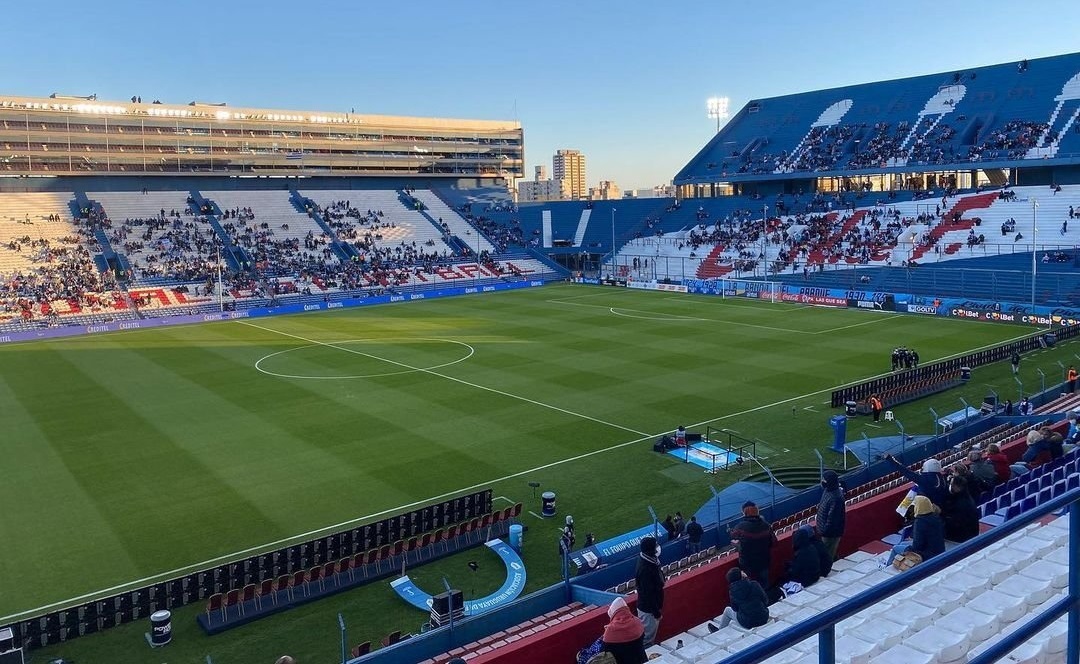
The Estadio Gran Parque Central is the stadium of Club Nacional de Football located in Montevideo, Uruguay, near Nacional headquarters (between the streets Carlos Anaya, Jaime Cibils, General Urquiza and Comandante Braga), in the La Blanqueada neighbourhood.
Due to various factors, it is considered a historical stadium. Built in 1900, it is the oldest current stadium in America and the fifteenth in the world. But it mainly stands out for having hosted the 1930 FIFA World Cup opening match, one of the first two matches in the history of the competition, when on 13 July 1930 United States defeated Belgium 3–0 in Group D. FIFA remembered this fact when in 2005 a delegation headed by its president, Joseph Blatter, came to visit the reforms and placed a commemorative plaque at the stadium. This historical fact was remembered by FIFA on two occasions: 1987 and 2005.
In addition, the stadium was also the venue for the Uruguay national team, both in soccer and in other disciplines. Since its creation and until 1930, it was the main sports arena in Uruguay, so until the inauguration of the Centenario Stadium, the Uruguayan team officiated as a local in the Gran Parque Central. It was also the venue for other important international tournaments, like the 1923 and 1924 South American Championships (current Copa América), the 2015 South American U-20 Championship or the 2021 Women's Copa Libertadores final.
Together with the Centenario Stadium, it is the Uruguayan stadium with the best artificial light, after a reform carried out in 2021. It is also, after the Centenario, the stadium in which the Uruguayan soccer team has played more official matches. In addition, on 31 October 2018, it was the stadium to register the highest ticket sales for a stadium in Uruguay without being the Centenario, selling the 34,000 tickets available.
The Estadio Gran Parque Central is an important landmark in the history of Uruguay, not only because of its relevance in sports, but also for its bonds with the rich history of Uruguayans and their patriotic feelings.
Before the existence of Parque Central as a sports ground, in exactly the same location (which used to be known as "Quinta de la Paraguaya"), Uruguay's national hero José Artigas was named Jefe de los Orientales (leader of the Uruguayan people) in 1811.
The Parque Central was opened for the practice of sports in 1900, having been the site of Montevideo's bullring until the abolition of this activity. At first, the tenants of the stadium were Deutscher Fussball Klub for their home games at the first Uruguayan league championship in the 1900s. As a sports stadium, the Parque Central was inaugurated on March 25, 1900 with a match between the Deutscher Fussball Klub and the CURCC (Central Uruguay Railway Cricket Club). The final score was CURCC 2 – Deutscher 0. Before the game, a lunch was served at Hotel Lanata, among personalities from the Government and leaders of the clubs. According to some chronicles from that period, the inauguration included the Don Bosco Band and the "Flora" gunship Band. There was also a special highlight with a Scottish skirt dancer who took the 7,000 people present by surprise, as they were unaware of the Scottish traditions. Two days after Nacional would meet the Deutscher F. K. in a game that ended 1–1.
The land was the property of "Tranvias a la Union y Maroñas", a German streetcar company whose employees were the founders of the Deutscher F. K. The venue consisted of four tennis courts and two football fields. By 1901,the streetcar company conceded Nacional the second field as they entered the AUF league. From that year until now, the Estadio Gran Parque Central has witnessed several championships won by Nacional (the last one in 2010/2011 season) and Uruguay national football team.
Hub AI
Estadio Gran Parque Central AI simulator
(@Estadio Gran Parque Central_simulator)
Estadio Gran Parque Central
The Estadio Gran Parque Central is the stadium of Club Nacional de Football located in Montevideo, Uruguay, near Nacional headquarters (between the streets Carlos Anaya, Jaime Cibils, General Urquiza and Comandante Braga), in the La Blanqueada neighbourhood.
Due to various factors, it is considered a historical stadium. Built in 1900, it is the oldest current stadium in America and the fifteenth in the world. But it mainly stands out for having hosted the 1930 FIFA World Cup opening match, one of the first two matches in the history of the competition, when on 13 July 1930 United States defeated Belgium 3–0 in Group D. FIFA remembered this fact when in 2005 a delegation headed by its president, Joseph Blatter, came to visit the reforms and placed a commemorative plaque at the stadium. This historical fact was remembered by FIFA on two occasions: 1987 and 2005.
In addition, the stadium was also the venue for the Uruguay national team, both in soccer and in other disciplines. Since its creation and until 1930, it was the main sports arena in Uruguay, so until the inauguration of the Centenario Stadium, the Uruguayan team officiated as a local in the Gran Parque Central. It was also the venue for other important international tournaments, like the 1923 and 1924 South American Championships (current Copa América), the 2015 South American U-20 Championship or the 2021 Women's Copa Libertadores final.
Together with the Centenario Stadium, it is the Uruguayan stadium with the best artificial light, after a reform carried out in 2021. It is also, after the Centenario, the stadium in which the Uruguayan soccer team has played more official matches. In addition, on 31 October 2018, it was the stadium to register the highest ticket sales for a stadium in Uruguay without being the Centenario, selling the 34,000 tickets available.
The Estadio Gran Parque Central is an important landmark in the history of Uruguay, not only because of its relevance in sports, but also for its bonds with the rich history of Uruguayans and their patriotic feelings.
Before the existence of Parque Central as a sports ground, in exactly the same location (which used to be known as "Quinta de la Paraguaya"), Uruguay's national hero José Artigas was named Jefe de los Orientales (leader of the Uruguayan people) in 1811.
The Parque Central was opened for the practice of sports in 1900, having been the site of Montevideo's bullring until the abolition of this activity. At first, the tenants of the stadium were Deutscher Fussball Klub for their home games at the first Uruguayan league championship in the 1900s. As a sports stadium, the Parque Central was inaugurated on March 25, 1900 with a match between the Deutscher Fussball Klub and the CURCC (Central Uruguay Railway Cricket Club). The final score was CURCC 2 – Deutscher 0. Before the game, a lunch was served at Hotel Lanata, among personalities from the Government and leaders of the clubs. According to some chronicles from that period, the inauguration included the Don Bosco Band and the "Flora" gunship Band. There was also a special highlight with a Scottish skirt dancer who took the 7,000 people present by surprise, as they were unaware of the Scottish traditions. Two days after Nacional would meet the Deutscher F. K. in a game that ended 1–1.
The land was the property of "Tranvias a la Union y Maroñas", a German streetcar company whose employees were the founders of the Deutscher F. K. The venue consisted of four tennis courts and two football fields. By 1901,the streetcar company conceded Nacional the second field as they entered the AUF league. From that year until now, the Estadio Gran Parque Central has witnessed several championships won by Nacional (the last one in 2010/2011 season) and Uruguay national football team.