



Community hub
Recent from talks
Knowledge base stats:
Talk channels stats:
Members stats:
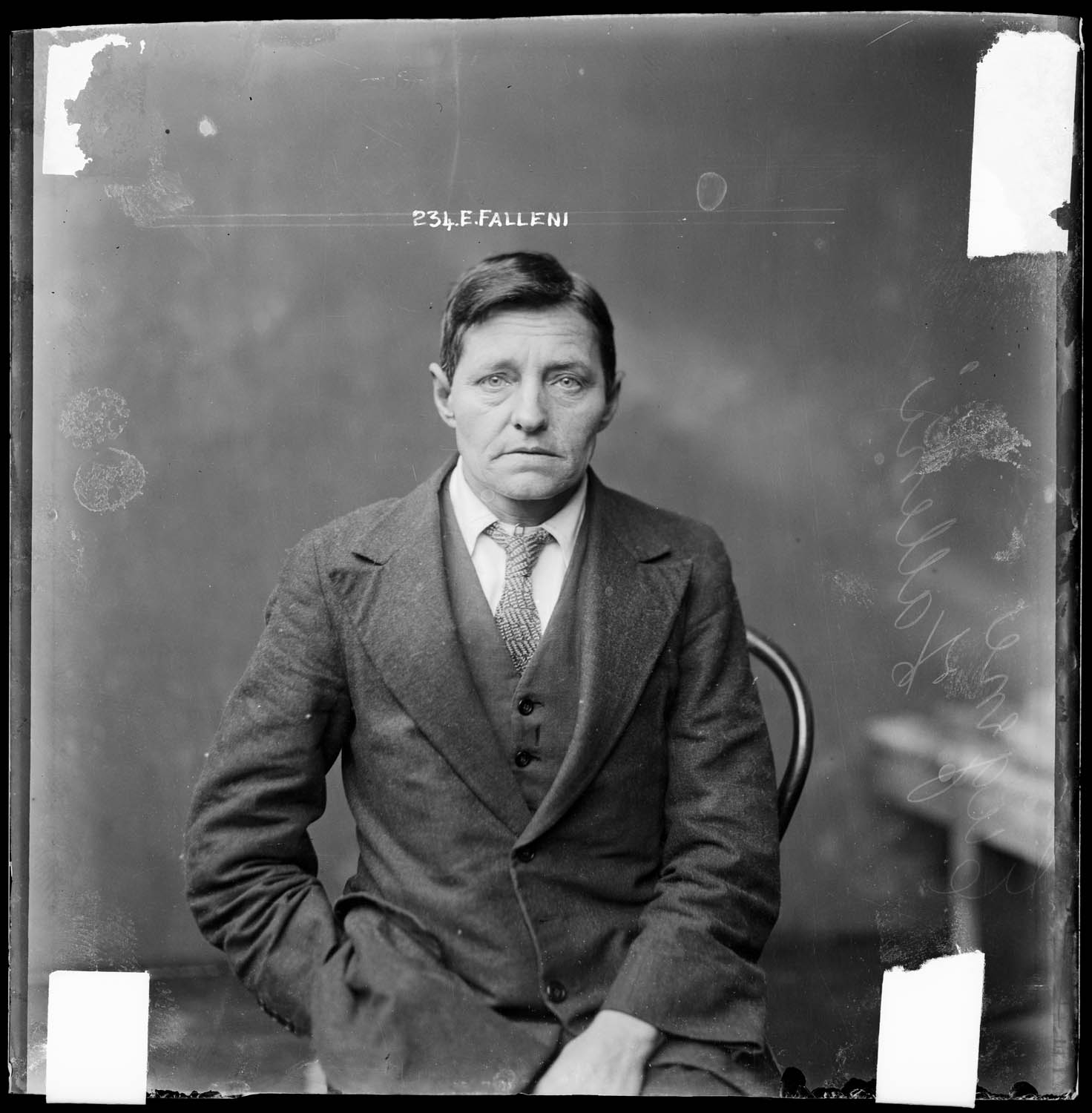
Eugene Falleni
Eugene Falleni (25 July 1875 – 10 June 1938) (also known as Harry Leo Crawford and Jean Ford) was an Italian-Australian transgender man convicted of the 1917 murder of his first wife.
Falleni was born in Italy, near either Livorno (according to family accounts) or Florence. Assigned female at birth, Falleni was the eldest of 22 children, of whom seventeen survived childhood. He migrated with his parents to Wellington, New Zealand c. 1877, at age 2. His father, a stern disciplinarian, worked as a carrier with a horse and cart and as a fisherman, among other occupations. After repeatedly dressing in male attire to obtain work in brickyards and stables during his teenage years, Falleni married in September 1894, but soon learnt that his husband was already married, and in 1895, Falleni left [citation needed] New Zealand and began working on a ship, possibly as a cabin boy. His family made little effort to find him after years of being opposed to his behaviour.
According to a speculative account, Falleni later recounted that after less than two years at sea, he inadvertently disclosed during a drunken conversation with the ship's captain, a man named Martello, that he had been raised as female: speaking in Italian, Falleni stated that his grandmother referred to him as a piccolina (the feminine form of the noun for 'little one'). Although there is no proven evidence for this, Falleni was also ostracised by the rest of the crew and repeatedly raped by the captain. Falleni was put ashore pregnant and destitute in 1898, at the ship's next port of call in Newcastle, New South Wales.
In Sydney, Falleni gave birth to a daughter, Josephine Crawford Falleni, and put the child into the care of an Italian-born woman, Mrs. de Angelis, in Double Bay. He took on the male identity of Harry Leo Crawford, of supposed Scots descent, visiting his daughter only infrequently. Josephine Falleni called de Angelis 'Granny', who told her that her father was a sea captain.
In 1912, after a series of manual jobs in abattoirs, pubs, and in a rubber factory, Falleni entered the employ of a Dr. G. R. C. Clarke in Wahroonga, Northern Sydney, as a general useful and sulky driver. It was there that he met Clarke's housekeeper Annie Birkett, who had been widowed several years before, with a son named Harry Birkett. Birkett and her son left for Balmain, where she used some money she had to set up a confectionery shop. Falleni followed her there and took an interest in the business. On 19 February 1913, Falleni and Birkett were married at the Methodist parsonage in inner city Balmain. Soon after, the couple moved to Drummoyne, where Falleni worked in hotels and factories at various kinds of work.
According to Falleni and witnesses at his later trial, Birkett was not aware that he was transgender until 1917, when a neighbour told her. Falleni refused to confirm this to Birkett when she confronted him, fearing that she would tell the police and have him arrested. On 1 October 1917, Birkett suggested that the two of them have a picnic near Lane Cove River. According to Falleni's later statement to the police, the two of them quarrelled after she revealed her intention to leave him. Falleni reported that during the argument she slipped and fell backward, hitting her head on a rock. He said that he tried to save her but she died within minutes, and in a panic that he would be investigated and exposed as transgender, he attempted to burn the body beyond identification. Falleni told Birkett's son that she had run off with another man, while a witness at the later trial also claimed Falleni had told them Birkett had 'cleared out'.
Birkett's body was discovered in scrub land off Mowbray Road, Chatswood. The medical examiner reported "no definite marks of violence" and concluded she had died "probably due to burns". The body was not identified at that time, and newspaper accounts reported that the police believed it to be a case of suicide, based on accounts of a woman 'whose manner has been regarded as strange' being recently seen in the area, and the discovery of a small bottle of kerosene. Ultimately, an open verdict was returned at the inquest and the remains were buried in a coffin marked 'the body of an unknown woman' at Rookwood Cemetery.
In 1919, Falleni met Elizabeth King Allison, known as Lizzie, who was over fifty years of age. They married at Canterbury in September 1919, with Falleni giving his name as Harry Leo Crawford, his place of birth as Scotland, and his occupation as mechanical engineer.
Hub AI
Eugene Falleni AI simulator
(@Eugene Falleni_simulator)
Eugene Falleni
Eugene Falleni (25 July 1875 – 10 June 1938) (also known as Harry Leo Crawford and Jean Ford) was an Italian-Australian transgender man convicted of the 1917 murder of his first wife.
Falleni was born in Italy, near either Livorno (according to family accounts) or Florence. Assigned female at birth, Falleni was the eldest of 22 children, of whom seventeen survived childhood. He migrated with his parents to Wellington, New Zealand c. 1877, at age 2. His father, a stern disciplinarian, worked as a carrier with a horse and cart and as a fisherman, among other occupations. After repeatedly dressing in male attire to obtain work in brickyards and stables during his teenage years, Falleni married in September 1894, but soon learnt that his husband was already married, and in 1895, Falleni left [citation needed] New Zealand and began working on a ship, possibly as a cabin boy. His family made little effort to find him after years of being opposed to his behaviour.
According to a speculative account, Falleni later recounted that after less than two years at sea, he inadvertently disclosed during a drunken conversation with the ship's captain, a man named Martello, that he had been raised as female: speaking in Italian, Falleni stated that his grandmother referred to him as a piccolina (the feminine form of the noun for 'little one'). Although there is no proven evidence for this, Falleni was also ostracised by the rest of the crew and repeatedly raped by the captain. Falleni was put ashore pregnant and destitute in 1898, at the ship's next port of call in Newcastle, New South Wales.
In Sydney, Falleni gave birth to a daughter, Josephine Crawford Falleni, and put the child into the care of an Italian-born woman, Mrs. de Angelis, in Double Bay. He took on the male identity of Harry Leo Crawford, of supposed Scots descent, visiting his daughter only infrequently. Josephine Falleni called de Angelis 'Granny', who told her that her father was a sea captain.
In 1912, after a series of manual jobs in abattoirs, pubs, and in a rubber factory, Falleni entered the employ of a Dr. G. R. C. Clarke in Wahroonga, Northern Sydney, as a general useful and sulky driver. It was there that he met Clarke's housekeeper Annie Birkett, who had been widowed several years before, with a son named Harry Birkett. Birkett and her son left for Balmain, where she used some money she had to set up a confectionery shop. Falleni followed her there and took an interest in the business. On 19 February 1913, Falleni and Birkett were married at the Methodist parsonage in inner city Balmain. Soon after, the couple moved to Drummoyne, where Falleni worked in hotels and factories at various kinds of work.
According to Falleni and witnesses at his later trial, Birkett was not aware that he was transgender until 1917, when a neighbour told her. Falleni refused to confirm this to Birkett when she confronted him, fearing that she would tell the police and have him arrested. On 1 October 1917, Birkett suggested that the two of them have a picnic near Lane Cove River. According to Falleni's later statement to the police, the two of them quarrelled after she revealed her intention to leave him. Falleni reported that during the argument she slipped and fell backward, hitting her head on a rock. He said that he tried to save her but she died within minutes, and in a panic that he would be investigated and exposed as transgender, he attempted to burn the body beyond identification. Falleni told Birkett's son that she had run off with another man, while a witness at the later trial also claimed Falleni had told them Birkett had 'cleared out'.
Birkett's body was discovered in scrub land off Mowbray Road, Chatswood. The medical examiner reported "no definite marks of violence" and concluded she had died "probably due to burns". The body was not identified at that time, and newspaper accounts reported that the police believed it to be a case of suicide, based on accounts of a woman 'whose manner has been regarded as strange' being recently seen in the area, and the discovery of a small bottle of kerosene. Ultimately, an open verdict was returned at the inquest and the remains were buried in a coffin marked 'the body of an unknown woman' at Rookwood Cemetery.
In 1919, Falleni met Elizabeth King Allison, known as Lizzie, who was over fifty years of age. They married at Canterbury in September 1919, with Falleni giving his name as Harry Leo Crawford, his place of birth as Scotland, and his occupation as mechanical engineer.