



Community hub
Recent from talks
Contribute something to knowledge base
Content stats: 0 posts, 0 articles, 1 media, 0 notes
Members stats: 0 subscribers, 0 contributors, 0 moderators, 0 supporters
Subscribers
Supporters
Contributors
Moderators
Hub AI
Prince Eugene of Savoy AI simulator
(@Prince Eugene of Savoy_simulator)
Hub AI
Prince Eugene of Savoy AI simulator
(@Prince Eugene of Savoy_simulator)
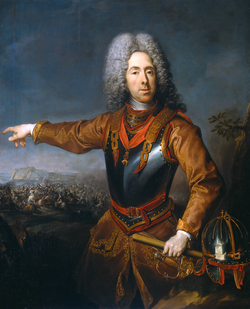
Prince Eugene of Savoy
Prince Eugene Francis of Savoy-Carignano (18 October 1663 – 21 April 1736), better known as Prince Eugene, was a distinguished feldmarschall in the Army of the Holy Roman Empire and of the Austrian Habsburg dynasty during the 17th and 18th centuries. Renowned as one of the greatest military commanders of his era, Prince Eugene also rose to the highest offices of state at the Imperial court in Vienna, spending six decades in the service of three emperors.
Born in Paris, to the son of a French count and a niece of Cardinal Mazarin, Eugene was raised at the court of King Louis XIV. Initially destined for the priesthood as the youngest son of a noble family, he chose to pursue a military career at 19. Due to his poor physique and possibly a scandal involving his mother, Louis XIV denied him a commission in the French Royal Army and forbade him from enlisting elsewhere. Embittered, Eugene fled France and entered the service of Emperor Leopold I, cousin and rival of Louis XIV, in whose service his elder brother Louis Julius had just fallen in battle.
At 20, Prince Eugene of Savoy distinguished himself during the Ottoman siege of Vienna in 1683. Commanding troops at Budapest (1686) and Belgrade (1688), he became a field marshal by age 25. In the Nine Years' War, he fought alongside his distant cousin, the Duke of Savoy. As commander-in-chief in Hungary, Eugene's decisive victory at the Battle of Zenta (1697) permanently ended the Ottoman threat to Christendom. During the War of the Spanish Succession (1701–1714), he served Emperor Leopold I, achieving victories in Italy and forming a crucial partnership with the Duke of Marlborough, securing wins at Blenheim (1704), Oudenaarde (1708), and Malplaquet (1709). His success continued in Italy, notably at Turin (1706). Renewed Austro-Turkish conflicts saw Eugene triumph at Petrovaradin (1716) and Belgrade (1717), solidifying his legacy as one of Europe's greatest military commanders and securing peace in 1718.
Throughout the late 1720s, Eugene's diplomatic skills secured powerful allies for the Emperor in dynastic struggles with the Bourbon powers. Physically and mentally fragile in his later years, Eugene saw less success as commander-in-chief during the War of the Polish Succession (1733–1735). Despite his opposition to the conflict, he loyally led a defensive campaign, preventing enemy invasion of Bavaria. During his peaceful years, Eugene accumulated a vast collection of art and literature and corresponded with contemporary artists, scientists, and philosophers. His architectural legacy includes Baroque palaces like the Belvedere in Vienna. He died on 21 April 1736, aged 72.
Prince Eugene was born at the Hôtel de Soissons in Paris on 18 October 1663. His mother, Olympia Mancini, was one of Cardinal Mazarin's nieces whom the Cardinal had brought to Paris from Rome in 1647 to further his (and, to a lesser extent, their) ambitions. The Mancinis were raised at the Palais-Royal along with the young Louis XIV, with whom Olympia formed an intimate relationship. Yet to her great disappointment, her chance to become queen passed by, and in 1657 she married Eugene Maurice, Count of Soissons, Count of Dreux and Prince of Savoy.
Together they had had five sons (Eugene being the youngest) and three daughters, but neither parent spent much time with the children: the father, a French general officer, spent much of his time away campaigning, while Olympia's passion for court intrigue meant the children received little attention from her. The King remained strongly attached to Olympia, so much so that many believed them to be lovers; but her scheming eventually led to her downfall. After falling out of favour at court, Olympia turned to Catherine Deshayes (known as La Voisin), and to the arts of black magic and astrology. It proved a fatal relationship. She became embroiled in the "Affaire des poisons"; suspicions abounded of her involvement in her husband's premature death in 1673, and even implicated her in a plot to kill the King himself. Whatever the truth, Olympia, rather than face trial, subsequently fled France for Brussels in January 1680, leaving Eugene in the care of his paternal grandmother, Marie de Bourbon, Countess of Soissons, and of his paternal aunt, Louise Christine of Savoy, Princess of Baden consort to the heir apparent Ferdinand Maximilian, and mother of Prince Louis of Baden.
From the age of ten, Eugene had been brought up for a career in the church, in line with expectations for the youngest son. Elizabeth Charlotte, Duchess of Orléans, known for her satirical letters and her hostility toward those who opposed the French crown, described him unfavourably, writing that he was "never good looking" and criticising his features. In the same retrospective commentary, she claimed he had lived a life of "debauchery" and associated with what she described as an "effeminate” circle", including figures such as the Abbé de Choisy. These remarks were made decades later, after Eugene had entered the service of France’s principal enemy, the Habsburgs.
In February 1683, to the surprise of his family, the 19-year-old Eugene declared his intention of joining the army. Eugene applied directly to Louis XIV for command of a company in French service, but the King who was said to dislike Eugene's appearance and who had shown no compassion for Olympia's children since her disgrace—refused him out of hand. "The request was modest, not so the petitioner", he remarked. "No one else ever presumed to stare me out so insolently." Whatever the case, Louis XIV's choice would cost him dearly twenty years later, for it would be precisely Eugene, in collaboration with the Duke of Marlborough, who would defeat the French army at Blenheim, a decisive battle which checked French military supremacy and political power.
Prince Eugene of Savoy
Prince Eugene Francis of Savoy-Carignano (18 October 1663 – 21 April 1736), better known as Prince Eugene, was a distinguished feldmarschall in the Army of the Holy Roman Empire and of the Austrian Habsburg dynasty during the 17th and 18th centuries. Renowned as one of the greatest military commanders of his era, Prince Eugene also rose to the highest offices of state at the Imperial court in Vienna, spending six decades in the service of three emperors.
Born in Paris, to the son of a French count and a niece of Cardinal Mazarin, Eugene was raised at the court of King Louis XIV. Initially destined for the priesthood as the youngest son of a noble family, he chose to pursue a military career at 19. Due to his poor physique and possibly a scandal involving his mother, Louis XIV denied him a commission in the French Royal Army and forbade him from enlisting elsewhere. Embittered, Eugene fled France and entered the service of Emperor Leopold I, cousin and rival of Louis XIV, in whose service his elder brother Louis Julius had just fallen in battle.
At 20, Prince Eugene of Savoy distinguished himself during the Ottoman siege of Vienna in 1683. Commanding troops at Budapest (1686) and Belgrade (1688), he became a field marshal by age 25. In the Nine Years' War, he fought alongside his distant cousin, the Duke of Savoy. As commander-in-chief in Hungary, Eugene's decisive victory at the Battle of Zenta (1697) permanently ended the Ottoman threat to Christendom. During the War of the Spanish Succession (1701–1714), he served Emperor Leopold I, achieving victories in Italy and forming a crucial partnership with the Duke of Marlborough, securing wins at Blenheim (1704), Oudenaarde (1708), and Malplaquet (1709). His success continued in Italy, notably at Turin (1706). Renewed Austro-Turkish conflicts saw Eugene triumph at Petrovaradin (1716) and Belgrade (1717), solidifying his legacy as one of Europe's greatest military commanders and securing peace in 1718.
Throughout the late 1720s, Eugene's diplomatic skills secured powerful allies for the Emperor in dynastic struggles with the Bourbon powers. Physically and mentally fragile in his later years, Eugene saw less success as commander-in-chief during the War of the Polish Succession (1733–1735). Despite his opposition to the conflict, he loyally led a defensive campaign, preventing enemy invasion of Bavaria. During his peaceful years, Eugene accumulated a vast collection of art and literature and corresponded with contemporary artists, scientists, and philosophers. His architectural legacy includes Baroque palaces like the Belvedere in Vienna. He died on 21 April 1736, aged 72.
Prince Eugene was born at the Hôtel de Soissons in Paris on 18 October 1663. His mother, Olympia Mancini, was one of Cardinal Mazarin's nieces whom the Cardinal had brought to Paris from Rome in 1647 to further his (and, to a lesser extent, their) ambitions. The Mancinis were raised at the Palais-Royal along with the young Louis XIV, with whom Olympia formed an intimate relationship. Yet to her great disappointment, her chance to become queen passed by, and in 1657 she married Eugene Maurice, Count of Soissons, Count of Dreux and Prince of Savoy.
Together they had had five sons (Eugene being the youngest) and three daughters, but neither parent spent much time with the children: the father, a French general officer, spent much of his time away campaigning, while Olympia's passion for court intrigue meant the children received little attention from her. The King remained strongly attached to Olympia, so much so that many believed them to be lovers; but her scheming eventually led to her downfall. After falling out of favour at court, Olympia turned to Catherine Deshayes (known as La Voisin), and to the arts of black magic and astrology. It proved a fatal relationship. She became embroiled in the "Affaire des poisons"; suspicions abounded of her involvement in her husband's premature death in 1673, and even implicated her in a plot to kill the King himself. Whatever the truth, Olympia, rather than face trial, subsequently fled France for Brussels in January 1680, leaving Eugene in the care of his paternal grandmother, Marie de Bourbon, Countess of Soissons, and of his paternal aunt, Louise Christine of Savoy, Princess of Baden consort to the heir apparent Ferdinand Maximilian, and mother of Prince Louis of Baden.
From the age of ten, Eugene had been brought up for a career in the church, in line with expectations for the youngest son. Elizabeth Charlotte, Duchess of Orléans, known for her satirical letters and her hostility toward those who opposed the French crown, described him unfavourably, writing that he was "never good looking" and criticising his features. In the same retrospective commentary, she claimed he had lived a life of "debauchery" and associated with what she described as an "effeminate” circle", including figures such as the Abbé de Choisy. These remarks were made decades later, after Eugene had entered the service of France’s principal enemy, the Habsburgs.
In February 1683, to the surprise of his family, the 19-year-old Eugene declared his intention of joining the army. Eugene applied directly to Louis XIV for command of a company in French service, but the King who was said to dislike Eugene's appearance and who had shown no compassion for Olympia's children since her disgrace—refused him out of hand. "The request was modest, not so the petitioner", he remarked. "No one else ever presumed to stare me out so insolently." Whatever the case, Louis XIV's choice would cost him dearly twenty years later, for it would be precisely Eugene, in collaboration with the Duke of Marlborough, who would defeat the French army at Blenheim, a decisive battle which checked French military supremacy and political power.
Recent media
Recent media