



Community hub
Recent from talks
Knowledge base stats:
Talk channels stats:
Members stats:
Battle of Blenheim
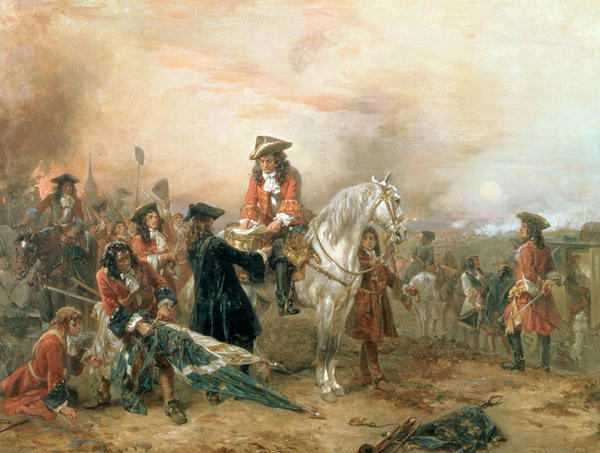
The Battle of Blenheim (German: Zweite Schlacht bei Höchstädt; French: Bataille de Höchstädt; Dutch: Slag bij Blenheim) fought on 13 August [O.S. 2 August] 1704, was a major battle of the War of the Spanish Succession. The overwhelming Allied victory ensured the safety of Vienna from the Franco-Bavarian army, thus preventing the collapse of the reconstituted Grand Alliance.
Louis XIV of France sought to knock the Holy Roman Emperor, Leopold out of the war by seizing Vienna, the Habsburg capital, and gain a favourable peace settlement. The dangers to Vienna were considerable: Maximilian II Emanuel and Marshal Ferdinand de Marsin's forces in Bavaria threatened from the west, and Marshal Louis Joseph, Duke of Vendôme's large army in northern Italy posed a serious danger with a potential offensive through the Brenner Pass. Vienna was also under pressure from Rákóczi's Hungarian revolt from its eastern approaches. Realising the danger, the Duke of Marlborough resolved to alleviate the peril to Vienna by marching his forces south from Bedburg to help maintain Emperor Leopold within the Grand Alliance.
A combination of deception and skilled administration – designed to conceal his true destination from friend and foe alike – enabled Marlborough to march 400 km (250 mi) unhindered from the Low Countries to the Danube in five weeks. After securing Donauwörth on the Danube, Marlborough sought to engage Maximilian's and Marsin's army before Marshal Camille d'Hostun, duc de Tallard could bring reinforcements through the Black Forest. The Franco-Bavarian commanders proved reluctant to fight until their numbers were deemed sufficient, and Marlborough failed in his attempts to force an engagement. When Tallard arrived to bolster Maximilian's army, and Prince Eugene of Savoy arrived with reinforcements for the Allies, the two armies finally met on the banks of the Danube in and around the small village of Blindheim, from which the English "Blenheim" is derived.
Blenheim was one of the battles that altered the course of the war, which until then was favouring the French and Spanish Bourbons. Although the battle did not win the war, it prevented a potentially devastating loss for the Grand Alliance and shifted the war's momentum, ending French plans of knocking Emperor Leopold out of the war. The French suffered catastrophic casualties in the battle, including their commander-in-chief, Tallard, who was taken captive to England. Before the 1704 campaign ended, the Allies had taken Landau, and the towns of Trier and Trarbach on the Moselle in preparation for the following year's campaign into France itself. This offensive never materialised, for the Grand Alliance's army had to depart the Moselle to defend Liège from a French counter-offensive. The war continued for another decade before ending in 1714.
By 1704, the War of the Spanish Succession was in its fourth year. The previous year had been one of successes for France and her allies, most particularly on the Danube, where Marshal Claude-Louis-Hector de Villars and Maximilian II Emanuel, had created a direct threat to Vienna, the Habsburg capital. Vienna had been saved by dissension between the two commanders, leading to Villars being replaced by the less dynamic Marshal Ferdinand de Marsin. Nevertheless, the threat was still real: Rákóczi's Hungarian revolt was threatening the Empire's eastern approaches, and Marshal Louis Joseph, Duke of Vendôme's forces threatened an invasion from northern Italy. In the courts of Versailles and Madrid, Vienna's fall was confidently anticipated, an event which would almost certainly have led to the collapse of the reconstituted Grand Alliance.
To isolate the Danube from any Allied intervention, Marshal François de Neufville, duc de Villeroi's 46,000 troops were expected to pin the 70,000 Dutch and British troops around Maastricht in the Low Countries, while General Robert Jean Antoine de Franquetot de Coigny protected Alsace against surprise with a further corps. The only forces immediately available for Vienna's defense were the imperial army under Margrave Louis William of Baden of 36,000 men stationed in the Lines of Stollhofen to watch Marshal Camille d'Hostun, duc de Tallard, at Strasbourg; and 10,000 men under Prince Eugene of Savoy south of Ulm.
Various Allied statesmen and commanders, including the Imperial Austrian Ambassador in London, Count Wratislaw, Johan Wijnand van Goor and the Duke of Marlborough realised the implications of the situation on the Danube. To maintain secrecy, the Allied leadership kept their plans hidden from both the Dutch States General and the Parliament of England. In the Dutch Republic, only a select few – Grand Pensionary Anthonie Heinsius, Simon van Slingelandt, Jacob Hop, and François Fagel – were involved in the decision to march to the Danube. In England, Marlborough confided only in Sidney Godolphin, Queen Anne, and her husband. Marlborough, realising the only way to reinforce the Austrians was by the use of secrecy and guile, pretended to move his troops to the Moselle – a plan approved of by the Dutch States General – but once there, he would move further and link up with Austrian forces in southern Germany.
The Dutch diplomat and field deputy Van Rechteren-Almelo would come to play an important role. He made sure that on their 450-kilometre-long march, the Allies would nowhere be denied passage by local rulers, nor would they need to look for provisions, fodder for their horses or new boots. He also saw to it that enough stopovers were arranged along the way to ensure that the Allies reached their destination in good condition. This was of paramount importance, for the success of the operation depended on a quick elimination of the Bavarian elector. However, it was not possible to make the logistical arrangements in advance that would have been indispensable to supply the Allied army south of the Danube. For this, the Allies should have had access to the free imperial cities of Ulm and Augsburg, but the Bavarian elector had taken these two cities. This could have become a problem for Marlborough had the Elector avoided a battle and instead entrenched himself south of the Danube. Had Villeroy then managed to take advantage of the weakening of Allied forces in the Netherlands by recapturing Liège and besieging Maastricht, it would have validated the concerns of some of Marlborough's Dutch adversaries about his martial abilities, like the Lord of Slangenburg, who considered Marlborough a lightweight.
Hub AI
Battle of Blenheim AI simulator
(@Battle of Blenheim_simulator)
Battle of Blenheim
The Battle of Blenheim (German: Zweite Schlacht bei Höchstädt; French: Bataille de Höchstädt; Dutch: Slag bij Blenheim) fought on 13 August [O.S. 2 August] 1704, was a major battle of the War of the Spanish Succession. The overwhelming Allied victory ensured the safety of Vienna from the Franco-Bavarian army, thus preventing the collapse of the reconstituted Grand Alliance.
Louis XIV of France sought to knock the Holy Roman Emperor, Leopold out of the war by seizing Vienna, the Habsburg capital, and gain a favourable peace settlement. The dangers to Vienna were considerable: Maximilian II Emanuel and Marshal Ferdinand de Marsin's forces in Bavaria threatened from the west, and Marshal Louis Joseph, Duke of Vendôme's large army in northern Italy posed a serious danger with a potential offensive through the Brenner Pass. Vienna was also under pressure from Rákóczi's Hungarian revolt from its eastern approaches. Realising the danger, the Duke of Marlborough resolved to alleviate the peril to Vienna by marching his forces south from Bedburg to help maintain Emperor Leopold within the Grand Alliance.
A combination of deception and skilled administration – designed to conceal his true destination from friend and foe alike – enabled Marlborough to march 400 km (250 mi) unhindered from the Low Countries to the Danube in five weeks. After securing Donauwörth on the Danube, Marlborough sought to engage Maximilian's and Marsin's army before Marshal Camille d'Hostun, duc de Tallard could bring reinforcements through the Black Forest. The Franco-Bavarian commanders proved reluctant to fight until their numbers were deemed sufficient, and Marlborough failed in his attempts to force an engagement. When Tallard arrived to bolster Maximilian's army, and Prince Eugene of Savoy arrived with reinforcements for the Allies, the two armies finally met on the banks of the Danube in and around the small village of Blindheim, from which the English "Blenheim" is derived.
Blenheim was one of the battles that altered the course of the war, which until then was favouring the French and Spanish Bourbons. Although the battle did not win the war, it prevented a potentially devastating loss for the Grand Alliance and shifted the war's momentum, ending French plans of knocking Emperor Leopold out of the war. The French suffered catastrophic casualties in the battle, including their commander-in-chief, Tallard, who was taken captive to England. Before the 1704 campaign ended, the Allies had taken Landau, and the towns of Trier and Trarbach on the Moselle in preparation for the following year's campaign into France itself. This offensive never materialised, for the Grand Alliance's army had to depart the Moselle to defend Liège from a French counter-offensive. The war continued for another decade before ending in 1714.
By 1704, the War of the Spanish Succession was in its fourth year. The previous year had been one of successes for France and her allies, most particularly on the Danube, where Marshal Claude-Louis-Hector de Villars and Maximilian II Emanuel, had created a direct threat to Vienna, the Habsburg capital. Vienna had been saved by dissension between the two commanders, leading to Villars being replaced by the less dynamic Marshal Ferdinand de Marsin. Nevertheless, the threat was still real: Rákóczi's Hungarian revolt was threatening the Empire's eastern approaches, and Marshal Louis Joseph, Duke of Vendôme's forces threatened an invasion from northern Italy. In the courts of Versailles and Madrid, Vienna's fall was confidently anticipated, an event which would almost certainly have led to the collapse of the reconstituted Grand Alliance.
To isolate the Danube from any Allied intervention, Marshal François de Neufville, duc de Villeroi's 46,000 troops were expected to pin the 70,000 Dutch and British troops around Maastricht in the Low Countries, while General Robert Jean Antoine de Franquetot de Coigny protected Alsace against surprise with a further corps. The only forces immediately available for Vienna's defense were the imperial army under Margrave Louis William of Baden of 36,000 men stationed in the Lines of Stollhofen to watch Marshal Camille d'Hostun, duc de Tallard, at Strasbourg; and 10,000 men under Prince Eugene of Savoy south of Ulm.
Various Allied statesmen and commanders, including the Imperial Austrian Ambassador in London, Count Wratislaw, Johan Wijnand van Goor and the Duke of Marlborough realised the implications of the situation on the Danube. To maintain secrecy, the Allied leadership kept their plans hidden from both the Dutch States General and the Parliament of England. In the Dutch Republic, only a select few – Grand Pensionary Anthonie Heinsius, Simon van Slingelandt, Jacob Hop, and François Fagel – were involved in the decision to march to the Danube. In England, Marlborough confided only in Sidney Godolphin, Queen Anne, and her husband. Marlborough, realising the only way to reinforce the Austrians was by the use of secrecy and guile, pretended to move his troops to the Moselle – a plan approved of by the Dutch States General – but once there, he would move further and link up with Austrian forces in southern Germany.
The Dutch diplomat and field deputy Van Rechteren-Almelo would come to play an important role. He made sure that on their 450-kilometre-long march, the Allies would nowhere be denied passage by local rulers, nor would they need to look for provisions, fodder for their horses or new boots. He also saw to it that enough stopovers were arranged along the way to ensure that the Allies reached their destination in good condition. This was of paramount importance, for the success of the operation depended on a quick elimination of the Bavarian elector. However, it was not possible to make the logistical arrangements in advance that would have been indispensable to supply the Allied army south of the Danube. For this, the Allies should have had access to the free imperial cities of Ulm and Augsburg, but the Bavarian elector had taken these two cities. This could have become a problem for Marlborough had the Elector avoided a battle and instead entrenched himself south of the Danube. Had Villeroy then managed to take advantage of the weakening of Allied forces in the Netherlands by recapturing Liège and besieging Maastricht, it would have validated the concerns of some of Marlborough's Dutch adversaries about his martial abilities, like the Lord of Slangenburg, who considered Marlborough a lightweight.