



Community hub
Recent from talks
Knowledge base stats:
Talk channels stats:
Members stats:
Exeter Ship Canal
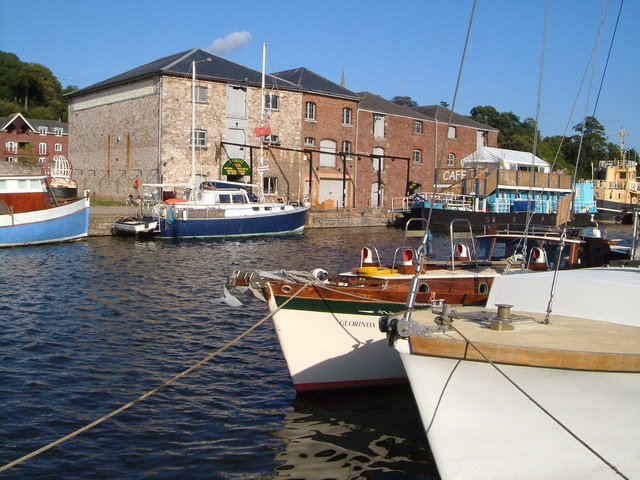
The Exeter Ship Canal, also known as the Exeter Canal is a canal leading from (and beside) the River Exe to Exeter Quay in the city of Exeter, Devon, England. It was first constructed in the 1560s, predating the "canal mania" period, and is one of the oldest artificial waterways in the UK. As built, it contained the first pound locks to be built in Britain. The canal was extended southwards in 1677, and when the contractor employed to enlarge the canal in 1698 absconded with the money, men and women from the city volunteered to carry out the work. It was completed in 1701 and was a financial success.
The engineer James Green made a series of improvements to the canal in the 1820s, and extended it southwards to Turf, where a new access lock was built, enabling ships to enter the canal at all states of the tide. The extension opened in 1827. Commercial carrying on the canal came to an end in the 1970s, with the final cargo of timber being unloaded in December 1973. However, the sludge carrier Countess Wear continued to use the canal, transporting sewage sludge from Exeter Sewage Works and dumping it at sea, until changes in legislation resulted in the practice ceasing on 31 December 1998. As commercial traffic ceased, it was replaced by leisure traffic. The canal was used for filming some of the historical drama The Onedin Line in the 1970s.
Since the building of the M5 motorway bridge, headroom has been limited to 30 feet (9.1 m), restricting the use of the canal by tall-masted sailing ships. Leisure use is also restricted by the swing and lift bridges at Countess Wear, which causes congestion to the road network when they are opened, and the cost of opening them is high. As they are nearing the end of their operational life, there is a campaign for them to be replaced with bridges giving more headroom, to enable more boats to reach Exeter.
At the start of Exeter's history, the River Exe was tidal and navigable up to the city walls enabling it to be a busy port. In the 1270s or 1280s, the Countess of Devon, Isabella de Fortibus, built a weir across the river to power her mills (this weir is remembered in the name of the nearby suburb Countess Wear). This had the effect of cutting off Exeter's port from the sea and damaging its salmon fisheries. In 1290, trade with Exeter's port was restored, only to be blocked by a new weir built in 1317 by Hugh de Courtenay, 9th Earl of Devon (Isabella's cousin), who also built a quay at Topsham. Because of the blockages on the river, boats were forced to unload at Topsham and the earls were able to exact large tolls to transport goods to Exeter. For the next 250 years the city petitioned the King to have the waterway reopened, to no avail, until 1550 when Edward VI finally granted permission. However, it was by then too late because the river channel had silted up.
In 1563, Exeter traders employed John Trew of Glamorgan to build a canal to bypass the weirs and rejoin the River Exe in the centre of the city where a quay would be built. Work began in February 1564, and was completed in Autumn 1566 or early 1567. The canal had three locks with vertical gates – the first pound locks to be built in Britain. They accommodated boats up to 16 tonnes. The original cut was 3 feet (0.91 m) deep and 16 feet (4.9 m) wide (0.9 m by 5 m). It ran for three and a quarter miles (5.2 km) from just below the Countess Wear to the centre of Exeter. This navigation was not very effective; it could not be entered at all states of the tide, and the double transfer of cargo over such a short distance made it uncompetitive with road transport.
The weir that maintains the water level in the quay is named "Trew's Weir" after the canal's builder. When built, it replaced St Leonard's Weir, and as well as maintaining the water level, it also provided a water source for a fulling mill, a cotton mill and a paper mill. The city council considered the weir as a site for a hydro-electric generating station in 1899, as their existing station needed to be replaced, due to the impending introduction of electric trams. However, this option was not pursued, and a new steam-powered station was built at Haven Banks, near the head of the canal basin.
In 1677 the canal was extended, and the entrance was moved downstream towards Topsham, to avoid a difficult stretch of the river. The entrance was made larger, while a basin for transshipment of goods was provided nearby. The new entrance had a single pair of gates, was called Trenchard's Sluice, and could accommodate barges of 60 tons. As part of the upgrade a quay built of stone and a new weir were constructed at Exeter. Further enlargement was approved in 1698, when William Bayley was employed to create a canal with a draught of 14 feet (4.3 m) to enable seagoing craft to use it. Bayley absconded with much of the money in 1699, leaving the canal unusable. The Council decided to carry out the work themselves, and were assisted by a large number of volunteers, both men and women, from the town. In 1701 the canal was re-opened. They had created a canal which was 50 feet (15 m) wide and 10 feet (3.0 m) deep, which could be used by ships of up to 150 tons. The three locks were replaced by a single large lock, which could be used as a passing place. Floodgates were fitted where the canal re-entered the Exe at Exeter. The entrance to the canal still only had a single pair of gates, and large ships could only use it at spring tides.
These improvements led to the canal being successful. The number of boats using it was 310 per year between 1715 and 1724, but this had increased to 479 in 1750/51. In 1795/96 448 boats used the canal, consisting of 158 sea-going ships and 290 lighters. Receipts which had been £747 per year in the 1750s had risen to £2,335 by the 1790s and to £3,221 by the 1810s.
Hub AI
Exeter Ship Canal AI simulator
(@Exeter Ship Canal_simulator)
Exeter Ship Canal
The Exeter Ship Canal, also known as the Exeter Canal is a canal leading from (and beside) the River Exe to Exeter Quay in the city of Exeter, Devon, England. It was first constructed in the 1560s, predating the "canal mania" period, and is one of the oldest artificial waterways in the UK. As built, it contained the first pound locks to be built in Britain. The canal was extended southwards in 1677, and when the contractor employed to enlarge the canal in 1698 absconded with the money, men and women from the city volunteered to carry out the work. It was completed in 1701 and was a financial success.
The engineer James Green made a series of improvements to the canal in the 1820s, and extended it southwards to Turf, where a new access lock was built, enabling ships to enter the canal at all states of the tide. The extension opened in 1827. Commercial carrying on the canal came to an end in the 1970s, with the final cargo of timber being unloaded in December 1973. However, the sludge carrier Countess Wear continued to use the canal, transporting sewage sludge from Exeter Sewage Works and dumping it at sea, until changes in legislation resulted in the practice ceasing on 31 December 1998. As commercial traffic ceased, it was replaced by leisure traffic. The canal was used for filming some of the historical drama The Onedin Line in the 1970s.
Since the building of the M5 motorway bridge, headroom has been limited to 30 feet (9.1 m), restricting the use of the canal by tall-masted sailing ships. Leisure use is also restricted by the swing and lift bridges at Countess Wear, which causes congestion to the road network when they are opened, and the cost of opening them is high. As they are nearing the end of their operational life, there is a campaign for them to be replaced with bridges giving more headroom, to enable more boats to reach Exeter.
At the start of Exeter's history, the River Exe was tidal and navigable up to the city walls enabling it to be a busy port. In the 1270s or 1280s, the Countess of Devon, Isabella de Fortibus, built a weir across the river to power her mills (this weir is remembered in the name of the nearby suburb Countess Wear). This had the effect of cutting off Exeter's port from the sea and damaging its salmon fisheries. In 1290, trade with Exeter's port was restored, only to be blocked by a new weir built in 1317 by Hugh de Courtenay, 9th Earl of Devon (Isabella's cousin), who also built a quay at Topsham. Because of the blockages on the river, boats were forced to unload at Topsham and the earls were able to exact large tolls to transport goods to Exeter. For the next 250 years the city petitioned the King to have the waterway reopened, to no avail, until 1550 when Edward VI finally granted permission. However, it was by then too late because the river channel had silted up.
In 1563, Exeter traders employed John Trew of Glamorgan to build a canal to bypass the weirs and rejoin the River Exe in the centre of the city where a quay would be built. Work began in February 1564, and was completed in Autumn 1566 or early 1567. The canal had three locks with vertical gates – the first pound locks to be built in Britain. They accommodated boats up to 16 tonnes. The original cut was 3 feet (0.91 m) deep and 16 feet (4.9 m) wide (0.9 m by 5 m). It ran for three and a quarter miles (5.2 km) from just below the Countess Wear to the centre of Exeter. This navigation was not very effective; it could not be entered at all states of the tide, and the double transfer of cargo over such a short distance made it uncompetitive with road transport.
The weir that maintains the water level in the quay is named "Trew's Weir" after the canal's builder. When built, it replaced St Leonard's Weir, and as well as maintaining the water level, it also provided a water source for a fulling mill, a cotton mill and a paper mill. The city council considered the weir as a site for a hydro-electric generating station in 1899, as their existing station needed to be replaced, due to the impending introduction of electric trams. However, this option was not pursued, and a new steam-powered station was built at Haven Banks, near the head of the canal basin.
In 1677 the canal was extended, and the entrance was moved downstream towards Topsham, to avoid a difficult stretch of the river. The entrance was made larger, while a basin for transshipment of goods was provided nearby. The new entrance had a single pair of gates, was called Trenchard's Sluice, and could accommodate barges of 60 tons. As part of the upgrade a quay built of stone and a new weir were constructed at Exeter. Further enlargement was approved in 1698, when William Bayley was employed to create a canal with a draught of 14 feet (4.3 m) to enable seagoing craft to use it. Bayley absconded with much of the money in 1699, leaving the canal unusable. The Council decided to carry out the work themselves, and were assisted by a large number of volunteers, both men and women, from the town. In 1701 the canal was re-opened. They had created a canal which was 50 feet (15 m) wide and 10 feet (3.0 m) deep, which could be used by ships of up to 150 tons. The three locks were replaced by a single large lock, which could be used as a passing place. Floodgates were fitted where the canal re-entered the Exe at Exeter. The entrance to the canal still only had a single pair of gates, and large ships could only use it at spring tides.
These improvements led to the canal being successful. The number of boats using it was 310 per year between 1715 and 1724, but this had increased to 479 in 1750/51. In 1795/96 448 boats used the canal, consisting of 158 sea-going ships and 290 lighters. Receipts which had been £747 per year in the 1750s had risen to £2,335 by the 1790s and to £3,221 by the 1810s.