
Recent from talks
Experimental Advanced Superconducting Tokamak
Knowledge base stats:
Talk channels stats:
Members stats:
Experimental Advanced Superconducting Tokamak
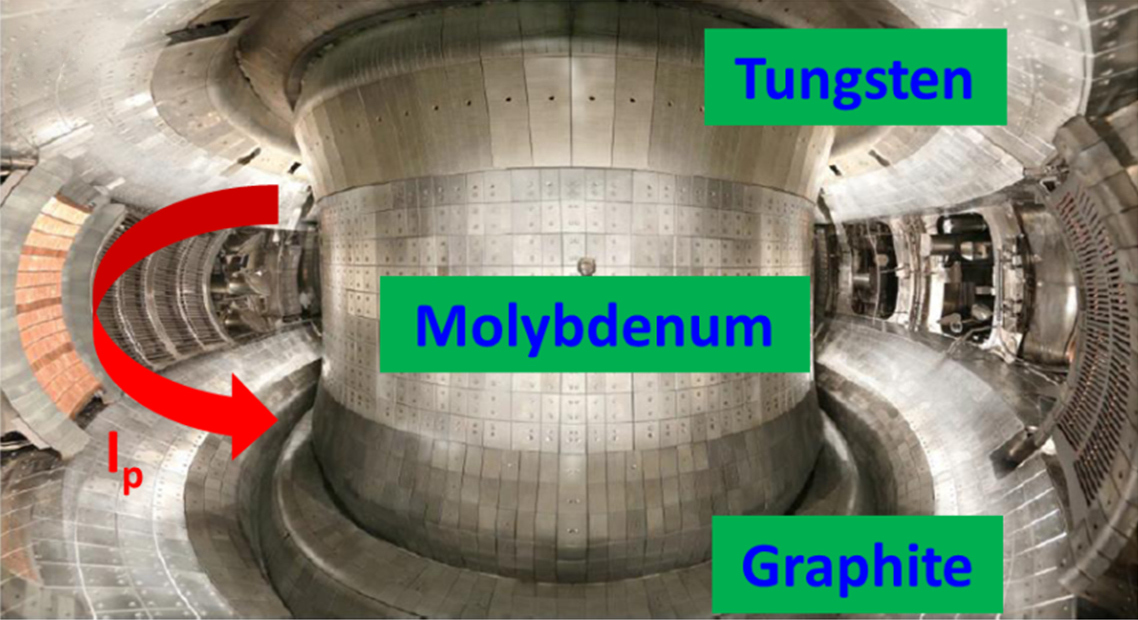
The Experimental Advanced Superconducting Tokamak (EAST), also known as HT-7U (Hefei Tokamak 7 Upgrade), is an experimental superconducting tokamak magnetic fusion energy reactor in Hefei, China. Operated by the Hefei Institutes of Physical Science conducting its experiments for the Chinese Academy of Sciences, EAST began its operations in 2006. EAST is part of the international ITER program after China joined the initiative in 2003 and acts as a testbed for ITER technologies. On January 20, 2025, it sustained plasma for 1066 seconds.
EAST was the first tokamak to utilize superconducting coils to establish both the toroidal and poloidal magnetic fields[citation needed].
EAST followed China's first superconducting tokamak device, dubbed HT-7, built by the Institute of Plasma Physics in partnership with Russia in the early 1990's .[citation needed] It was first proposed in 1996 and approved in 1998. According to a 2003 schedule, buildings and site facilities were to be constructed by 2003. Tokamak assembly was to take place from 2003 through 2005. Construction was completed in March 2006.
According to official reports, the project's budget is CNY ¥300 million (US$37 million), some 1/15 to 1/20 the cost of a comparable reactor built in other countries.
EAST entered its first commissioning phase around March 2006. Shortly after, in-vessel components and diagnostics were assembled.
During initial operation, EAST was able to successfully generate its first plasma on September 28, 2006 in a nearly three second long test, reaching an electric current of 200 kiloamperes. By January 2007, the reactor had progressed to creating a plasma that could last nearly five seconds and generate currents up to 500 kiloamperes.
Three and a half years later, EAST was able to achieve a key milestone on November 7, 2010, achieving an H-mode plasma by low hybrid wave (LHW) injection alone.[better source needed] This was shortly followed by further success, where EAST became the first tokamak to successfully sustain H-Mode plasma for over 30 seconds at ~50 million Kelvin in May 2011.
The second phase of EAST was formally entered through a ribbon-cutting ceremony for the EAST auxiliary heating system project, which was held on November 29, 2011.
Hub AI
Experimental Advanced Superconducting Tokamak AI simulator
(@Experimental Advanced Superconducting Tokamak_simulator)
Experimental Advanced Superconducting Tokamak
The Experimental Advanced Superconducting Tokamak (EAST), also known as HT-7U (Hefei Tokamak 7 Upgrade), is an experimental superconducting tokamak magnetic fusion energy reactor in Hefei, China. Operated by the Hefei Institutes of Physical Science conducting its experiments for the Chinese Academy of Sciences, EAST began its operations in 2006. EAST is part of the international ITER program after China joined the initiative in 2003 and acts as a testbed for ITER technologies. On January 20, 2025, it sustained plasma for 1066 seconds.
EAST was the first tokamak to utilize superconducting coils to establish both the toroidal and poloidal magnetic fields[citation needed].
EAST followed China's first superconducting tokamak device, dubbed HT-7, built by the Institute of Plasma Physics in partnership with Russia in the early 1990's .[citation needed] It was first proposed in 1996 and approved in 1998. According to a 2003 schedule, buildings and site facilities were to be constructed by 2003. Tokamak assembly was to take place from 2003 through 2005. Construction was completed in March 2006.
According to official reports, the project's budget is CNY ¥300 million (US$37 million), some 1/15 to 1/20 the cost of a comparable reactor built in other countries.
EAST entered its first commissioning phase around March 2006. Shortly after, in-vessel components and diagnostics were assembled.
During initial operation, EAST was able to successfully generate its first plasma on September 28, 2006 in a nearly three second long test, reaching an electric current of 200 kiloamperes. By January 2007, the reactor had progressed to creating a plasma that could last nearly five seconds and generate currents up to 500 kiloamperes.
Three and a half years later, EAST was able to achieve a key milestone on November 7, 2010, achieving an H-mode plasma by low hybrid wave (LHW) injection alone.[better source needed] This was shortly followed by further success, where EAST became the first tokamak to successfully sustain H-Mode plasma for over 30 seconds at ~50 million Kelvin in May 2011.
The second phase of EAST was formally entered through a ribbon-cutting ceremony for the EAST auxiliary heating system project, which was held on November 29, 2011.
Recent media