
Recent from talks
Fanny White
Knowledge base stats:
Talk channels stats:
Members stats:
Fanny White
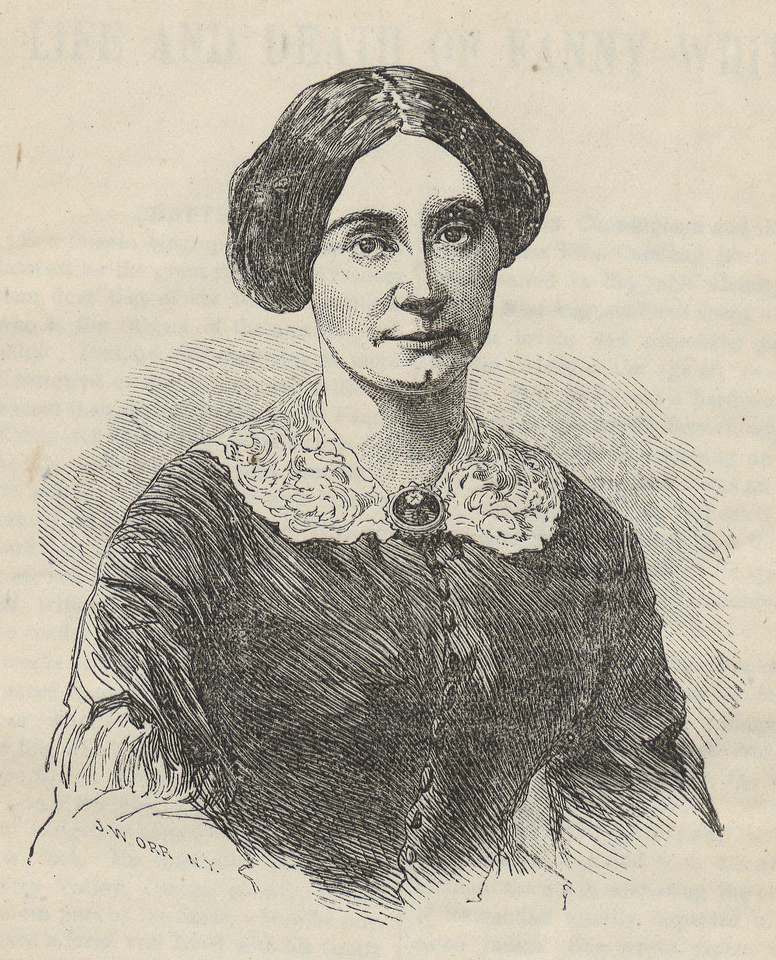
Jane Augusta Blankman (née Funk; March 22, 1823 – October 12, 1860), better known as Fanny White, was one of the most successful courtesans of ante-bellum New York City. Known for her beauty, wit, and business acumen, White accumulated a significant fortune over the course of her career, married a middle-class lawyer in her thirties, and died suddenly a year later. Rumors that White had been poisoned caused a public outcry, which forced an inquest into her death.
Jane Augusta Funk was born on March 22, 1823, in Cherry Valley, Otsego County, New York, the eldest daughter of farmers Jacob and Jane B. Funk. Her mother died when she was just 8 years old, while her father died in 1847. Funk received a basic education and was considered a bookish girl.
At age seventeen or eighteen, Funk "became the victim of a seducer". A "seducer" was an older man who seduced naïve young women, often with a promise of marriage, only to abandon them. "Seduced and abandoned" women were considered ruined and were shunned by middle class Victorian society. Seduction reportedly was the third most common "cause" of prostitution in New York in the early 1800s, after economic motives and "inclination," and was viewed as a social problem by moral reformers.
In the fall of 1842, Funk went to New York City, to her older brother John H. Funk, a house carpenter who had moved there six years earlier. Funk's husband would later accuse John of refusing to help his ruined sister. Funk found menial work at a hotel to try to support herself. In 1843, Funk joined a "house of prostitution at 120 Church street", where she assumed her professional name of Fanny White.
In ante-bellum New York most brothels were owned and controlled by women. The average prostitute entered the business before age 21 and lasted four years. Most practiced the trade part-time; few continued past age 30. Many contracted tuberculosis or syphilis.
Fanny White had the business sense and good luck to beat the odds. A few months after starting work at 120 Church Street, White moved up to Julia Brown's brothel on West Broadway, near the National Theater. By 1847, the 24-year-old White was managing the brothel at 120 Church Street where she used to work.
Also by 1847, she had met lawyer and Tammany Hall brother Daniel Sickles. White's staff considered Sickles to be her "man". Nineteenth century prostitutes commonly had a "man" or a "friend" with whom they developed a romantic attachment. A prostitute's paramour did not normally pay for her attention, although Sickles did give White generous gifts of jewelry and money.
In 1851, White purchased a building at 119 Mercer Street, which she outfitted as a discreet, high-class brothel. "[H]er customers were merchants, Congressmen, and those belonging to the diplomatic corps on visits to New York." White carefully maintained good relations with the police so her establishment would escape official notice.
Hub AI
Fanny White AI simulator
(@Fanny White_simulator)
Fanny White
Jane Augusta Blankman (née Funk; March 22, 1823 – October 12, 1860), better known as Fanny White, was one of the most successful courtesans of ante-bellum New York City. Known for her beauty, wit, and business acumen, White accumulated a significant fortune over the course of her career, married a middle-class lawyer in her thirties, and died suddenly a year later. Rumors that White had been poisoned caused a public outcry, which forced an inquest into her death.
Jane Augusta Funk was born on March 22, 1823, in Cherry Valley, Otsego County, New York, the eldest daughter of farmers Jacob and Jane B. Funk. Her mother died when she was just 8 years old, while her father died in 1847. Funk received a basic education and was considered a bookish girl.
At age seventeen or eighteen, Funk "became the victim of a seducer". A "seducer" was an older man who seduced naïve young women, often with a promise of marriage, only to abandon them. "Seduced and abandoned" women were considered ruined and were shunned by middle class Victorian society. Seduction reportedly was the third most common "cause" of prostitution in New York in the early 1800s, after economic motives and "inclination," and was viewed as a social problem by moral reformers.
In the fall of 1842, Funk went to New York City, to her older brother John H. Funk, a house carpenter who had moved there six years earlier. Funk's husband would later accuse John of refusing to help his ruined sister. Funk found menial work at a hotel to try to support herself. In 1843, Funk joined a "house of prostitution at 120 Church street", where she assumed her professional name of Fanny White.
In ante-bellum New York most brothels were owned and controlled by women. The average prostitute entered the business before age 21 and lasted four years. Most practiced the trade part-time; few continued past age 30. Many contracted tuberculosis or syphilis.
Fanny White had the business sense and good luck to beat the odds. A few months after starting work at 120 Church Street, White moved up to Julia Brown's brothel on West Broadway, near the National Theater. By 1847, the 24-year-old White was managing the brothel at 120 Church Street where she used to work.
Also by 1847, she had met lawyer and Tammany Hall brother Daniel Sickles. White's staff considered Sickles to be her "man". Nineteenth century prostitutes commonly had a "man" or a "friend" with whom they developed a romantic attachment. A prostitute's paramour did not normally pay for her attention, although Sickles did give White generous gifts of jewelry and money.
In 1851, White purchased a building at 119 Mercer Street, which she outfitted as a discreet, high-class brothel. "[H]er customers were merchants, Congressmen, and those belonging to the diplomatic corps on visits to New York." White carefully maintained good relations with the police so her establishment would escape official notice.
Recent media