
Recent from talks
Farid al-Atrash
Knowledge base stats:
Talk channels stats:
Members stats:
Farid al-Atrash
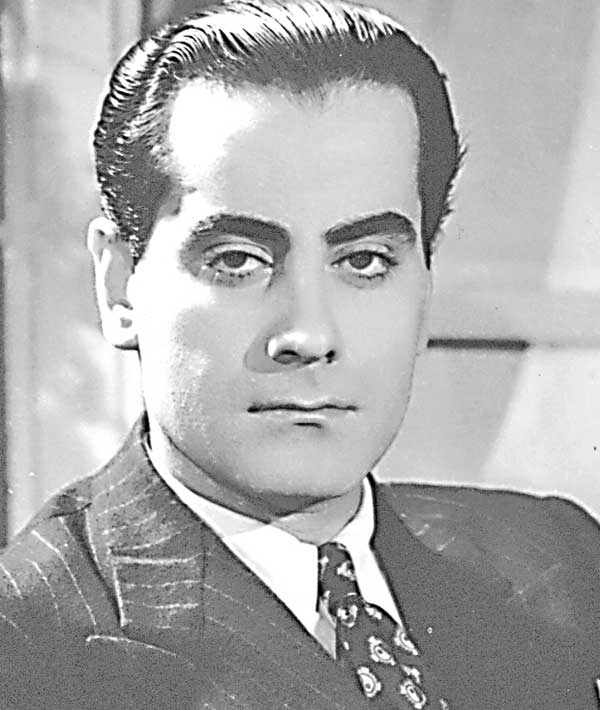
Farid al-Atrash (Arabic: فريد الأطرش; October 19, 1910 – December 26, 1974), also spelled Farid El-Atrache, was a Syrian-Egyptian singer, oudist, composer, and actor. Although born in Syria, he immigrated to Egypt at the age of nine with his mother and siblings, where he eventually became one of the most noted figures in 20th-century Arabic music.
Al-Atrash embarked on a highly successful career spanning more than four decades, recording 500 songs and starring in 31 movies. He is also widely regarded for his virtuosity on the Arabic oud, and has sometimes been given the epithet "King of the Oud" ("Malek al-Oud").
Al-Atrash was born in 1910, in Al-Qurayya, in southern Syria to the Druze princely al-Atrash family who fought the French colonial army. His father was Syrian and his mother was Lebanese.
As a young child, al-Atrash emigrated with his mother and siblings to Egypt, escaping the French occupation.[citation needed] Later, they were naturalized by the Egyptian government as citizens. Farid's mother sang and played the Oud, which spurred his musical interest at an early age.[citation needed]
As a child and young adult, al-Atrash sang within school events. He studied at Egypt's music conservatory and became an apprentice of the famous Egyptian composer Riad Al Sunbati. In the 1930s, al-Atrash began his professional singing career by working for privately owned Egyptian radio stations. Eventually, he was hired as an oud player for the national radio station and later as a singer. His sister, Asmahan, was also a talented singer, and for a while they worked together. In 1941, they starred in their first successful movie Intisar a l-Shabab (انتصار الشباب – The Triumph of Youth, 1941), in which Farid himself composed all the music.
Farid and his sister Amal, along with their brother Fouad, belonged to the religious minority Druze clan of their parents, Princess Alia and Prince Fahd al-Atrash. (Asmar 1998) His sister, Asmahan, evidenced similar musical talent in her teens, becoming one of the most popular female vocalists and cinema stars in the late 1930s and early 1940s. Farid is better known than Asmahan because her career was interrupted by her death in an accident in 1944. Yet he was initially overshadowed by his sister's talent and popularity. With maturity and the forging of a successful performance formula, Farid became famous in his own right. Even today, the reference to the given name "Farid" in the context of Arabic music or popular culture is immediately understood to denote al-Atrash himself.[citation needed]
Al-Atrash had a long and colorful music career lasting four decades. He composed musically diverse songs, and was a highly regarded composer, singer and instrumentalist. Al-Atrash maintained that although some of his music had western musical influence, he always stayed true to Arab music principles. Although the majority of his compositions were romantic love songs, he also composed several patriotic and religious songs.
One of al-Atrash's most unusual and distinguishable traits was his voice.[citation needed] High and mellow at the start of his career, it evolved into a wider, deeper sound.[citation needed]
Hub AI
Farid al-Atrash AI simulator
(@Farid al-Atrash_simulator)
Farid al-Atrash
Farid al-Atrash (Arabic: فريد الأطرش; October 19, 1910 – December 26, 1974), also spelled Farid El-Atrache, was a Syrian-Egyptian singer, oudist, composer, and actor. Although born in Syria, he immigrated to Egypt at the age of nine with his mother and siblings, where he eventually became one of the most noted figures in 20th-century Arabic music.
Al-Atrash embarked on a highly successful career spanning more than four decades, recording 500 songs and starring in 31 movies. He is also widely regarded for his virtuosity on the Arabic oud, and has sometimes been given the epithet "King of the Oud" ("Malek al-Oud").
Al-Atrash was born in 1910, in Al-Qurayya, in southern Syria to the Druze princely al-Atrash family who fought the French colonial army. His father was Syrian and his mother was Lebanese.
As a young child, al-Atrash emigrated with his mother and siblings to Egypt, escaping the French occupation.[citation needed] Later, they were naturalized by the Egyptian government as citizens. Farid's mother sang and played the Oud, which spurred his musical interest at an early age.[citation needed]
As a child and young adult, al-Atrash sang within school events. He studied at Egypt's music conservatory and became an apprentice of the famous Egyptian composer Riad Al Sunbati. In the 1930s, al-Atrash began his professional singing career by working for privately owned Egyptian radio stations. Eventually, he was hired as an oud player for the national radio station and later as a singer. His sister, Asmahan, was also a talented singer, and for a while they worked together. In 1941, they starred in their first successful movie Intisar a l-Shabab (انتصار الشباب – The Triumph of Youth, 1941), in which Farid himself composed all the music.
Farid and his sister Amal, along with their brother Fouad, belonged to the religious minority Druze clan of their parents, Princess Alia and Prince Fahd al-Atrash. (Asmar 1998) His sister, Asmahan, evidenced similar musical talent in her teens, becoming one of the most popular female vocalists and cinema stars in the late 1930s and early 1940s. Farid is better known than Asmahan because her career was interrupted by her death in an accident in 1944. Yet he was initially overshadowed by his sister's talent and popularity. With maturity and the forging of a successful performance formula, Farid became famous in his own right. Even today, the reference to the given name "Farid" in the context of Arabic music or popular culture is immediately understood to denote al-Atrash himself.[citation needed]
Al-Atrash had a long and colorful music career lasting four decades. He composed musically diverse songs, and was a highly regarded composer, singer and instrumentalist. Al-Atrash maintained that although some of his music had western musical influence, he always stayed true to Arab music principles. Although the majority of his compositions were romantic love songs, he also composed several patriotic and religious songs.
One of al-Atrash's most unusual and distinguishable traits was his voice.[citation needed] High and mellow at the start of his career, it evolved into a wider, deeper sound.[citation needed]
Recent media