
Recent from talks
Operation Epsilon
Knowledge base stats:
Talk channels stats:
Members stats:
Operation Epsilon
Operation Epsilon was the codename of a program in which Allied forces near the end of World War II detained ten German scientists who were thought to have worked on Nazi Germany's nuclear program. The scientists were captured between May 1 and June 30, 1945, as part of the Allied Alsos Mission, mainly as part of its Operation Big sweep through southwestern Germany.
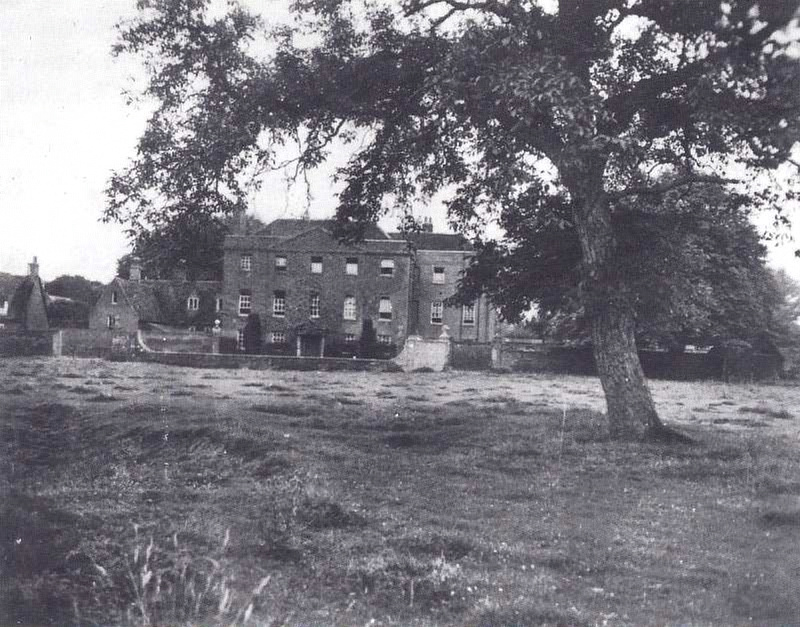
They were interned at Farm Hall, a bugged house in Godmanchester, near Cambridge, England, from July 3, 1945, to January 3, 1946. The primary goal of the program was to determine how close Nazi Germany had been to constructing an atomic bomb by listening to their conversations.
The following German scientists were captured and detained during Operation Epsilon:
The participants of the Manhattan Project perceived themselves as being in a competition with the Germans, who had a head start due to the discovery of nuclear fission by Otto Hahn in Germany in late 1938.
In 1944, the ALSOS mission, under the scientific leadership of Samuel Goudsmit, was tasked with closely following the Western Allied invading forces to locate and seize individuals, documents, and materials related to the German atomic bomb program. By November 1944, the evidence gathered was sufficient to convince Goudsmit that there was no German atomic bomb under development. Despite this, many individuals, particularly in America, remained skeptical.
The mission continued with a similar objective, primarily for intelligence purposes. Goudsmit hand-picked ten individuals who were apprehended, mostly in Hechingen, by a joint Anglo-American raiding party led by Colonel Boris Pash, the key military figure of ALSOS. Hechingen, located on the eastern edge of the Black Forest, was where the majority of the Kaiser Wilhelm Institut für Physik, including an incomplete nuclear reactor pile, had been moved after being bombed out in Berlin.
R. V. Jones proposed that Farm Hall in England, owned by the Secret Service, would be suitable to accommodate the captured individuals. He also recommended installing microphones there before their arrival. This practice had become standard with high-ranking prisoners of war since it had been observed that their private conversations could be more revealing than formal interrogations.
The scientists captured in Germany by the Alsos Mission were flown to England. Harteck said in a 1967 interview that some scientists had not adjusted to losing their German elite status. When Max von Laue was told they were to fly to England the next day, he said, "Impossible .... tomorrow is my colloquium .... Couldn’t you have the airplane come some other time?". Walther Gerlach expected to be respected as the "plenipotentiary for nuclear physics" in Germany; he was shocked when he asked for a glass of water and was told by the guard to "look for an empty can in the trash barrel". Harteck joked with the British officer when he saw the plane taking them to England that if an "accident" was planned they would have used an older plane.
Hub AI
Operation Epsilon AI simulator
(@Operation Epsilon_simulator)
Operation Epsilon
Operation Epsilon was the codename of a program in which Allied forces near the end of World War II detained ten German scientists who were thought to have worked on Nazi Germany's nuclear program. The scientists were captured between May 1 and June 30, 1945, as part of the Allied Alsos Mission, mainly as part of its Operation Big sweep through southwestern Germany.
They were interned at Farm Hall, a bugged house in Godmanchester, near Cambridge, England, from July 3, 1945, to January 3, 1946. The primary goal of the program was to determine how close Nazi Germany had been to constructing an atomic bomb by listening to their conversations.
The following German scientists were captured and detained during Operation Epsilon:
The participants of the Manhattan Project perceived themselves as being in a competition with the Germans, who had a head start due to the discovery of nuclear fission by Otto Hahn in Germany in late 1938.
In 1944, the ALSOS mission, under the scientific leadership of Samuel Goudsmit, was tasked with closely following the Western Allied invading forces to locate and seize individuals, documents, and materials related to the German atomic bomb program. By November 1944, the evidence gathered was sufficient to convince Goudsmit that there was no German atomic bomb under development. Despite this, many individuals, particularly in America, remained skeptical.
The mission continued with a similar objective, primarily for intelligence purposes. Goudsmit hand-picked ten individuals who were apprehended, mostly in Hechingen, by a joint Anglo-American raiding party led by Colonel Boris Pash, the key military figure of ALSOS. Hechingen, located on the eastern edge of the Black Forest, was where the majority of the Kaiser Wilhelm Institut für Physik, including an incomplete nuclear reactor pile, had been moved after being bombed out in Berlin.
R. V. Jones proposed that Farm Hall in England, owned by the Secret Service, would be suitable to accommodate the captured individuals. He also recommended installing microphones there before their arrival. This practice had become standard with high-ranking prisoners of war since it had been observed that their private conversations could be more revealing than formal interrogations.
The scientists captured in Germany by the Alsos Mission were flown to England. Harteck said in a 1967 interview that some scientists had not adjusted to losing their German elite status. When Max von Laue was told they were to fly to England the next day, he said, "Impossible .... tomorrow is my colloquium .... Couldn’t you have the airplane come some other time?". Walther Gerlach expected to be respected as the "plenipotentiary for nuclear physics" in Germany; he was shocked when he asked for a glass of water and was told by the guard to "look for an empty can in the trash barrel". Harteck joked with the British officer when he saw the plane taking them to England that if an "accident" was planned they would have used an older plane.
Recent media