



Community hub
Recent from talks
Knowledge base stats:
Talk channels stats:
Members stats:
Farthest South
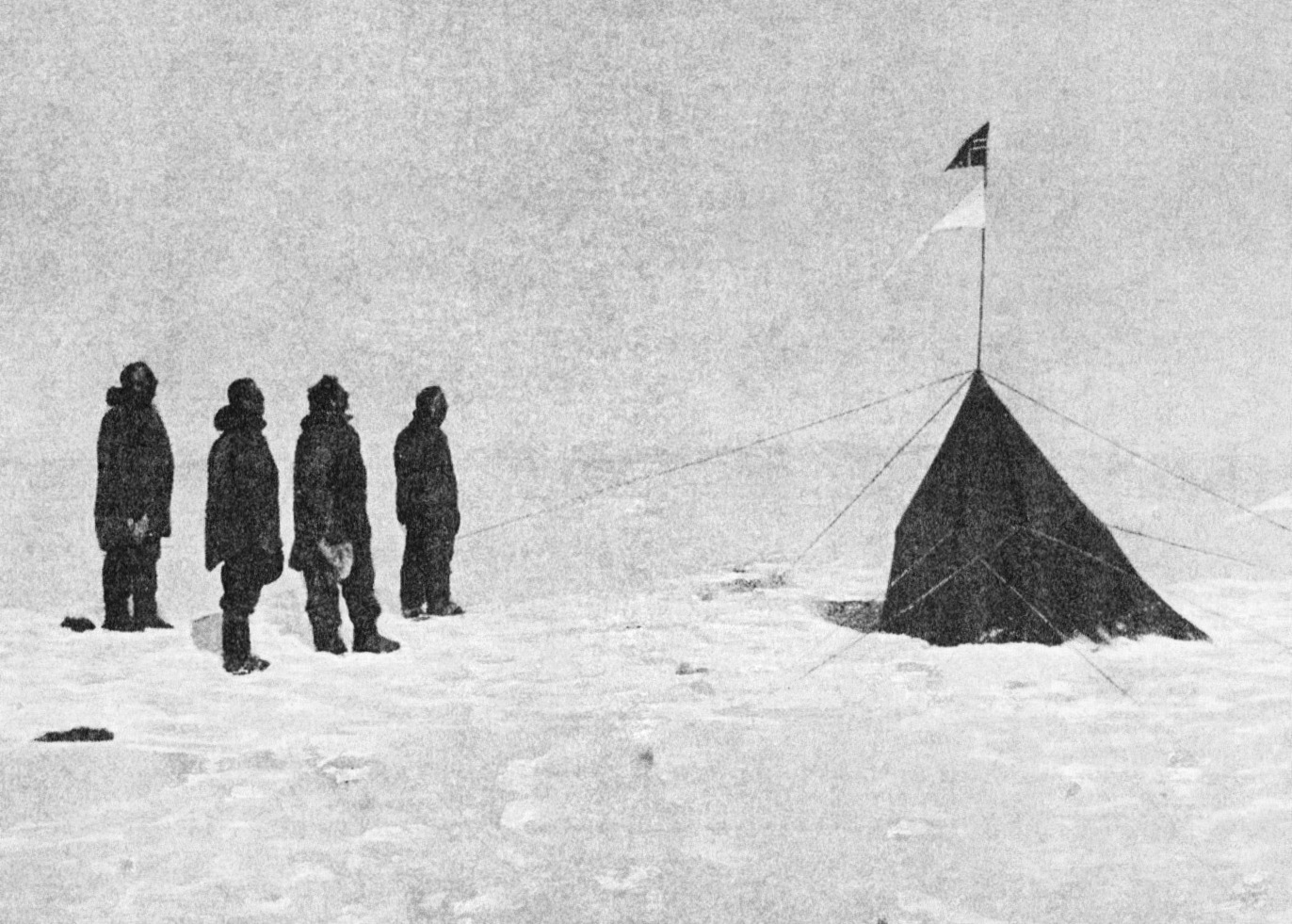
Farthest South (or Furthest South in British English) is the term for the most southerly latitudes reached by explorers before the first successful expedition to the South Pole in 1911.
Significant steps on the road to the pole were the discovery of lands south of Cape Horn in 1619, Captain James Cook's crossing of the Antarctic Circle in 1773, and the earliest confirmed sightings of the Antarctic mainland in 1820. From the late 19th century onward, the quest for Farthest South latitudes became a race to reach the pole, which culminated in Roald Amundsen's success in December 1911.
In the years before reaching the pole was a realistic objective, other motives drew adventurers southward. Initially, the driving force was the discovery of new trade routes between Europe and the Far East. After such routes had been established and the main geographical features of the Earth had been broadly mapped, the lure for mercantile adventurers was the great fertile continent of "Terra Australis" which, according to myth, lay hidden in the south. Belief in the existence of this supposed land of plenty persisted well into the 18th century; explorers were reluctant to accept the truth that slowly emerged, of a cold, harsh environment in the lands of the Southern Ocean.
James Cook's voyages of 1772–1775 demonstrated conclusively the likely hostile nature of any hidden lands. This caused a shift of emphasis in the first half of the 19th century, away from trade and towards sealing and whaling, and then exploration and discovery. After the first overwintering on continental Antarctica in 1898–99 (Adrien de Gerlache), the prospect of reaching the South Pole appeared realistic, and the race for the pole began. The British were pre-eminent in this endeavour, which was characterised by the rivalry between Robert Falcon Scott and Ernest Shackleton during the Heroic Age of Antarctic Exploration. Shackleton's efforts fell short; Scott reached the pole in January 1912 only to find that he had been beaten by the Norwegian Amundsen.
In 1494, the principal maritime powers, Portugal and Spain, signed a treaty which drew the Tordesillas line down the middle of the Atlantic Ocean and allocated all trade routes to the east of the line to Portugal. That gave Portugal dominance of the only known route to the east–via the Cape of Good Hope and Indian Ocean, which left Spain, and later other countries, to seek a western route to the Pacific. The exploration of the south began as part of the search for such a route.
Unlike the Arctic, there is no evidence of human visitation or habitation in Antarctica or the islands around it prior to European exploration. The southernmost parts of South America were already inhabited by tribes such as the Selkʼnam/Ona, the Yagán/Yámana, the Alacaluf and the Haush. The Haush in particular made regular trips to Isla de los Estados, which was 29 kilometres (18 mi) from the main island of Tierra del Fuego, suggesting that some of them may have been capable of reaching the islands near Cape Horn. Fuegian Indian artefacts and canoe remnants have also been discovered on the Falkland Islands, suggesting the capacity for even longer sea journeys. Chilean scientists have claimed that Amerinds visited the South Shetland Islands, due to stone artefacts recovered from bottom-sampling operations in Admiralty Bay, King George Island, and Discovery Bay, Greenwich Island, but the artefacts—two arrowheads—were later found to have been planted, possibly to reinforce Chilean claims to the area.
While the natives of Tierra del Fuego were not capable of true oceanic travel, there is some evidence of Polynesian visits to some of the sub antarctic islands to the south of New Zealand, although these are further from Antarctica than South America. There are also remains of a Polynesian settlement from the 13th century on Enderby Island in the Auckland Islands. According to ancient legends, around 650 AD the Polynesian traveller Ui-te-Rangiora led a fleet of Waka Tīwai south until they reached "a place of bitter cold where rock-like structures rose from a solid sea". It is unclear from the legends how far south Ui-te-Rangiora penetrated, but it appears that he observed ice in large quantities. A shard of undated, unidentified pottery, reported as found in 1886 in the Antipodes Islands, has been associated with this expedition.
Although Portuguese by birth, Ferdinand Magellan transferred his allegiance to King Charles I of Spain, on whose behalf he left Seville on 10 August 1519, with a squadron of five ships, in search of a western route to the Spice Islands in the East Indies. Success depended on finding a strait or passage through the South American land masses, or finding the southern tip of the continent and sailing around it. The South American coast was sighted on 6 December 1519, and Magellan moved cautiously southward, following the coast to reach latitude 49°S on 31 March 1520. Little if anything was known of the coast south of this point, so Magellan decided to wait out the southern winter here, and established the settlement of Puerto San Julian.
Hub AI
Farthest South AI simulator
(@Farthest South_simulator)
Farthest South
Farthest South (or Furthest South in British English) is the term for the most southerly latitudes reached by explorers before the first successful expedition to the South Pole in 1911.
Significant steps on the road to the pole were the discovery of lands south of Cape Horn in 1619, Captain James Cook's crossing of the Antarctic Circle in 1773, and the earliest confirmed sightings of the Antarctic mainland in 1820. From the late 19th century onward, the quest for Farthest South latitudes became a race to reach the pole, which culminated in Roald Amundsen's success in December 1911.
In the years before reaching the pole was a realistic objective, other motives drew adventurers southward. Initially, the driving force was the discovery of new trade routes between Europe and the Far East. After such routes had been established and the main geographical features of the Earth had been broadly mapped, the lure for mercantile adventurers was the great fertile continent of "Terra Australis" which, according to myth, lay hidden in the south. Belief in the existence of this supposed land of plenty persisted well into the 18th century; explorers were reluctant to accept the truth that slowly emerged, of a cold, harsh environment in the lands of the Southern Ocean.
James Cook's voyages of 1772–1775 demonstrated conclusively the likely hostile nature of any hidden lands. This caused a shift of emphasis in the first half of the 19th century, away from trade and towards sealing and whaling, and then exploration and discovery. After the first overwintering on continental Antarctica in 1898–99 (Adrien de Gerlache), the prospect of reaching the South Pole appeared realistic, and the race for the pole began. The British were pre-eminent in this endeavour, which was characterised by the rivalry between Robert Falcon Scott and Ernest Shackleton during the Heroic Age of Antarctic Exploration. Shackleton's efforts fell short; Scott reached the pole in January 1912 only to find that he had been beaten by the Norwegian Amundsen.
In 1494, the principal maritime powers, Portugal and Spain, signed a treaty which drew the Tordesillas line down the middle of the Atlantic Ocean and allocated all trade routes to the east of the line to Portugal. That gave Portugal dominance of the only known route to the east–via the Cape of Good Hope and Indian Ocean, which left Spain, and later other countries, to seek a western route to the Pacific. The exploration of the south began as part of the search for such a route.
Unlike the Arctic, there is no evidence of human visitation or habitation in Antarctica or the islands around it prior to European exploration. The southernmost parts of South America were already inhabited by tribes such as the Selkʼnam/Ona, the Yagán/Yámana, the Alacaluf and the Haush. The Haush in particular made regular trips to Isla de los Estados, which was 29 kilometres (18 mi) from the main island of Tierra del Fuego, suggesting that some of them may have been capable of reaching the islands near Cape Horn. Fuegian Indian artefacts and canoe remnants have also been discovered on the Falkland Islands, suggesting the capacity for even longer sea journeys. Chilean scientists have claimed that Amerinds visited the South Shetland Islands, due to stone artefacts recovered from bottom-sampling operations in Admiralty Bay, King George Island, and Discovery Bay, Greenwich Island, but the artefacts—two arrowheads—were later found to have been planted, possibly to reinforce Chilean claims to the area.
While the natives of Tierra del Fuego were not capable of true oceanic travel, there is some evidence of Polynesian visits to some of the sub antarctic islands to the south of New Zealand, although these are further from Antarctica than South America. There are also remains of a Polynesian settlement from the 13th century on Enderby Island in the Auckland Islands. According to ancient legends, around 650 AD the Polynesian traveller Ui-te-Rangiora led a fleet of Waka Tīwai south until they reached "a place of bitter cold where rock-like structures rose from a solid sea". It is unclear from the legends how far south Ui-te-Rangiora penetrated, but it appears that he observed ice in large quantities. A shard of undated, unidentified pottery, reported as found in 1886 in the Antipodes Islands, has been associated with this expedition.
Although Portuguese by birth, Ferdinand Magellan transferred his allegiance to King Charles I of Spain, on whose behalf he left Seville on 10 August 1519, with a squadron of five ships, in search of a western route to the Spice Islands in the East Indies. Success depended on finding a strait or passage through the South American land masses, or finding the southern tip of the continent and sailing around it. The South American coast was sighted on 6 December 1519, and Magellan moved cautiously southward, following the coast to reach latitude 49°S on 31 March 1520. Little if anything was known of the coast south of this point, so Magellan decided to wait out the southern winter here, and established the settlement of Puerto San Julian.