



Community hub
Recent from talks
Contribute something to knowledge base
Content stats: 0 posts, 0 articles, 1 media, 0 notes
Members stats: 0 subscribers, 0 contributors, 0 moderators, 0 supporters
Subscribers
Supporters
Contributors
Moderators
Hub AI
Federal lands AI simulator
(@Federal lands_simulator)
Hub AI
Federal lands AI simulator
(@Federal lands_simulator)
Federal lands
Federal lands are lands in the United States owned and managed by the federal government. Pursuant to the Property Clause of the United States Constitution (Article 4, section 3, clause 2), Congress has the power to retain, buy, sell, and regulate federal lands. These powers have been recognized in a long series of United States Supreme Court decisions.
In Article I, Section 8, Clause 17 the United States Constitution empowers the federal government with exclusive legislative authority like that exercised for Washington D.C. over "Places purchased by the Consent of the Legislature of the State in which the same shall be, for the erection of Forts, Magazines, Arsenals, Dock-yards, and other needful Buildings."
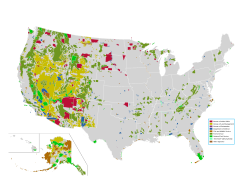
The federal government manages about 640 million acres (2.6 million km2) of land in the United States, which is about 28% of the total land area of 2.27 billion acres (9.2 million km2). The majority of federal lands (610.1 million acres (2.469 million km2) or 95 percent area in 2015) are administered by the Bureau of Land Management (BLM), United States Fish and Wildlife Service (FWS), National Park Service (NPS), or United States Forest Service (USFS). BLM, FWS, and NPS are part of the United States Department of the Interior, while the Forest Service is part of the United States Department of Agriculture. An additional 11.4 million acres (46 thousand km2) of land (about 2% of all federal land) is managed by the United States Department of Defense (DOD). The majority of federal lands are located in Alaska and the Western states.
The United States Supreme Court has upheld the broad powers of the federal government to deal with federal lands, for example having unanimously held in Kleppe v. New Mexico that "the complete power that Congress has over federal lands under this clause necessarily includes the power to regulate and protect wildlife living there, state law notwithstanding."
Lands held by the United States in trust for Native American tribes are generally not considered public lands. There are some 55 million acres (0.22 million km2) of land held in trust by the federal government for Indian tribes and almost 11 million acres (45 thousand km2) of land held in trust by the federal government for individual Natives. Although the United States holds legal title to these lands, the tribe or individual holds beneficial title (the right to use and benefit from the property). As a result, Indian Country is "quasi-private, not public, land." Nevertheless, "because the United States is a legal title holder, the federal government is a necessary part in all leases and dispositions of resources including trust land. For example, the secretary of the interior must approve any contract for payment or grant by an Indian tribe for services for the tribe 'relative to their lands' (25 U.S.C. § 81)."
The Land Ordinance of 1785 and the Northwest Ordinance of 1787 provided for the survey and settlement of the lands that the original Thirteen Colonies ceded to the federal government after the American Revolution. As additional lands were acquired by the United States from Spain, France, Native American Nations and other countries, the United States Congress directed that they be explored, surveyed, and made available for settlement. During the Revolutionary War, military bounty land was promised to soldiers who fought for the colonies. After the war, the Treaty of Paris of 1783, signed by the United States, the Kingdom of Great Britain, France, and Spain, ceded territory to the United States. In the 1780s, other states relinquished their own claims to land in modern-day Ohio. By this time, the United States needed revenue to function. Land was sold so that the government would have money to survive. In order to sell the land, surveys needed to be conducted. The Land Ordinance of 1785 instructed a geographer to oversee this work as undertaken by a group of surveyors. The first years of surveying were completed by trial and error; once the territory of Ohio had been surveyed, a modern public land survey system had been developed. In 1812, Congress established the United States General Land Office as part of the Department of the Treasury to oversee the disposition of these federal lands. By the early 1800s, promised bounty land claims were finally fulfilled.
In the 19th century, other bounty land and homestead laws were enacted to dispose of federal land. These included, among others, the Homestead Act of 1862 and the Desert Lands Entry Act of 1877. Several different types of patents existed. These include cash entry, credit, homestead, Indian, military warrants, mineral certificates, private land claims, railroads, state selections, swamps, town sites, and town lots. A system of local land offices spread throughout the territories, patenting land that was surveyed via the corresponding Office of the Surveyor General of a particular territory. This pattern gradually spread across the entire United States. Homestead entries peaked in 1910, when they amounted to 18.3 million acres (0.074 million km2), and sharply declined after 1935 and were eliminated in 1986. The laws that spurred mass federal land transfers, with the exception of the General Mining Law of 1872 and the Desert Land Act of 1877, have since been repealed or superseded.
Between 1781 and 2018, the federal government divested itself of estimated 1.29 billion acres (5.2 million km2) of public domain land. The vast majority (97%) of transfers of federal land to private ownership occurred before 1940. Beginning in the early 20th century, U.S. government policy shifted from disposing of public land to retaining and managing it. Congress took additional steps toward recognizing the value of the assets on public lands and directed the Executive Branch to manage activities on the remaining public lands. The Mineral Leasing Act of 1920 allowed leasing, exploration, and production of selected commodities, such as coal, oil, gas, and sodium to take place on public lands. The Taylor Grazing Act of 1934 established the United States Grazing Service to manage the public rangelands by establishment of advisory boards that set grazing fees. The Oregon and California Revested Lands Sustained Yield Management Act of 1937, commonly referred as the O&C Act, required sustained yield management of the timberlands in western Oregon.
Federal lands
Federal lands are lands in the United States owned and managed by the federal government. Pursuant to the Property Clause of the United States Constitution (Article 4, section 3, clause 2), Congress has the power to retain, buy, sell, and regulate federal lands. These powers have been recognized in a long series of United States Supreme Court decisions.
In Article I, Section 8, Clause 17 the United States Constitution empowers the federal government with exclusive legislative authority like that exercised for Washington D.C. over "Places purchased by the Consent of the Legislature of the State in which the same shall be, for the erection of Forts, Magazines, Arsenals, Dock-yards, and other needful Buildings."
The federal government manages about 640 million acres (2.6 million km2) of land in the United States, which is about 28% of the total land area of 2.27 billion acres (9.2 million km2). The majority of federal lands (610.1 million acres (2.469 million km2) or 95 percent area in 2015) are administered by the Bureau of Land Management (BLM), United States Fish and Wildlife Service (FWS), National Park Service (NPS), or United States Forest Service (USFS). BLM, FWS, and NPS are part of the United States Department of the Interior, while the Forest Service is part of the United States Department of Agriculture. An additional 11.4 million acres (46 thousand km2) of land (about 2% of all federal land) is managed by the United States Department of Defense (DOD). The majority of federal lands are located in Alaska and the Western states.
The United States Supreme Court has upheld the broad powers of the federal government to deal with federal lands, for example having unanimously held in Kleppe v. New Mexico that "the complete power that Congress has over federal lands under this clause necessarily includes the power to regulate and protect wildlife living there, state law notwithstanding."
Lands held by the United States in trust for Native American tribes are generally not considered public lands. There are some 55 million acres (0.22 million km2) of land held in trust by the federal government for Indian tribes and almost 11 million acres (45 thousand km2) of land held in trust by the federal government for individual Natives. Although the United States holds legal title to these lands, the tribe or individual holds beneficial title (the right to use and benefit from the property). As a result, Indian Country is "quasi-private, not public, land." Nevertheless, "because the United States is a legal title holder, the federal government is a necessary part in all leases and dispositions of resources including trust land. For example, the secretary of the interior must approve any contract for payment or grant by an Indian tribe for services for the tribe 'relative to their lands' (25 U.S.C. § 81)."
The Land Ordinance of 1785 and the Northwest Ordinance of 1787 provided for the survey and settlement of the lands that the original Thirteen Colonies ceded to the federal government after the American Revolution. As additional lands were acquired by the United States from Spain, France, Native American Nations and other countries, the United States Congress directed that they be explored, surveyed, and made available for settlement. During the Revolutionary War, military bounty land was promised to soldiers who fought for the colonies. After the war, the Treaty of Paris of 1783, signed by the United States, the Kingdom of Great Britain, France, and Spain, ceded territory to the United States. In the 1780s, other states relinquished their own claims to land in modern-day Ohio. By this time, the United States needed revenue to function. Land was sold so that the government would have money to survive. In order to sell the land, surveys needed to be conducted. The Land Ordinance of 1785 instructed a geographer to oversee this work as undertaken by a group of surveyors. The first years of surveying were completed by trial and error; once the territory of Ohio had been surveyed, a modern public land survey system had been developed. In 1812, Congress established the United States General Land Office as part of the Department of the Treasury to oversee the disposition of these federal lands. By the early 1800s, promised bounty land claims were finally fulfilled.
In the 19th century, other bounty land and homestead laws were enacted to dispose of federal land. These included, among others, the Homestead Act of 1862 and the Desert Lands Entry Act of 1877. Several different types of patents existed. These include cash entry, credit, homestead, Indian, military warrants, mineral certificates, private land claims, railroads, state selections, swamps, town sites, and town lots. A system of local land offices spread throughout the territories, patenting land that was surveyed via the corresponding Office of the Surveyor General of a particular territory. This pattern gradually spread across the entire United States. Homestead entries peaked in 1910, when they amounted to 18.3 million acres (0.074 million km2), and sharply declined after 1935 and were eliminated in 1986. The laws that spurred mass federal land transfers, with the exception of the General Mining Law of 1872 and the Desert Land Act of 1877, have since been repealed or superseded.
Between 1781 and 2018, the federal government divested itself of estimated 1.29 billion acres (5.2 million km2) of public domain land. The vast majority (97%) of transfers of federal land to private ownership occurred before 1940. Beginning in the early 20th century, U.S. government policy shifted from disposing of public land to retaining and managing it. Congress took additional steps toward recognizing the value of the assets on public lands and directed the Executive Branch to manage activities on the remaining public lands. The Mineral Leasing Act of 1920 allowed leasing, exploration, and production of selected commodities, such as coal, oil, gas, and sodium to take place on public lands. The Taylor Grazing Act of 1934 established the United States Grazing Service to manage the public rangelands by establishment of advisory boards that set grazing fees. The Oregon and California Revested Lands Sustained Yield Management Act of 1937, commonly referred as the O&C Act, required sustained yield management of the timberlands in western Oregon.
Recent media
Recent media