
Recent from talks
Federico García Lorca
Knowledge base stats:
Talk channels stats:
Members stats:
Federico García Lorca
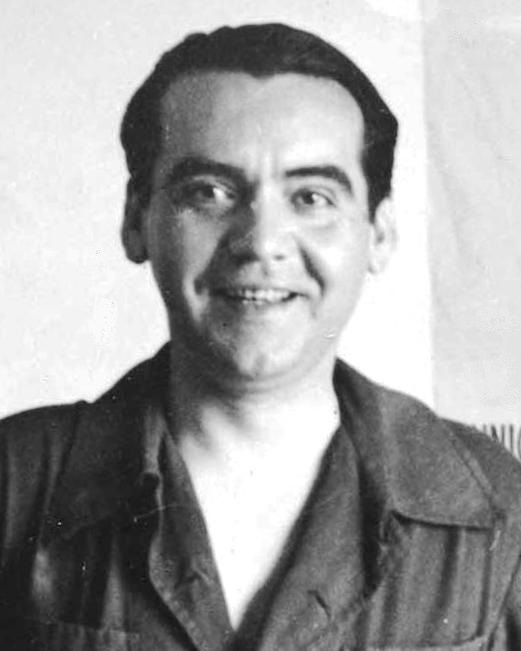
Federico del Sagrado Corazón de Jesús García Lorca (5 June 1898 – 19 August 1936) was a Spanish poet, playwright, and theatre director. García Lorca achieved international recognition as an emblematic member of the Generation of '27, a group consisting mostly of poets who introduced the tenets of European movements (such as symbolism, futurism, and surrealism) into Spanish literature.
He initially rose to fame with Romancero gitano (Gypsy Ballads, 1928), a book of poems depicting life in his native Andalusia. His poetry incorporated traditional Andalusian motifs and avant-garde styles. After a sojourn in New York City from 1929 to 1930—documented posthumously in Poeta en Nueva York (Poet in New York, 1942)—he returned to Spain and wrote his best-known plays, Blood Wedding (1932), Yerma (1934), and The House of Bernarda Alba (1936).
García Lorca was homosexual and suffered from depression after the end of his relationship with sculptor Emilio Aladrén Perojo. García Lorca also had a close emotional relationship for a time with Salvador Dalí, who said he rejected García Lorca's sexual advances.
García Lorca was assassinated by Nationalist forces at the beginning of the Spanish Civil War. His remains have never been found, and the motive remains in dispute; some theorize he was targeted for being gay, a socialist, or both, while others view a personal dispute as the more likely cause.
Federico del Sagrado Corazón de Jesús García Lorca was born on 5 June 1898, in Fuente Vaqueros, a small town 17 km west of Granada, southern Spain. His father, Federico García Rodríguez, was a prosperous landowner with a farm in the fertile vega (valley) near Granada and a comfortable villa in the heart of the city. García Rodríguez saw his fortunes rise with a boom in the sugar industry. García Lorca's mother, Vicenta Lorca Romero, was a teacher. In 1905, the family moved from Fuente Vaqueros to the nearby town of Valderrubio (at the time named Asquerosa). In 1909, when the boy was 11, his family moved to the regional capital of Granada, where there was the equivalent of a high school; their best-known residence there is the summer home called the Huerta de San Vicente, on what were then the outskirts of the city of Granada. For the rest of his life, he maintained the importance of living close to the natural world, praising his upbringing in the country. All three of these homes—Fuente Vaqueros, Valderrubio, and Huerta de San Vicente—are today museums.
In 1915, after graduating from secondary school, García Lorca attended the University of Granada. During this time his studies included law, literature, and composition. Throughout his adolescence, he felt a deeper affinity for music than for literature. When he was 11 years old, he began six years of piano lessons with Antonio Segura Mesa, a harmony teacher in the local conservatory and a composer. It was Segura who inspired Federico's dream of a career in music. His first artistic inspirations arose from scores by Claude Debussy, Frédéric Chopin and Ludwig van Beethoven. Later, with his friendship with composer Manuel de Falla, Spanish folklore became his muse. García Lorca did not turn to writing until Segura's death in 1916, and his first prose works, such as "Nocturne", "Ballade", and "Sonata", drew on musical forms. His milieu of young intellectuals gathered in El Rinconcillo at the Café Alameda in Granada. In 1916 and 1917, García Lorca travelled throughout Castile, León, and Galicia, in northern Spain, with a professor of his university, who also encouraged him to write his first book, Impresiones y paisajes (Impressions and Landscapes—printed at his father's expense in 1918). Fernando de los Rios persuaded García Lorca's parents to let him move to the progressive, Oxbridge-inspired Residencia de Estudiantes in Madrid in 1919, while nominally attending classes at the University of Madrid.
At the Residencia de Estudiantes in Madrid, García Lorca befriended Luis Buñuel and Salvador Dalí and many other creative artists who were, or would become, influential across Spain. He was taken under the wing of the poet Juan Ramón Jiménez, becoming close to playwright Eduardo Marquina and Gregorio Martínez Sierra, the Director of Madrid's Teatro Eslava.
In 1919–20, at Sierra's invitation, he wrote and staged his first play, The Butterfly's Evil Spell. It was a verse play dramatising the impossible love between a cockroach and a butterfly, with a supporting cast of other insects; it was laughed off the stage by an unappreciative public after only four performances and influenced García Lorca's attitude to the theatre-going public for the rest of his career. He would later claim that Mariana Pineda, written in 1927, was, in fact, his first play. During his time at the Residencia de Estudiantes, he pursued degrees in law and philosophy, though he had more interest in writing than in study.
Hub AI
Federico García Lorca AI simulator
(@Federico García Lorca_simulator)
Federico García Lorca
Federico del Sagrado Corazón de Jesús García Lorca (5 June 1898 – 19 August 1936) was a Spanish poet, playwright, and theatre director. García Lorca achieved international recognition as an emblematic member of the Generation of '27, a group consisting mostly of poets who introduced the tenets of European movements (such as symbolism, futurism, and surrealism) into Spanish literature.
He initially rose to fame with Romancero gitano (Gypsy Ballads, 1928), a book of poems depicting life in his native Andalusia. His poetry incorporated traditional Andalusian motifs and avant-garde styles. After a sojourn in New York City from 1929 to 1930—documented posthumously in Poeta en Nueva York (Poet in New York, 1942)—he returned to Spain and wrote his best-known plays, Blood Wedding (1932), Yerma (1934), and The House of Bernarda Alba (1936).
García Lorca was homosexual and suffered from depression after the end of his relationship with sculptor Emilio Aladrén Perojo. García Lorca also had a close emotional relationship for a time with Salvador Dalí, who said he rejected García Lorca's sexual advances.
García Lorca was assassinated by Nationalist forces at the beginning of the Spanish Civil War. His remains have never been found, and the motive remains in dispute; some theorize he was targeted for being gay, a socialist, or both, while others view a personal dispute as the more likely cause.
Federico del Sagrado Corazón de Jesús García Lorca was born on 5 June 1898, in Fuente Vaqueros, a small town 17 km west of Granada, southern Spain. His father, Federico García Rodríguez, was a prosperous landowner with a farm in the fertile vega (valley) near Granada and a comfortable villa in the heart of the city. García Rodríguez saw his fortunes rise with a boom in the sugar industry. García Lorca's mother, Vicenta Lorca Romero, was a teacher. In 1905, the family moved from Fuente Vaqueros to the nearby town of Valderrubio (at the time named Asquerosa). In 1909, when the boy was 11, his family moved to the regional capital of Granada, where there was the equivalent of a high school; their best-known residence there is the summer home called the Huerta de San Vicente, on what were then the outskirts of the city of Granada. For the rest of his life, he maintained the importance of living close to the natural world, praising his upbringing in the country. All three of these homes—Fuente Vaqueros, Valderrubio, and Huerta de San Vicente—are today museums.
In 1915, after graduating from secondary school, García Lorca attended the University of Granada. During this time his studies included law, literature, and composition. Throughout his adolescence, he felt a deeper affinity for music than for literature. When he was 11 years old, he began six years of piano lessons with Antonio Segura Mesa, a harmony teacher in the local conservatory and a composer. It was Segura who inspired Federico's dream of a career in music. His first artistic inspirations arose from scores by Claude Debussy, Frédéric Chopin and Ludwig van Beethoven. Later, with his friendship with composer Manuel de Falla, Spanish folklore became his muse. García Lorca did not turn to writing until Segura's death in 1916, and his first prose works, such as "Nocturne", "Ballade", and "Sonata", drew on musical forms. His milieu of young intellectuals gathered in El Rinconcillo at the Café Alameda in Granada. In 1916 and 1917, García Lorca travelled throughout Castile, León, and Galicia, in northern Spain, with a professor of his university, who also encouraged him to write his first book, Impresiones y paisajes (Impressions and Landscapes—printed at his father's expense in 1918). Fernando de los Rios persuaded García Lorca's parents to let him move to the progressive, Oxbridge-inspired Residencia de Estudiantes in Madrid in 1919, while nominally attending classes at the University of Madrid.
At the Residencia de Estudiantes in Madrid, García Lorca befriended Luis Buñuel and Salvador Dalí and many other creative artists who were, or would become, influential across Spain. He was taken under the wing of the poet Juan Ramón Jiménez, becoming close to playwright Eduardo Marquina and Gregorio Martínez Sierra, the Director of Madrid's Teatro Eslava.
In 1919–20, at Sierra's invitation, he wrote and staged his first play, The Butterfly's Evil Spell. It was a verse play dramatising the impossible love between a cockroach and a butterfly, with a supporting cast of other insects; it was laughed off the stage by an unappreciative public after only four performances and influenced García Lorca's attitude to the theatre-going public for the rest of his career. He would later claim that Mariana Pineda, written in 1927, was, in fact, his first play. During his time at the Residencia de Estudiantes, he pursued degrees in law and philosophy, though he had more interest in writing than in study.
Recent media