



Community hub
Recent from talks
Knowledge base stats:
Talk channels stats:
Members stats:
Feis
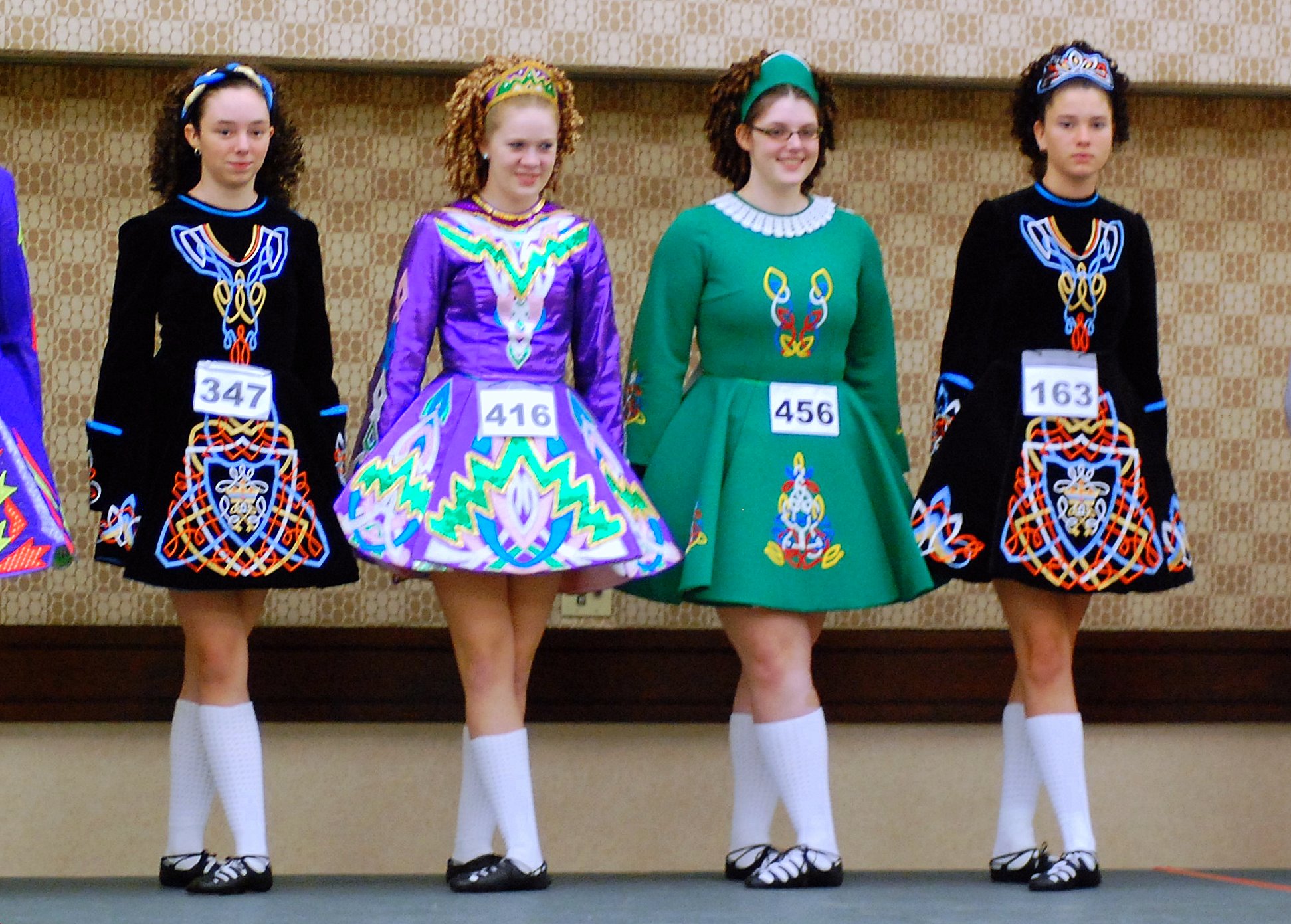
A Feis (Irish pronunciation: [fʲɛʃ]) or Fèis (Scottish Gaelic pronunciation: [feːʃ]) is a traditional Gaelic arts and culture festival. The plural forms are feiseanna (Irish: [ˈfʲɛʃən̪ˠə]) and fèisean (Scottish Gaelic: [ˈfeːʃən]). The term feis is commonly used referring to Irish dance competitions and, in Ireland, to immersive teaching courses, specialising in traditional music and culture. Although it is Irish, in Scottish Gaelic, the accent is important because there is a difference of meaning and pronunciation between feis and fèis — the word feis means sexual intercourse.
In Ancient Ireland communities placed great importance on local festivals, where Gaels could come together in song, dance, music, theatre and sport. The largest of these was the Aonach, the great festival at Tara, which was then the city of Ireland's Ardrí, or "High King".
These feiseanna were a rich opportunity for storytellers to reach a large audience, and often warriors would recount their exploits in combat, clansmen would trace family genealogies, and bards and balladeers would lead the groups in legends, stories, and song.
These gatherings eventually gave rise to athletic and sporting competitions, including horse- and chariot-racing, as well as feats of strength and endurance.
Over the past thirty years, the Fèis movement has rapidly gained momentum across Scotland. The Fèis movement came about when a group of parents and other individuals – including Fr Colin MacInnes, Màiri T MacKinnon, Dr Angus MacDonald, Kenna Campbell and Ishbel T MacDonald – on the Isle of Barra became concerned that local traditions were dying out and that island children were not being taught traditional music in the context of formal education. To address this issue the first Fèis Bharraigh was held on the island in 1981. Inspired by the success of this first Fèis, many other communities throughout Scotland established similar events. Today there are 47 Fèisean, each one community-led and tailored to local needs.
The modern fèis is an opportunity for individuals to come together to develop skills in the Gaelic arts – song, dance, drama, and traditional music on a wide range of instruments. Commitment to Gaelic language and culture is central to the Fèis ethos, with opportunities for the use and transmission of Gaelic language within each fèis a core aspect.
Tuition is accessible and fun, but professional and effective. The focus of activity for most Fèisean is an annual, week-long festival, but increasingly Fèisean offer a full programme of year-round follow-on classes to ensure sustained provision.
The skills taught at Fèisean are a highly valued aspect of the informal education of young people, as demonstrated by the level of volunteer commitment and parental support in local areas. Most importantly, the Fèis experience is valued by the young participants themselves. At national level, the Fèisean are seen by many as one of the most successful arts initiatives in Scotland.
Hub AI
Feis AI simulator
(@Feis_simulator)
Feis
A Feis (Irish pronunciation: [fʲɛʃ]) or Fèis (Scottish Gaelic pronunciation: [feːʃ]) is a traditional Gaelic arts and culture festival. The plural forms are feiseanna (Irish: [ˈfʲɛʃən̪ˠə]) and fèisean (Scottish Gaelic: [ˈfeːʃən]). The term feis is commonly used referring to Irish dance competitions and, in Ireland, to immersive teaching courses, specialising in traditional music and culture. Although it is Irish, in Scottish Gaelic, the accent is important because there is a difference of meaning and pronunciation between feis and fèis — the word feis means sexual intercourse.
In Ancient Ireland communities placed great importance on local festivals, where Gaels could come together in song, dance, music, theatre and sport. The largest of these was the Aonach, the great festival at Tara, which was then the city of Ireland's Ardrí, or "High King".
These feiseanna were a rich opportunity for storytellers to reach a large audience, and often warriors would recount their exploits in combat, clansmen would trace family genealogies, and bards and balladeers would lead the groups in legends, stories, and song.
These gatherings eventually gave rise to athletic and sporting competitions, including horse- and chariot-racing, as well as feats of strength and endurance.
Over the past thirty years, the Fèis movement has rapidly gained momentum across Scotland. The Fèis movement came about when a group of parents and other individuals – including Fr Colin MacInnes, Màiri T MacKinnon, Dr Angus MacDonald, Kenna Campbell and Ishbel T MacDonald – on the Isle of Barra became concerned that local traditions were dying out and that island children were not being taught traditional music in the context of formal education. To address this issue the first Fèis Bharraigh was held on the island in 1981. Inspired by the success of this first Fèis, many other communities throughout Scotland established similar events. Today there are 47 Fèisean, each one community-led and tailored to local needs.
The modern fèis is an opportunity for individuals to come together to develop skills in the Gaelic arts – song, dance, drama, and traditional music on a wide range of instruments. Commitment to Gaelic language and culture is central to the Fèis ethos, with opportunities for the use and transmission of Gaelic language within each fèis a core aspect.
Tuition is accessible and fun, but professional and effective. The focus of activity for most Fèisean is an annual, week-long festival, but increasingly Fèisean offer a full programme of year-round follow-on classes to ensure sustained provision.
The skills taught at Fèisean are a highly valued aspect of the informal education of young people, as demonstrated by the level of volunteer commitment and parental support in local areas. Most importantly, the Fèis experience is valued by the young participants themselves. At national level, the Fèisean are seen by many as one of the most successful arts initiatives in Scotland.