


Community hub
Recent from talks
Contribute something to knowledge base
Content stats: 0 posts, 0 articles, 1 media, 0 notes
Members stats: 0 subscribers, 0 contributors, 0 moderators, 0 supporters
Subscribers
Supporters
Contributors
Moderators
Hub AI
Feodor Chaliapin AI simulator
(@Feodor Chaliapin_simulator)
Hub AI
Feodor Chaliapin AI simulator
(@Feodor Chaliapin_simulator)
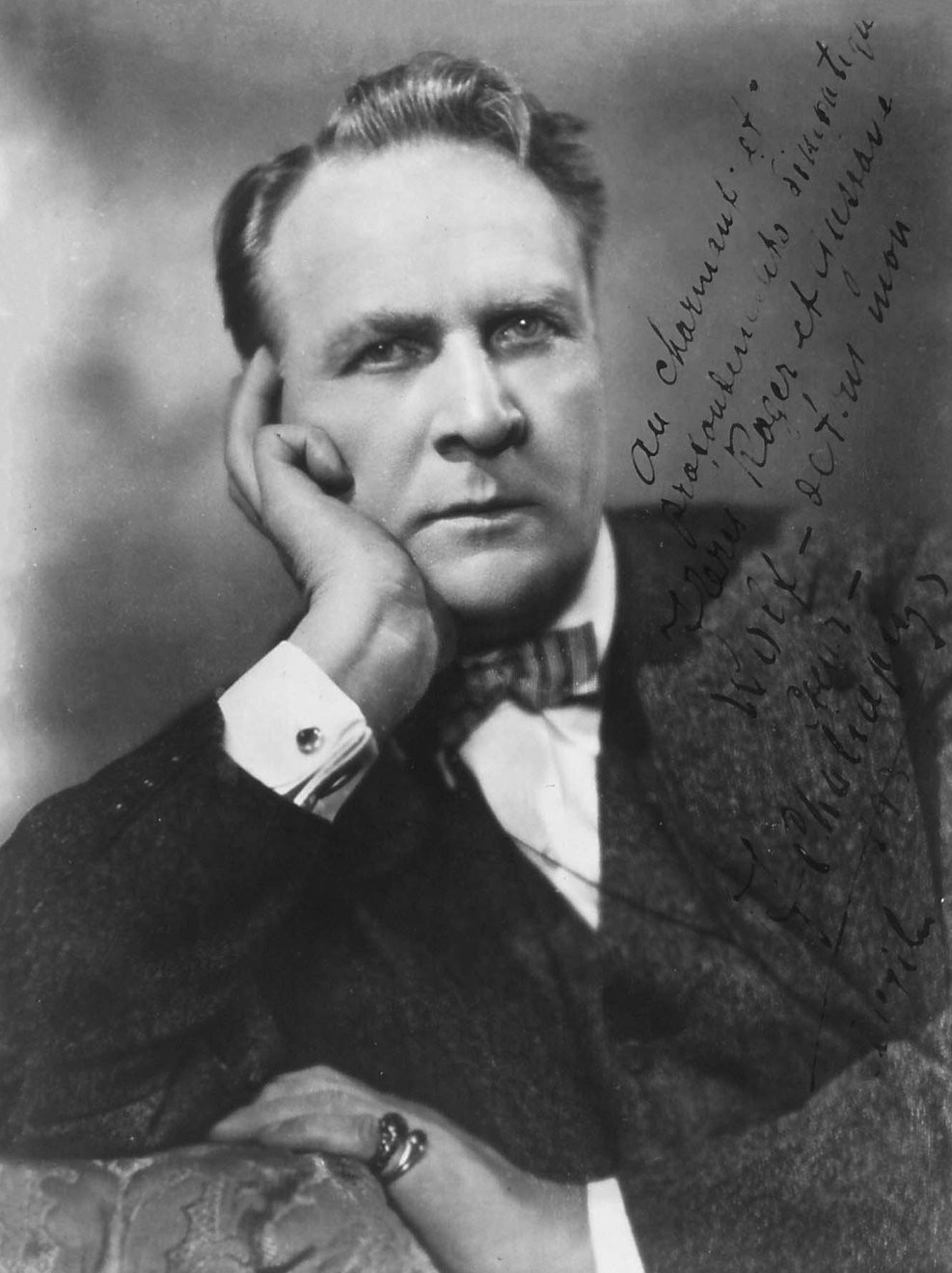
Feodor Chaliapin
Feodor Ivanovich Chaliapin (Russian: Фёдор Ива́нович Шаля́пин, romanized: Fyodor Ivanovich Shalyapin, IPA: [ˈfʲɵdər ɨˈvanəvʲɪtɕ ʂɐˈlʲapʲɪn]; 13 February [O.S. 1 February] 1873 – 12 April 1938) was a Russian opera singer. Possessing a deep and expressive bass voice, he enjoyed an important international career at major opera houses and is often credited with establishing the tradition of naturalistic acting in his chosen art form.
He himself spelled his surname, French-style, Chaliapine in the West, and his name even appeared on early His Master's Voice 78s as Theodore Chaliapine. In English texts, his given name is most usually rendered as Feodor or Fyodor, and his surname is most usually seen as Chaliapin. However, in the Russian pronunciation the initial consonant Ш is pronounced like sh in shop, not as ch in chop, and in reference books the surname is sometimes given a strict romanization as Shalyapin. This spelling also better reflects the fact that the name is pronounced with three syllables (Sha-LYA-pin), not four.
Feodor Chaliapin was born into a peasant family on 1 February (OS), 1873 in Kazan, in the wing of merchant Lisitzin's house on Rybnoryadskaya Street (now Pushkin Street) 10. This wing no longer exists, but the house with the yard where the wing was situated is still there. The next day, Candlemas (The Meeting of Our Lord), he was baptized in Epiphany (Bogoyavlenskaya) Church on Bolshaya Prolomnaya street (now Bauman Street). His godparents were his neighbors: the shoemaker Nikolay Tonkov and Ludmila Kharitonova, a 12-year-old girl. The dwelling was expensive for his father, Ivan Yakovlevich, who served as a clerk in the Zemskaya Uprava (Zemstvo District Council), and in 1878 the Chaliapin family moved to the village of Ametyevo (also Ometyevo, or the Ometyev settlements, now a settlement within Kazan) behind the area of Sukonnaya Sloboda, and settled in a small house.
His vocal teacher was Dmitri Usatov. Chaliapin began his career at Tbilisi and at the Imperial Opera in Saint Petersburg in 1894. He was then invited to sing at the Mamontov Private Opera (1896–1899); he first appeared there as Mephistopheles in Gounod's Faust, in which role he achieved considerable success.
At Mamontov Chaliapin met Sergei Rachmaninoff, who was serving as an assistant conductor there and with whom he remained friends for life. Rachmaninoff taught him much about musicianship, including how to analyze a music score, and insisted that Chaliapin learn not only his own roles but also all the other roles in the operas in which he was scheduled to appear. With Rachmaninoff he learned the title role of Mussorgsky's Boris Godunov, which became his signature character. Chaliapin returned the favor by showing Rachmaninoff how he built each of his interpretations around a culminating moment or "point". Regardless of where that point was or at which dynamic within that piece, the performer had to know how to approach it with absolute calculation and precision; otherwise, the whole construction of the piece could crumble and the piece could become disjointed. Rachmaninoff put this approach to considerable use when he became a full-time concert-pianist after World War I.
On the strength of his Mamontov appearances, the Bolshoi Theatre in Moscow engaged Chaliapin, and he appeared there regularly from 1899 until 1914. During the First World War, Chaliapin also appeared regularly at the Zimin Private Opera in Moscow. In addition, from 1901, Chaliapin began touring in the West, making a sensational debut at La Scala that year as the devil in a production of Boito's Mefistofele, under the baton of one of the 20th century's most dynamic opera conductors, Arturo Toscanini. At the end of his career, Toscanini observed that the Russian bass was the greatest operatic talent with whom he had ever worked. The singer's Metropolitan Opera debut in the 1907 season was disappointing due to the unprecedented frankness of his stage acting; but he returned to the Met in 1921 and sang there with immense success for eight seasons, New York's audiences having grown more broad-minded since 1907. In 1913 Chaliapin was introduced to London and Paris by the brilliant entrepreneur Sergei Diaghilev (1872-1929), at which point he began giving well-received solo recitals in which he sang traditional Russian folk-songs as well as more serious fare. Such folk songs included "Along Peterskaya" (which he recorded with a British-based Russian folk-instrument orchestra) and the song which he made famous throughout the world: "The Song of the Volga Boatmen". In 1925, when he performed in New York, his piano accompanist was a young Harry Lubin, later to become a composer of music for the television series The Outer Limits.
Chaliapin toured Australia in 1926, giving a series of recitals which were highly acclaimed. Privately, Chaliapin's personal affairs were in a state of disarray as a consequence of the Russian Revolution of 1917. At first he was treated as a revered artist of the newly emerged Soviet Russia. However, the harsh realities of everyday life under the new regime, and the unstable climate which followed because of the ensuing Civil War, combined with, reportedly, the encroachment on some of his property by the Communist authorities, caused him to remain perpetually outside Russia after 1921. Chaliapin initially moved to Finland and later lived in France. Cosmopolitan Paris, with its significant Russian émigré population, became his base, and ultimately, the city of his death. He was renowned for his larger-than-life carousing during this period, but he never sacrificed his dedication to his art.
Chaliapin's attachment to Paris did not prevent him from pursuing an international operatic and concert career in England, the United States, and further afield. In May 1931 he appeared in the Russian Season directed by Sir Thomas Beecham at London's Lyceum Theatre. His most famous part was the title role of Boris Godunov (excerpts of which he recorded 1929–31 and earlier). He is remembered also for his interpretations of Ivan the Terrible in Rimsky-Korsakov's The Maid of Pskov and Salieri in Mozart and Salieri, Mephistopheles in Gounod's Faust, Don Quixote in Massenet's Don Quichotte, and King Philip in Verdi's Don Carlos.
Feodor Chaliapin
Feodor Ivanovich Chaliapin (Russian: Фёдор Ива́нович Шаля́пин, romanized: Fyodor Ivanovich Shalyapin, IPA: [ˈfʲɵdər ɨˈvanəvʲɪtɕ ʂɐˈlʲapʲɪn]; 13 February [O.S. 1 February] 1873 – 12 April 1938) was a Russian opera singer. Possessing a deep and expressive bass voice, he enjoyed an important international career at major opera houses and is often credited with establishing the tradition of naturalistic acting in his chosen art form.
He himself spelled his surname, French-style, Chaliapine in the West, and his name even appeared on early His Master's Voice 78s as Theodore Chaliapine. In English texts, his given name is most usually rendered as Feodor or Fyodor, and his surname is most usually seen as Chaliapin. However, in the Russian pronunciation the initial consonant Ш is pronounced like sh in shop, not as ch in chop, and in reference books the surname is sometimes given a strict romanization as Shalyapin. This spelling also better reflects the fact that the name is pronounced with three syllables (Sha-LYA-pin), not four.
Feodor Chaliapin was born into a peasant family on 1 February (OS), 1873 in Kazan, in the wing of merchant Lisitzin's house on Rybnoryadskaya Street (now Pushkin Street) 10. This wing no longer exists, but the house with the yard where the wing was situated is still there. The next day, Candlemas (The Meeting of Our Lord), he was baptized in Epiphany (Bogoyavlenskaya) Church on Bolshaya Prolomnaya street (now Bauman Street). His godparents were his neighbors: the shoemaker Nikolay Tonkov and Ludmila Kharitonova, a 12-year-old girl. The dwelling was expensive for his father, Ivan Yakovlevich, who served as a clerk in the Zemskaya Uprava (Zemstvo District Council), and in 1878 the Chaliapin family moved to the village of Ametyevo (also Ometyevo, or the Ometyev settlements, now a settlement within Kazan) behind the area of Sukonnaya Sloboda, and settled in a small house.
His vocal teacher was Dmitri Usatov. Chaliapin began his career at Tbilisi and at the Imperial Opera in Saint Petersburg in 1894. He was then invited to sing at the Mamontov Private Opera (1896–1899); he first appeared there as Mephistopheles in Gounod's Faust, in which role he achieved considerable success.
At Mamontov Chaliapin met Sergei Rachmaninoff, who was serving as an assistant conductor there and with whom he remained friends for life. Rachmaninoff taught him much about musicianship, including how to analyze a music score, and insisted that Chaliapin learn not only his own roles but also all the other roles in the operas in which he was scheduled to appear. With Rachmaninoff he learned the title role of Mussorgsky's Boris Godunov, which became his signature character. Chaliapin returned the favor by showing Rachmaninoff how he built each of his interpretations around a culminating moment or "point". Regardless of where that point was or at which dynamic within that piece, the performer had to know how to approach it with absolute calculation and precision; otherwise, the whole construction of the piece could crumble and the piece could become disjointed. Rachmaninoff put this approach to considerable use when he became a full-time concert-pianist after World War I.
On the strength of his Mamontov appearances, the Bolshoi Theatre in Moscow engaged Chaliapin, and he appeared there regularly from 1899 until 1914. During the First World War, Chaliapin also appeared regularly at the Zimin Private Opera in Moscow. In addition, from 1901, Chaliapin began touring in the West, making a sensational debut at La Scala that year as the devil in a production of Boito's Mefistofele, under the baton of one of the 20th century's most dynamic opera conductors, Arturo Toscanini. At the end of his career, Toscanini observed that the Russian bass was the greatest operatic talent with whom he had ever worked. The singer's Metropolitan Opera debut in the 1907 season was disappointing due to the unprecedented frankness of his stage acting; but he returned to the Met in 1921 and sang there with immense success for eight seasons, New York's audiences having grown more broad-minded since 1907. In 1913 Chaliapin was introduced to London and Paris by the brilliant entrepreneur Sergei Diaghilev (1872-1929), at which point he began giving well-received solo recitals in which he sang traditional Russian folk-songs as well as more serious fare. Such folk songs included "Along Peterskaya" (which he recorded with a British-based Russian folk-instrument orchestra) and the song which he made famous throughout the world: "The Song of the Volga Boatmen". In 1925, when he performed in New York, his piano accompanist was a young Harry Lubin, later to become a composer of music for the television series The Outer Limits.
Chaliapin toured Australia in 1926, giving a series of recitals which were highly acclaimed. Privately, Chaliapin's personal affairs were in a state of disarray as a consequence of the Russian Revolution of 1917. At first he was treated as a revered artist of the newly emerged Soviet Russia. However, the harsh realities of everyday life under the new regime, and the unstable climate which followed because of the ensuing Civil War, combined with, reportedly, the encroachment on some of his property by the Communist authorities, caused him to remain perpetually outside Russia after 1921. Chaliapin initially moved to Finland and later lived in France. Cosmopolitan Paris, with its significant Russian émigré population, became his base, and ultimately, the city of his death. He was renowned for his larger-than-life carousing during this period, but he never sacrificed his dedication to his art.
Chaliapin's attachment to Paris did not prevent him from pursuing an international operatic and concert career in England, the United States, and further afield. In May 1931 he appeared in the Russian Season directed by Sir Thomas Beecham at London's Lyceum Theatre. His most famous part was the title role of Boris Godunov (excerpts of which he recorded 1929–31 and earlier). He is remembered also for his interpretations of Ivan the Terrible in Rimsky-Korsakov's The Maid of Pskov and Salieri in Mozart and Salieri, Mephistopheles in Gounod's Faust, Don Quixote in Massenet's Don Quichotte, and King Philip in Verdi's Don Carlos.
Recent media
Recent media