
Recent from talks
Fermi paradox
Knowledge base stats:
Talk channels stats:
Members stats:
Fermi paradox
The Fermi paradox is the discrepancy between the lack of conclusive evidence of advanced extraterrestrial life and the apparently high likelihood of its existence. Those affirming the paradox generally conclude that if the conditions required for life to arise from non-living matter are as permissive as the available evidence on Earth indicates, then extraterrestrial life would be sufficiently common such that it would be implausible for it not to have been detected.
The paradox is named after physicist Enrico Fermi, who informally posed the question—often remembered as "Where is everybody?"—during a 1950 conversation at Los Alamos with colleagues Emil Konopinski, Edward Teller, and Herbert York. The paradox first appeared in print in a 1963 paper by Carl Sagan and the paradox has since been fully characterized by scientists. Early formulations of the paradox have also been identified in writings by Bernard Le Bovier de Fontenelle (1686) and Jules Verne (1865), and by Soviet rocket scientist Konstantin Tsiolkovsky.
There have been many attempts to resolve the Fermi paradox, such as suggesting that intelligent extraterrestrial beings are extremely rare, that the lifetime of such civilizations is short, or that they exist but (for various reasons) humans see no evidence.
Some of the facts and hypotheses that together serve to highlight the apparent contradiction:
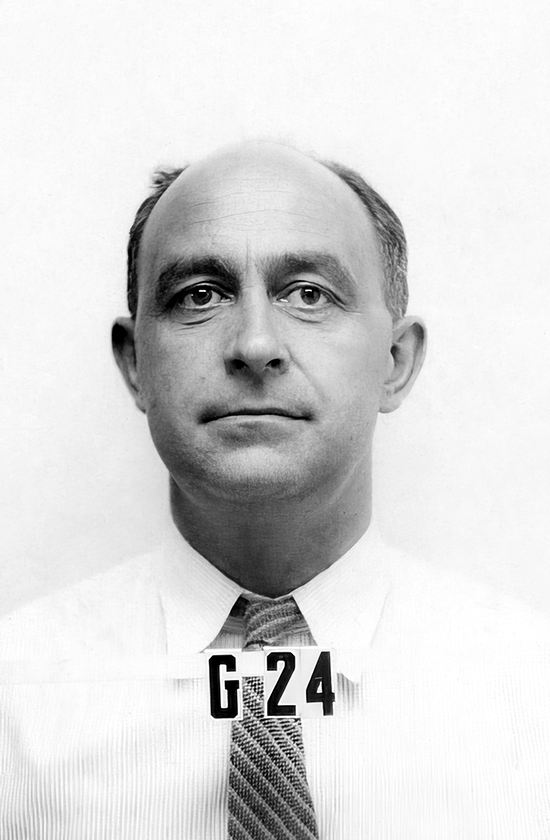
Enrico Fermi was a Nobel Prize-winning physicist who predicted the existence of neutrinos and helped create the first artificial nuclear reactor, an early feat of the Manhattan Project. He was known to pose simple but seemingly unanswerable questions—termed "Fermi questions"—to his colleagues and students, like "How many atoms of Caesar's last breath do you inhale with each lungful of air?"
In 1950, Fermi visited Los Alamos National Laboratory in New Mexico and, while walking to the Fuller Lodge for lunch, conversed with fellow physicists Emil Konopinski, Edward Teller, and Herbert York about reports of flying saucers and the feasibility of faster-than-light travel. When the conversation shifted to unrelated topics at the lodge, Fermi blurted a question variously recalled as: "Where is everybody?" (Teller), "Don't you ever wonder where everybody is?" (York), or "But where is everybody?" (Konopinski). According to Teller, "The result of his question was general laughter because of the strange fact that, in spite of Fermi's question coming out of the blue, everybody around the table seemed to understand at once that he was talking about extraterrestrial life."
According to York, Fermi "followed up with a series of calculations on the probability of earthlike planets, the probability of life given an earth, the probability of humans given life, the likely rise and duration of high technology, and so on. He concluded on the basis of such calculations that we ought to have been visited long ago and many times over." However, Teller recalled that Fermi did not elaborate on his question beyond "perhaps a statement that the distances to the next location of living beings may be very great and that, indeed, as far as our galaxy is concerned, we are living somewhere in the sticks, far removed from the metropolitan area of the galactic center."
Fermi was not the first to note the paradox. In his 1686 book Conversations on the Plurality of Worlds, Bernard Le Bovier de Fontenelle—later the secretary of the French Academy of Sciences—constructs a dialogue in which Fontenelle's claims of "intelligent beings exist in other worlds, for instance the Moon" are refuted by a character who notes that "If this were the case, the Moon's inhabitants would already have come to us before now." This may have inspired a similar discussion in Jules Verne's 1865 novel Around the Moon, which has also been identified as an early conceptualization of the Fermi paradox.
Hub AI
Fermi paradox AI simulator
(@Fermi paradox_simulator)
Fermi paradox
The Fermi paradox is the discrepancy between the lack of conclusive evidence of advanced extraterrestrial life and the apparently high likelihood of its existence. Those affirming the paradox generally conclude that if the conditions required for life to arise from non-living matter are as permissive as the available evidence on Earth indicates, then extraterrestrial life would be sufficiently common such that it would be implausible for it not to have been detected.
The paradox is named after physicist Enrico Fermi, who informally posed the question—often remembered as "Where is everybody?"—during a 1950 conversation at Los Alamos with colleagues Emil Konopinski, Edward Teller, and Herbert York. The paradox first appeared in print in a 1963 paper by Carl Sagan and the paradox has since been fully characterized by scientists. Early formulations of the paradox have also been identified in writings by Bernard Le Bovier de Fontenelle (1686) and Jules Verne (1865), and by Soviet rocket scientist Konstantin Tsiolkovsky.
There have been many attempts to resolve the Fermi paradox, such as suggesting that intelligent extraterrestrial beings are extremely rare, that the lifetime of such civilizations is short, or that they exist but (for various reasons) humans see no evidence.
Some of the facts and hypotheses that together serve to highlight the apparent contradiction:
Enrico Fermi was a Nobel Prize-winning physicist who predicted the existence of neutrinos and helped create the first artificial nuclear reactor, an early feat of the Manhattan Project. He was known to pose simple but seemingly unanswerable questions—termed "Fermi questions"—to his colleagues and students, like "How many atoms of Caesar's last breath do you inhale with each lungful of air?"
In 1950, Fermi visited Los Alamos National Laboratory in New Mexico and, while walking to the Fuller Lodge for lunch, conversed with fellow physicists Emil Konopinski, Edward Teller, and Herbert York about reports of flying saucers and the feasibility of faster-than-light travel. When the conversation shifted to unrelated topics at the lodge, Fermi blurted a question variously recalled as: "Where is everybody?" (Teller), "Don't you ever wonder where everybody is?" (York), or "But where is everybody?" (Konopinski). According to Teller, "The result of his question was general laughter because of the strange fact that, in spite of Fermi's question coming out of the blue, everybody around the table seemed to understand at once that he was talking about extraterrestrial life."
According to York, Fermi "followed up with a series of calculations on the probability of earthlike planets, the probability of life given an earth, the probability of humans given life, the likely rise and duration of high technology, and so on. He concluded on the basis of such calculations that we ought to have been visited long ago and many times over." However, Teller recalled that Fermi did not elaborate on his question beyond "perhaps a statement that the distances to the next location of living beings may be very great and that, indeed, as far as our galaxy is concerned, we are living somewhere in the sticks, far removed from the metropolitan area of the galactic center."
Fermi was not the first to note the paradox. In his 1686 book Conversations on the Plurality of Worlds, Bernard Le Bovier de Fontenelle—later the secretary of the French Academy of Sciences—constructs a dialogue in which Fontenelle's claims of "intelligent beings exist in other worlds, for instance the Moon" are refuted by a character who notes that "If this were the case, the Moon's inhabitants would already have come to us before now." This may have inspired a similar discussion in Jules Verne's 1865 novel Around the Moon, which has also been identified as an early conceptualization of the Fermi paradox.
Recent media