



Community hub
Recent from talks
Knowledge base stats:
Talk channels stats:
Members stats:
Fibber McGee and Molly
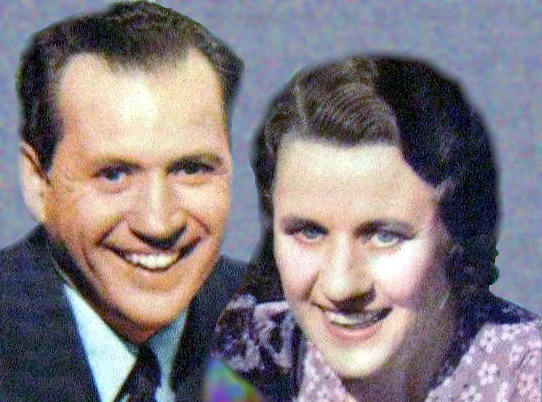
Fibber McGee and Molly (1935–1959) was a longtime American husband-and-wife team radio comedy program.
The situation comedy was a staple of the NBC Red Network from 1936 on, after originating on NBC Blue in 1935. One of the most popular and enduring radio series of its time, it ran as a stand-alone series from 1935 to 1956, and then continued as a short-form series as part of the weekend Monitor from 1957 to 1959. The title characters were created and portrayed by Jim and Marian Jordan, a husband-and-wife team that had been working in radio since the 1920s.
Fibber McGee and Molly followed up the Jordans' previous radio sitcom Smackout. It featured the misadventures of a working-class couple: habitual storyteller Fibber McGee and his sometimes terse but always loving wife Molly, living among their numerous neighbors and acquaintances in the community of Wistful Vista. As with radio comedies of the era, Fibber McGee and Molly featured an announcer, house band and vocal quartet for interludes. At the peak of the show's success in the 1940s, it was adapted into a string of feature films. A 1959 attempt to adapt the series to television with a different cast and new writers was both a critical and commercial failure, which, coupled with Marian Jordan's death shortly thereafter, brought the series to a finish.
The stars of the program were husband-and-wife team Jim Jordan (1896–1988) and Marian Driscoll Jordan (1898–1961), who were natives of Peoria, Illinois.
Jordan was the seventh of eight children born to James Edward Jordan, a farmer, and Mary (née Tighe) Jordan, while Driscoll was the twelfth of thirteen children born to Daniel P., a coalminer, and wife Anna (née Carroll) Driscoll.
Jim wanted to be a singer, and Marian wanted to be a music teacher. Both attended the same Catholic church, where they met at choir practice. Marian's parents had attempted to discourage her professional aspirations. When she started seeing Jim Jordan, the Driscolls were far from approving of either him or his ideas. Jim's voice teacher gave him a recommendation for work as a professional in Chicago, and he followed it. He was able to gain steady employment, but soon tired of the life on the road. In less than a year, Jim came back to Peoria and went to work for the Post Office. Marian's parents now found Jim (and his career) to be acceptable, and they stopped objecting to the couple's marriage plans. The pair married in Peoria, August 31, 1918.
Five days after the wedding, Jim received his draft notice. He was sent to France, and became part of a military touring group which entertained the armed forces after World War I. When Jim came home from France, he and Marian decided to try their luck with a vaudeville act. They had 2 children, Kathryn Therese Jordan (1920–2007) and James Carroll Jordan (1923–1998). Marian returned home for the birth of Kathryn, but went back to performing with Jim, leaving her with Jim's parents. After Jim Jr. was born, Marian stayed with the children for a time, while Jim performed a solo act. Marian and the children joined him on the road for a short time, but the couple had to admit defeat when they found themselves in Lincoln, Illinois in 1923 with 2 small children and no funds. The couple's parents had to wire them money for their return to Peoria. Jim went to work at a local department store, but still felt an attraction of being in show business. He and Marian went back into vaudeville.
While staying with Jim's brother in Chicago in 1924, the family was listening to the radio; Jim said he and Marian could do better than the musical act currently on the air. Jim's brother bet him $10 (equal to $183 today) they could not. To win the bet, Jim and Marian went to WIBO, where they were immediately put on the air. At the end of the performance, the station offered the couple a contract for a weekly show, which paid $10 a week. The show's sponsor was Oh Henry! candy, and they appeared for 6 months on The Oh Henry! Twins program, switching to radio station WENR by 1927.
Hub AI
Fibber McGee and Molly AI simulator
(@Fibber McGee and Molly_simulator)
Fibber McGee and Molly
Fibber McGee and Molly (1935–1959) was a longtime American husband-and-wife team radio comedy program.
The situation comedy was a staple of the NBC Red Network from 1936 on, after originating on NBC Blue in 1935. One of the most popular and enduring radio series of its time, it ran as a stand-alone series from 1935 to 1956, and then continued as a short-form series as part of the weekend Monitor from 1957 to 1959. The title characters were created and portrayed by Jim and Marian Jordan, a husband-and-wife team that had been working in radio since the 1920s.
Fibber McGee and Molly followed up the Jordans' previous radio sitcom Smackout. It featured the misadventures of a working-class couple: habitual storyteller Fibber McGee and his sometimes terse but always loving wife Molly, living among their numerous neighbors and acquaintances in the community of Wistful Vista. As with radio comedies of the era, Fibber McGee and Molly featured an announcer, house band and vocal quartet for interludes. At the peak of the show's success in the 1940s, it was adapted into a string of feature films. A 1959 attempt to adapt the series to television with a different cast and new writers was both a critical and commercial failure, which, coupled with Marian Jordan's death shortly thereafter, brought the series to a finish.
The stars of the program were husband-and-wife team Jim Jordan (1896–1988) and Marian Driscoll Jordan (1898–1961), who were natives of Peoria, Illinois.
Jordan was the seventh of eight children born to James Edward Jordan, a farmer, and Mary (née Tighe) Jordan, while Driscoll was the twelfth of thirteen children born to Daniel P., a coalminer, and wife Anna (née Carroll) Driscoll.
Jim wanted to be a singer, and Marian wanted to be a music teacher. Both attended the same Catholic church, where they met at choir practice. Marian's parents had attempted to discourage her professional aspirations. When she started seeing Jim Jordan, the Driscolls were far from approving of either him or his ideas. Jim's voice teacher gave him a recommendation for work as a professional in Chicago, and he followed it. He was able to gain steady employment, but soon tired of the life on the road. In less than a year, Jim came back to Peoria and went to work for the Post Office. Marian's parents now found Jim (and his career) to be acceptable, and they stopped objecting to the couple's marriage plans. The pair married in Peoria, August 31, 1918.
Five days after the wedding, Jim received his draft notice. He was sent to France, and became part of a military touring group which entertained the armed forces after World War I. When Jim came home from France, he and Marian decided to try their luck with a vaudeville act. They had 2 children, Kathryn Therese Jordan (1920–2007) and James Carroll Jordan (1923–1998). Marian returned home for the birth of Kathryn, but went back to performing with Jim, leaving her with Jim's parents. After Jim Jr. was born, Marian stayed with the children for a time, while Jim performed a solo act. Marian and the children joined him on the road for a short time, but the couple had to admit defeat when they found themselves in Lincoln, Illinois in 1923 with 2 small children and no funds. The couple's parents had to wire them money for their return to Peoria. Jim went to work at a local department store, but still felt an attraction of being in show business. He and Marian went back into vaudeville.
While staying with Jim's brother in Chicago in 1924, the family was listening to the radio; Jim said he and Marian could do better than the musical act currently on the air. Jim's brother bet him $10 (equal to $183 today) they could not. To win the bet, Jim and Marian went to WIBO, where they were immediately put on the air. At the end of the performance, the station offered the couple a contract for a weekly show, which paid $10 a week. The show's sponsor was Oh Henry! candy, and they appeared for 6 months on The Oh Henry! Twins program, switching to radio station WENR by 1927.