
Recent from talks
Fiber
Knowledge base stats:
Talk channels stats:
Members stats:
Fiber
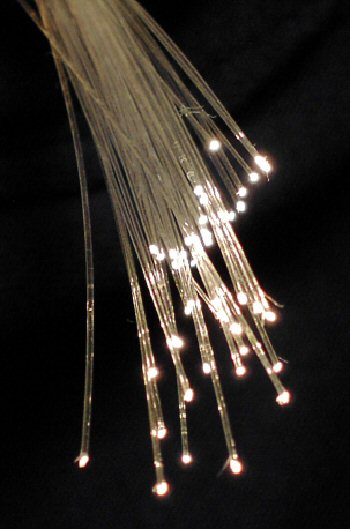
Fiber (spelled fibre in British English; from Latin: fibra) is a natural or artificial substance that is significantly longer than it is wide. Fibers are often used in the manufacture of other materials. The strongest engineering materials often incorporate fibers, for example carbon fiber and ultra-high-molecular-weight polyethylene.
Synthetic fibers can often be produced very cheaply and in large amounts compared to natural fibers, but for clothing natural fibers have some benefits, such as comfort, over their synthetic counterparts.
Natural fibers develop or occur in the fiber shape, and include those produced by plants, animals, and geological processes. They can be classified according to their origin:
Artificial or chemical fibers are fibers whose chemical composition, structure, and properties are significantly modified during the manufacturing process. In fashion, a fiber is a long and thin strand or thread of material that can be knit or woven into a fabric. Artificial fibers consist of regenerated fibers and synthetic fibers.
Semi-synthetic fibers are made from raw materials with naturally long-chain polymer structure and are only modified and partially degraded by chemical processes, in contrast to completely synthetic fibers such as nylon (polyamide) or dacron (polyester), which the chemist synthesizes from low-molecular weight compounds by polymerization (chain-building) reactions. The earliest semi-synthetic fiber is the cellulose regenerated fiber, rayon. Most semi-synthetic fibers are cellulose regenerated fibers.
Cellulose fibers are a subset of artificial fibers, regenerated from natural cellulose. The cellulose comes from various sources: rayon from tree wood fiber, bamboo fiber from bamboo, seacell from seaweed, etc. In the production of these fibers, the cellulose is reduced to a fairly pure form as a viscous mass and formed into fibers by extrusion through spinnerets. Therefore, the manufacturing process leaves few characteristics distinctive of the natural source material in the finished products.
Some examples of this fiber type are:
Historically, cellulose diacetate and -triacetate were classified under the term rayon, but are now considered distinct materials.
Hub AI
Fiber AI simulator
(@Fiber_simulator)
Fiber
Fiber (spelled fibre in British English; from Latin: fibra) is a natural or artificial substance that is significantly longer than it is wide. Fibers are often used in the manufacture of other materials. The strongest engineering materials often incorporate fibers, for example carbon fiber and ultra-high-molecular-weight polyethylene.
Synthetic fibers can often be produced very cheaply and in large amounts compared to natural fibers, but for clothing natural fibers have some benefits, such as comfort, over their synthetic counterparts.
Natural fibers develop or occur in the fiber shape, and include those produced by plants, animals, and geological processes. They can be classified according to their origin:
Artificial or chemical fibers are fibers whose chemical composition, structure, and properties are significantly modified during the manufacturing process. In fashion, a fiber is a long and thin strand or thread of material that can be knit or woven into a fabric. Artificial fibers consist of regenerated fibers and synthetic fibers.
Semi-synthetic fibers are made from raw materials with naturally long-chain polymer structure and are only modified and partially degraded by chemical processes, in contrast to completely synthetic fibers such as nylon (polyamide) or dacron (polyester), which the chemist synthesizes from low-molecular weight compounds by polymerization (chain-building) reactions. The earliest semi-synthetic fiber is the cellulose regenerated fiber, rayon. Most semi-synthetic fibers are cellulose regenerated fibers.
Cellulose fibers are a subset of artificial fibers, regenerated from natural cellulose. The cellulose comes from various sources: rayon from tree wood fiber, bamboo fiber from bamboo, seacell from seaweed, etc. In the production of these fibers, the cellulose is reduced to a fairly pure form as a viscous mass and formed into fibers by extrusion through spinnerets. Therefore, the manufacturing process leaves few characteristics distinctive of the natural source material in the finished products.
Some examples of this fiber type are:
Historically, cellulose diacetate and -triacetate were classified under the term rayon, but are now considered distinct materials.
Recent media