Hubbry Logo
PolymerPolymerMain
Open search
Polymer
Community hub
Polymer
logo
8 pages, 0 posts
0 subscribers
Be the first to start a discussion here.
Contribute something
Polymer
Polymer
from Wikipedia

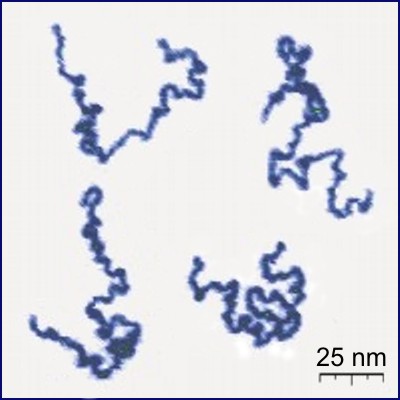
Appearance of real linear polymer chains as recorded using an atomic force microscope on a surface, under liquid medium. Chain contour length for this polymer is ~204 nm; thickness is ~0.4 nm.[1]
IUPAC definition

A polymer is a substance composed of macromolecules.[2] A macromolecule is a molecule of high relative molecular mass, the structure of which essentially comprises the multiple repetition of units derived, actually or conceptually, from molecules of low relative molecular mass.[3]

A polymer (/ˈpɒlɪmər/[4][5]) is a substance or material that consists of very large molecules, or macromolecules, that are constituted by many repeating subunits derived from one or more species of monomers.[6] Due to their broad spectrum of properties,[7] both synthetic and natural polymers play essential and ubiquitous roles in everyday life.[8] Polymers range from familiar synthetic plastics such as polystyrene to natural biopolymers such as DNA and proteins that are fundamental to biological structure and function. Polymers, both natural and synthetic, are created via polymerization of many small molecules, known as monomers. Their consequently large molecular mass, relative to small molecule compounds, produces unique physical properties including toughness, high elasticity, viscoelasticity, and a tendency to form amorphous and semicrystalline structures rather than crystals.

Polymers are studied in the fields of polymer science (which includes polymer chemistry and polymer physics), biophysics and materials science and engineering. Historically, products arising from the linkage of repeating units by covalent chemical bonds have been the primary focus of polymer science. An emerging important area now focuses on supramolecular polymers formed by non-covalent links. Polyisoprene of latex rubber is an example of a natural polymer, and the polystyrene of styrofoam is an example of a synthetic polymer. In biological contexts, essentially all biological macromolecules—i.e., proteins (polyamides), nucleic acids (polynucleotides), and polysaccharides—are purely polymeric, or are composed in large part of polymeric components.

Cartoon schematic of polymer molecules

Etymology

[edit]

The term "polymer" derives from Greek πολύς (polus) 'many, much' and μέρος (meros) 'part'. The term was coined in 1833 by Jöns Jacob Berzelius, though with a definition distinct from the modern IUPAC definition.[9][10] The modern concept of polymers as covalently bonded macromolecular structures was proposed in 1920 by Hermann Staudinger,[11] who spent the next decade finding experimental evidence for this hypothesis.[12]

Common examples

[edit]
Structure of a styrene-butadiene chain, from a molecular simulation

Polymers are of two types: naturally occurring and synthetic or man made.

Natural

[edit]

Natural polymeric materials such as hemp, shellac, amber, wool, silk, and natural rubber have been used for centuries. A variety of other natural polymers exist, such as cellulose, which is the main constituent of wood and paper.

Space polymer

[edit]

Hemoglycin (previously termed hemolithin) is a space polymer that is the first polymer of amino acids found in meteorites.[13][14][15]

Synthetic

[edit]

The list of synthetic polymers, roughly in order of worldwide demand, includes polyethylene, polypropylene, polystyrene, polyvinyl chloride, synthetic rubber, phenol formaldehyde resin (or Bakelite), neoprene, nylon, polyacrylonitrile, PVB, silicone, and many more. More than 330 million tons of these polymers are made every year (2015).[16]

Most commonly, the continuously linked backbone of a polymer used for the preparation of plastics consists mainly of carbon atoms. A simple example is polyethylene ('polythene' in British English), whose repeat unit or monomer is ethylene. Many other structures do exist; for example, elements such as silicon form familiar materials such as silicones, examples being Silly Putty and waterproof plumbing sealant. Oxygen is also commonly present in polymer backbones, such as those of polyethylene glycol, polysaccharides (in glycosidic bonds), and DNA (in phosphodiester bonds).

Synthesis

[edit]
A classification of the polymerization reactions

Polymerization is the process of combining many small molecules known as monomers into a covalently bonded chain or network. During the polymerization process, some chemical groups may be lost from each monomer. This happens in the polymerization of PET polyester. The monomers are terephthalic acid (HOOC—C6H4—COOH) and ethylene glycol (HO—CH2—CH2—OH) but the repeating unit is —OC—C6H4—COO—CH2—CH2—O—, which corresponds to the combination of the two monomers with the loss of two water molecules. The distinct piece of each monomer that is incorporated into the polymer is known as a repeat unit or monomer residue.

Synthetic methods are generally divided into two categories, step-growth polymerization and chain polymerization.[17] The essential difference between the two is that in chain polymerization, monomers are added to the chain one at a time only,[18] such as in polystyrene, whereas in step-growth polymerization chains of monomers may combine with one another directly,[19] such as in polyester. Step-growth polymerization can be divided into polycondensation, in which low-molar-mass by-product is formed in every reaction step, and polyaddition.

Example of chain polymerization: Radical polymerization of styrene, R. is initiating radical, P. is another polymer chain radical terminating the formed chain by radical recombination.

Newer methods, such as plasma polymerization do not fit neatly into either category. Synthetic polymerization reactions may be carried out with or without a catalyst. Laboratory synthesis of biopolymers, especially of proteins, is an area of intensive research.

Biological synthesis

[edit]
Microstructure of part of a DNA double helix biopolymer

There are three main classes of biopolymers: polysaccharides, polypeptides, and polynucleotides. In living cells, they may be synthesized by enzyme-mediated processes, such as the formation of DNA catalyzed by DNA polymerase. The synthesis of proteins involves multiple enzyme-mediated processes to transcribe genetic information from the DNA to RNA and subsequently translate that information to synthesize the specified protein from amino acids. The protein may be modified further following translation in order to provide appropriate structure and functioning. There are other biopolymers such as rubber, suberin, melanin, and lignin.

Modification of natural polymers

[edit]

Naturally occurring polymers such as cotton, starch, and rubber were familiar materials for years before synthetic polymers such as polyethene and perspex appeared on the market. Many commercially important polymers are synthesized by chemical modification of naturally occurring polymers. Prominent examples include the reaction of nitric acid and cellulose to form nitrocellulose and the formation of vulcanized rubber by heating natural rubber in the presence of sulfur. Ways in which polymers can be modified include oxidation, cross-linking, and end-capping.


Structure

[edit]

The structure of a polymeric material can be described at different length scales, from the sub-nm length scale up to the macroscopic one. There is in fact a hierarchy of structures, in which each stage provides the foundations for the next one.[20] The starting point for the description of the structure of a polymer is the identity of its constituent monomers. Next, the microstructure essentially describes the arrangement of these monomers within the polymer at the scale of a single chain. The microstructure determines the possibility for the polymer to form phases with different arrangements, for example through crystallization, the glass transition or microphase separation.[21] These features play a major role in determining the physical and chemical properties of a polymer.

Monomers and repeat units

[edit]

The identity of the repeat units (monomer residues, also known as "mers") comprising a polymer is its first and most important attribute. Polymer nomenclature is generally based upon the type of monomer residues comprising the polymer. A polymer which contains only a single type of repeat unit is known as a homopolymer, while a polymer containing two or more types of repeat units is known as a copolymer.[22] A terpolymer is a copolymer which contains three types of repeat units.[23]

Polystyrene is composed only of styrene-based repeat units, and is classified as a homopolymer. Polyethylene terephthalate, even though produced from two different monomers (ethylene glycol and terephthalic acid), is usually regarded as a homopolymer because only one type of repeat unit is formed. Ethylene-vinyl acetate contains more than one variety of repeat unit and is a copolymer. Some biological polymers are composed of a variety of different but structurally related monomer residues; for example, polynucleotides such as DNA are composed of four types of nucleotide subunits.

Homopolymers and copolymers (examples)
Homopolymer polystyrene Homopolymer polydimethylsiloxane, a silicone. The main chain is formed of silicon and oxygen atoms. The homopolymer polyethylene terephthalate has only one repeat unit. Copolymer styrene-butadiene rubber: The repeat units based on styrene and 1,3-butadiene form two repeating units, which can alternate in any order in the macromolecule, making the polymer thus a random copolymer.

A polymer containing ionizable subunits (e.g., pendant carboxylic groups) is known as a polyelectrolyte or ionomer, when the fraction of ionizable units is large or small respectively.

Microstructure

[edit]

The microstructure of a polymer (sometimes called configuration) relates to the physical arrangement of monomer residues along the backbone of the chain.[24] These are the elements of polymer structure that require the breaking of a covalent bond in order to change. Various polymer structures can be produced depending on the monomers and reaction conditions: A polymer may consist of linear macromolecules containing each only one unbranched chain. In the case of unbranched polyethylene, this chain is a long-chain n-alkane. There are also branched macromolecules with a main chain and side chains, in the case of polyethylene the side chains would be alkyl groups. In particular unbranched macromolecules can be in the solid state semi-crystalline, crystalline chain sections highlighted red in the figure below.

While branched and unbranched polymers are usually thermoplastics, many elastomers have a wide-meshed cross-linking between the "main chains". Close-meshed crosslinking, on the other hand, leads to thermosets. Cross-links and branches are shown as red dots in the figures. Highly branched polymers are amorphous and the molecules in the solid interact randomly.


Linear, unbranched macromolecule

Branched macromolecule

Semi-crystalline structure of an unbranched polymer

Slightly cross-linked polymer (elastomer)

Highly cross-linked polymer (thermoset)

Polymer architecture

[edit]
Branch point in a polymer

An important microstructural feature of a polymer is its architecture and shape, which relates to the way branch points lead to a deviation from a simple linear chain.[25] A branched polymer molecule is composed of a main chain with one or more substituent side chains or branches. Types of branched polymers include star polymers, comb polymers, polymer brushes, dendronized polymers, ladder polymers, and dendrimers.[25] There exist also two-dimensional polymers (2DP) which are composed of topologically planar repeat units. A polymer's architecture affects many of its physical properties including solution viscosity, melt viscosity, solubility in various solvents, glass-transition temperature and the size of individual polymer coils in solution. A variety of techniques may be employed for the synthesis of a polymeric material with a range of architectures, for example living polymerization.

Chain length

[edit]

A common means of expressing the length of a chain is the degree of polymerization, which quantifies the number of monomers incorporated into the chain.[26][27] As with other molecules, a polymer's size may also be expressed in terms of molecular weight. Since synthetic polymerization techniques typically yield a statistical distribution of chain lengths, the molecular weight is expressed in terms of weighted averages. The number-average molecular weight (Mn) and weight-average molecular weight (Mw) are most commonly reported.[28][29] The ratio of these two values (Mw / Mn) is the dispersity (Đ), which is commonly used to express the width of the molecular weight distribution.[30]

The physical properties[31] of polymer strongly depend on the length (or equivalently, the molecular weight) of the polymer chain.[32] One important example of the physical consequences of the molecular weight is the scaling of the viscosity (resistance to flow) in the melt.[33] The influence of the weight-average molecular weight () on the melt viscosity () depends on whether the polymer is above or below the onset of entanglements. Below the entanglement molecular weight[clarification needed], , whereas above the entanglement molecular weight, . In the latter case, increasing the polymer chain length 10-fold would increase the viscosity over 1000 times.[34][page needed] Increasing chain length furthermore tends to decrease chain mobility, increase strength and toughness, and increase the glass-transition temperature (Tg).[35] This is a result of the increase in chain interactions such as van der Waals attractions and entanglements that come with increased chain length.[36][37] These interactions tend to fix the individual chains more strongly in position and resist deformations and matrix breakup, both at higher stresses and higher temperatures.

Monomer arrangement in copolymers

[edit]

Copolymers are classified either as statistical copolymers, alternating copolymers, block copolymers, graft copolymers or gradient copolymers. In the schematic figure below, and symbolize the two repeat units.

Statistisches Copolymer
Random copolymer
Gradientcopolymer
Gradient copolymer
Pfropfcopolymer
Graft copolymer
Alternierendes Copolymer
Alternating copolymer
Blockcopolymer
Block copolymer
  • Alternating copolymers possess two regularly alternating monomer residues:[38] (AB)
    n
    . An example is the equimolar copolymer of styrene and maleic anhydride formed by free-radical chain-growth polymerization.[39] A step-growth copolymer such as Nylon 66 can also be considered a strictly alternating copolymer of diamine and diacid residues, but is often described as a homopolymer with the dimeric residue of one amine and one acid as a repeat unit.[40]
  • Periodic copolymers have more than two species of monomer units in a regular sequence.[41]
  • Statistical copolymers have monomer residues arranged according to a statistical rule. A statistical copolymer in which the probability of finding a particular type of monomer residue at a particular point in the chain is independent of the types of surrounding monomer residue may be referred to as a truly random copolymer.[42][43] For example, the chain-growth copolymer of vinyl chloride and vinyl acetate is random.[39]
  • Block copolymers have long sequences of different monomer units.[39][40] Polymers with two or three blocks of two distinct chemical species (e.g., A and B) are called diblock copolymers and triblock copolymers, respectively. Polymers with three blocks, each of a different chemical species (e.g., A, B, and C) are termed triblock terpolymers.
  • Graft or grafted copolymers contain side chains or branches whose repeat units have a different composition or configuration than the main chain.[40] The branches are added on to a preformed main chain macromolecule.[39]

Monomers within a copolymer may be organized along the backbone in a variety of ways. A copolymer containing a controlled arrangement of monomers is called a sequence-controlled polymer.[44] Alternating, periodic and block copolymers are simple examples of sequence-controlled polymers.

Tacticity

[edit]

Tacticity describes the relative stereochemistry of chiral centers in neighboring structural units within a macromolecule. There are three types of tacticity: isotactic (all substituents on the same side), atactic (random placement of substituents), and syndiotactic (alternating placement of substituents).


Isotactic

Syndiotactic

Atactic (i. e. random)

Morphology

[edit]

Polymer morphology generally describes the arrangement and microscale ordering of polymer chains in space. The macroscopic physical properties of a polymer are related to the interactions between the polymer chains.


Randomly oriented polymer

Interlocking of several polymers
  • Disordered polymers: In the solid state, atactic polymers, polymers with a high degree of branching and random copolymers form amorphous (i.e. glassy structures).[45] In melt and solution, polymers tend to form a constantly changing "statistical cluster", see freely-jointed-chain model. In the solid state, the respective conformations of the molecules are frozen. Hooking and entanglement of chain molecules lead to a "mechanical bond" between the chains. Intermolecular and intramolecular attractive forces only occur at sites where molecule segments are close enough to each other. The irregular structures of the molecules prevent a narrower arrangement.

Polyethylene: zigzag conformation of molecules in close packed chains

Lamella with tie molecules

Spherulite

polypropylene helix

p-Aramid, red dotted: hydrogen bonds
  • Linear polymers with periodic structure, low branching and stereoregularity (e. g. not atactic) have a semi-crystalline structure in the solid state.[45] In simple polymers (such as polyethylene), the chains are present in the crystal in zigzag conformation. Several zigzag conformations form dense chain packs, called crystallites or lamellae. The lamellae are much thinner than the polymers are long (often about 10 nm).[46] They are formed by more or less regular folding of one or more molecular chains. Amorphous structures exist between the lamellae. Individual molecules can lead to entanglements between the lamellae and can also be involved in the formation of two (or more) lamellae (chains than called tie molecules). Several lamellae form a superstructure, a spherulite, often with a diameter in the range of 0.05 to 1 mm.[46]
The type and arrangement of (functional) residues of the repeat units effects or determines the crystallinity and strength of the secondary valence bonds. In isotactic polypropylene, the molecules form a helix. Like the zigzag conformation, such helices allow a dense chain packing. Particularly strong intermolecular interactions occur when the residues of the repeating units allow the formation of hydrogen bonds, as in the case of p-aramid. The formation of strong intramolecular associations may produce diverse folded states of single linear chains with distinct circuit topology. Crystallinity and superstructure are always dependent on the conditions of their formation, see also: crystallization of polymers. Compared to amorphous structures, semi-crystalline structures lead to a higher stiffness, density, melting temperature and higher resistance of a polymer.
  • Cross-linked polymers: Wide-meshed cross-linked polymers are elastomers and cannot be molten (unlike thermoplastics); heating cross-linked polymers only leads to decomposition. Thermoplastic elastomers, on the other hand, are reversibly "physically crosslinked" and can be molten. Block copolymers in which a hard segment of the polymer has a tendency to crystallize and a soft segment has an amorphous structure are one type of thermoplastic elastomers: the hard segments ensure wide-meshed, physical crosslinking.

Wide-meshed cross-linked polymer (elastomer)


Wide-meshed cross-linked polymer (elastomer) under tensile stress

Crystallites as "crosslinking sites": one type of thermoplastic elastomer


Semi-crystalline thermoplastic elastomer under tensile stress

Crystallinity

[edit]

When applied to polymers, the term crystalline has a somewhat ambiguous usage. In some cases, the term crystalline finds identical usage to that used in conventional crystallography. For example, the structure of a crystalline protein or polynucleotide, such as a sample prepared for x-ray crystallography, may be defined in terms of a conventional unit cell composed of one or more polymer molecules with cell dimensions of hundreds of angstroms or more. A synthetic polymer may be loosely described as crystalline if it contains regions of three-dimensional ordering on atomic (rather than macromolecular) length scales, usually arising from intramolecular folding or stacking of adjacent chains. Synthetic polymers may consist of both crystalline and amorphous regions; the degree of crystallinity may be expressed in terms of a weight fraction or volume fraction of crystalline material. Few synthetic polymers are entirely crystalline. The crystallinity of polymers is characterized by their degree of crystallinity, ranging from zero for a completely non-crystalline polymer to one for a theoretical completely crystalline polymer. Polymers with microcrystalline regions are generally tougher (can be bent more without breaking) and more impact-resistant than totally amorphous polymers.[47] Polymers with a degree of crystallinity approaching zero or one will tend to be transparent, while polymers with intermediate degrees of crystallinity will tend to be opaque due to light scattering by crystalline or glassy regions. For many polymers, crystallinity may also be associated with decreased transparency.

Chain conformation

[edit]

The space occupied by a polymer molecule is generally expressed in terms of radius of gyration, which is an average distance from the center of mass of the chain to the chain itself. Alternatively, it may be expressed in terms of pervaded volume, which is the volume spanned by the polymer chain and scales with the cube of the radius of gyration.[48] The simplest theoretical models for polymers in the molten, amorphous state are ideal chains.

Properties

[edit]

Polymer properties depend of their structure and they are divided into classes according to their physical bases. Many physical and chemical properties describe how a polymer behaves as a continuous macroscopic material. They are classified as bulk properties, or intensive properties according to thermodynamics.

Mechanical properties

[edit]
A polyethylene sample that has necked under tension

The bulk properties of a polymer are those most often of end-use interest. These are the properties that dictate how the polymer actually behaves on a macroscopic scale.

Tensile strength

[edit]

The tensile strength of a material quantifies how much elongating stress the material will endure before failure.[49][50] This is very important in applications that rely upon a polymer's physical strength or durability. For example, a rubber band with a higher tensile strength will hold a greater weight before snapping. In general, tensile strength increases with polymer chain length and crosslinking of polymer chains.

Young's modulus of elasticity

[edit]

Young's modulus quantifies the elasticity of the polymer. It is defined, for small strains, as the ratio of rate of change of stress to strain. Like tensile strength, this is highly relevant in polymer applications involving the physical properties of polymers, such as rubber bands. The modulus is strongly dependent on temperature. Viscoelasticity describes a complex time-dependent elastic response, which will exhibit hysteresis in the stress-strain curve when the load is removed. Dynamic mechanical analysis or DMA measures this complex modulus by oscillating the load and measuring the resulting strain as a function of time.

Transport properties

[edit]

Transport properties such as diffusivity describe how rapidly molecules move through the polymer matrix. These are very important in many applications of polymers for films and membranes.

The movement of individual macromolecules occurs by a process called reptation in which each chain molecule is constrained by entanglements with neighboring chains to move within a virtual tube. The theory of reptation can explain polymer molecule dynamics and viscoelasticity.[51]

Phase behavior

[edit]

Crystallization and melting

[edit]
Thermal transitions in (A) amorphous and (B) semicrystalline polymers, represented as traces from differential scanning calorimetry. As the temperature increases, both amorphous and semicrystalline polymers go through the glass transition (Tg). Amorphous polymers (A) do not exhibit other phase transitions, though semicrystalline polymers (B) undergo crystallization and melting (at temperatures Tc and Tm, respectively).

Depending on their chemical structures, polymers may be either semi-crystalline or amorphous. Semi-crystalline polymers can undergo crystallization and melting transitions, whereas amorphous polymers do not. In polymers, crystallization and melting do not suggest solid-liquid phase transitions, as in the case of water or other molecular fluids. Instead, crystallization and melting refer to the phase transitions between two solid states (i.e., semi-crystalline and amorphous). Crystallization occurs above the glass-transition temperature (Tg) and below the melting temperature (Tm).

Glass transition

[edit]

All polymers (amorphous or semi-crystalline) go through glass transitions. The glass-transition temperature (Tg) is a crucial physical parameter for polymer manufacturing, processing, and use. Below Tg, molecular motions are frozen and polymers are brittle and glassy. Above Tg, molecular motions are activated and polymers are rubbery and viscous. The glass-transition temperature may be engineered by altering the degree of branching or crosslinking in the polymer or by the addition of plasticizers.[52]

Whereas crystallization and melting are first-order phase transitions, the glass transition is not.[53] The glass transition shares features of second-order phase transitions (such as discontinuity in the heat capacity, as shown in the figure), but it is generally not considered a thermodynamic transition between equilibrium states.

Mixing behavior

[edit]
Phase diagram of the typical mixing behavior of weakly interacting polymer solutions, showing spinodal curves and binodal coexistence curves

In general, polymeric mixtures are far less miscible than mixtures of small molecule materials. This effect results from the fact that the driving force for mixing is usually entropy, not interaction energy. In other words, miscible materials usually form a solution not because their interaction with each other is more favorable than their self-interaction, but because of an increase in entropy and hence free energy associated with increasing the amount of volume available to each component. This increase in entropy scales with the number of particles (or moles) being mixed. Since polymeric molecules are much larger and hence generally have much higher specific volumes than small molecules, the number of molecules involved in a polymeric mixture is far smaller than the number in a small molecule mixture of equal volume. The energetics of mixing, on the other hand, is comparable on a per volume basis for polymeric and small molecule mixtures. This tends to increase the free energy of mixing for polymer solutions and thereby making solvation less favorable, and thereby making the availability of concentrated solutions of polymers far rarer than those of small molecules.

Furthermore, the phase behavior of polymer solutions and mixtures is more complex than that of small molecule mixtures. Whereas most small molecule solutions exhibit only an upper critical solution temperature phase transition (UCST), at which phase separation occurs with cooling, polymer mixtures commonly exhibit a lower critical solution temperature phase transition (LCST), at which phase separation occurs with heating.

In dilute solutions, the properties of the polymer are characterized by the interaction between the solvent and the polymer. In a good solvent, the polymer appears swollen and occupies a large volume. In this scenario, intermolecular forces between the solvent and monomer subunits dominate over intramolecular interactions. In a bad solvent or poor solvent, intramolecular forces dominate and the chain contracts. In the theta solvent, or the state of the polymer solution where the value of the second virial coefficient becomes 0, the intermolecular polymer-solvent repulsion balances exactly the intramolecular monomer-monomer attraction. Under the theta condition (also called the Flory condition), the polymer behaves like an ideal random coil. The transition between the states is known as a coil–globule transition.

Inclusion of plasticizers

[edit]

Inclusion of plasticizers tends to lower Tg and increase polymer flexibility. Addition of the plasticizer will also modify dependence of the glass-transition temperature Tg on the cooling rate.[54] The mobility of the chain can further change if the molecules of plasticizer give rise to hydrogen bonding formation. Plasticizers are generally small molecules that are chemically similar to the polymer and create gaps between polymer chains for greater mobility and fewer interchain interactions. A good example of the action of plasticizers is related to polyvinylchlorides or PVCs. A uPVC, or unplasticized polyvinylchloride, is used for things such as pipes. A pipe has no plasticizers in it, because it needs to remain strong and heat-resistant. Plasticized PVC is used in clothing for a flexible quality. Plasticizers are also put in some types of cling film to make the polymer more flexible.

Chemical properties

[edit]

The attractive forces between polymer chains play a large part in determining the polymer's properties. Because polymer chains are so long, they have many such interchain interactions per molecule, amplifying the effect of these interactions on the polymer properties in comparison to attractions between conventional molecules. Different side groups on the polymer can lend the polymer to ionic bonding or hydrogen bonding between its own chains. These stronger forces typically result in higher tensile strength and higher crystalline melting points.

The intermolecular forces in polymers can be affected by dipoles in the monomer units. Polymers containing amide or carbonyl groups can form hydrogen bonds between adjacent chains; the partially positively charged hydrogen atoms in N-H groups of one chain are strongly attracted to the partially negatively charged oxygen atoms in C=O groups on another. These strong hydrogen bonds, for example, result in the high tensile strength and melting point of polymers containing urethane or urea linkages. Polyesters have dipole-dipole bonding between the oxygen atoms in C=O groups and the hydrogen atoms in H-C groups. Dipole bonding is not as strong as hydrogen bonding, so a polyester's melting point and strength are lower than Kevlar's (Twaron), but polyesters have greater flexibility. Polymers with non-polar units such as polyethylene interact only through weak Van der Waals forces. As a result, they typically have lower melting temperatures than other polymers.

When a polymer is dispersed or dissolved in a liquid, such as in commercial products like paints and glues, the chemical properties and molecular interactions influence how the solution flows and can even lead to self-assembly of the polymer into complex structures. When a polymer is applied as a coating, the chemical properties will influence the adhesion of the coating and how it interacts with external materials, such as superhydrophobic polymer coatings leading to water resistance. Overall the chemical properties of a polymer are important elements for designing new polymeric material products.

Optical properties

[edit]

Polymers such as PMMA and HEMA:MMA are used as matrices in the gain medium of solid-state dye lasers, also known as solid-state dye-doped polymer lasers. These polymers have a high surface quality and are also highly transparent so that the laser properties are dominated by the laser dye used to dope the polymer matrix. These types of lasers, that also belong to the class of organic lasers, are known to yield very narrow linewidths which is useful for spectroscopy and analytical applications.[55] An important optical parameter in the polymer used in laser applications is the change in refractive index with temperature also known as dn/dT. For the polymers mentioned here the (dn/dT) ~ −1.4 × 10⁻⁴ in units of K−1 in the 297 ≤ T ≤ 337 K range.[56]

Electrical properties

[edit]

Most conventional polymers such as polyethylene are electrical insulators, but the development of polymers containing π-conjugated bonds has led to a wealth of polymer-based semiconductors, such as polythiophenes. This has led to many applications in the field of organic electronics.

Applications

[edit]

Nowadays, synthetic polymers are used in almost all walks of life. Modern society would look very different without them. The spreading of polymer use is connected to their unique properties: low density, low cost, good thermal/electrical insulation properties, high resistance to corrosion, low-energy demanding polymer manufacture and facile processing into final products. For a given application, the properties of a polymer can be tuned or enhanced by combination with other materials, as in composites. Their application allows to save energy (lighter cars and planes, thermally insulated buildings), protect food and drinking water (packaging), save land and lower use of fertilizers (synthetic fibres), preserve other materials (coatings), protect and save lives (hygiene, medical applications). A representative, non-exhaustive list of applications is given below.

Standardized nomenclature

[edit]

There are multiple conventions for naming polymer substances. Many commonly used polymers, such as those found in consumer products, are referred to by a common or trivial name. The trivial name is assigned based on historical precedent or popular usage rather than a standardized naming convention. Both the American Chemical Society (ACS)[57] and IUPAC[58] have proposed standardized naming conventions; the ACS and IUPAC conventions are similar but not identical.[59] Examples of the differences between the various naming conventions are given in the table below:

Common name ACS name IUPAC name
Poly(ethylene oxide) or PEO Poly(oxyethylene) Poly(oxyethylene)
Poly(ethylene terephthalate) or PET Poly(oxy-1,2-ethanediyloxycarbonyl-1,4-phenylenecarbonyl) Poly(oxyethyleneoxyterephthaloyl)
Nylon 6 or Polyamide 6 Poly[imino(1-oxo-1,6-hexanediyl)] Poly[azanediyl(1-oxohexane-1,6-diyl)]

In both standardized conventions, the polymers' names are intended to reflect the monomer(s) from which they are synthesized (source based nomenclature) rather than the precise nature of the repeating subunit. For example, the polymer synthesized from the simple alkene ethene is called polyethene, retaining the -ene suffix even though the double bond is removed during the polymerization process:

However, IUPAC structure based nomenclature is based on naming of the preferred constitutional repeating unit.[60]

IUPAC has also issued guidelines for abbreviating new polymer names.[61] 138 common polymer abbreviations are also standardized in the standard ISO 1043–1.[62]

Characterization

[edit]

Polymer characterization spans many techniques for determining the chemical composition, molecular weight distribution, and physical properties. Select common techniques include the following:

Degradation

[edit]
A plastic item with thirty years of exposure to heat and cold, brake fluid, and sunlight. Notice the discoloration and crazing of the material (compared with replacement item in foreground).

Polymer degradation is a change in the properties—tensile strength, color, shape, or molecular weight—of a polymer or polymer-based product under the influence of one or more environmental factors, such as heat, light, and the presence of certain chemicals, oxygen, and enzymes. This change in properties is often the result of bond breaking in the polymer backbone (chain scission) which may occur at the chain ends or at random positions in the chain.

Although such changes are frequently undesirable, in some cases, such as biodegradation and recycling, they may be intended to prevent environmental pollution. Degradation can also be useful in biomedical settings. For example, a copolymer of polylactic acid and polyglycolic acid is employed in hydrolysable stitches that slowly degrade after they are applied to a wound.

The susceptibility of a polymer to degradation depends on its structure. Epoxies and chains containing aromatic functionalities are especially susceptible to UV degradation while polyesters are susceptible to degradation by hydrolysis. Polymers containing an unsaturated backbone degrade via ozone cracking. Carbon based polymers are more susceptible to thermal degradation than inorganic polymers such as polydimethylsiloxane and are therefore not ideal for most high-temperature applications.[citation needed]

The degradation of polyethylene occurs by random scission—a random breakage of the bonds that hold the atoms of the polymer together. When heated above 450 °C, polyethylene degrades to form a mixture of hydrocarbons. In the case of chain-end scission, monomers are released and this process is referred to as unzipping or depolymerization. Which mechanism dominates will depend on the type of polymer and temperature; in general, polymers with no or a single small substituent in the repeat unit will decompose via random-chain scission.

The sorting of polymer waste for recycling purposes may be facilitated by the use of the resin identification codes developed by the Society of the Plastics Industry to identify the type of plastic.

Product failure

[edit]
Chlorine attack of acetal resin plumbing joint

Failure of safety-critical polymer components can cause serious accidents, such as fire in the case of cracked and degraded polymer fuel lines. Chlorine-induced cracking of acetal resin plumbing joints and polybutylene pipes has caused many serious floods in domestic properties, especially in the US in the 1990s. Traces of chlorine in the water supply attacked polymers present in the plumbing, a problem which occurs faster if any of the parts have been poorly extruded or injection molded. Attack of the acetal joint occurred because of faulty molding, leading to cracking along the threads of the fitting where there is stress concentration.

Ozone-induced cracking in natural rubber tubing

Polymer oxidation has caused accidents involving medical devices. One of the oldest known failure modes is ozone cracking caused by chain scission when ozone gas attacks susceptible elastomers, such as natural rubber and nitrile rubber. They possess double bonds in their repeat units which are cleaved during ozonolysis. Cracks in fuel lines can penetrate the bore of the tube and cause fuel leakage. If cracking occurs in the engine compartment, electric sparks can ignite the gasoline and can cause a serious fire. In medical use degradation of polymers can lead to changes of physical and chemical characteristics of implantable devices.[63]

Nylon 66 is susceptible to acid hydrolysis, and in one accident, a fractured fuel line led to a spillage of diesel into the road. If diesel fuel leaks onto the road, accidents to following cars can be caused by the slippery nature of the deposit, which is like black ice. Furthermore, the asphalt concrete road surface will suffer damage as a result of the diesel fuel dissolving the asphaltenes from the composite material, this resulting in the degradation of the asphalt surface and structural integrity of the road.

History

[edit]

Polymers have been essential components of commodities since the early days of humankind. The use of wool (keratin), cotton and linen fibres (cellulose) for garments, paper reed (cellulose) for paper are just a few examples of how ancient societies exploited polymer-containing raw materials to obtain artefacts. The latex sap of "caoutchouc" trees (natural rubber) reached Europe in the 16th century from South America long after the Olmec, Maya and Aztec had started using it as a material to make balls, waterproof textiles and containers.[64]

The chemical manipulation of polymers dates back to the 19th century, although at the time the nature of these species was not understood. The behaviour of polymers was initially rationalised according to the theory proposed by Thomas Graham which considered them as colloidal aggregates of small molecules held together by unknown forces.

Notwithstanding the lack of theoretical knowledge, the potential of polymers to provide innovative, accessible and cheap materials was immediately grasped. The work carried out by Braconnot, Parkes, Ludersdorf, Hayward and many others on the modification of natural polymers determined many significant advances in the field.[65] Their contributions led to the discovery of materials such as celluloid, galalith, parkesine, rayon, vulcanised rubber and, later, Bakelite: all materials that quickly entered industrial manufacturing processes and reached households as garments components (e.g., fabrics, buttons), crockery and decorative items.

In 1920, Hermann Staudinger published his seminal work "Über Polymerisation",[66] in which he proposed that polymers were in fact long chains of atoms linked by covalent bonds. His work was debated at length, but eventually it was accepted by the scientific community. Because of this work, Staudinger was awarded the Nobel Prize in 1953.[67]

After the 1930s polymers entered a golden age during which new types were discovered and quickly given commercial applications, replacing naturally-sourced materials. This development was fuelled by an industrial sector with a strong economic drive and it was supported by a broad academic community that contributed innovative syntheses of monomers from cheaper raw material, more efficient polymerisation processes, improved techniques for polymer characterisation and advanced, theoretical understanding of polymers.[65]

Some memorable milestones in the history of polymers[68]

Since 1953, six Nobel prizes have been awarded in the area of polymer science, excluding those for research on biological macromolecules. This further testifies to its impact on modern science and technology. As Lord Todd summarised in 1980, "I am inclined to think that the development of polymerization is perhaps the biggest thing that chemistry has done, where it has had the biggest effect on everyday life".[69]

See also

[edit]

References

[edit]

Bibliography

[edit]
[edit]
Revisions and contributorsEdit on WikipediaRead on Wikipedia
from Grokipedia
A polymer is a substance composed of macromolecules, which are very large molecules with molecular weights ranging from a few thousand to millions of grams per mole, formed by the multiple repetition of smaller units derived from molecules of low relative molecular mass. These macromolecules consist of repeating structural units known as monomers, which link together through chemical bonds to create long chains, often with branching or cross-linking that influences the material's properties. The term "polymer" was coined by German chemist in the 1920s, who established the macromolecular hypothesis and received the in 1953 for his foundational work. Polymers can be classified as natural or synthetic, with natural polymers occurring in living organisms and synthetic ones produced through industrial processes. polymers include proteins, , , and DNA, which have been utilized by humans since prehistoric times for applications such as textiles and . Synthetic polymers, first developed in the early 20th century, encompass materials like phenol-formaldehyde (, invented around 1905–1909), poly(vinyl chloride) (PVC, commercialized in 1930), (PET, 1943), and . They are synthesized via two primary mechanisms: addition , where monomers link without loss of atoms (e.g., from ), and condensation , which involves the elimination of small molecules like (e.g., from diamines and diacids). Homopolymers consist of identical repeating units, while copolymers incorporate two or more different monomers for tailored properties. The properties of polymers vary widely depending on their structure, molecular weight, and processing, enabling diverse applications across industries. Global production of polymers exceeded 450 million metric tons in 2024. For instance, (HDPE) is rigid with a of 130°C, while (LDPE) is softer at 110°C; elastomers like rubber exhibit high elasticity with melting points around 30°C. Polymers are integral to daily life, forming plastics, fibers, elastomers, adhesives, and composites used in , , medical devices (e.g., heart valves), transportation, , and . They drive innovations in , , and sustainable materials.

Etymology and History

Etymology

The term "polymer" originates from the Greek words poly (πολύς), meaning "many," and meros (μέρος), meaning "parts," and was coined in by the Swedish to describe compounds sharing the same empirical composition but differing in molecular weight by integral multiples, such as and butylene. introduced this terminology in the context of to denote a specific type of isomerism, without implying the long-chain structures understood today. In 1861, British chemist Thomas Graham extended the term "polymer" to describe colloidal substances, proposing that materials like and were aggregates or "polymeric" associations of smaller molecules held together by weak forces, as part of his association theory contrasting colloids with crystalloids. This usage marked an early application to high-molecular-weight substances exhibiting low , laying groundwork for later interpretations in macromolecular chemistry. The concept evolved significantly in the early 20th century through the work of Hermann Staudinger, who in the 1920s advocated for the macromolecular hypothesis, redefining polymers as long-chain molecules formed by covalent linkages of monomeric units rather than mere aggregates. Staudinger coined the term "macromolecule" (Makromolekül) in 1922 to emphasize the enormous size of these structures, distinguishing them from Berzelius's original compositional sense and Graham's colloidal view. These developments solidified "polymer" in its modern sense, focusing on chain-like macromolecules central to both natural and synthetic materials.

Historical Development

The utilization of natural polymers dates back to ancient civilizations. In , around 2700 BCE, the production of —a protein-based polymer derived from silkworm cocoons—emerged as a key technological achievement, enabling the weaving of fine fabrics that became central to and . Similarly, in , by 1600 BCE, indigenous peoples such as the Olmec and Maya processed latex from the tree, mixing it with morning glory vine juice to create solid rubber for balls, seals, and other tools, demonstrating early mastery of natural polymer manipulation. The 19th century marked the transition toward synthetic polymers through industrial innovations. In 1839, American inventor discovered , a process that heated with to enhance its elasticity and durability, revolutionizing its commercial viability for tires and . Two decades later, in 1862, British chemist patented Parkesine, the first man-made plastic derived from cellulose nitrate, which could be molded into durable items like combs and buttons, laying the groundwork for the . In 1907, Belgian-American chemist invented , the first fully synthetic plastic, through the condensation of phenol and , initiating the era of commercial thermosetting plastics. The 20th century saw foundational scientific breakthroughs that established as a distinct field. In 1920, German chemist proposed the macromolecular hypothesis, arguing that polymers consist of long chains of covalently bonded monomers rather than aggregates of small molecules, a concept validated over decades and earning him the in 1953. Building on this, in 1935, American chemist at synthesized , the first fully synthetic fiber, by polycondensing and , enabling mass production of strong, versatile materials for textiles and more. In the 1950s, and developed Ziegler-Natta catalysts, enabling stereospecific polymerization of olefins like and into and isotactic , innovations recognized with the 1963 . Entering the 21st century, polymer research shifted toward functional and sustainable materials. In 2000, the was awarded to , Alan G. MacDiarmid, and Hideki Shirakawa for discovering conductive polymers, such as doped , which conduct electricity like metals while retaining polymer flexibility, opening applications in electronics and sensors. In the 2020s, attention has intensified on biodegradable polymers like (PHA), microbial polyesters that fully degrade in natural environments, addressing plastic waste through sustainable alternatives in packaging and agriculture. By 2025, advancements in bio-based polymers from renewable feedstocks, such as sugarcane-derived and CO2-captured materials, have accelerated, with companies like introducing innovations for reusable packaging and construction, driven by demands.

Classification and Examples

Natural Polymers

Natural polymers, also known as biopolymers, are large molecules synthesized by living organisms through enzymatic processes, consisting of repeating monomeric units covalently linked to form chains or networks. These include three primary classes: proteins, formed from amino acid monomers; nucleic acids, composed of nucleotide units such as in DNA and RNA; and polysaccharides, built from sugar monomers. Unlike synthetic polymers, biopolymers are produced in biological systems and play essential roles in cellular structure, function, and metabolism. Prominent examples derive from diverse biological sources, with plants serving as the primary origin for many abundant polysaccharides. Cellulose, a linear polysaccharide of glucose units linked by β-1,4-glycosidic bonds, is the most prevalent organic polymer on Earth, accounting for approximately 33% of all plant biomass and forming the structural framework of plant cell walls. Starch, another plant-derived polysaccharide composed of α-glucose units, functions mainly in energy storage in seeds, roots, and tubers. In animals, proteins such as collagen predominate; collagen is a fibrous protein assembled from glycine, proline, and hydroxyproline-rich sequences, forming a triple helix that provides tensile strength in connective tissues like skin, tendons, and bones. Nucleic acids originate from all living cells, with DNA serving as the genetic blueprint in nuclei and RNA facilitating protein synthesis. Chitin, a polysaccharide of N-acetylglucosamine, forms the exoskeletons of arthropods and fungal cell walls. Natural rubber, a polyisoprene elastomer, is extracted from the latex of the Hevea brasiliensis tree, where it exists as colloidal particles in the sap. Lignin, a complex aromatic heteropolymer derived from phenylpropanoid units, impregnates plant cell walls, particularly in wood, contributing up to one-third of its dry weight. In nature, these polymers fulfill critical structural, storage, and informational roles. Cellulose and lignin provide mechanical support and rigidity to plant tissues, enabling upright growth and resistance to environmental stresses. and (an analog) act as energy reserves, broken down into glucose during metabolic needs. Proteins like maintain tissue integrity and elasticity in animal extracellular matrices, while enzymes (also proteins) catalyze biochemical reactions. Nucleic acids store and transmit hereditary information, with DNA's double-helix ensuring stable replication and RNA enabling . offers protective barriers in invertebrates and fungi, and in may deter herbivores or seal wounds. These functions underscore the evolutionary adaptation of to sustain life processes across kingdoms.

Synthetic Polymers

Synthetic polymers are human-made materials produced through in laboratories, typically derived from petroleum-based or bio-based monomers such as or . Unlike natural polymers like or proteins, which occur in biological systems, synthetic polymers offer greater versatility in structure and properties due to controlled processes. These polymers are broadly classified into major categories based on their thermal and mechanical behaviors: thermoplastics, thermosets, and elastomers. Thermoplastics, which soften upon heating and can be reshaped repeatedly, include and (PVC); for instance, (HDPE) and (LDPE) are widely used in packaging due to their durability and flexibility. Thermosets, such as epoxy resins, form irreversible cross-linked networks during curing, resulting in rigid structures with high thermal stability suitable for adhesives and composites. Elastomers, characterized by high elasticity and resilience, encompass synthetic rubbers like styrene-butadiene rubber (SBR), which mimics the properties of but offers improved resistance to abrasion and aging. Prominent examples highlight the diversity of synthetic polymers. serves as a lightweight foam material for insulation and packaging, valued for its low cost and ease of molding. Polyurethanes, formed from diisocyanates and polyols, are employed in flexible foams for cushions and durable coatings for surfaces, providing a balance of toughness and elasticity. A notable bio-derived addition is (PLA), an aliphatic polyester produced from renewable sources like , which was commercialized in the early 1990s and is prized for its biodegradability and use in packaging and medical applications. The design of synthetic polymers emphasizes tailoring molecular to achieve targeted , such as enhanced through cross-linking or flexibility via linear chain structures. By selecting specific monomers, adjusting molecular weight, and controlling conditions, engineers customize these materials for applications requiring precise mechanical, thermal, or chemical performance. This intentional engineering distinguishes synthetic polymers, enabling innovations beyond the limitations of natural counterparts.

Molecular Structure

Monomers and Repeat Units

Polymers are formed from small organic molecules known as , which are capable of linking together through chemical to create long chains or networks. A typically contains functional groups that enable , such as double bonds in vinyl or reactive end groups in bifunctional molecules. For instance, (C₂H₄), a simple , serves as the for , one of the most common synthetic polymers. In biological systems, act as , linking to form proteins; each has an amino group and a carboxyl group that participate in bond formation. Upon , are incorporated into the polymer chain, resulting in a repeating structural segment called the constitutional repeating unit (CRU), which is the smallest identifiable repeating portion of the polymer backbone. The CRU is determined by examining the polymer's connectivity and selecting the subunit that, when repeated, reconstructs the chain with the lowest possible locants for substituents. For , the CRU is [\ceCH2CH2]-[\ce{CH2-CH2}]-, derived directly from the monomer after opening its . In proteins, the CRU consists of the amide-linked backbone from , excluding the variable side chains. The linkages between monomers occur via covalent bonds formed in two primary mechanisms: polyaddition and polycondensation. In polyaddition, react without eliminating small molecules, directly incorporating the entire monomer structure into the ; this is common for monomers with carbon-carbon double bonds, as in the formation of from . In polycondensation, link with the release of a small , such as , resulting in a that may differ slightly from the original ; for example, form bonds in proteins by eliminating H₂O from the carboxyl and amino groups. The general representation of is nM[M]nn \, M \rightarrow [M]_n, where MM denotes the and nn is the , indicating the number of repeat units in the chain. Polymers are classified as homopolymers or copolymers based on the number of distinct types. Homopolymers consist of a single repeating type, such as derived solely from , leading to a uniform CRU throughout the chain. Copolymers, in contrast, incorporate two or more different s, resulting in sequences of varied repeat units; often uses connectives like "co-" to denote this, as in poly(styrene-co-butadiene). This distinction allows for tailored properties in materials design.

Microstructure

The microstructure of polymers refers to the arrangement and configuration of monomer units within the polymer chains, which significantly influences their physical and chemical behavior. Polymer architecture encompasses various structural motifs, including linear, branched, cross-linked, star, and dendrimer forms. In linear polymers, monomer units connect in a straight chain without side branches, as seen in . Branched architectures feature side chains attached to the main backbone, such as in produced via free-radical , where short-chain branches arise from intramolecular hydrogen abstraction during synthesis. Cross-linked polymers involve covalent bonds between different chains, forming networks that enhance rigidity, while star polymers consist of multiple linear arms radiating from a central core, and dendrimers exhibit highly ordered, tree-like branching with precise generational layers. These architectures are tailored through synthesis methods to achieve desired properties, with branching generally increasing chain entanglement and altering flow characteristics. Chain length in polymers is quantified by molecular weight metrics, reflecting the . The number-average molecular weight (MnM_n) is the of the molecular weights of all chains, calculated as the total divided by the number of molecules, while the weight-average molecular weight (MwM_w) weights each chain by its , emphasizing longer chains and typically yielding higher values than MnM_n. The polydispersity index (PDI), defined as: PDI=MwMn\text{PDI} = \frac{M_w}{M_n} measures the breadth of the molecular ; a PDI of 1 indicates monodispersity (uniform chain lengths), but most synthetic polymers have PDI > 1, signifying a distribution of lengths that broadens with less controlled , thereby increasing melt and processing challenges. These parameters are determined experimentally via techniques like . Copolymers, formed from two or more distinct , exhibit varied microstructures based on monomer sequencing. Random copolymers have monomers distributed irregularly along the chain, leading to averaged properties; alternating copolymers feature strict ABAB patterns, often due to charge-transfer interactions in copolymerization; block copolymers consist of long sequences of one monomer type followed by another (e.g., AAAAABBBB), enabling into domains; and graft copolymers attach branches of one monomer type onto a backbone of another. For instance, block copolymers can self-assemble into ordered structures like micelles in selective solvents due to incompatible blocks. These configurations are controlled by polymerization techniques such as living anionic polymerization for blocks. Tacticity describes the stereochemical arrangement of substituents along the polymer backbone in vinyl polymers, arising from the at each . Isotactic polymers have all substituents on the same side of the chain (regular configuration), syndiotactic polymers alternate sides, and atactic polymers show random placement, resulting in amorphous structures. Stereoregular isotactic and syndiotactic polymers, which enable higher order, are synthesized using Ziegler-Natta catalysts—heterogeneous systems of compounds (e.g., TiCl₄) and organoaluminum cocatalysts—that coordinate monomers in a specific orientation during , as pioneered in the for polypropene production. This stereocontrol revolutionized synthesis, allowing crystalline materials with enhanced strength.

Morphology

Polymer morphology refers to the physical arrangement and organization of polymer chains in bulk materials, which determines many macroscopic properties such as mechanical strength and optical clarity. In amorphous regions, polymer chains typically adopt conformations, characterized by disordered, entangled structures that maximize , as described in Flory's of real polymer chains. In contrast, within crystalline domains, chains assume more ordered conformations, such as extended planar zigzags in or helical arrangements in isotactic polymers like , enabling close packing and higher density. Crystallinity represents the degree of structural order in these crystalline domains, often quantified as the percentage of crystalline material relative to the total mass, with typical values ranging from 50% to 90% in (HDPE). This degree is commonly measured using (DSC), where the heat of fusion is compared to that of a fully crystalline . Spherulites serve as the primary growth units in semicrystalline polymers, forming radially branching aggregates of lamellar crystals from a central nucleus, as explained by the phenomenological theory of Keith and Padden, which attributes their development to the of noncrystallizing material ahead of the front. Semicrystalline polymers consist of alternating crystalline and amorphous regions, while fully amorphous polymers lack long-range order. In the amorphous components of both types, the material exists in a glassy state below the temperature (Tg), where chains are rigid and immobile due to restricted segmental motion, transitioning to a rubbery state above Tg with increased chain flexibility and elasticity. The degree of crystallinity is also influenced by the of the polymer chains, as detailed in the microstructure section. Morphology is significantly affected by processing conditions, such as cooling rate during solidification. For instance, rapid quenching of poly(ethylene terephthalate) (PET) at rates of 1 or higher yields a fully amorphous structure by preventing chain reorganization into , whereas slower cooling promotes partial or full .

Synthesis

Polymerization Mechanisms

Polymerization mechanisms encompass the chemical pathways through which monomers link to form long-chain synthetic polymers, primarily classified into chain-growth () and step-growth types. These mechanisms differ fundamentally in how molecular weight develops and the nature of reactive intermediates involved. Chain-growth polymerization proceeds via sequential to active chain ends, enabling rapid molecular weight buildup even at low monomer conversion, while step-growth relies on intermolecular reactions between functional groups, requiring high conversion for substantial chain lengths. Coordination mechanisms, a subset of chain-growth, utilize metal catalysts for precise control over polymer . Addition polymerization, or , involves the opening of double bonds in vinyl or similar monomers through reactive species like free radicals, carbocations, carbanions, or metal complexes. In free radical addition polymerization, begins with the or photochemical decomposition of an initiator, such as a , generating radicals that add to the monomer's , forming a chain-carrying radical. Propagation continues as this radical adds successive monomers, exemplified by the of to (PVC), a widely used . Termination occurs via radical combination or , limiting chain length and broadening the molecular weight distribution. This mechanism, kinetically described by Flory in , dominates industrial production of polymers like and due to its simplicity and tolerance for impurities. Ionic variants of addition polymerization include cationic and anionic mechanisms, which offer greater control over chain architecture. Cationic polymerization employs electrophilic initiators like Lewis acids to generate carbocations, suitable for monomers such as , but often limited by . Anionic polymerization, conversely, uses nucleophilic initiators like alkyllithium compounds, propagating via carbanions. The seminal discovery of living anionic polymerization by Szwarc in 1956 demonstrated that, in the absence of terminating impurities, chains remain active, allowing precise molecular weight control and narrow polydispersity index (PDI, typically <1.1). This enables synthesis of block copolymers, as seen in styrene-butadiene-styrene triblock polymers for thermoplastic elastomers. Living techniques have since extended to cationic systems using weakly coordinating counterions, further expanding access to tailored architectures. A major advancement in addition polymerization is controlled radical polymerization (CRP), which achieves living-like characteristics in free radical systems through reversible deactivation of chain-end radicals. Key methods include (ATRP), developed by Matyjaszewski and Sawamoto in 1995, which uses catalysts (e.g., complexes) to reversibly oxidize radicals to dormant alkyl halides; reversible addition-fragmentation (RAFT), introduced by CSIRO researchers in 1998, employing thiocarbonylthio compounds as agents; and nitroxide-mediated polymerization (NMP), pioneered by Georges et al. in 1993, utilizing stable nitroxide radicals for reversible trapping. These techniques yield polymers with predetermined molecular weights, low PDI (typically <1.5), and high chain-end fidelity, facilitating the synthesis of like stimuli-responsive hydrogels and nanostructured films. CRP's versatility with a wide range of monomers and tolerance to functional groups has made it indispensable in academic and industrial settings since the late . Step-growth polymerization forms polymers through repeated reactions between bifunctional monomers, often via condensation with elimination of small byproducts like water. Unlike chain-growth, active species are the functional groups themselves, leading to formation first, followed by gradual chain extension. A classic example is the synthesis of nylon 6,6, a produced by the condensation of and , where bonds form and water is released. This process, pioneered by Carothers at in the 1930s, requires stoichiometric balance and high purity to achieve high molecular weights. The relationship between chain length and reaction progress is quantified by the : Xn=11pX_n = \frac{1}{1 - p} where XnX_n is the number-average degree of polymerization and pp is the extent of reaction (fraction of functional groups consumed). For instance, at p=0.99p = 0.99, Xn100X_n \approx 100, illustrating the need for near-complete conversion. Coordination polymerization, another chain-growth variant, employs transition metal catalysts to coordinate and insert monomers into a growing chain, enabling stereoregular polymers. The Ziegler-Natta system, developed independently by and Natta in the early , uses compounds (e.g., TiCl₄) with aluminum alkyls to polymerize α-olefins like into isotactic , a crystalline with superior mechanical properties. The mechanism involves migratory insertion at the metal center, with the catalyst's active sites dictating tacticity via monomer approach geometry. polymerization, utilizing or catalysts, extends this control to cyclic monomers, forming polymers with defined microstructures, though Ziegler-Natta remains dominant for polyolefins due to its scalability. Kinetically, chain-growth and step-growth mechanisms contrast sharply in molecular weight evolution. In chain-growth, such as free radical or coordination processes, high molecular weights emerge rapidly after , with proportional to the ratio of to termination rates, often yielding PDI around 1.5–2. In step-growth, molecular weight increases gradually, following the , where low pp (e.g., 0.95) limits XnX_n to about 20, necessitating advanced techniques like for equilibrium shifts. These differences influence reactor design and product uniformity, with chain-growth favoring continuous processes and step-growth batch reactions. Biological polymerization variants, such as enzymatic chain-growth, mirror these principles but occur .

Biological Synthesis

Biological synthesis of polymers occurs in living organisms through highly regulated enzymatic and metabolic processes that ensure precise control over chain length, structure, and functionality. These pathways leverage cellular machinery to assemble macromolecules from simple monomers, often integrating energy from metabolic intermediates and responding to environmental cues. Unlike synthetic methods, biological polymerization emphasizes , folding, and integration into cellular functions, such as , , and . Proteins, linear polymers of , are synthesized via on ribosomes, where (mRNA) templates direct the assembly. During elongation, transfer RNAs (tRNAs) deliver activated to the ribosome's peptidyl transferase center, catalyzing the formation of bonds between the carboxyl group of the growing chain and the amino group of the incoming . This process adds sequentially, yielding polypeptides that fold into functional proteins, with ribosomes ensuring fidelity through codon-anticodon matching and mechanisms. Polysaccharides, such as and , are built through enzymatic pathways that extend glycosidic bonds from activated sugar nucleotides like UDP-glucose. , a key , polymerizes glucose units via α-1,4 linkages to form linear chains, while branching enzymes introduce α-1,6 branches, enhancing and accessibility for rapid mobilization as reserves. These reactions occur in the of eukaryotic cells or bacterial , with regulatory modulating activity to balance synthesis and degradation. Nucleic acids, including DNA and RNA, are polymerized by nucleotidyl transferases that add nucleotides to a growing strand. DNA polymerase catalyzes the formation of phosphodiester bonds by incorporating deoxynucleoside triphosphates (dNTPs) complementary to the template strand, exclusively in the 5' to 3' direction, using the 3'-hydroxyl group of the last nucleotide as the nucleophile. This directionality ensures efficient replication with high fidelity, aided by proofreading exonuclease activity that removes mismatches, achieving error rates as low as 10^{-9} per base pair. RNA polymerase follows a similar mechanism for transcription, producing RNA strands that serve as templates or functional molecules. A notable example of bacterial polymer synthesis is the production of (PHAs), biodegradable polyesters accumulated as carbon storage granules. In organisms like , the pathway begins with derived from β-oxidation or sugar , which is converted to 3-hydroxyacyl-CoA intermediates by β-ketothiolase and acetoacetyl-CoA reductase. PHA then polymerizes these monomers into granules, with chain lengths varying from short (PHB) to medium (), enabling applications as eco-friendly plastics that degrade in soil within months. This process is upregulated under nutrient limitation, highlighting metabolic flexibility in prokaryotes.

Modification of Natural Polymers

Modification of natural polymers involves chemical alterations to their structures, such as derivatization and cross-linking, to improve properties like , mechanical strength, and stability for industrial applications. These techniques transform inherently limited natural materials into versatile derivatives while retaining core and renewability. Derivatization replaces or adds functional groups to the polymer backbone, enhancing reactivity or processability, whereas cross-linking forms covalent bonds between chains to increase rigidity and . Such modifications have enabled widespread use in textiles, adhesives, and biomedical materials, bridging natural and synthetic polymer domains. A prominent derivatization example is the conversion of cellulose to rayon via the viscose process, which begins with xanthation. In this method, alkali cellulose reacts with carbon disulfide to form cellulose xanthate, a soluble intermediate that is extruded into an acid bath to regenerate cellulose filaments with improved flexibility and dyeability compared to native cellulose. Discovered by Charles Frederick Cross and Edward John Bevan in 1891, this process marked a pivotal advancement in textile production, allowing natural cellulose from wood pulp to yield synthetic-like fibers. Cross-linking exemplifies another key technique, notably in the vulcanization of () with . Heating rubber with 1-3% creates bridges between polymer chains, transforming the sticky, temperature-sensitive material into a resilient resistant to abrasion and environmental degradation. This process, invented by in 1839, revolutionized and seal manufacturing by enhancing elasticity and longevity. Grafting copolymerization further expands modification options by attaching synthetic polymer chains to natural backbones, yielding hybrid materials with tailored properties. For instance, free-radical initiation attaches acrylic monomers to like or , combining the biodegradability of the natural component with the hydrophilicity or strength of synthetics. This approach minimizes and enables applications in and composites. Specific examples illustrate practical outcomes. with via ceric initiation produces superabsorbent polymers that swell up to 500 times their weight in water, used in products for superior absorbency over pure synthetics due to enhanced stability. Similarly, deacetylation of —extracted from crustacean shells—yields , a cationic polymer with 70-95% deacetylation degree, imparting antimicrobial activity against bacteria like by disrupting cell membranes. This modification improves solubility in acidic media and enables uses in dressings and . Nitrocellulose, derived from nitration of cellulose with nitric and sulfuric acids, exemplifies early derivatization for high-impact applications. Discovered by Christian Friedrich Schönbein in 1846, this material features nitrate ester groups that confer flammability and in organic solvents, leading to its use in propellants and lacquers with velocities exceeding 6000 m/s. Overall, these modifications enhance natural polymers' and stability, facilitating their integration into modern materials while preserving sustainability.

Properties

Mechanical Properties

Mechanical properties of polymers describe their response to applied forces, encompassing behaviors such as deformation, strength, and recovery under stress. These properties are crucial for determining suitability in applications ranging from structural components to flexible materials. Polymers exhibit a wide range of mechanical behaviors depending on their and processing, often falling into categories like brittle, ductile, or elastic. Tensile strength represents the maximum a polymer can withstand while being stretched before it fractures, typically measured in megapascals (MPa). For engineering thermoplastics like (polyamides), tensile strength commonly ranges from 50 to 90 MPa, enabling their use in load-bearing parts such as gears and cables. In contrast, commodity polymers like (HDPE) exhibit lower values around 15-30 MPa, reflecting their role in less demanding applications like packaging. Young's modulus, also known as the , quantifies a polymer's in the linear elastic and is defined as the of stress to strain: E=σϵE = \frac{\sigma}{\epsilon} where σ\sigma is stress and ϵ\epsilon is strain. For semi-crystalline polymers, such as polyamides or polyethylenes, Young's modulus typically falls between 1 and 3 GPa, indicating moderate due to the reinforcing effect of crystalline domains. This value is determined through and highlights how chain alignment and crystallinity enhance resistance to deformation without permanent damage./04:_Mechanical_Properties) Elongation at break measures the of a polymer, expressed as the increase in length from the original before . Elastomers, such as polyurethanes or , often achieve elongations exceeding 500%, allowing extreme stretching and recovery, which is essential for seals, tires, and biomedical devices. This high extensibility arises from flexible, cross-linked molecular networks that store and release efficiently. Viscoelasticity in polymers refers to their combined viscous and elastic responses, leading to time-dependent deformation under load. Creep is the gradual increase in strain over time under constant stress, while is the decrease in stress under fixed strain; both phenomena are prominent in amorphous and semi-crystalline polymers at . These behaviors, modeled by elements like Maxwell or Kelvin-Voigt in rheological analysis, influence long-term performance in applications like adhesives and composites, where sustained loads can lead to dimensional changes. Morphology, such as the degree of crystallinity, can modulate viscoelastic effects by altering chain mobility.

Thermal and Phase Behavior

Polymers exhibit distinct thermal transitions that govern their phase behavior, primarily influenced by their molecular structure and composition. The (Tg) marks the reversible shift in amorphous polymers from a rigid, glassy state to a flexible, rubbery state, where segmental mobility increases significantly. For instance, displays a Tg of approximately 100°C, allowing it to maintain rigidity at while softening upon heating. This transition is critical for applications requiring dimensional stability below Tg and elasticity above it. In copolymers, Tg can be predicted using the Fox equation, which accounts for the weight fractions of individual components:
1Tg=wiTgi\frac{1}{T_g} = \sum \frac{w_i}{T_{g i}}
where wiw_i is the weight fraction of the ith component and TgiT_{g i} is its temperature. This empirical relation assumes additive contributions from homopolymer segments, providing a useful for random copolymers without strong interactions. Experimental validations confirm its applicability in many systems, though deviations occur in block copolymers due to .
Crystalline polymers undergo at the melting temperature (Tm), where ordered lamellae disrupt into a disordered melt, distinct from the Tg of amorphous regions. (HDPE), for example, melts around 130°C, enabling processing via or molding while preserving mechanical integrity below this point. Crystallization from the melt requires , where the temperature drops below Tm to drive and growth; greater accelerates kinetics but can yield metastable structures with reduced perfection, influencing final morphology and properties. The of polymer blends is described by Flory-Huggins theory, which models the free energy of mixing through the interaction parameter χ, quantifying enthalpic differences between unlike segment contacts. Miscibility occurs when χ is sufficiently low (typically χ < 0.5 for symmetric blends at equilibrium), promoting a single phase; higher values lead to , as seen in immiscible polystyrene-poly() blends. This parameter, often temperature-dependent, guides blend design for tailored thermal behavior. Plasticizers enhance flexibility by reducing intermolecular forces, thereby lowering Tg and enabling use in rigid polymers like (PVC). Phthalate esters, such as di(2-ethylhexyl) phthalate, are commonly added to PVC at 30-50 wt% to depress Tg from ~80°C to below 0°C, transforming it into a pliable for cables and . This effect arises from the plasticizer's of polymer chains, increasing free volume without altering primary structure.

Electrical, Optical, and Chemical Properties

Polymers exhibit a range of electrical properties depending on their molecular structure and composition. The dielectric constant, a measure of a material's ability to store in an , typically ranges from 2 to 4 for common non-polar polymers such as (2.1) and (2.3), while polar polymers like can reach up to 3.5. Conjugated polymers, such as , demonstrate electrical conductivity through delocalized π-electrons along their backbone, with doped forms achieving conductivities of 0.1 to 4 S/cm under optimal conditions like acidic doping and specific synthesis methods. (PVDF) displays , generating an electric charge in response to mechanical stress due to its polar β-phase crystalline structure, making it suitable for sensors and actuators. Optical properties of polymers are influenced by their chain packing and electronic structure. Poly(methyl methacrylate) (PMMA) offers high transparency with approximately 92% transmission in the visible range (380-780 nm), resembling and enabling applications in optical lenses. Oriented polymer chains induce , where the refractive indices differ along and perpendicular to the chain direction due to anisotropic , often quantified as Δn ≈ 0.1-0.2 for stretched films. Most polymers have a around 1.5, as seen in (1.59) and PMMA (1.49), which governs bending and reflection in optical components. Chemical properties determine polymer stability and interactions with environments. Resistance to solvents is predicted using Hansen solubility parameters, which separate cohesive energy into dispersion (δ_d), polar (δ_p), and hydrogen-bonding (δ_h) components; for instance, has δ_d ≈ 18.6 MPa^{1/2}, δ_p ≈ 1.0 MPa^{1/2}, and δ_h ≈ 2.0 MPa^{1/2}, indicating solubility in non-polar solvents like . Polyesters, such as , undergo where ester linkages react with water under acidic or basic conditions to form carboxylic acids and alcohols, a process accelerated by heat or enzymes and leading to chain scission. These properties have enabled practical advancements, including the commercialization of organic light-emitting diodes (OLEDs) using conductive polymers like poly(3,4-ethylenedioxythiophene) (PEDOT) post-2000, where their conductivity and transparency facilitate efficient charge injection and light emission in flexible displays.

Applications

Industrial and Consumer Applications

Polymers are integral to industrial and consumer applications, leveraging their versatile properties for durability, lightweighting, and cost-effectiveness across sectors. In , (PE) films dominate due to their excellent moisture barrier and flexibility, enabling efficient protection and preservation of goods. Global PE production totaled approximately 108 million metric tons in 2023, with over half allocated to uses such as flexible films and wraps. (PET) complements this by providing clarity and strength for rigid containers, particularly bottles for beverages and consumer products. Worldwide PET bottle production reached about 28 million metric tons in 2024, underscoring its prevalence in single-use and reusable formats. Construction relies on polymers for structural integrity and energy efficiency, with (PVC) pipes serving as a cornerstone for , drainage, and systems owing to their resistance and longevity. Global PVC pipe production was 25.9 million metric tons in 2024, reflecting sustained demand in residential and infrastructure projects. (PU) foams further enhance building performance through superior , reducing in heating and cooling. Total global PU production exceeded 21 million metric tons in 2023, with rigid PU foams—primarily used for insulation—accounting for a substantial share valued at USD 22.76 billion in 2024. In the automotive industry, polymers contribute to safety, performance, and sustainability, notably through in , which provides essential traction and abrasion resistance. The tire sector consumes roughly 70% of global rubber output, including a significant portion of production, valued at USD 24.29 billion in 2024 and estimated at around 15 million metric tons annually. Polymer composites, including reinforced thermoplastics, enable lightweighting of components like bumpers and panels, improving fuel economy and range. The automotive polymer composites market was valued at USD 10.20 billion in 2023, driven by regulatory pressures for emissions reduction. Consumer goods benefit from polymers' adaptability in everyday items, with fibers leading in textiles for apparel, , and home furnishings due to their wrinkle resistance and ease of care. comprised 57% of global production, which hit 132 million metric tons in 2024, translating to roughly 75 million metric tons of output. Polymer adhesives, often based on acrylics or urethanes, bond diverse materials in products like , , and , enhancing assembly efficiency. The global adhesives and sealants market, heavily reliant on polymers, reached USD 82.88 billion in 2024. The polymer sector's scale is evident in its resource intensity, accounting for about 8% of global use as feedstock in 2024, primarily for and derivatives. Looking to 2025, projections emphasize transitions to models, with investments in recycled polymer technologies anticipated to surge toward USD 100 billion by 2030 to address waste and support sustainable supply chains. In 2025, the adoption of bio-based and recycled polymers in and automotive sectors has accelerated, driven by new regulations on waste.

Biomedical and Biological Applications

Polymers play a pivotal role in biomedical and biological applications due to their , tunable degradation profiles, and ability to mimic biological tissues. These materials enable innovations in , tissue regeneration, and implantable devices, improving therapeutic outcomes while minimizing immune responses. Synthetic polymers like (PEG) and poly(lactic-co-glycolic acid) () are particularly valued for their versatility in creating structures that interact safely with physiological environments. In , hydrogels based on PEG have emerged as effective carriers for controlled release, leveraging their high water content and swelling properties to encapsulate and gradually release therapeutic agents. PEG hydrogels facilitate sustained delivery of drugs such as chemotherapeutics, reducing dosing frequency and systemic in cancer therapy. For instance, injectable PEG-based systems can form at tumor sites, achieving prolonged release over days to weeks while maintaining . Recent formulations incorporate stimuli-responsive elements, like pH-sensitive linkages, to trigger release in acidic tumor microenvironments, enhancing precision. Tissue engineering relies on biodegradable scaffolds from polymers like polylactic acid (PLA) and PLGA to support cell growth and tissue regeneration. These scaffolds provide mechanical support and degrade into non-toxic byproducts, allowing gradual replacement by native tissue in applications such as and repair. PLA scaffolds, often modified with bioactive molecules, promote adhesion and proliferation, with degradation rates tunable from months to years via copolymer ratios. PLGA variants offer faster , making them suitable for soft tissue engineering, where they enhance vascularization and deposition. For implants, silicone elastomers are widely used in prosthetics and long-term devices due to their flexibility, durability, and low toxicity. These materials form soft, biocompatible components in breast implants and maxillofacial prosthetics, withstanding mechanical stress while resisting degradation in vivo. Silicone's inert nature minimizes inflammation, enabling safe integration over decades. Hydrogels, including silicone-infused variants, are staples in contact lenses, providing oxygen permeability and moisture retention to prevent corneal hypoxia during extended wear. Modern silicone hydrogel lenses achieve high water content (up to 80%) and modulus values below 1 MPa, improving comfort and reducing infection risks. Recent advances highlight polymers in nucleic acid delivery, such as coatings on nanoparticles (LNPs) for mRNA vaccines. In the , PEG-lipid conjugates stabilized LNPs in vaccines, extending circulation time and boosting immunogenicity by evading immune clearance. These coatings reduced lipid content while maintaining efficacy, with formulations achieving over 90% in dendritic cells. For , polymer-based systems like lipid-polymer hybrids and modified chitosans have improved delivery efficiency, enabling targeted edits with minimal off-target effects. By 2025, these carriers demonstrated up to 70% editing for therapeutic applications like genetic disorders, addressing limitations in viral vectors through biodegradability and scalability.

Characterization

Molecular and Structural Characterization

Molecular and structural characterization of polymers involves a suite of analytical techniques designed to elucidate their , chain length distribution, , branching, and overall architecture, which are critical for understanding their behavior and performance. These methods provide insights into the molecular-level features that define a polymer's identity, distinct from macroscopic properties. Key approaches include spectroscopic, chromatographic, microscopic, and techniques, each offering complementary information on structure at different scales. Nuclear magnetic resonance (NMR) is a cornerstone for determining polymer microstructure, particularly and monomer sequence distribution. In 13C NMR, the chemical shifts of carbon atoms in the polymer backbone reveal the stereochemical configuration; for instance, in , the relative intensities of methyl carbon resonances distinguish isotactic, syndiotactic, and atactic forms, with isotactic showing a single sharp peak at around 21.8 ppm due to its regular stereoregularity. This technique, pioneered in early studies on stereoregular polymers, allows quantitative assessment of by integrating peak areas, achieving resolutions down to dyad or triad levels for copolymers. Proton (1H) NMR complements this by identifying end groups and sequence defects in copolymers like ethylene-propylene. For complex architectures such as branched or star polymers, multidimensional NMR variants like DOSY (diffusion-ordered ) map chain dimensions and connectivity. Infrared (IR) spectroscopy, including Fourier-transform IR (FTIR), excels at identifying functional groups and overall composition in polymers, providing a rapid, non-destructive means to confirm chemical identity. Characteristic absorption bands, such as the C=O stretch at 1700-1750 cm⁻¹ for polyesters or the C-H stretch at 2800-3000 cm⁻¹ for polyolefins, enable qualitative and quantitative analysis of additives, cross-links, or degradation products. In copolymers, IR distinguishes monomer ratios by band intensities, as seen in ethylene-vinyl acetate where the acetate carbonyl peak quantifies vinyl acetate content up to 40 mol%. (ATR) FTIR extends this to solid samples, facilitating in-situ monitoring of structural changes during processing. Gel permeation chromatography (GPC), also known as (SEC), is the primary method for characterizing molecular weight distribution (MWD) and polydispersity index (PDI), essential for assessing chain length heterogeneity. Polymers are separated by hydrodynamic volume in a solvent-eluting column packed with porous beads; larger chains elute first, and calibration with standards (e.g., ) yields number-average (M_n) and weight-average (M_w) molecular weights via the Mark-Houwink relation, [η] = K M^a, where correlates to size. For example, in , GPC reveals bimodal distributions from blending, with PDI values above 2 indicating broad MWD that impacts melt flow. Advanced multi-detector GPC couples light scattering and viscometry for absolute without standards, particularly useful for branched polymers like . Atomic force microscopy (AFM) provides nanoscale visualization of individual polymer chains and their conformations, bridging molecular and morphological scales. In tapping mode, AFM images single-chain adsorption on substrates, revealing coil or extended conformations; for on , chain radii of gyration (R_g) measured around 10-20 nm align with theoretical models. This technique probes in ultrathin films or solutions, detecting branching via irregular chain outlines, and has been instrumental in confirming bottlebrush polymer architectures with side-chain grafting densities. Transmission electron microscopy (TEM) offers high-resolution imaging of polymer morphology at the nanoscale, particularly for block copolymers and nanocomposites. Cryo-TEM preserves native structures in vitrified samples, visualizing lamellar or cylindrical microdomains with periodicities of 10-100 nm, as in polystyrene-block-polybutadiene where is evident from contrasting electron densities. Staining with enhances visibility of unsaturated segments, enabling 3D reconstructions via for complex architectures like micelles. Small-angle X-ray scattering (SAXS) and (WAXS) probe crystallinity and larger-scale structures non-destructively. SAXS detects long-range order, such as lamellar stacking in semicrystalline polymers, yielding d-spacings from , λ = 2d sinθ; in , SAXS long periods of 20-30 nm indicate crystal-amorphous alternation. WAXS resolves atomic-scale crystallinity through peaks, quantifying percent crystallinity (e.g., 50-70% for ) via peak . Combined SAXS/WAXS analysis, as in studies of poly(ε-caprolactone), reveals how processing affects perfection and orientation. These techniques reference microstructure elements like size without delving into their formation mechanisms.

Property Characterization

Property characterization of polymers involves a suite of standardized techniques to quantify their mechanical, thermal, rheological, and electrical behaviors, enabling precise material specification and performance prediction. These methods focus on functional responses under controlled conditions, distinct from structural analyses that probe molecular composition. Mechanical properties, such as tensile modulus and strength, are commonly assessed through tensile testing, where a polymer specimen is subjected to uniaxial tension until failure. The ASTM D638-22 standard outlines this procedure for unreinforced and reinforced plastics, using dumbbell-shaped samples to determine key metrics like Young's modulus, yield strength, and elongation at break, which reflect the material's stiffness and ductility under load. For example, in polyethylene testing, modulus values typically range from 200 to 1000 MPa, establishing baseline rigidity for packaging applications. Thermal properties are evaluated using (DSC) to identify temperature (Tg) and melting temperature (Tm), which govern phase changes and processability. In DSC, a polymer sample is heated at a controlled rate while measuring flow differences relative to a reference, revealing endothermic or exothermic transitions; Tg appears as a step change in , often between -100°C and 200°C for common polymers like (Tg ≈ 100°C). (TGA) complements this by monitoring mass loss with temperature to determine onset, typically above 300°C for stable thermoplastics, aiding in assessing thermal stability and filler content. For instance, TGA of ,6 shows degradation starting at 482°C with near-complete mass loss. Rheological characterization, particularly melt viscosity, is performed via viscometry to measure the (MFI), indicating processability in or molding. Under ASTM D1238, a molten polymer is extruded through a under specified and load, with MFI reported in grams per 10 minutes; low-MFI materials like (≈0.2 g/10 min) exhibit higher suitable for . This single-point measurement provides a practical proxy for molecular weight and flow behavior without full shear-rate profiling. Electrical properties, including conductivity, are probed using impedance spectroscopy, which applies an across frequencies to model . This technique generates Nyquist plots to separate bulk resistance from interfacial effects, yielding conductivity values often in the 10^{-12} to 10^{-6} S/cm range for insulating polymers, with enhancements via conductive fillers. In , it reveals ionic contributions dominant at low frequencies, crucial for battery applications.

Degradation and Environmental Impact

Types of Degradation

Polymers undergo degradation through various mechanisms that compromise their structural integrity and performance, primarily at the molecular level via chain scission, cross-linking, or . These processes are influenced by environmental factors such as , , , and oxygen, leading to changes in mechanical properties like reduced tensile strength and increased . The main types include , , hydrolytic and oxidative degradation, as well as associated product failure modes. Thermal degradation occurs when polymers are exposed to elevated temperatures, typically above their (Tm), resulting in bond breakage and volatile product formation. In this process, chain scission predominates, where covalent bonds along the polymer backbone cleave, reducing molecular weight and causing material weakening. For instance, in (PMMA), degradation above 220°C initiates random unzipping , primarily yielding units through end-chain and propagation. This mechanism contrasts with random scission seen in at temperatures exceeding 450°C, which produces a of hydrocarbons without predominant recovery. Overall, stability varies with polymer structure; aromatic polymers like exhibit higher resistance due to stabilized bonds, while aliphatic chains degrade more readily. Photodegradation is triggered by (UV) radiation, particularly in the 290–400 nm range, which excites chromophoric groups in the polymer, generating free radicals that propagate chain reactions. In polyolefins such as , UV absorption leads to formation and subsequent radical-mediated scission, causing surface erosion, yellowing, and embrittlement over time. The process often involves photo-oxidative pathways, where oxygen reacts with radicals to form carbonyl groups, further reducing ductility and increasing fragility, as observed in (HDPE) films after prolonged exposure. This degradation is more pronounced in unstabilized polymers, with depth limited to surface layers unless antioxidants are absent. Hydrolytic degradation involves the cleavage of susceptible bonds, such as in polyesters, by molecules, often catalyzed by acids or bases, leading to chain shortening and loss of mechanical integrity. In aliphatic polyesters like poly() (PLA), proceeds via nucleophilic attack, producing and alcohol end groups that autocatalyze further breakdown, resulting in bulk erosion and reduced toughness. This mechanism is pH-dependent and accelerated in humid environments, with poly(ethylene terephthalate) (PET) showing slower rates due to its semi-crystalline structure. Oxidative degradation, including auto-oxidation, arises from reactions with atmospheric oxygen, forming peroxyl radicals that initiate chain propagation and termination. In rubbers like or rubber, auto-oxidation begins with hydrogen abstraction at allylic positions, leading to double-bond scission, cross-linking, and hardening, which diminishes elasticity. The process exhibits an induction period before rapid degradation, influenced by temperature and trace metals that catalyze radical formation. Product failure modes often stem from these degradative mechanisms under applied stress. Creep rupture involves time-dependent deformation under constant load below the yield strength, culminating in due to viscoelastic flow and chain disentanglement, as seen in PMMA components under prolonged tension. Environmental stress cracking (ESC) in HDPE pipes occurs when tensile stress combines with chemical agents like , inducing craze formation and crack propagation through localized chain slippage and void growth. These modes highlight how degradation accelerates failure in load-bearing applications.

Environmental and Sustainability Considerations

Polymers, particularly synthetic ones like and (PET), contribute significantly to environmental pollution through the release of , which arise from the fragmentation of larger debris via degradation processes. An estimated 14 million metric tons of , much of it in microplastic form, enters the oceans annually as of 2025, posing risks to marine ecosystems and entering the global . PET plastics exhibit high environmental persistence, remaining intact in marine environments for decades to hundreds of years due to their resistance to natural breakdown under ambient conditions. While most conventional polymers are non-biodegradable in natural settings, certain bio-based alternatives like (PLA) can degrade under specific controlled conditions. PLA biodegrades completely in industrial composting environments, where temperatures of 58–60°C and high humidity facilitate microbial activity, achieving up to 90% mineralization to CO₂ within 70–180 days. However, PLA does not readily break down in home composting, , or marine settings without such optimized conditions, limiting its environmental benefits if not properly managed. Recycling remains a core strategy for mitigating polymer waste, encompassing mechanical methods like re-extrusion of sorted plastics into new products and chemical approaches such as to recover monomers for repolymerization. These processes support objectives, with the targeting 55% of plastic packaging waste by 2030 to reduce landfill and incineration reliance. Enzymatic has seen notable 2025 advances, including engineered enzymes that achieve up to 65% energy savings and cost reductions in PET , enabling more efficient breakdown at milder conditions compared to traditional chemical methods. Sustainable polymer alternatives emphasize bio-based feedstocks to lessen dependency and emissions. For instance, bio-based (bio-PE) derived from offers identical properties to conventional PE while capturing CO₂ during plant growth, reducing lifecycle by up to 70%. These innovations, alongside ongoing developments, address gaps in traditional by promoting scalable, low-impact pathways for polymer production and end-of-life management. Internationally, negotiations for a global plastics under the UN Environment Programme's Intergovernmental Negotiating (INC) continued into 2025, aiming for a legally binding instrument to end , though the fifth session (INC-5) adjourned without agreement in August 2025 and was set to reconvene later that year.

Nomenclature

Standardized Nomenclature

The International Union of Pure and Applied Chemistry (IUPAC) establishes standardized nomenclature for polymers to ensure unambiguous description of their chemical structures, prioritizing structure-based naming for precision while allowing source-based naming for simplicity when the monomer is clearly identifiable. Source-based nomenclature derives the polymer name directly from the monomer or monomers used in synthesis, prefixing "poly" to the monomer name enclosed in parentheses, such as poly(ethylene) for the polymer formed from ethylene monomers. In contrast, structure-based nomenclature employs the constitutional repeating unit (CRU)—the smallest structural motif that repeats to form the polymer chain—and names the polymer as poly followed by the CRU in square brackets, for example, poly(oxyethylene) for polyethylene oxide, which highlights the repeating -O-CH₂-CH₂- unit rather than the source material. For copolymers, IUPAC recommends connective prefixes to denote the arrangement of repeating units, such as "co" for random or unspecified copolymers (e.g., poly(styrene-co-butadiene)), "block" for block copolymers (e.g., poly(styrene-block-butadiene)), and "alt" for alternating copolymers (e.g., poly(styrene-alt-maleic anhydride)). These connectives are italicized and placed between the names of the components, which are listed in alphabetical order, enabling clear differentiation of architectural features without implying specific sequencing unless further specified. To address regularity, including , IUPAC employs "source-with-regularity" nomenclature for polymers with ordered , incorporating stereodescriptors into the name to specify configurations along the chain; for instance, isotactic is denoted as it-poly(propene), using the 'it-' prefix to indicate isotactic configuration. This approach extends structure-based rules for irregular polymers by using slashes to separate multiple CRUs (e.g., poly(but-1-ene-1,4-diyl/1-vinylethane-1,2-diyl) for polymers with irregular constitutional units), while tactic polymers like syndiotactic ones use descriptors such as "rac" or "meso" for specifications. The 2017 IUPAC recommendations extend these principles to complex architectures, such as and dendritic polymers, introducing substitutive and multiplicative naming systems based on core units, dendrons, and generations; for example, polymers are denoted following general rules as star-poly(A), while dendritic structures use detailed CRU assemblies like α,α′,α″-[ethane-1,1,1-triyltri(4,1-phenylene)]tris[ω-hexadecahydro-dendro G4-(oxymethylenebenzene-1,3,5-triyl)] for precise generational control. Hyperbranched polymers follow substitutive rules with "hyper-" prefixes, naming them as α-(core)-ω-(end-group)-hyper-poly(CRU), such as α-(propane-1,1,1-triyl)-ω-(hydroxymethyl)-hyper-poly[methyleneoxy(2-methyl-1-oxoethane-1,2,2-triyl)].

Common Naming Conventions

Common naming conventions for polymers often rely on source-based , where the name is derived from the or monomers used in synthesis, prefixed with "poly" to indicate the polymeric nature. For instance, (PE) is named after its ethylene , while (PVC) reflects the precursor. These generic names are widely adopted in and industry for their simplicity and direct connection to . Trade names, assigned by manufacturers, provide branded identifiers for commercial polymers and are frequently used in everyday contexts, marketing, and product specifications. Examples include Teflon for polytetrafluoroethylene (PTFE), known for its non-stick properties; for a type of fiber valued in protective gear; and [Lucite](/page/polymethyl methacrylate) for polymethyl methacrylate (PMMA), a clear acrylic material. Other notable trade names are Dacron and Mylar, both referring to poly(ethylene terephthalate) (PET) in textile and film applications, respectively. These names enhance market recognition but can lead to confusion without chemical equivalents. Abbreviations serve as shorthand in technical writing, research papers, and patents to streamline communication. Standard examples include PS for , PET for poly(ethylene terephthalate), and PMMA for polymethyl methacrylate, following guidelines that prioritize brevity while maintaining clarity. The International Union of Pure and Applied Chemistry (IUPAC) endorses such abbreviations, recommending their full expansion on first use to avoid ambiguity. Historically, some trade names have evolved into generic terms due to widespread adoption, illustrating shifts in nomenclature over time. , trademarked in 1907 by inventor for the first fully synthetic plastic (a phenol-formaldehyde resin), became synonymous with phenolic resins in common parlance despite its proprietary origins. This phenomenon, similar to "" for polyamides, highlights how influential polymers can transcend branding to influence everyday language.

References

Add your contribution
Related Hubs
Contribute something
User Avatar
No comments yet.