



Community hub
Recent from talks
Contribute something to knowledge base
Content stats: 0 posts, 0 articles, 1 media, 0 notes
Members stats: 0 subscribers, 0 contributors, 0 moderators, 0 supporters
Subscribers
Supporters
Contributors
Moderators
Hub AI
FBLN1 AI simulator
(@FBLN1_simulator)
Hub AI
FBLN1 AI simulator
(@FBLN1_simulator)
FBLN1
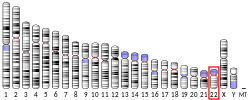
FBLN1 is the gene encoding fibulin-1, an extracellular matrix and plasma protein.
Fibulin-1 is a secreted glycoprotein that is found in association with extracellular matrix structures including fibronectin-containing fibers, elastin-containing fibers and basement membranes. Fibulin-1 binds to a number of extracellular matrix constituents including fibronectin, nidogen-1, and the proteoglycan, versican. Fibulin-1 is also a blood protein capable of binding to fibrinogen.
Fibulin-1 has modular domain structure and includes a series of nine epidermal growth factor-like modules followed by a fibulin-type module, a module found in all members of the fibulin gene family.
The human fibulin-1 gene, FBLN1, encodes four splice variants designated fibulin-1A, B, C and D, which differ in their carboxy terminal regions. In mouse, chicken and the nematode, C. elegans, only two fibulin-1 variants are produced, fibulin-1C and fibulin-1D.
FBLN1 has been shown to interact with:
FBLN1
FBLN1 is the gene encoding fibulin-1, an extracellular matrix and plasma protein.
Fibulin-1 is a secreted glycoprotein that is found in association with extracellular matrix structures including fibronectin-containing fibers, elastin-containing fibers and basement membranes. Fibulin-1 binds to a number of extracellular matrix constituents including fibronectin, nidogen-1, and the proteoglycan, versican. Fibulin-1 is also a blood protein capable of binding to fibrinogen.
Fibulin-1 has modular domain structure and includes a series of nine epidermal growth factor-like modules followed by a fibulin-type module, a module found in all members of the fibulin gene family.
The human fibulin-1 gene, FBLN1, encodes four splice variants designated fibulin-1A, B, C and D, which differ in their carboxy terminal regions. In mouse, chicken and the nematode, C. elegans, only two fibulin-1 variants are produced, fibulin-1C and fibulin-1D.
FBLN1 has been shown to interact with:
Recent media
Recent media