Hubbry Logo
FibronectinFibronectinMain
Open search
Fibronectin
Community hub
Fibronectin
logo
8 pages, 0 posts
0 subscribers
Be the first to start a discussion here.
Contribute something
Fibronectin
Fibronectin
from Wikipedia

FN1
Available structures
PDBOrtholog search: H0Y7Z1%20or%20B7ZLE5 PDBe H0Y7Z1,B7ZLE5 RCSB
Identifiers
AliasesFN1, CIG, ED-B, FINC, FN, FNZ, GFND, GFND2, LETS, MSF, fibronectin 1, SMDCF
External IDsOMIM: 135600; MGI: 95566; HomoloGene: 1533; GeneCards: FN1; OMA:FN1 - orthologs
Orthologs
SpeciesHumanMouse
Entrez
Ensembl
UniProt
RefSeq (mRNA)
RefSeq (protein)
Location (UCSC)Chr 2: 215.36 – 215.44 MbChr 1: 71.62 – 71.69 Mb
PubMed search[3][4]
Wikidata
View/Edit HumanView/Edit Mouse
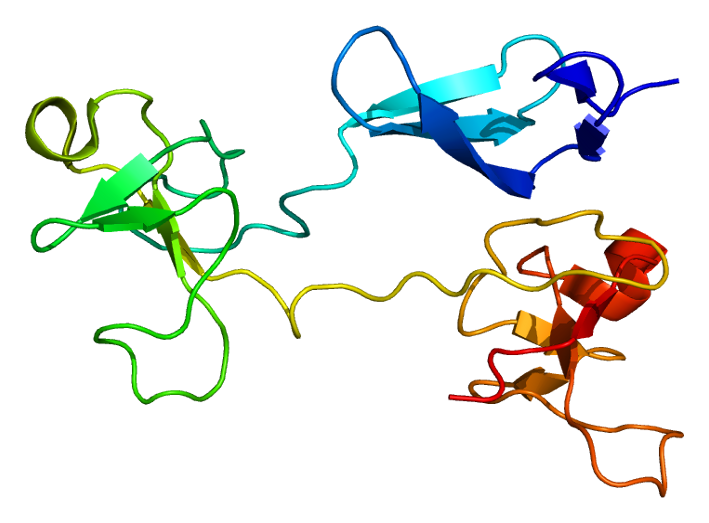
The modular structure of fibronectin and its binding domains

Fibronectin is a high-molecular weight (~500-~600 kDa)[5] glycoprotein of the extracellular matrix that binds to membrane-spanning receptor proteins called integrins.[6] Fibronectin also binds to other extracellular matrix proteins such as collagen, fibrin, and heparan sulfate proteoglycans (e.g. syndecans).

Fibronectin exists as a protein dimer, consisting of two nearly identical monomers linked by a pair of disulfide bonds.[6] The fibronectin protein is produced from a single gene, but alternative splicing of its pre-mRNA leads to the creation of several isoforms.

Two types of fibronectin are present in vertebrates:[6]

  • soluble plasma fibronectin (formerly called "cold-insoluble globulin", or CIg) is a major protein component of blood plasma (300 μg/ml) and is produced in the liver by hepatocytes.
  • insoluble cellular fibronectin is a major component of the extracellular matrix. It is secreted by various cells, primarily fibroblasts, as a soluble protein dimer and is then assembled into an insoluble matrix in a complex cell-mediated process.

Fibronectin plays a major role in cell adhesion, growth, migration, and differentiation, and it is important for processes such as wound healing and embryonic development.[6] Altered fibronectin expression, degradation, and organization has been associated with a number of pathologies, including cancer, arthritis, and fibrosis.[7][8]

Structure

[edit]

Fibronectin exists as a protein dimer, consisting of two nearly identical polypeptide chains linked by a pair of C-terminal disulfide bonds.[9] Each fibronectin subunit has a molecular weight of ~230–~275 kDa[10] and contains multiple copies of three types of modules: type I, II, and III. All three modules are composed of two anti-parallel β-sheets resulting in a Beta-sandwich; however, type I and type II are stabilized by intra-chain disulfide bonds, while type III modules do not contain any disulfide bonds. The absence of disulfide bonds in type III modules allows them to partially unfold under applied force.[11]

Three regions of variable splicing occur along the length of the fibronectin protomer. One or both of the "extra" type III modules (EIIIA and EIIIB) may be present in cellular fibronectin, but they are never present in plasma fibronectin. A "variable" V-region exists between III14–15 (the 14th and 15th type III module). The V-region structure is different from the type I, II, and III modules, and its presence and length may vary. The V-region contains the binding site for α4β1 integrins. It is present in most cellular fibronectin, but only one of the two subunits in a plasma fibronectin dimer contains a V-region sequence.

The modules are arranged into several functional and protein-binding domains along the length of a fibronectin monomer. There are four fibronectin-binding domains, allowing fibronectin to associate with other fibronectin molecules.[9] One of these fibronectin-binding domains, I1–5, is referred to as the "assembly domain", and it is required for the initiation of fibronectin matrix assembly. Modules III9–10 correspond to the "cell-binding domain" of fibronectin. The RGD sequence (Arg–Gly–Asp) is located in III10 and is the site of cell attachment via α5β1 and αVβ3 integrins on the cell surface. The "synergy site" is in III9 and has a role in modulating fibronectin's association with α5β1 integrins.[12] Fibronectin also contains domains for fibrin-binding (I1–5, I10–12), collagen-binding (I6–9), fibulin-1-binding (III13–14), heparin-binding and syndecan-binding (III12–14).[9]

Function

[edit]

Fibronectin has numerous functions that ensure the normal functioning of vertebrate organisms.[6] It is involved in cell adhesion, growth, migration, and differentiation. Cellular fibronectin is assembled into the extracellular matrix, an insoluble network that separates and supports the organs and tissues of an organism.

Fibronectin plays a crucial role in wound healing.[13][14] Along with fibrin, plasma fibronectin is deposited at the site of injury, forming a blood clot that stops bleeding and protects the underlying tissue. As repair of the injured tissue continues, fibroblasts and macrophages begin to remodel the area, degrading the proteins that form the provisional blood clot matrix and replacing them with a matrix that more resembles the normal, surrounding tissue. Fibroblasts secrete proteases, including matrix metalloproteinases, that digest the plasma fibronectin, and then the fibroblasts secrete cellular fibronectin and assemble it into an insoluble matrix. Fragmentation of fibronectin by proteases has been suggested to promote wound contraction, a critical step in wound healing. Fragmenting fibronectin further exposes its V-region, which contains the site for α4β1 integrin binding. These fragments of fibronectin are believed to enhance the binding of α4β1 integrin-expressing cells, allowing them to adhere to and forcefully contract the surrounding matrix.

Fibronectin is necessary for embryogenesis, and inactivating the gene for fibronectin results in early embryonic lethality.[15] Fibronectin is important for guiding cell attachment and migration during embryonic development. In mammalian development, the absence of fibronectin leads to defects in mesodermal, neural tube, and vascular development. Similarly, the absence of a normal fibronectin matrix in developing amphibians causes defects in mesodermal patterning and inhibits gastrulation.[16]

Fibronectin is also found in normal human saliva, which helps prevent colonization of the oral cavity and pharynx by pathogenic bacteria.[17]

Matrix assembly

[edit]

Cellular fibronectin is assembled into an insoluble fibrillar matrix in a complex cell-mediated process.[18] Fibronectin matrix assembly begins when soluble, compact fibronectin dimers are secreted from cells, often fibroblasts. These soluble dimers bind to α5β1 integrin receptors on the cell surface and aid in clustering the integrins. The local concentration of integrin-bound fibronectin increases, allowing bound fibronectin molecules to more readily interact with one another. Short fibronectin fibrils then begin to form between adjacent cells. As matrix assembly proceeds, the soluble fibrils are converted into larger insoluble fibrils that comprise the extracellular matrix.

Fibronectin's shift from soluble to insoluble fibrils proceeds when cryptic fibronectin-binding sites are exposed along the length of a bound fibronectin molecule. Cells are believed to stretch fibronectin by pulling on their fibronectin-bound integrin receptors. This force partially unfolds the fibronectin ligand, unmasking cryptic fibronectin-binding sites and allowing nearby fibronectin molecules to associate. This fibronectin-fibronectin interaction enables the soluble, cell-associated fibrils to branch and stabilize into an insoluble fibronectin matrix.

A transmembrane protein, CD93, has been shown to be essential for fibronectin matrix assembly (fibrillogenesis) in human dermal blood endothelial cells.[19] As a consequence, knockdown of CD93 in these cells resulted in the disruption of the fibronectin fibrillogenesis. Moreover, the CD93 knockout mice retinas displayed disrupted fibronectin matrix at the retinal sprouting front.[19]

Role in cancer

[edit]

Several morphological changes has been observed in tumors and tumor-derived cell lines that have been attributed to decreased fibronectin expression, increased fibronectin degradation, and/or decreased expression of fibronectin-binding receptors, such as α5β1 integrins.[20]

Fibronectin has been implicated in carcinoma development.[21] In lung carcinoma, fibronectin expression is increased especially in non-small cell lung carcinoma. The adhesion of lung carcinoma cells to fibronectin enhances tumorigenicity and confers resistance to apoptosis-inducing chemotherapeutic agents. Fibronectin has been shown to stimulate the gonadal steroids that interact with vertebrate androgen receptors, which are capable of controlling the expression of cyclin D and related genes involved in cell cycle control. These observations suggest that fibronectin may promote lung tumor growth/survival and resistance to therapy, and it could represent a novel target for the development of new anticancer drugs.

Fibronectin 1 acts as a potential biomarker for radioresistance[22] and for pan-cancer prognosis.[23]

FN1-FGFR1 fusion is frequent in phosphaturic mesenchymal tumours.[24][25]

Role in wound healing

[edit]

Fibronectin has profound effects on wound healing, including the formation of proper substratum for migration and growth of cells during the development and organization of granulation tissue, as well as remodeling and resynthesis of the connective tissue matrix.[26] The biological significance of fibronectin in vivo was studied during the mechanism of wound healing.[26] Plasma fibronectin levels are decreased in acute inflammation or following surgical trauma and in patients with disseminated intravascular coagulation.[27]

Fibronectin is located in the extracellular matrix of embryonic and adult tissues (not in the basement membranes of the adult tissues), but may be more widely distributed in inflammatory lesions. During blood clotting, the fibronectin remains associated with the clot, covalently cross-linked to fibrin with the help of Factor XIII (fibrin-stabilizing factor).[28][29] Fibroblasts play a major role in wound healing by adhering to fibrin. Fibroblast adhesion to fibrin requires fibronectin, and was strongest when the fibronectin was cross-linked to the fibrin. Patients with Factor XIII deficiencies display impairment in wound healing as fibroblasts don't grow well in fibrin lacking Factor XIII. Fibronectin promotes particle phagocytosis by both macrophages and fibroblasts. Collagen deposition at the wound site by fibroblasts takes place with the help of fibronectin. Fibronectin was also observed to be closely associated with the newly deposited collagen fibrils. Based on the size and histological staining characteristics of the fibrils, it is likely that at least in part they are composed of type III collagen (reticulin). An in vitro study with native collagen demonstrated that fibronectin binds to type III collagen rather than other types.[30]

Fibronectin genetic variation as a protective factor against Alzheimer's disease

[edit]

A specific genetic variation in Fibronectin gene was shown to reduce the risk of developing Alzheimer's disease in a multicenter, multiethnic genetic epidemiology and functional genomics study. This effect is believed to be through enhancing the brain's ability to clear the toxic waste and protein accumulation through the blood–brain barrier.[31]

Interactions

[edit]

Besides integrin, fibronectin binds to many other host and non-host molecules. For example, it has been shown to interact with proteins such fibrin, tenascin, TNF-α, BMP-1, rotavirus NSP-4, and many fibronectin-binding proteins from bacteria (like FBP-A; FBP-B on the N-terminal domain), as well as the glycosaminoglycan, heparan sulfate.

pUR4 is a recombinant peptide that is known to inhibit the polymerization of fibronectin in a number of cell types including fibroblasts and endothelial cells.[32]

Fibronectin has been shown to interact with:

See also

[edit]

References

[edit]

Further reading

[edit]
[edit]
Revisions and contributorsEdit on WikipediaRead on Wikipedia
from Grokipedia
Fibronectin is a large, multidomain that serves as a key structural component of the (ECM) and is also present in soluble form in , where it facilitates , migration, and tissue organization through binding to and other ECM molecules. Composed of two nearly identical polypeptide chains, each approximately 230–270 kDa, linked by bonds at their C-termini, fibronectin exhibits a modular structure featuring 12 type I, 2 type II, and 15–17 type III repeating domains that enable its diverse interactions. It exists in multiple isoforms generated by , including variants with extra type III domains (EDA and EDB) that are particularly prominent in cellular fibronectin produced by fibroblasts and other mesenchymal cells, as opposed to the plasma form synthesized primarily by hepatocytes. In its fibrillar form, fibronectin is assembled by cells into insoluble, viscoelastic networks within the ECM through a process called fibrillogenesis, which involves integrin-mediated mechanical tension that unfolds domains to expose cryptic binding sites for self-association and interactions with collagens, , and over 40 growth factors such as TGF-β and VEGF. This assembly is essential for ECM maturation and mechanotransduction, allowing cells to sense and respond to mechanical cues in their environment. Plasma fibronectin, circulating at concentrations of 300–400 μg/mL, differs from cellular fibronectin by lacking EDA and EDB domains and plays a distinct role in early by stabilizing clots during initial response. Physiologically, fibronectin is indispensable for embryonic development, where it supports processes like and branching , as evidenced by severe defects in fibronectin-null mice. In adult tissues, it promotes by guiding migration, , and ECM remodeling, with EDA-containing isoforms enhancing cell motility and proliferation at injury sites. Dysregulation of fibronectin contributes to pathological conditions, including —where excessive deposition stiffens tissues in organs like the lungs and kidneys—and cancer progression, as oncofetal isoforms facilitate tumor invasion and .

Structure and Isoforms

Primary Structure

Fibronectin is a high-molecular-weight that exists as a dimer, with each subunit ranging from approximately 220 to 250 , resulting in a total of 440 to 500 for the intact molecule. The two subunits are covalently linked by two bonds near their C-termini, forming a structure that is flexible and elongated under physiological conditions. This dimeric organization is essential for its role in assembly, though the primary itself dictates the modular blueprint independent of assembly dynamics. The primary structure of fibronectin is characterized by a modular architecture consisting of repeating domains: approximately 12 type I modules, 2 type II modules, and 15 to 17 type III modules, which together comprise about 90% of the polypeptide sequence. Type I modules, each about 40 long, feature two antiparallel β-sheets stabilized by three intramolecular bonds and are distributed at both the N- and C-termini, with the first five forming the N-terminal assembly domain that contributes to interactions with and . Type II modules, roughly 60 each, adopt a compact globular fold with two β-sheets and three bonds, facilitating and binding. In contrast, type III modules, around 90 apiece, form rod-like β-sandwich structures composed of seven β-strands without intramolecular bonds, enabling mechanical unfolding under tensile forces to expose cryptic binding sites for . This modular repetition allows for a "beads-on-a-string" linear arrangement, with inter-module linkers providing flexibility. Biophysically, fibronectin exhibits distinct solubility properties depending on its form: the plasma variant is highly soluble at concentrations up to 300–400 μg/mL in circulation, while the matrix-associated form becomes insoluble through into . The N-terminal 70-kDa fragment, comprising the first five type I modules, plays a pivotal role in initiating fibril assembly by self-associating and binding to other fibronectin domains. These properties arise from the intrinsic hydrophilicity of the soluble dimer and the exposure of hydrophobic sites during conformational changes in the matrix context. The modular domains of fibronectin demonstrate strong evolutionary conservation across metazoans, with type III modules particularly preserved in sequence and fold from to mammals, underscoring their ancient origin in evolution. Type I and II modules also show conservation in vertebrates, reflecting selective pressure for matrix-binding functionalities.

Isoforms and Splicing Variants

Fibronectin, a modular encoded by a single , undergoes extensive to produce multiple isoforms that exhibit tissue-specific expression and functional diversity. The primary sites of alternative splicing occur within three regions: the extra type III domain A (EDA, also known as EIIIA), extra type III domain B (EDB, or EIIIB), and the connecting segment-1 (CS, also referred to as the IIICS or V region). These splicing events allow for the inclusion or exclusion of specific exons, generating up to 20 distinct isoforms in humans, with variations in domain composition that influence protein , matrix incorporation, and interactions with cells. The EDA and EDB exons each encode a complete type III repeat and are typically excluded in plasma fibronectin, the soluble form predominantly synthesized by hepatocytes in the liver and circulating at concentrations of approximately 300–400 μg/mL in human blood. In contrast, cellular fibronectin isoforms, produced mainly by fibroblasts and other mesenchymal cells, often include EDA and/or EDB, rendering them insoluble and prone to incorporation into the . The CS region is more complex, undergoing variable splicing to produce isoforms such as V120 (full inclusion), V95 (partial inclusion with a 25-amino-acid deletion), and V0 (complete exclusion), which further diversifies the protein's adhesive properties. Plasma fibronectin generally lacks EDA and EDB but may include partial CS variants, while cellular forms show greater heterogeneity in all three sites. Tissue distribution of these isoforms is tightly regulated and reflects developmental and physiological needs. EDA and EDB are minimally expressed in healthy adult tissues but become prominently included during embryogenesis, , and tumorigenesis, where they can constitute up to 90% of total fibronectin in affected areas. For instance, EDA+ isoforms predominate in embryonic tissues and healing wounds, while EDB+ forms are enriched in vascularized embryonic structures and tumor stroma. The plasma isoform predominates in circulation and quiescent tissues, whereas cellular isoforms with EDA/EDB are fibroblast-derived and matrix-associated in dynamic environments like embryos and tumors. Functionally, the inclusion of EDA and EDB domains enhances fibrillogenesis and matrix stability, promoting stronger interactions with such as α5β1 and αvβ3, which in turn amplify , spreading, and signaling pathways like (FAK) activation. These extra domains also modulate and survival, with EDA+ fibronectin supporting migratory phenotypes in fibroblasts and endothelial cells. The variable CS region, particularly the CS1 peptide in V120 and V95 isoforms, plays a key role in cell motility by binding to like α4β1, facilitating leukocyte migration and tumor cell without significantly affecting matrix assembly. In contrast, the V0 isoform reduces these adhesive interactions, altering cellular responses to the matrix. Recent studies have elucidated the role of the EDB isoform in tumor , highlighting its pro-vascularization effects through interactions with (VEGF). For example, FN-EDB upregulates VEGF expression and matrix metalloproteinases in the , enhancing endothelial and vessel formation, which correlates with poor in various cancers. A 2025 review emphasized FN-EDB's potential as a therapeutic target, as its blockade disrupts without affecting normal vasculature. These findings build on earlier work showing EDB's specificity to angiogenic tissues, underscoring splicing's role in pathological adaptation.

Biological Functions

Cell Adhesion and Migration

Fibronectin plays a central role in mediating to the through specific interactions with receptors on the cell surface. The primary binding site for these interactions is the Arg-Gly-Asp (RGD) motif located within the tenth type III module (FNIII10) of the fibronectin molecule, which serves as the key recognition sequence for such as α5β1 and αvβ3. This motif enables direct attachment of cells like fibroblasts and endothelial cells to fibronectin substrates, facilitating stable anchorage during tissue organization. Adhesion specificity and affinity are further enhanced by a synergy region in the adjacent ninth type III module (FNIII9), containing the Pro-His-Ser-Arg-Asn (PHSRN) sequence, which cooperates with the RGD site to promote high-avidity binding, particularly to α5β1 integrin. Mutations or disruptions in this synergy site significantly reduce cell attachment efficiency on fibronectin-coated surfaces, underscoring its importance in selective integrin engagement. Beyond direct cell adhesion, fibronectin's N-terminal domains contribute to opsonization by binding to bacterial surfaces and cellular debris, thereby promoting their recognition and engulfment by phagocytic cells such as monocytes and macrophages through opsonic bridging. This process enhances immune clearance, as demonstrated by increased phagocytosis rates of fibronectin-coated particles compared to uncoated ones in vitro. In the context of cell spreading and motility, fibronectin supports the formation of focal adhesions—dynamic protein complexes that link the actin cytoskeleton to the —by allowing cells to exert traction forces that unfold fibronectin and expose cryptic binding sites within its modules. These forces, generated through actomyosin contraction, stabilize adhesions and enable cell protrusion, contributing to morphological changes like spreading on fibronectin matrices. Experimental studies using fibronectin-coated glass or plastic surfaces have shown that adherent cells, such as fibroblasts, rapidly extend lamellipodia—broad, actin-rich protrusions—at the , promoting directed migration with persistence indices up to 0.8 over several hours, far exceeding random movement on non-adhesive substrates. These assays highlight fibronectin's role in guiding haptotactic migration, where cells preferentially move toward higher fibronectin densities.

Signaling Pathways and Differentiation

Fibronectin engagement with , particularly α5β1, initiates intracellular signaling cascades that regulate , survival, and cytoskeletal dynamics. Upon binding, integrins cluster at s, recruiting and activating focal adhesion kinase (FAK), which autophosphorylates at 397 to create a docking site for Src-family kinases. Src activation further phosphorylates FAK and associated proteins, leading to the recruitment of adapter molecules like paxillin and talin. This complex activates Rho GTPases, such as RhoA, which promote actin stress fiber formation and focal adhesion maturation. Downstream, these events converge on the MAPK/ERK pathway to drive for cell proliferation and the PI3K/Akt pathway to enhance survival by inhibiting . The extra domain A (EDA)-containing isoform of fibronectin plays a specialized role in cell differentiation, particularly promoting differentiation during tissue remodeling. EDA-fibronectin binds to (TLR4) on fibroblasts, triggering activation and the expression of profibrotic genes such as I and α-smooth muscle . This signaling is cooperative with α4β1, which recognizes the EDA domain and facilitates a biphasic response: an early wave of inflammatory gene induction at 2 hours and a later profibrotic phase at 24 hours. EDA engagement thus shifts fibroblasts toward a contractile, matrix-producing essential for developmental processes. Fibronectin also participates in cross-talk with pathways to influence epithelial-mesenchymal transition (EMT), a process involving loss of and gain of migratory traits. Through integrin-mediated adhesion, fibronectin enhances TGF-β signaling by stabilizing Smad complexes and upregulating TGF-β receptor expression, thereby amplifying EMT transcription factors like and Twist. Concurrently, fibronectin modulates Wnt/β-catenin signaling by facilitating β-catenin stabilization and nuclear translocation, which synergizes with TGF-β to sustain EMT gene programs. This integration allows fibronectin to fine-tune cellular responses to microenvironmental cues during differentiation. Quantitative aspects of these interactions underscore their mechanosensitivity. The binding affinity of α5β1 to the RGD motif in fibronectin typically ranges from 10 to 100 nM, with activated states achieving sub-nanomolar dissociation constants (e.g., Kd ≈ 1.7 nM for the fibronectin type III9-10 modules). Signaling thresholds are force-dependent; unfolding and downstream , such as talin-mediated reinforcement, occur above ~2-5 pN per bond, while higher loads (~50-100 pN) trigger clutch slippage and pathway modulation. These parameters ensure that fibronectin signaling scales with matrix stiffness and tension.

Extracellular Matrix Dynamics

Synthesis and Secretion

The FN1 gene, which encodes fibronectin, is located on the long arm of human at the 2q35 band. Transcription of FN1 is regulated by promoters that respond to environmental cues, including cytokines such as interleukin-1β (IL-1β), which upregulates expression during inflammatory conditions to enhance fibronectin production. The liver, particularly hepatocytes, serves as the primary site of synthesis for the soluble plasma form of fibronectin, which circulates at concentrations of approximately 300–400 μg/mL. This hepatic production ensures a steady supply for systemic functions, distinct from the cellular fibronectin assembled locally by fibroblasts and other cell types. Biosynthesis of fibronectin begins with translation on ribosomes associated with the (ER), where co-translational modifications occur. These include N-linked at residues and O-linked at serine or residues, collectively adding about 8% by mass to the mature protein, which influences its stability and interactions. Within the ER, individual fibronectin polypeptides form dimers linked by bonds near their C-termini, a critical step for the protein's dimeric in both plasma and cellular forms. variants, such as those including extra type III domains, can influence the efficiency of these biosynthetic processes, though the core dimerization mechanism remains conserved. Following processing in the ER and Golgi apparatus, fibronectin is packaged into vesicles for secretion via , a process that delivers the dimer to the . Secreted fibronectin initially remains soluble but rapidly associates with the cell surface through interactions with , priming it for incorporation into the . This secretion is tightly controlled to match cellular demands. Regulation of fibronectin synthesis involves adaptive responses to cellular stress, notably hypoxia, where hypoxia-inducible factor 1α (HIF-1α) activates transcriptional feedback loops that increase FN1 expression and subsequent . For example, in hypoxic environments, HIF-1α signaling enhances fibronectin levels via pathways like PI3K/Akt, supporting cell survival and migration without altering baseline dimerization or . Such mechanisms ensure responsive production in dynamic physiological contexts.

Fibrillogenesis and Matrix Assembly

Fibrillogenesis is the process by which soluble fibronectin (FN) dimers polymerize into insoluble fibrillar structures within the (ECM), forming a scaffold essential for tissue architecture. This cell-dependent assembly transforms compact, soluble FN into extended that can reach lengths of several microns, driven by mechanical forces and molecular interactions. The process requires FN binding to cell surfaces, followed by conformational changes that expose binding sites for intermolecular associations. Initiation of fibrillogenesis begins with the self-association of the N-terminal 70-kDa domain (comprising modules I1-9), which binds to cell-surface receptors such as (e.g., α5β1) and syndecans to anchor FN dimers. This anchoring occurs primarily through the RGD motif in the III10 module and synergy sites in III9, enabling clustering and linkage to the , which generates tensile forces necessary for assembly. Syndecans, particularly syndecan-1 and -2, facilitate initial FN deposition by promoting formation and modulating activation, thereby nucleating fibril formation at cell-ECM interfaces. Elongation proceeds through cell-generated tensile forces that induce partial unfolding of type III modules, such as III1-3 and III12-14, exposing cryptic self-binding sites like those in III1 and the HepII domain (modules I13-15). This unfolding allows β-strand exchange between FN molecules, promoting end-to-end and lateral associations that extend fibrils into structures. The resulting exhibit a periodic alignment of FN dimers, with unfolding primarily in the III1 domain facilitating rapid elongation under mechanical tension from actomyosin contractility. Cross-linking integrates FN fibrils with other ECM components, enhancing network stability. The type I modules (I6-9 and I1-2) mediate binding to , while modules I10-12 interact with , incorporating FN into provisional matrices during . Transglutaminase enzymes, such as factor XIIIa, further stabilize these networks by forming covalent cross-links between FN molecules and associated proteins like and , converting soluble multimers into insoluble resistant to extraction. The kinetics of fibrillogenesis are time-dependent, typically spanning hours to days, with initial deposition forming small multimers that mature into thick under sustained tension. Factors such as and modulate assembly; elevated or high promotes FN extension and thicker by altering conformational states, while co-factors like CD93 enhance β1 activation to accelerate initiation during . These dynamics ensure regulated ECM formation, with fibril thickness varying from nanometers to hundreds of nanometers based on environmental cues. Recent studies (as of 2025) highlight fibronectin fibrillogenesis's role in driving three-dimensional neovessel formation and enhancing anti-tumor responses through α5β1 -mediated matrix remodeling.

Physiological Roles

In Embryonic Development and

Fibronectin was first identified in the as the large external transformation-sensitive protein (LETS), a surface prominent on embryonic fibroblasts and lost in transformed cells, highlighting its early recognition in developmental contexts. This discovery laid the groundwork for understanding fibronectin's role in cellular and tissue organization during embryogenesis. During and , fibronectin plays a pivotal role in guiding cell through interactions with receptors, particularly α5β1, which facilitate polarized cell protrusions and mediolateral intercalation essential for embryonic axis elongation. In fibronectin-null mice, embryos implant normally but exhibit lethal defects shortly after, around embryonic day 8.5, due to impaired , closure, and vascular development, underscoring fibronectin's indispensability for these processes. These -fibronectin interactions, briefly referencing mechanisms from broader cellular contexts, enable the spatiotemporal assembly of fibrils that direct tissue patterning. In and vasculogenesis, fibronectin supports endothelial cell tube formation and vessel remodeling by providing a scaffold for and migration during embryonic cardiovascular development. The extra domain A (EDA)-containing isoform of fibronectin contributes to vascular integrity and , as evidenced by roles in ; severe defects in heart and vascular development occur in fibronectin-null mice, emphasizing isoform-specific contributions to . For tissue homeostasis, fibronectin maintains integrity by integrating with other components, ensuring structural support and regulating cellular behaviors in adult tissues. It also modulates niches, such as in where it influences satellite cell quiescence and activation through integrin-mediated signaling. Fibronectin turnover is balanced by synthesis from resident cells and degradation primarily by matrix metalloproteinases MMP-2 and MMP-9, which cleave it to prevent excessive accumulation while preserving matrix dynamics for long-term tissue maintenance.

In Wound Healing and Tissue Repair

In the hemostasis phase of , plasma fibronectin rapidly extrudes from vessels and binds to within the forming clot, contributing to the assembly of a provisional that stabilizes the site and facilitates initial . This binding occurs primarily through the N-terminal domains of fibronectin interacting with polymerization sites, enhancing clot integrity and providing a scaffold for subsequent cellular infiltration. Additionally, plasma fibronectin acts as a nonimmune , promoting the of cellular debris and pathogens by macrophages and other immune cells, thereby clearing the bed during this early stage. During the inflammation and proliferation phases, cellular fibronectin, particularly the extra domain A (EDA)-containing isoform, is upregulated and secreted by fibroblasts and endothelial cells to support formation. The EDA isoform binds to on fibroblasts, promoting their to the wound site and differentiation into myofibroblasts, which deposit new components essential for tissue rebuilding. This process facilitates and epithelial cell across the provisional matrix, with fibronectin's role in further enabling directed fibroblast movement into the injury area. Recent 2025 research has demonstrated that engineered fibronectin variants, such as those fused with domains or incorporated into nanofiber scaffolds, enhance fibroblast and migration rates by up to 50% , offering potential for improved scaffolds in therapies. In the remodeling phase, fibronectin integrates with newly synthesized type I fibrils, stabilizing the maturing and guiding its alignment to restore mechanical strength. This integration occurs via fibronectin's collagen-binding domains, which template collagen fibrillogenesis and prevent disorganized deposition. As healing progresses, excess fibronectin is degraded by and matrix metalloproteinases (MMPs), such as MMP-2 and MMP-9, to facilitate scar resolution and tissue maturation, with balanced proteolysis ensuring the achieves approximately 80% of normal tensile strength. Clinically, fibronectin deficiencies or dysfunctional matrix assembly are associated with impaired in diabetic patients, where disrupts fibronectin secretion and fibrillogenesis, leading to persistent and delayed closure. Topical applications of fibronectin or its mimetics have shown promise in preclinical models, accelerating re-epithelialization by 20-30% in irradiated or full-thickness wounds, and ongoing investigations, including NIH-funded projects on chimeric fibronectin fragments like Chimectin, aim to translate these into human trials for enhanced repair in compromised healing scenarios.

Pathological Roles

In Cancer Progression and Metastasis

In cancer, fibronectin (FN) plays a pivotal role in tumor stroma remodeling by upregulating cellular FN isoforms containing extra domain A (EDA) and extra domain B (EDB), which promote epithelial-mesenchymal transition (EMT) and invasion. EDA-FN, secreted by cancer-associated fibroblasts, enhances tumor cell migration and scattering through integrin αvβ6 and α9β1 signaling, as demonstrated in studies of head and neck cells. Similarly, EDB-FN accumulates in the tumor stroma, fostering matrix stiffness and facilitating EMT via TGF-β pathway activation in various carcinomas, such as . These isoforms also drive ; for instance, EDA-FN upregulates VEGF-C expression in cells, supporting neovascularization. In gliomas, EDB-FN serves as a specific marker for tumor , with 2025 studies, including those exploring targeting oncofetal fibronectin in solid tumors, showing its overexpression correlates with poor prognosis and increased vascular density in high-grade malignancies. FN further facilitates metastasis by contributing to pre-metastatic niche formation through targeted deposition in distant organs. Tumor-derived exosomes from pancreatic and cells induce FN upregulation in stromal cells of the and liver, creating adhesive scaffolds that recruit VEGFR1+ bone marrow-derived cells via α4β1 binding, thereby promoting and immune suppression. This FN-enriched environment enhances and prepares sites for (CTC) seeding. Additionally, FN interactions with CTCs improve survival during circulation; plasma FN protects and cells from cytotoxic effects of inflammatory mediators by facilitating into clots and subsequent in models. Therapeutic strategies targeting FN show promise in inhibiting cancer progression, particularly through anti-FN antibodies and RGD mimetics. In models like E0771, function-blocking antibodies against α5β1 reduce FN fibril assembly, enhancing + T cell infiltration and synergizing with checkpoint blockade to achieve complete tumor regressions. Anti-EDB FN antibody-drug conjugates eliminate tumors in preclinical settings and exhibit enhanced efficacy when combined with inhibitors in solid tumor xenografts. RGD mimetics, which disrupt FN- binding, have been tested in clinical trials for ; for example, the αvβ3-targeted antibody Abegrin (etaracizumab) was evaluated in Phase II trials (NCT00072930), showing limited clinical activity when combined with in advanced metastatic . Moreover, FN1-FGFR1 fusions, identified in 42% of phosphaturic mesenchymal tumors—a rare subtype—drive oncogenic signaling and represent actionable targets, with fusion prevalence confirmed in studies from 2015 to 2024. As a biomarker, FN levels aid in assessing cancer aggressiveness and treatment response. Elevated serum and plasma FN correlates with poor prognosis in non-small cell (NSCLC), where higher concentrations reflect increased stromal remodeling and EMT. In , FN-mediated adhesion via β1 and αvβ3 confers resistance to TNF-α-induced and chemotherapeutic agents by activating survival pathways like Akt/, though it does not protect against radiotherapy.

In Fibrosis, Cardiovascular Diseases, and Other Pathologies

Fibronectin plays a central role in the of across multiple organs, where persistent expression of its extra domain A (EDA)-containing isoform promotes the maintenance of myofibroblasts, contractile cells responsible for excessive (ECM) deposition. In liver and , EDA-fibronectin interacts with α4β1 on fibroblasts, enhancing their differentiation into myofibroblasts and sustaining a profibrotic that resists and resolution. This persistent EDA expression is particularly evident in chronic models, where it drives ongoing ECM accumulation and scar formation, contributing to organ dysfunction. Similarly, in (IPF), dysregulation of matrix metalloproteinases (MMPs), such as MMP-9 and MMP-7, impairs the degradation of fibronectin-rich ECM, leading to unbalanced remodeling and progressive lung as highlighted in recent mechanistic reviews. In cardiovascular diseases, fibronectin contributes to both plaque stability and adverse remodeling processes. During , EDA-fibronectin stabilizes plaques by modulating cell (SMC) phenotypes, reducing SMC and promoting production within the fibrous cap, which helps prevent rupture in advanced lesions. Post-myocardial (MI), fibronectin isoforms, including EDA variants, accumulate in the infarct zone to support initial reparative ECM assembly; however, excessive or dysregulated deposition exacerbates , leading to and impaired cardiac function. In , transforming growth factor-β (TGF-β) induces elevated fibronectin expression in vascular cells, promoting ECM and vascular stiffness that perpetuate elevated . Beyond fibrotic and cardiovascular contexts, fibronectin influences other pathologies through fragment-mediated and impaired immune responses. In arthritis, particularly and , proteolytic fragments of synovial fibronectin, such as the 45-kDa fragment, act as pro-inflammatory signals by binding like α5β1 on synovial fibroblasts and chondrocytes, inducing release (e.g., IL-6, MMP-13) and degradation. Regarding bacterial infections, dysregulated fibronectin in pathological states can impair opsonization, as fibronectin normally bridges to via its binding to bacterial fibronectin-binding proteins and host ; however, in conditions like chronic or ECM alterations, this process fails, increasing susceptibility to pathogens such as by favoring bacterial adhesion over clearance. Therapeutic strategies targeting fibronectin hold promise for mitigating these pathologies, with anti-fibrotic agents like demonstrating efficacy in reducing fibronectin deposition. inhibits TGF-β-driven fibronectin synthesis and differentiation, thereby attenuating ECM accumulation in IPF and other fibrotic models, as evidenced by decreased fibronectin levels in treated fibroblasts and improved tissue outcomes in preclinical studies. Ongoing research explores fibronectin-specific inhibitors to enhance plaque stability in or modulate fragment activity in , aiming to restore balanced ECM dynamics without disrupting physiological repair.

Genetic and Regulatory Aspects

Genetic Variations and Polymorphisms

The FN1 gene, located on chromosome 2q35, spans approximately 75 kb and consists of 47 exons that encode the modular structure of fibronectin, including type I, II, and III repeats essential for its multifunctional roles. These exons facilitate , contributing to isoform diversity, though sequence variations primarily occur as single nucleotide polymorphisms (SNPs) or rare that influence expression or function. Common SNPs, such as rs1250259 (leading to a L15Q substitution in the ), alter fibronectin processing and secretion, thereby modulating plasma levels and associating with cardiovascular traits. Rare loss-of-function variants in FN1 provide protection against , particularly in APOEε4 carriers. A 2024 study identified the missense variant rs140926439 (p.Gly357Glu) in exon 10, which reduces AD risk (OR=0.29, 95% CI 0.11-0.78) and delays onset by about 3.4 years in homozygous APOEε4 individuals by limiting fibronectin deposition at the blood-brain barrier, thereby enhancing glymphatic clearance and reducing amyloid-β accumulation. Similarly, the rare variant rs116558455 was enriched in unaffected elderly APOEε4 homozygotes, supporting a protective through impaired fibronectin matrix assembly that mitigates neurovascular pathology. FN1 variants also confer disease susceptibility in other contexts. Intronic polymorphisms, including rs56380797 and rs35343655, increase risk for cerebral vein by potentially disrupting regulatory elements and fibronectin-mediated , with higher frequencies observed in affected cohorts. In cancer, the SNP rs6707530 (GG ) correlates with elevated FN1 expression, promoting invasive tumor morphology in by facilitating extracellular matrix remodeling and . Rare heterozygous mutations, such as missense changes in type III repeats (e.g., p.Trp1925Arg, rs137854486), underlie glomerulopathy with fibronectin deposits, causing dominant-negative effects that lead to glomerular fibronectin accumulation, , and progressive renal failure in up to 40% of familial cases. Allele frequencies of FN1 variants exhibit ethnic variation, influencing population-specific risks. For instance, the protective rs140926439 shows higher prevalence in cohorts (up to 3.3%) compared to (absent or <1% in gnomAD European data), potentially contributing to lower AD burden in certain groups, while other risk alleles like those in cardiovascular loci vary similarly across ancestries.

Protein Interactions and Post-Translational Modifications

Fibronectin engages in multiple protein interactions that are essential for its integration into the and regulation of cellular processes. It binds to various collagens, including types I through V, primarily through its type I modules, facilitating matrix assembly and stability. Additionally, fibronectin interacts with and other glycosaminoglycans via its type II and III modules (specifically modules 12-14), which modulates its conformation and binding affinity to other matrix components. The N-terminal domain of fibronectin also binds , promoting the incorporation of fibronectin into fibrin clots during and early . Furthermore, co-receptors such as CD93 enhance fibronectin's fibrillogenesis by activating β1 , thereby supporting matrix organization during . Post-translational modifications significantly influence fibronectin's solubility, stability, and bioactivity. Phosphorylation of fibronectin, for instance, can occur at specific serine residues and alters its interaction with cells; controlled by s like casein kinase II enhances cell attachment and traction forces on . variants of fibronectin, including those with oncofetal glycosylations, affect its and folding, with more processed glycans generally conferring greater compared to high-mannose forms. Limited by matrix metalloproteinase-9 (MMP-9) generates bioactive fragments from fibronectin, which can exhibit distinct functions such as promoting or inhibiting proliferation, separate from the intact protein. Regulatory enzymes further modulate fibronectin through cleavage and degradation pathways. ADAMTS proteases, such as ADAMTS3 and ADAMTS9, cleave fibronectin during remodeling, contributing to tissue adaptation and turnover. Ubiquitination targets fibronectin for lysosomal degradation, a process that is constitutive but can be enhanced by stressors like UV irradiation; reduced ubiquitination leads to accumulation of specific isoforms, such as fibronectin-EDA, in fibrotic conditions. Recent studies have highlighted fibronectin's interactions with (VEGF) in modulating . Fibronectin exposes cryptic VEGF-binding sites upon heparin-induced conformational changes, enhancing VEGF presentation to endothelial cells and promoting vascular sprouting; these pH-sensitive interactions are similarly utilized by VEGFR2. In pathological contexts, such as , fibronectin facilitates endothelial-to-mesenchymal transition, amplifying VEGF-driven vessel instability as observed in 2025 investigations.

References

Add your contribution
Related Hubs
Contribute something
User Avatar
No comments yet.