Hubbry Logo
Film perforationsFilm perforationsMain
Open search
Film perforations
Community hub
Film perforations
logo
8 pages, 0 posts
0 subscribers
Be the first to start a discussion here.
Film perforations
Film perforations
from Wikipedia
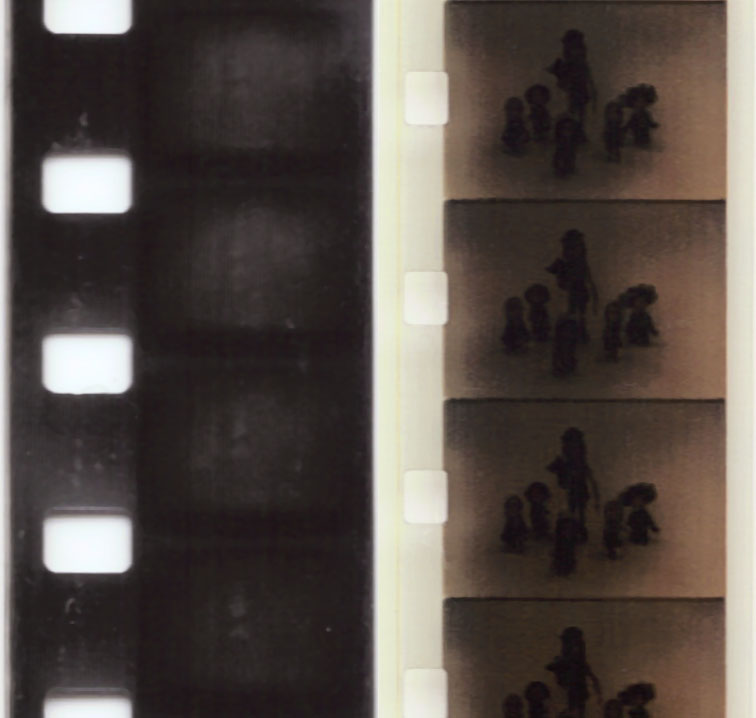
Perforations on Standard (left) and Super (right) 8 mm film

Film perforations, also known as perfs and sprocket holes, are the holes placed in the film stock during manufacturing and used for transporting (by sprockets and claws) and steadying (by pin registration) the film. Films may have different types of perforations depending on film gauge, film format, and intended usage. Perforations are also used as a standard measuring reference within certain camera systems to refer to the size of the frame.

Some formats are referred to in terms of the ratio "perforations per frame/gauge size" to provide an easy way of denoting size. For instance, 35mm Academy is also known as 4 perf-35mm; VistaVision is 8 perf-35mm; the long-time standard Todd-AO 70 mm film is 5 perf-70mm; and IMAX is 15 perf-70mm. This description does not indicate whether the film transport is horizontal or vertical, but uncertainty is precluded because there are currently no horizontal systems using the same number of perforations on the same gauge as a vertical one.

Pitch

[edit]

One of the characteristics of perforations is their "pitch". This is the measurement of the distance between the tops of two sequential perforations. For 35mm and 16mm motion picture film, there are two different pitches—short pitch (camera stocks intended for duplication or printing, and for most intermediate applications) and long pitch (camera stocks intended for direct projection, print stocks, and special intermediate applications, as well as 135 still camera film). For 35 mm film these are 0.1866" and 0.1870" (4.740 mm and 4.750 mm); for 16 mm film they are 0.2994" and 0.3000" (7.605 mm and 7.620 mm).

This distinction arose because early nitrocellulose film base naturally shrank about 0.3% in processing due to heat, so film printing equipment was designed to account for a size difference between its (processed) input and (unprocessed) output. When cellulose acetate film was developed, which does not shrink, two forms were produced for compatibility with existing equipment.[1]

Shapes

[edit]
The shapes and dimensions of 35 mm sprocket holes

Additionally, for 35 mm film only, there are several different shapes for these perforations.

BH

[edit]

BH (Bell and Howell) perforations are used on camera negative film and have straight tops and bottoms with outward curving sides; they have been in use since the beginning of the 20th century. The BH perforation is a circle of approximately diameter 0.110" (2.79 mm), with flattened sides giving a height of approximately 0.073" (1.85 mm).[2][3] The corners used to be sharp, but were slightly rounded in 1989 by 0.005" (0.127 mm) to give them greater strength. The BH1866 perforation, or BH perforation with a pitch of 0.1866", is the modern standard for negative and intermediate (interpositive / internegative) lab film. The BH1870 perforation, or BH perforation with a pitch of 0.1870", was the original standard for positive prints intended for direct projection (release prints).

KS

[edit]

KS (Kodak Standard) perforations were introduced in the 1920s to improve the life of projected film stock by eliminating the sharp corners which were prone to tearing.[2][1] and thus are occasionally used for high-speed filming, but failed to displace BH perforations for filming operations prior to projection. KS perfs are rectangular with rounded corners, and measure 0.0780" (1.981 mm) in height by 0.1100" (2.794 mm) in width.[4]

KS perforations were once recommended for negative and intermediate films, too, but only the Eastern Bloc countries (the Soviet Union and its satellites) adopted KS for these uses. The Western Bloc countries maintained BH perforations for negative and intermediate films, but adopted KS perforations for positive print films and for amateur films which were on a 35 mm wide base.

This was one of the very few instances where a Western Bloc recommendation and standard was adopted by the Eastern Bloc, but was wholly rejected by the very bloc which proposed its adoption.[citation needed] To this day, all Western Bloc professional cameras employ BH perforations, and so also do the intermediate applications (interpositives and internegatives, also known as the IP/IN process).

One aspect of this particular adoption was that it effectively prevented amateur camera films from being "diverted" to professional uses, as KS-perforated camera film will indeed pass undamaged through a Western Bloc professional camera, but it cannot maintain the required registration accuracy as the KS perforation is too tall relative to the professional camera's BH-sized registration pin(s).

The increased height also means that the image registration was considerably less accurate than with BH perfs, which remain the standard for negatives.[5] The KS1870 perforation, or KS perforation with a pitch of 0.1870", is the modern standard for release prints as well as for 135 still camera film.

65/70 mm, the other "professional" standard, was created many years after KS perforations had been recommended for negative as well as positive applications, and was adopted for positive applications. Consequently, 65/70 mm uses only KS perforations for all applications, negative, intermediate and positive.

DH

[edit]

The Dubray Howell (DH) perforation was first suggested in 1931 to replace both the BH and KS perfs with a single standard perforation which was a hybrid of the two in shape and size, being like KS a rectangle with rounded corners and a width of 0.1100" (2.79 mm), but with BH's height of 0.073" (1.85 mm).[6] This gave it longer projection life and also improved registration. One of its primary applications was usage in Technicolor's dye imbibition printing (dye transfer).[7] The DH perf never caught on, and Kodak's introduction of monopack Eastmancolor film in the 1950s reduced the demand for dye transfer,[5] although the DH perf persists in intermediate films to this day,[8] such as long-pitch interpositives contact-printed from short-pitch negatives.

CS

[edit]

In 1953, the introduction of CinemaScope—with its wider picture area and its use of four-track magnetic sound (four strips of magnetic tape coated on the film)—required another type of perforation. CinemaScope perforations are similar to KS perforations, but almost square in shape to accommodate the magnetic stripes.[9] These perfs are commonly referred to as CinemaScope (CS) or "Fox hole" perforations, or simply "Foxholes" (because, initially, all CinemaScope films were made by 20th Century Fox). Their dimensions are 0.0730" (1.85 mm) in width by 0.0780" (1.98 mm) in height. [10] Due to the size difference, CS perfed film cannot be run through a projector with standard KS sprocket teeth, but KS prints can be run on sprockets with CS teeth. CS-perforated stock has fallen out of use since the 1970s when 35 mm prints with magnetic sound became uncommon.

17.5 mm

[edit]

Standard 17.5 mm magnetic film uses 35 mm magnetic film which has been slit lengthwise into two equal widths and lengths before use. The "heads" of one-half of the 35 mm donor become the "heads" of one 17.5 mm length while the "tails" of one-half of the 35 mm donor become the "heads" of the other 17.5 mm length. 17.5 mm magnetic film was used as a secondary "shop standard" at Paramount and Universal for location dialogue recording ; it was most often run at 45 feet/minute, one-half of the usual 35 mm magnetic film speed, thereby achieving a 4-to-1 increase in economy although at a significant sacrifice in sound fidelity, but adequate for monophonic dialogue. For stereophonic dialogue, conventional 35 mm magnetic film was used.

For final mixing, the 17.5 mm dialog was usually initially copied to a 35 mm center track or full coat magnetic film element, whereby the dialog track entered the conventional mixing process as a second-generation 35 mm duplicate.

17.5 mm film, in this context, is for magnetic sound elements only, and only for very cost-conscious producers.

16 mm

[edit]

All 16 mm perforations are rectangles with rounded corners and are 1.27mm high by 1.829mm wide.[11] The tolerance for these perforation dimensions was reduced to 0.01 mm in 1989, which allowed 16 mm camera manufacturers to slightly enlarge their registration pins and thus improve image registration and steadiness tolerances to less than 1/750th of the image height of the 16 mm frame.

8 mm

[edit]

Standard 8 mm film uses 16 mm film that is perforated twice as frequently (half the pitch of normal 16 mm) and then split down the middle after development. Super 8 uses much narrower perfs on film which is already 8 mm wide. Super 8 pitch is 0.1667" and perfs are 0.045" high by 0.036" wide.

Placement

[edit]

All of the systems described above place the perforations down either one side (Standard and Super 8, Super 16) or both sides (35 mm and 65/70 mm). Standard 16 mm can be either single or double perf; some older cameras require double perf, but most can handle either. Because most cameras can handle both, and because of the increased popularity of Super 16 film, most 16 mm stock manufactured today is single perf unless requested otherwise.

Some obsolete formats such as 9.5 mm film and some variants of 17.5 mm film used a single perforation in the middle of the frame line between each image. This is however considered a liability, since any sprocket or claw error will likely damage the center of the frame itself rather than the outer edges.

Damage and inspection

[edit]

Damaged or broken perforations can lead to a tear in the film as it runs through the projector.[12] Film is commonly checked for broken sprocket holes before presentation, a process known as "spooling". Mechanical devices exist for this purpose, but the classic method is to place the finger and thumb of a gloved hand on the edges of the film, which is mounted on a winding bench, and to slowly run the film through the fingers, feeling for snags.[13]

See also

[edit]

References

[edit]
Revisions and contributorsEdit on WikipediaRead on Wikipedia
from Grokipedia
Film perforations, commonly referred to as sprocket holes, are small, precisely engineered holes punched along the edges of motion picture to facilitate its intermittent advancement through cameras, projectors, printers, and other film-handling equipment via engagement with toothed . These perforations ensure accurate frame registration and steady transport, preventing jitter or misalignment during exposure and projection, and have been integral to analog since the late . Typically rectangular with rounded corners to reduce tearing, they vary in size, pitch (distance between holes), and placement depending on the film gauge and intended use, such as camera originals versus release prints. The development of film perforations traces back to the 1880s, when 35mm film—originally adapted from 70mm for still photography—was modified for motion pictures by William Kennedy Laurie Dickson under , with perforations added to enable precise mechanical handling in devices like the Kinetograph camera. Early perforations were rudimentary and prone to damage, but by 1909, 35mm film with standardized perforations had gained international acceptance at a conference, driven by economic efficiencies in production and the 4:3 aspect ratio's versatility for various genres. Improvements continued into the , including rounded corners introduced by in 1923 to enhance durability, coinciding with the rise of technologies that influenced perforation placement to accommodate optical or magnetic tracks. Standardization of perforations has been overseen by organizations like the Society of Motion Picture and Television Engineers (SMPTE), with key specifications ensuring across the industry; for instance, 35mm film typically features four per frame, with short-pitch variants (0.1866 inches or 4.74 mm) for camera negatives and long-pitch (0.1870 inches or 4.75 mm) for positives. Common types include (BH) perforations, which are 0.073 inches (1.85 mm) high for negatives, and Standard (KS) at 0.078 inches (1.98 mm) for prints, both with a width of approximately 0.110 inches (2.8 mm) and tolerances as tight as ±0.001 inches (0.025 mm) to maintain precision. These standards, codified in SMPTE documents such as PH22.36-1964 for KS-1870, also extend to narrower gauges like 16mm, introduced in 1923 with one per frame initially on both edges, later adapted to single-edge for films. In preservation contexts, film perforations serve as identifiers for stock type, generation, and degradation risks, with their integrity crucial for archival storage under controlled conditions like 10°C and 40% relative to prevent shrinkage or tearing that could render films unprojectable. Variations such as CinemaScope's smaller perforations (introduced in 1954) or Super 16mm's single-sided design for wider image capture highlight adaptations for evolving formats, though the decline of analog film since the has shifted focus to digital alternatives while underscoring perforations' historical role in cinema's mechanical foundation.

History

Invention and Early Development

The development of film perforations originated in the late as a critical advancement for motion picture technology. In 1889, introduced the first commercial transparent made from , providing a flexible and durable base material essential for subsequent perforation processes. This innovation laid the groundwork for Thomas Edison's team to experiment with and playback devices. By 1891, William Kennedy Laurie Dickson, working under Edison, invented perforations for the , a peep-hole viewer that displayed short films. The film stock was slit lengthwise from 70mm-wide rolls into 35mm strips and punched with holes along both edges to facilitate precise, steady transport through the mechanism. These perforations, standardized at 64 per foot on each side under the "Edison Standard Gauge," engaged a wheel to prevent slippage and ensure consistent image advancement. Early implementations addressed key mechanical challenges in nascent film devices. Prior to perforations, experimental systems relied on friction-based transport, which often resulted in film slippage and erratic motion. The Kinetograph camera, developed concurrently by Dickson in 1891, incorporated these perforations to capture sequential images reliably, marking the first use of perforated 35mm film in motion picture recording. By the mid-1890s, this format extended to projection systems, including the Vitascope, demonstrated in 1895 by Charles Francis Jenkins and Thomas Armat, which utilized the same perforated 35mm stock to project images onto screens for audiences. These perforations enabled smoother operation compared to unperforated alternatives, transforming individual viewing into public exhibitions. Initial perforations, however, were experimental and lacked uniformity, leading to practical difficulties. In the , various shapes—often round or elongated with sharp corners—were employed, and sizes were noticeably smaller than later standards, resulting in inconsistent spacing and vulnerability to wear. Such irregularities caused projection inconsistencies, including jitter, tearing (known as the "crowsfoot" effect), and unsteady pictures due to poor with sprockets. These issues highlighted the need for refinement, though the basic perforated format established by Dickson persisted as the foundation for 35mm cinema.

Standardization and Evolution

The Society of Motion Picture and Television Engineers (SMPTE), founded in 1916, played a pivotal role in formalizing film perforation standards during the 1910s and 1920s to address inconsistencies in early formats stemming from William Kennedy Dickson's initial rectangular perforations in the 1890s. International acceptance of the 35mm format with four perforations per frame was achieved at a 1909 conference in . By 1917, SMPTE began developing standardized dimensions for 35mm film perforations, focusing on size, shape, and placement to ensure compatibility across cameras, printers, and projectors. In 1924, Eastman Kodak introduced the KS (Kodak Standard) perforation shape for positive prints, featuring rounded corners to minimize wear and tear during projection, which was subsequently adopted in SMPTE standards by the late 1920s. During the , SMPTE refined pitch standards to compensate for shrinkage in processed , establishing short pitch at 0.1866 inches for 35mm negatives and long pitch at 0.1870 inches for positives to maintain registration accuracy during and projection. These specifications, detailed in SMPTE PH22 series documents, allowed for a 0.3% dimensional differential that improved steadiness and reduced in sound-era films. An attempt at a universal in faced resistance from manufacturers like , but the short/long pitch system became the industry norm by the decade's end. The 1950s saw adaptations for formats, with employing 70mm using five perforations per frame for enhanced resolution in roadshow presentations like Oklahoma! (1955). Similarly, Paramount's utilized horizontal 35mm stock with eight perforations per frame to capture larger negative areas, doubling the image size over standard 4-perf without altering gauge. These innovations, standardized under SMPTE guidelines, supported the shift to aspect ratios up to 2.66:1 while preserving perforation integrity for optical printing. Refinements continued into the 1960s and 1980s for smaller gauges; introduced Super 8 in 1965 with narrower perforations (0.914 mm wide) on one edge only, enabling a larger frame area (5.79 mm x 4.01 mm) and easier cartridge loading for amateur filmmaking, as per SMPTE ST 149. For professional 16mm, the (ISO) tightened perforation tolerances to 0.01 mm in 1989, improving precision for television and documentary production by reducing cumulative pitch errors. The advent of in the accelerated the decline of traditional perforations, as projectors eliminated the need for mechanical transport, but they persisted in niche applications like 's 15-perf 70mm format for immersive experiences. As of 2025, IMAX continues to support film-based productions, with the first of a new fleet of 15/65mm cameras completed to sustain high-fidelity analog capture amid hybrid digital workflows.

Fundamentals

Definition and Purpose

Film perforations, commonly referred to as perfs or , are small, precisely punched holes located along the edges of motion picture . These holes are manufactured during the production of the film base to interlock with , pins, and pegs in cameras, printers, and projectors, facilitating mechanical handling of the film. The primary purposes of these perforations are to enable precise intermittent transport of the film, preventing image during exposure and projection; to ensure accurate frame registration for maintaining sharp focus; and to sustain steady movement at standardized speeds, such as 24 frames per second in 35mm formats. In the pre-digital era, perforations were critically necessary to accommodate the flexibility and dimensional shrinkage of analog materials, such as cellulose nitrate or , which could cause misalignment and issues without mechanical . This contrasts with non-perforated formats, like early paper-backed roll films such as Kodak's 828 introduced in , which relied on simpler advancement mechanisms unsuitable for the precision demands of motion picture and projection. Modern digital systems serve as proxies that bypass perforations entirely through electronic timing and , eliminating the mechanical vulnerabilities of physical .

Pitch

In film perforations, pitch refers to the vertical distance from the bottom edge of one perforation to the bottom edge of the next, serving as a critical parameter for precise frame advancement in cameras, printers, and projectors. Standard pitch values differ between negative and print stocks to accommodate processing effects. For 35 mm film, short pitch measures 0.1866 inches (4.740 mm) and is used for negatives, while long pitch is 0.1870 inches (4.750 mm) for prints; for 16 mm film, short pitch is 0.2994 inches (7.605 mm) for negatives, and long pitch is 0.3000 inches (7.620 mm) for prints. This dual standard exists primarily to compensate for shrinkage in the negative stock during development and aging, typically ranging from 0.1% to 0.3%, ensuring that the processed negative aligns properly with the print stock during contact printing without buckling or misalignment. Tolerance for pitch is tightly controlled at ±0.0004 inches (0.010 mm) in modern standards, reflecting an evolution from looser specifications in early 20th-century practices to enhance registration accuracy and reduce image unsteadiness.

Perforation Shapes

BH

The (BH) perforation features a rectangular shape with straight top and bottom edges and curved side edges, measuring 0.110 inches (2.79 mm) in width by 0.073 inches (1.85 mm) in height for . This design evolved from earlier round perforations to provide sharper corners while maintaining curved sides for better engagement with sprockets. Developed in the 1910s by the company through their introduction of a standardized film perforator in , the BH perforation was specifically created for camera negatives to minimize stress points during intermittent film transport. The shape and smaller size relative to print-oriented perforations allow for a larger image area on the film while ensuring precise registration in professional cameras and printers. The primary advantages of the BH perforation lie in its durability under high-tension pulls common in camera mechanisms, reducing the likelihood of tearing at stress points compared to earlier designs. It is compatible with short-pitch configurations in professional motion picture negatives, supporting steady advancement and alignment. As of 2025, the BH perforation remains the established standard for 35 mm negative and internegative stocks, adhering to ANSI/SMPTE specifications for ongoing use in capture and intermediate processes. In contrast to the rounded KS perforation favored for prints, BH prioritizes robustness for negative handling.

KS

The Kodak Standard (KS) perforation was introduced in 1924 by Eastman Kodak specifically for 35 mm release prints, featuring a fully rounded rectangular shape to extend print life by eliminating sharp corners that caused cracking and stress in the film base. This design marked an evolution from earlier angular perforation shapes, prioritizing durability during repeated projection. The KS perforation measures 0.078 inches high by 0.110 inches wide for , with all corners radiused for enhanced strength. Its larger size and rounded edges provide superior wear resistance in projectors compared to prior designs, reducing tear risks from intermittent movement and allowing prints to withstand more playthroughs. By the , the KS perforation had become the global standard for 35 mm positive prints due to its proven reliability in commercial theaters. It is commonly paired with a long pitch—slightly greater than that of original films—to match the effective dimensions of negatives after processing shrinkage, preventing slippage and ensuring precise registration during contact printing.

DH

The DuBay-Howell (DH) perforation, also known as Dubray-Howell, is a hybrid rectangular shape featuring rounded corners with a width of 0.110 inches and a height of 0.073 inches, combining the taller height of the (BH) perforation for compatibility with negative stock while adopting the narrower width typical of positive perforations to facilitate precise alignment. This design, with radiused corners at a radius of approximately 0.020 inches, aimed to mitigate excessive wear on sprocket pins during prolonged use in and projection . As a precursor to more standardized shapes, it addressed early challenges in maintaining tension and registration across different production stages. Developed in the early by engineers J. A. Dubray and A. S. Howell, the DH perforation was proposed in their 1933 paper to the Society of Motion Picture Engineers as a unified standard for , initially for Trucolor two-color prints at to balance mechanical stresses in step-contact printing processes. It gained adoption in early color film workflows, particularly for Technicolor's dye imbibition printing during the , where the hybrid dimensions ensured better overlay of multiple color separation matrices without slippage or distortion. The perforation's pitch was standardized at 0.1870 inches, allowing four perforations per frame in 35 mm formats, which supported the era's transition from black-and-white to additive and systems. Its specific application was limited to transitional color print stocks in the 1930s, including imbibition releases, where it provided enhanced registration accuracy in dye-transfer operations by matching negative height for seamless negative-to-positive transfers while the rounded edges reduced tear risks during the gelatin matrix handling inherent to . By the , however, DH perforations were phased out in favor of more durable alternatives, as advancements in film base materials and printer designs rendered the hybrid form obsolete for widespread use. This limited lifespan underscores its role as a specialized solution for the mechanical demands of early multicolor rather than a long-term industry standard.

CS

The CS perforation, commonly referred to as the "Fox hole" perforation, was introduced in 1953 by 20th Century-Fox for anamorphic motion picture prints. This design emerged to support the wide-screen format's requirements, particularly by providing additional space on the 35mm film strip for soundtracks without compromising the projected image area. It was specifically engineered for early productions, such as , which debuted the system with four-track magnetic . The features a nearly square , measuring 0.073 inches (1.85 ) in height by 0.078 inches (1.98 ) in width. This compact form, smaller than the contemporaneous KS , reduced the total area allocated to perforations on each side of the film, thereby maximizing the available width for the anamorphic image frame and sound elements. The dimensions allowed the to expand to approximately 0.912 inches wide by 0.715 inches high, compared to the standard 0.825 inches by 0.600 inches, increasing the usable picture area by about 32%. A key advantage of the perforation was its facilitation of the 2.55:1 in 35mm prints from 1953 to 1956, where the reduced perforation size freed up space for four magnetic sound stripes to deliver . It also proved compatible with variable-density optical tracks in later "magoptical" configurations, enabling the shift to a 2.35:1 by 1957 without further image reduction, as the optical track occupied a narrower band alongside the magnetic stripes. This versatility supported high-fidelity audio integration in presentations, enhancing the immersive experience on larger theater screens. Adapted briefly from the taller KS perforation by shortening its height, the CS design was an interim solution tailored to CinemaScope's initial magnetic sound needs. By the late , it was largely replaced by returning to KS standards as CinemaScope adopted combined magnetic-optical sound formats and broader industry normalization. However, CS perforations lingered in select widescreen releases through the , particularly for films retaining magnetic-only audio tracks, before being fully supplanted by SMPTE-approved universal standards.

Placement

Side Configuration

Film perforations are configured on either one or both edges of the film strip, influencing stability, image area utilization, and compatibility with sound systems. Single-sided perforations, also known as single-perf or 1R, feature holes along only one edge, which became common in to accommodate optical or magnetic soundtracks on the opposite edge, thereby preserving space for audio without reducing the image area excessively. This configuration also offers cost savings in manufacturing and allows for a larger image frame in formats like Super 16 mm, where the unused edge space is repurposed for wider aspect ratios. In contrast, double-sided perforations, or double-perf (2R), place sprocket holes on both edges, providing balanced mechanical pull during transport through cameras, printers, and projectors. This setup is the standard for , ensuring steadier registration and minimizing skewing or lateral movement that could distort the image. The dual engagement by s distributes tension evenly, enhancing precision in professional applications where image stability is critical. Historically, 35 mm film adopted double-sided perforations from its inception, with Thomas Edison describing a double-perforated cine film band in his 1889 caveat, establishing it as the norm for early motion pictures to support reliable intermittent movement. For 16 mm film, introduced by Eastman Kodak in 1923 as an affordable amateur alternative to 35 mm, the initial configuration was double-sided to ensure steady transport in simple home projectors. The shift to single-sided perforations in 16 mm occurred in the mid-1930s with the advent of optical sound, exemplified by the RCA Victor Sound 16 mm camera released in 1934, which required space for soundtracks and prompted modifications in professional equipment. By the 1960s, single-perf further evolved for Super 16 mm to optimize image quality, though double-perf remained available for silent or specialized uses. Mechanically, double-sided perforations enable more robust handling in high-precision systems, as the symmetric pull reduces weave and improves frame-to-frame consistency, a key factor in 35 mm's adoption for theatrical projection. Single-sided setups, while sufficient for 16 mm's lighter-duty applications, can introduce slight imbalances if not properly tensioned, but they facilitate easier integration of and larger images without compromising amateur accessibility. Shapes such as BH are typically used in double-sided 35 mm configurations for optimal durability.

Alignment with Frames

In motion picture film, the vertical alignment of perforations with the image frame is determined by the perforation pitch, which establishes the spacing between consecutive perforations along the film's length. In standard , the pitch is typically 0.187 inches (4.75 mm) for release prints and 0.1866 inches (4.74 mm) for camera negatives, allowing for four perforations per frame in the conventional Academy format. This configuration results in a frame height of approximately 0.748 inches (19 mm), ensuring consistent pulldown during camera exposure and projector advancement at 24 frames per second. Horizontally, perforations are positioned near the film's edges to facilitate precise registration without encroaching on the image area. The standard places the perforations such that the margin between the film edge and the perforation allows for secure engagement by transport mechanisms, with tolerances of ±0.002 inches (0.05 mm) to accommodate manufacturing variations and ensure compatibility with camera and projector gates. This positioning adheres to specifications in ANSI/SMPTE 93-2005 for dimensions, maintaining a clear zone between the perforations measuring 0.980 inches (24.89 mm) wide, within which the Academy aperture image frame measures 0.864 inches (21.95 mm) wide. The primary function of this alignment is to enable accurate registration, where one or more pins in the camera or gate engage the perforations to immobilize the film during exposure or projection, minimizing vertical weave and . By locking the film in place via the perforations, the system achieves sub-millimeter precision, critical for sharp imagery in formats like 35 mm. Variations exist to optimize film usage; for instance, the 3-perf pulldown method advances the film by three perforations per frame instead of four, reducing negative stock by about 25% for productions while relying on the same pitch-based alignment for registration. This approach, common in modern 35 mm workflows with digital intermediates, maintains frame steadiness through adapted pin engagement.

Applications by Film Format

35 mm

The 35 mm film format, the dominant standard for professional motion picture production since the late , features perforations on both edges of the 1.377-inch-wide or base to enable precise transport through cameras, printers, and projectors. This double-sided configuration originated in the with early Edison and systems, establishing a pitch that yields approximately 64 perforations per foot per side, allowing for 16 frames per foot in standard operation. In the conventional 4-perforation (4-perf) pull-down setup, each frame spans four perforations vertically, corresponding to a pulldown distance of 0.748 inches (19.0 ) at a long pitch of 0.1870 inches per perforation, supporting the aspect ratio of 1.37:1 with an area of approximately 0.825 inches wide by 0.600 inches high. This configuration maximizes resolution and stability for sound-era films, with the perforations engaging sprockets to advance the film intermittently at 24 frames per second. (BH) perforations, measuring 0.110 inches wide by 0.073 inches high with sharp corners, are standard for camera negatives to ensure registration accuracy during exposure. Variations in pull-down adapt the format for widescreen and cost efficiency. employs a 3-perf pull-down, reducing the frame height to about 0.560 inches (14.2 mm) while retaining the full 0.980-inch width, enabling aspect ratios up to 2.39:1 and yielding 25% savings in and processing compared to 4-perf. , introduced in 1954, runs horizontally through the camera with an 8-perf pull-down (four perfs per side), capturing a larger 1.485-inch by 0.981-inch frame for enhanced detail, though it requires specialized reduction printing for standard vertical projection. For release prints, Kodak Standard (KS) perforations replace BH types, with a taller 0.078-inch height and rounded corners for greater durability against wear during projection, using the same 0.1870-inch long pitch to accommodate base material shrinkage. These specifications persist in 2025 for high-end productions, including 35 mm originals converted to IMAX formats via scanning and digital remastering, as seen in select theatrical releases shot on Kodak Vision3 stocks.

16 mm

The 16 mm film format, introduced by Eastman Kodak in 1923 as an affordable reversal film for amateur cinematography, features rectangular perforations with rounded corners to facilitate precise advancement and registration in cameras and projectors. These perforations measure 1.829 mm in width and 1.27 mm in height, with a corner radius of 0.25 mm and tolerances of ±0.010 mm to ensure compatibility across equipment. The perforation pitch is standardized at 0.2994–0.3000 inches (7.605–7.620 mm), with the shorter pitch typically used for camera negative stock and the longer for print films to minimize slippage during processing. In configurations, is often single-sided perforated to accommodate an optical or magnetic , leaving the opposite edge unperforated for audio recording space, while double-sided is reserved for silent applications. Each frame aligns with one vertically, advancing the film at a rate of approximately 40 frames per foot, which optimizes runtime —a standard 400-foot roll yields about 11 minutes at 24 frames per second, effectively utilizing over 200 feet for extended amateur or documentary sequences without frequent reloading. Over time, standards evolved to improve precision; in 1989, ISO specifications tightened tolerances to ±0.01 mm, enabling better frame registration and reducing image instability in projectors, particularly beneficial for workflows. These shapes are adapted at a reduced scale from 35 mm standards like BH and KS for consistent manufacturing. In 2025, reversible color stocks such as 100D continue to support niche indie filmmaking, providing daylight-balanced, positive-image results ideal for portable production.

8 mm

Standard 8 mm film, introduced by Kodak in 1932 for amateur home movies, utilizes perforations derived from double-perforated 16 mm stock that is exposed in a camera on one half at a time, then split lengthwise after processing. This results in an 8 mm wide film with a single row of perforations along one edge, featuring a half-pitch of 0.15 inches (3.81 mm) to accommodate 80 perforations per foot and support 80 frames per foot at standard projection speeds. The perforations themselves measure 0.072 inches (1.83 mm) wide by 0.050 inches (1.27 mm) high, matching the standard dimensions for 16 mm film perforations to ensure compatibility with splitting and sprocket engagement in consumer cameras and projectors. Each frame corresponds to one perforation, with a typical frame size of approximately 4.5 mm × 3.3 mm and a standard running speed of 16 frames per second, though some cameras operated at 18 fps for smoother motion. In 1965, launched Super 8 as an improved format for home filmmaking, featuring narrower on pre-slit 8 mm stock to maximize the image area while maintaining single-sided placement. The Super 8 have a pitch of 0.1667 inches (4.234 mm long pitch), with dimensions of 0.036 inches (0.914 mm) wide by 0.045 inches (1.143 mm) high, allowing for a larger frame size of about 5.8 mm × 4.0 mm—roughly 50% greater area than standard 8 mm for sharper, more detailed images. Like its predecessor, Super 8 employs one per frame and runs at a standard 18 frames per second, optimizing for consumer projectors and enabling longer run times per cartridge (typically 3 minutes). To incorporate sound, Kodak introduced magnetic-striped Super 8 film in 1973, reserving space along the unperforated edge for a full-coat stripe that recorded audio directly onto the film during projection or post-processing. This innovation expanded home movie capabilities without altering perforation design, though it required compatible sound projectors and reduced available space slightly for the soundtrack. Both formats peaked in popularity during the 1960s through 1980s, capturing family events and amateur narratives before supplanted them, but Super 8 has seen a revival among analog enthusiasts in recent years, including renewed interest in 2025 driven by new film stocks and creative communities seeking tactile, grainy aesthetics.

Specialized Formats

Specialized film formats employ unique perforation configurations to accommodate larger gauges, higher resolutions, or specific production needs beyond standard 35 mm, 16 mm, and 8 mm systems. The 17.5 mm format, often derived by slitting 35 mm magnetic , featured half-pitch perforations—typically single perforations per frame on one edge—to support reduced transport speeds of 45 feet per minute for and sound recording applications from to the . This half-pitch design, approximately 0.374 inches (9.5 mm) per frame compared to the standard 0.748 inches (19 mm) for four-perforation 35 mm, allowed efficient use of the narrower while maintaining synchronization for magnetic audio tracks. Early iterations, such as the prototype camera from around 1917, utilized 17.5 mm with two-sided perforations for amateur filmmaking, though the format remained niche and largely obsolete by the mid-20th century. In contrast, 70 mm formats doubled the width of 35 mm stock to enable widescreen presentation, with perforations on both edges for enhanced stability during vertical transport. The Todd-AO process, introduced in 1955, employed a five-perforation vertical pull-down on 70 mm prints derived from 65 mm negatives, achieving a 2.2:1 aspect ratio at 24 or 30 frames per second. These perforations maintained the standard pitch of 0.187 inches (4.75 mm), identical to 35 mm BH types, but spanned five per frame for an image area of approximately 1.912 inches wide by 0.870 inches high. The 65 mm camera negatives, perforated on both sides without space for soundtracks, were printed to 70 mm release stock that included additional width for six-track magnetic audio, optimizing resolution for roadshow presentations. IMAX represents an extreme specialization within 70 mm, using a 15/70 configuration where the film runs horizontally through the , exposing 15 perforations per frame to create a frame size of approximately 52 mm wide by 70 mm high—nearly nine times the area of a standard 35 mm frame. This horizontal orientation, with perforations along the 70 mm edges, supports a suited to tall, immersive giant screens up to 80 feet wide, providing superior detail and brightness for large-format theaters. The perforations, also at 0.187-inch pitch and double-sided, are engineered for precise registration in high-speed pulls of up to 34 meters per minute, ensuring stability on curved or domed surfaces without the vertical constraints of conventional 70 mm systems.

Damage, Inspection, and Preservation

Types of Damage

Film perforations are susceptible to several forms of mechanical and environmental degradation that compromise their structural integrity and functionality during transport in cameras, printers, and projectors. Common wear types include elongation, where the holes stretch due to repeated frictional contact with teeth, leading to burrs on the edges that progress to bending and distortion. Tearing often initiates at the corners of the perforations, particularly in earlier designs with sharp angles, such as (BH) perforations, where strain from intermittent movement causes splits or "crowsfoot" tears extending outward from the hole. Shrinkage-induced misalignment occurs as the film base contracts over time, altering the pitch between perforations and causing them to fail to register properly with transport mechanisms. These damages arise from operational stresses and suboptimal conditions throughout the film's lifecycle. Excessive tension during advancement in cameras or projectors applies concentrated force at the perforations, promoting wear and deformation, especially if sprocket teeth are worn or misaligned. from sprocket engagement exacerbates elongation, while accumulation in projectors can introduce abrasive particles that accelerate edge damage. Improper storage at relative humidity levels above 60% can soften the film base, increasing vulnerability to , whereas levels below 40% induce that heightens cracking risk during handling. Format-specific vulnerabilities highlight how scale and usage patterns influence damage prevalence. In , the smaller perforation size and frequent home handling make it particularly prone to splitting and minor tears, which are challenging to manage due to the narrow margins for repair alignment, especially on shrunken stock. For 35 mm negatives, stretching often results from high tension applied during laboratory processing and winding, distorting perforations and contributing to overall length changes. The consequences of perforation damage disrupt projection quality and film longevity. Elongated or torn perforations lead to unsteady transport, manifesting as frame jitter or image vibration on screen, which can also cause focus instability as the film fails to maintain steady registration in the gate. In severe cases, progressive tears result in complete film breakage during runs, halting playback and risking further emulsion damage from snags. Shapes like Kodak Standard (KS) perforations, with rounded corners introduced in 1924, were specifically designed to mitigate such corner-initiated tearing by distributing stress more evenly.

Inspection Methods

Inspection of film perforations involves a range of techniques to detect defects such as , elongation, and dimensional inaccuracies that could compromise transport through projectors or scanners. Visual and manual methods remain foundational, particularly for routine checks before projection or . Operators spool the film slowly under controlled lighting, such as a light box, while using a magnifying to scrutinize perforations for cracks, chips, or . Concurrently, gloved fingers are trailed along the film edges during rewinding to feel for rough, torn, or poorly mended areas, identifying elongation or other irregularities through tactile feedback. For precise assessment of perforation pitch, digital calipers measure the distance between consecutive holes, ensuring compliance with manufacturing tolerances of ±0.0005 inches to prevent misalignment during use. Mechanical tools complement these approaches by simulating operational stresses. testers mimic pull-down mechanisms to reveal skips or binding caused by damaged perforations, while shrinkage gauges engage sprocket holes on pins to quantify dimensional changes, with readings above 0.8% for 16 mm or 1% for 35 mm indicating potential issues like elongation. Advanced digital methods, increasingly adopted in archival settings by 2025, employ high-resolution scanners with laser-based profiling to non-destructively measure diameter and pitch to within 0.001 mm, enabling detailed integrity assessments without physical contact. These systems facilitate automated detection of subtle defects in legacy films. Industry guidelines emphasize pre-projection checks to verify condition and mitigate risks during handling or playback.

Preservation Techniques

Preservation of perforations is essential for maintaining the structural integrity of motion picture in archival collections, as perforations facilitate precise through projectors and scanners. Optimal storage conditions involve maintaining cool temperatures between 4°C and 10°C and relative humidity levels of 30% to 50% in sealed vaults to minimize shrinkage, which can distort perforation alignment and lead to failures. shrinkage, often accelerated by degradation in acetate-based films, causes the base to contract unevenly, potentially tearing or misaligning perforations, whereas bases offer greater dimensional stability and resistance to such environmental effects. Proper handling practices further protect perforations during routine archival access and preparation. Archivists recommend using or gloves to avoid oils and abrasions that could weaken edges, and rewinding under low tension—typically not exceeding 0.25 pounds—to prevent stretching or tearing of the sprocket holes. Splices should be avoided near edges to minimize stress points that could propagate damage during transport. Restoration techniques focus on repairing damaged perforations to enable safe handling and projection. Mechanical repairs often involve precision punches to realign or recreate missing sprocket holes, as demonstrated in the restoration of early films where 2.5mm punches were used with splicing tape on scrap stock for accurate replication. For severely compromised reels, digital scanning allows non-destructive capture of content, enabling 2025-era reprints on stable media without relying on original perforations. Long-term preservation may include freezing at -10°C or lower in moisture-barrier containers, which can extend usability for decades by halting degradation processes. In modern contexts, while the transition to digital workflows has reduced overall demand for physical handling, niche productions such as the 35 mm VistaVision-format shoot for (printed to 70 mm), released in 2024, still require laboratories equipped for perforation-matched processing to ensure compatibility with legacy equipment. serves as a prerequisite to these techniques, identifying issues before storage or restoration proceeds.

References

Add your contribution
Related Hubs
User Avatar
No comments yet.