
Recent from talks
Folliculogenesis
Knowledge base stats:
Talk channels stats:
Members stats:
Folliculogenesis
In biology, folliculogenesis is the maturation of the ovarian follicle, a densely packed shell of somatic cells that contains an immature oocyte. Folliculogenesis describes the progression of a number of small primordial follicles into large preovulatory follicles that occurs in part during the menstrual cycle.
Contrary to male spermatogenesis, which can last indefinitely, folliculogenesis ends when the remaining follicles in the ovaries are incapable of responding to the hormonal cues that previously recruited some follicles to mature. This depletion in follicle supply signals the beginning of menopause.
The primary role of the follicle is oocyte support. From the whole pool of follicles a woman is born with, only 0.1% of them will rise ovulation, whereas 99.9% will break down (in a process called follicular atresia). From birth, the ovaries of the human female contain many immature, primordial follicles. These follicles each contain a similarly immature primary oocyte. At puberty, clutches of follicles begin folliculogenesis, entering a growth pattern that ends in ovulation (the process where the oocyte leaves the follicle) or in atresia (death of the follicle's granulosa cells).[citation needed]
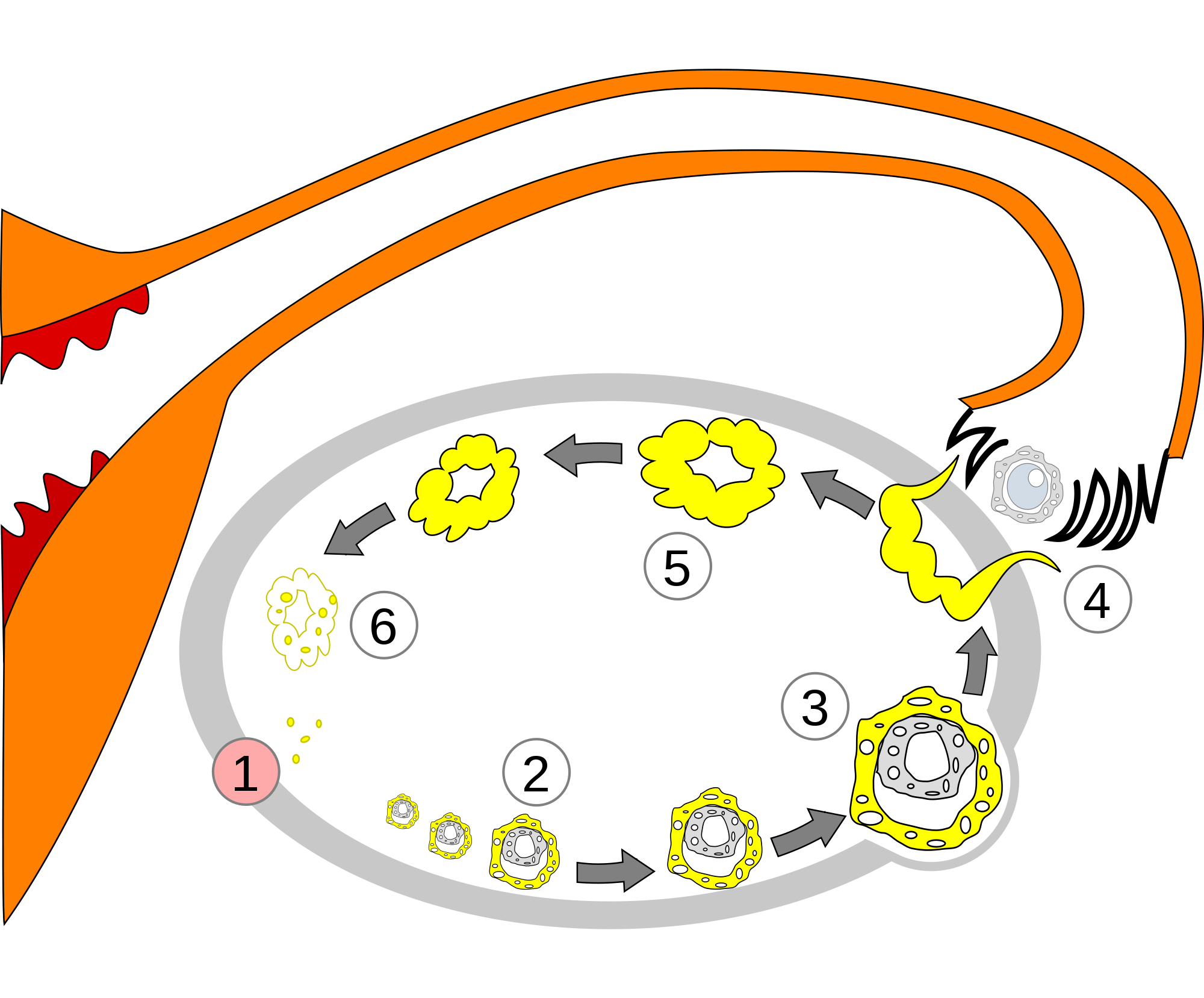
During follicular development, primordial follicles undergo a series of critical changes in character, both histologically and hormonally. First they change into primary follicles and later into secondary follicles. The follicles then transition to tertiary, or antral, follicles. At this stage in development, they become dependent on hormones, particularly FSH which causes a substantial increase in their growth rate. The late tertiary or pre-ovulatory follicle ruptures and discharges the oocyte (that has become a secondary oocyte), ending folliculogenesis.
Follicle 'selection' is the process by which a single 'dominant' follicle is chosen from the recruited cohort or wave for preferential growth. It has generally been documented to occur once in the early- to mid- follicular phase of the menstrual cycle, leading to ovulation.
Folliculogenesis is continuous, meaning that at any time the ovary contains follicles in many stages of development. The majority of follicles die and never complete development. A few develop fully to produce a secondary oocyte which is released by rupture of the follicle in a process called ovulation.
The growing follicle passes through the following distinct stages that are defined by certain structural characteristics:
In a larger perspective, the whole folliculogenesis, from primordial to preovulatory follicle, belongs to the stage of ootidogenesis of oogenesis.
Hub AI
Folliculogenesis AI simulator
(@Folliculogenesis_simulator)
Folliculogenesis
In biology, folliculogenesis is the maturation of the ovarian follicle, a densely packed shell of somatic cells that contains an immature oocyte. Folliculogenesis describes the progression of a number of small primordial follicles into large preovulatory follicles that occurs in part during the menstrual cycle.
Contrary to male spermatogenesis, which can last indefinitely, folliculogenesis ends when the remaining follicles in the ovaries are incapable of responding to the hormonal cues that previously recruited some follicles to mature. This depletion in follicle supply signals the beginning of menopause.
The primary role of the follicle is oocyte support. From the whole pool of follicles a woman is born with, only 0.1% of them will rise ovulation, whereas 99.9% will break down (in a process called follicular atresia). From birth, the ovaries of the human female contain many immature, primordial follicles. These follicles each contain a similarly immature primary oocyte. At puberty, clutches of follicles begin folliculogenesis, entering a growth pattern that ends in ovulation (the process where the oocyte leaves the follicle) or in atresia (death of the follicle's granulosa cells).[citation needed]
During follicular development, primordial follicles undergo a series of critical changes in character, both histologically and hormonally. First they change into primary follicles and later into secondary follicles. The follicles then transition to tertiary, or antral, follicles. At this stage in development, they become dependent on hormones, particularly FSH which causes a substantial increase in their growth rate. The late tertiary or pre-ovulatory follicle ruptures and discharges the oocyte (that has become a secondary oocyte), ending folliculogenesis.
Follicle 'selection' is the process by which a single 'dominant' follicle is chosen from the recruited cohort or wave for preferential growth. It has generally been documented to occur once in the early- to mid- follicular phase of the menstrual cycle, leading to ovulation.
Folliculogenesis is continuous, meaning that at any time the ovary contains follicles in many stages of development. The majority of follicles die and never complete development. A few develop fully to produce a secondary oocyte which is released by rupture of the follicle in a process called ovulation.
The growing follicle passes through the following distinct stages that are defined by certain structural characteristics:
In a larger perspective, the whole folliculogenesis, from primordial to preovulatory follicle, belongs to the stage of ootidogenesis of oogenesis.
Recent media