



Community hub
Recent from talks
Knowledge base stats:
Talk channels stats:
Members stats:
Forced labor in California
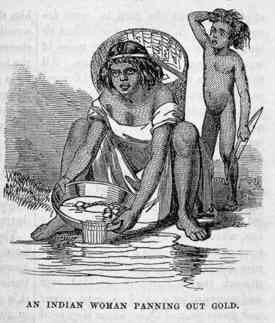
Forced labor of Native Americans in California spanned from the Spanish missions of the 18th century to the gold rush era of the mid-19th century. Native Californians were subject to systematic exploitation, forced labor, and cultural disruption.
Pre-European contact, the estimated population of Indigenous persons native to California varies with accounts ranging from 300,000 to nearly one million. Spaniards first arrived in California when explorer Juan Rodriguez Cabrillo landed in San Diego Bay in 1542, however, the Spanish didn't successfully settle the region until 1769 when Padre Junípero Serra founded the first Spanish mission, el Misión San Diego de Alcalá, located in modern-day San Diego.
While Native Californians were treated with differing levels of respect from the padres who oversaw them, many of the Spanish soldiers in the area at the time, saw them solely as manpower to be exploited. These soldiers would often force the Native Californians to perform most of the manual labor needed in their fortresses and would hunt down any natives who refused or tried to escape. These fortresses consisted of four military installations, primarily in place to reinforce Spanish claims to Alta California. They were known as el Presidio Real de San Carlos de Monterey, el Presidio Real de San Diego, el Presidio Real de San Francisco, and el Presidio Real de Santa Bárbara. The soldiers occupying these fortresses would treat the natives poorly, often raping the native women of the villages.
Due to the conditions that the natives were forced into, there were several recorded uprisings where Native Californians resisted Spanish rule. One of the earliest instances of these uprisings was the attack on Mission San Diego de Alcalá on November 4, 1775. The Tipai-Ipai organized around 800 Native Californians from nine different villages to destroy the mission, killing three Spaniards in the process. The Tipai-Ipai were successful in their goal, burning the original mission down prior to the reconstruction of it in 1769. Despite this instance, not every Native Californian uprising was violent. An example of this can be seen in September 1795, when over two hundred natives deserted San Francisco in droves, citing their poor treatment at the hands of Spanish soldiers and priests as their reason for abandoning the area. Regardless of the nature of the uprisings conducted by Native Californians, they were met with harsh punishments at the hands of the Spanish. Even natives who conducted nonviolent forms of resistance such as deserting missions were punished by being hunted down and forced to return to where they were attempting to flee from. Other punishments for instances of resistance include execution or imprisonment while subjected to harsh labor.
After Mexico gained its independence from Spain in 1821, California became a Mexican territory. In 1824, the Mexican constitution guaranteed citizenship to "all persons", which provided Native Californians with the right to continue occupying their villages. However, the same year, the Mexican National Congress passed the Colonization Act of 1824 which granted large sections of unoccupied land to individuals in an effort to promote agriculture and economic development in California. While this act can be seen as a negative for natives during this time as it created and enforced a large class division between Native Californians and the new rancheros in the area, it also allowed for many natives to learn how to grow crops which would prove to be an essential skill.
In August 1833, the Mexican government passed the Mexican Secularization Act, which secularized missions in an effort to transfer the land in which the missions were built from the Catholic Church to private individuals. In doing so, the Mexican government hoped to promote private enterprise and settlement throughout California, however, this would prove to be detrimental to the Native Californians who resided near or on these missions. While this act did state that around half of the mission's land was to be given to the natives who resided and worked there, very few natives actually received this compensation. Instead, many civil authorities confiscated most of the land for themselves as a majority of the natives were ill-equipped to accept the land that they were promised. Rather, the natives who lived on these missions were further exploited by the rancheros who took over, being forced to work for virtually nothing.
Throughout the settlement of California, the indigenous population of the state dropped from 300,000 during Spanish rule in 1769 to 250,000 in 1834. This significant population drop is widely attributed to increased contact with new diseases brought by settlers coming into California from other parts of the world. Additionally, after gaining independence from Spain in 1821 and the secularization of the coastal missions by the Mexican government in 1834, the indigenous population suffered a much more drastic decrease in population.
In the wake of American settlers streaming into California during the 1820s, it was officially acquired by the United States in 1848. Under U.S. sovereignty, the Native American population plummeted from an estimated 150,000 to 30,000, reaching a low of 16,000 in 1900.
Hub AI
Forced labor in California AI simulator
(@Forced labor in California_simulator)
Forced labor in California
Forced labor of Native Americans in California spanned from the Spanish missions of the 18th century to the gold rush era of the mid-19th century. Native Californians were subject to systematic exploitation, forced labor, and cultural disruption.
Pre-European contact, the estimated population of Indigenous persons native to California varies with accounts ranging from 300,000 to nearly one million. Spaniards first arrived in California when explorer Juan Rodriguez Cabrillo landed in San Diego Bay in 1542, however, the Spanish didn't successfully settle the region until 1769 when Padre Junípero Serra founded the first Spanish mission, el Misión San Diego de Alcalá, located in modern-day San Diego.
While Native Californians were treated with differing levels of respect from the padres who oversaw them, many of the Spanish soldiers in the area at the time, saw them solely as manpower to be exploited. These soldiers would often force the Native Californians to perform most of the manual labor needed in their fortresses and would hunt down any natives who refused or tried to escape. These fortresses consisted of four military installations, primarily in place to reinforce Spanish claims to Alta California. They were known as el Presidio Real de San Carlos de Monterey, el Presidio Real de San Diego, el Presidio Real de San Francisco, and el Presidio Real de Santa Bárbara. The soldiers occupying these fortresses would treat the natives poorly, often raping the native women of the villages.
Due to the conditions that the natives were forced into, there were several recorded uprisings where Native Californians resisted Spanish rule. One of the earliest instances of these uprisings was the attack on Mission San Diego de Alcalá on November 4, 1775. The Tipai-Ipai organized around 800 Native Californians from nine different villages to destroy the mission, killing three Spaniards in the process. The Tipai-Ipai were successful in their goal, burning the original mission down prior to the reconstruction of it in 1769. Despite this instance, not every Native Californian uprising was violent. An example of this can be seen in September 1795, when over two hundred natives deserted San Francisco in droves, citing their poor treatment at the hands of Spanish soldiers and priests as their reason for abandoning the area. Regardless of the nature of the uprisings conducted by Native Californians, they were met with harsh punishments at the hands of the Spanish. Even natives who conducted nonviolent forms of resistance such as deserting missions were punished by being hunted down and forced to return to where they were attempting to flee from. Other punishments for instances of resistance include execution or imprisonment while subjected to harsh labor.
After Mexico gained its independence from Spain in 1821, California became a Mexican territory. In 1824, the Mexican constitution guaranteed citizenship to "all persons", which provided Native Californians with the right to continue occupying their villages. However, the same year, the Mexican National Congress passed the Colonization Act of 1824 which granted large sections of unoccupied land to individuals in an effort to promote agriculture and economic development in California. While this act can be seen as a negative for natives during this time as it created and enforced a large class division between Native Californians and the new rancheros in the area, it also allowed for many natives to learn how to grow crops which would prove to be an essential skill.
In August 1833, the Mexican government passed the Mexican Secularization Act, which secularized missions in an effort to transfer the land in which the missions were built from the Catholic Church to private individuals. In doing so, the Mexican government hoped to promote private enterprise and settlement throughout California, however, this would prove to be detrimental to the Native Californians who resided near or on these missions. While this act did state that around half of the mission's land was to be given to the natives who resided and worked there, very few natives actually received this compensation. Instead, many civil authorities confiscated most of the land for themselves as a majority of the natives were ill-equipped to accept the land that they were promised. Rather, the natives who lived on these missions were further exploited by the rancheros who took over, being forced to work for virtually nothing.
Throughout the settlement of California, the indigenous population of the state dropped from 300,000 during Spanish rule in 1769 to 250,000 in 1834. This significant population drop is widely attributed to increased contact with new diseases brought by settlers coming into California from other parts of the world. Additionally, after gaining independence from Spain in 1821 and the secularization of the coastal missions by the Mexican government in 1834, the indigenous population suffered a much more drastic decrease in population.
In the wake of American settlers streaming into California during the 1820s, it was officially acquired by the United States in 1848. Under U.S. sovereignty, the Native American population plummeted from an estimated 150,000 to 30,000, reaching a low of 16,000 in 1900.