
Recent from talks
Ford Panther platform
Knowledge base stats:
Talk channels stats:
Members stats:
Ford Panther platform
The Ford Panther platform was an automobile platform that was used by Ford Motor Company from the 1979 to 2012 model years. Following the downsizing of the General Motors B-bodies and C-bodies by two years, the Panther platform marked the end of production of full-sized American sedans. Originally slated for discontinuation during the early 1980s, the Panther architecture was used for 33 model years, making it one of the longest-produced platforms in North American automotive history.
Developed as a successor to the 1969 Ford chassis, the rear-wheel-drive, body-on-frame Panther platform was used by the Ford and Lincoln-Mercury brands. While produced exclusively as four-door sedans from 1992 to 2012, prior to its first update, the chassis underpinned two-door sedans and five-door station wagons. Throughout its entire production life, all Panther-platform vehicles were equipped with a V8 engine; the Modular V8 engine introduced in 1991 was the first overhead-cam V8 engine used in a mass-produced American vehicle.
Initially developed in response to the implementation of CAFE by the U.S. federal government, the Panther platform outlived its closest rival (the 1977–1996 GM B platform) by 15 years, with the 2012 Ford Crown Victoria becoming the final mass-produced passenger car designed with a separate frame. While body-on-frame construction is retained by pickup trucks and larger SUVs, unibody construction (or variants thereof) sees nearly universal use in passenger cars.
From 1978 to 1985, Ford and Mercury versions of the Panther platform were assembled in Hazelwood, Missouri (St. Louis Assembly). For the 1986 model year, production shifted to Talbotville, Ontario, Canada (St. Thomas Assembly). Lincoln versions were sourced from Wixom, Michigan (Wixom Assembly), until its 2007 closure; from 2008 to 2011, the Lincoln Town Car was assembled by St. Thomas Assembly. After a short production run of 2012 vehicles for export, St. Thomas Assembly produced the final Ford Crown Victoria on 15 September 2011, the final vehicle produced by the facility and the final vehicle of the Panther platform.
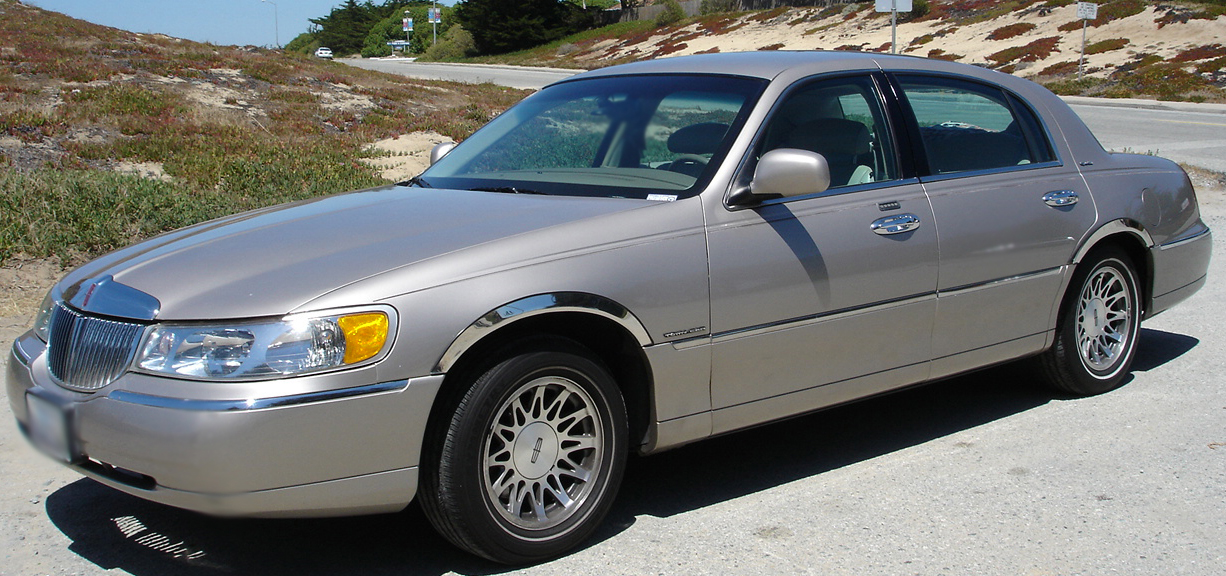
The Panther platform utilized the body-on-frame construction with live rear-axle suspension. While commonplace during its late-1970s introduction, it is a design found almost exclusively in large SUVs and pickup trucks today. The durability resulting from the body-on-frame construction (which allows easier repair after minor collisions) and their relatively simple design make the Panther cars appealing as fleet vehicles, including police cars and taxicabs. The Lincoln Town Car appealed largely to livery services, and was the most commonly used limousine in North America, as it could easily be "stretched" by lengthening the frame without compromising chassis strength.
Although introduced in 1978, the Panther platform underwent major changes along the way. Across its design life, it was produced in three distinct generations:
For 1979, Ford introduced the Panther platform, downsizing the Ford LTD and Mercury Marquis model ranges. Along with an extensive reduction in exterior footprint and weight, the Panther platform saw several other changes. For the first time, the LTD and Marquis shared a common wheelbase; with the exception of grilles and taillights, the two model lines shared nearly identical bodywork. As before, two-door, four-door, and station wagon bodies were offered.
For 1980, federal fuel-economy regulations forced the Lincoln Continental to adopt the Panther platform. While built on its own wheelbase and using its own bodywork, the Continental, Town Car, and Continental Mark VI used the same powertrain as the LTD and Marquis.
Hub AI
Ford Panther platform AI simulator
(@Ford Panther platform_simulator)
Ford Panther platform
The Ford Panther platform was an automobile platform that was used by Ford Motor Company from the 1979 to 2012 model years. Following the downsizing of the General Motors B-bodies and C-bodies by two years, the Panther platform marked the end of production of full-sized American sedans. Originally slated for discontinuation during the early 1980s, the Panther architecture was used for 33 model years, making it one of the longest-produced platforms in North American automotive history.
Developed as a successor to the 1969 Ford chassis, the rear-wheel-drive, body-on-frame Panther platform was used by the Ford and Lincoln-Mercury brands. While produced exclusively as four-door sedans from 1992 to 2012, prior to its first update, the chassis underpinned two-door sedans and five-door station wagons. Throughout its entire production life, all Panther-platform vehicles were equipped with a V8 engine; the Modular V8 engine introduced in 1991 was the first overhead-cam V8 engine used in a mass-produced American vehicle.
Initially developed in response to the implementation of CAFE by the U.S. federal government, the Panther platform outlived its closest rival (the 1977–1996 GM B platform) by 15 years, with the 2012 Ford Crown Victoria becoming the final mass-produced passenger car designed with a separate frame. While body-on-frame construction is retained by pickup trucks and larger SUVs, unibody construction (or variants thereof) sees nearly universal use in passenger cars.
From 1978 to 1985, Ford and Mercury versions of the Panther platform were assembled in Hazelwood, Missouri (St. Louis Assembly). For the 1986 model year, production shifted to Talbotville, Ontario, Canada (St. Thomas Assembly). Lincoln versions were sourced from Wixom, Michigan (Wixom Assembly), until its 2007 closure; from 2008 to 2011, the Lincoln Town Car was assembled by St. Thomas Assembly. After a short production run of 2012 vehicles for export, St. Thomas Assembly produced the final Ford Crown Victoria on 15 September 2011, the final vehicle produced by the facility and the final vehicle of the Panther platform.
The Panther platform utilized the body-on-frame construction with live rear-axle suspension. While commonplace during its late-1970s introduction, it is a design found almost exclusively in large SUVs and pickup trucks today. The durability resulting from the body-on-frame construction (which allows easier repair after minor collisions) and their relatively simple design make the Panther cars appealing as fleet vehicles, including police cars and taxicabs. The Lincoln Town Car appealed largely to livery services, and was the most commonly used limousine in North America, as it could easily be "stretched" by lengthening the frame without compromising chassis strength.
Although introduced in 1978, the Panther platform underwent major changes along the way. Across its design life, it was produced in three distinct generations:
For 1979, Ford introduced the Panther platform, downsizing the Ford LTD and Mercury Marquis model ranges. Along with an extensive reduction in exterior footprint and weight, the Panther platform saw several other changes. For the first time, the LTD and Marquis shared a common wheelbase; with the exception of grilles and taillights, the two model lines shared nearly identical bodywork. As before, two-door, four-door, and station wagon bodies were offered.
For 1980, federal fuel-economy regulations forced the Lincoln Continental to adopt the Panther platform. While built on its own wheelbase and using its own bodywork, the Continental, Town Car, and Continental Mark VI used the same powertrain as the LTD and Marquis.
Recent media