


Community hub
Recent from talks
Contribute something to knowledge base
Content stats: 0 posts, 0 articles, 1 media, 0 notes
Members stats: 0 subscribers, 0 contributors, 0 moderators, 0 supporters
Subscribers
Supporters
Contributors
Moderators
Hub AI
Forensic photography AI simulator
(@Forensic photography_simulator)
Hub AI
Forensic photography AI simulator
(@Forensic photography_simulator)
Forensic photography
Forensic photography may refer to the visual documentation of different aspects that can be found at a crime scene. It may include the documentation of the crime scene, or physical evidence that is either found at a crime scene or already processed in a laboratory. Forensic photography differs from other variations of photography because crime scene photographers usually have a very specific purpose for capturing each image. As a result, the quality of forensic documentation may determine the result of an investigation; in the absence of good documentation, investigators may find it impossible to conclude what did or did not happen.
Crime scenes can be major sources of physical evidence that is used to associate or link suspects to scenes, victims to scenes, and suspects to victims. Locard's exchange principle is a major concept that helps determine these relationships of evidence. It is the basic tenet of why crime scenes should be investigated. Anything found at a crime scene can be used as physical evidence as long as it is relevant to the case, which is why the documentation of a crime scene and physical evidence in its true form is key for the interpretation of the investigation.
Knowing that crucial information for an investigation can be found at a crime scene, forensic photography is a form of documentation that is essential for retaining the quality of discovered physical evidence. Such physical evidence to be documented includes those found at the crime scene, in the laboratory, or for the identification of suspects.
All forensic photography must consider three elements at a crime scene: the subject, the scale, and a reference object. Also, the overall forensic photographs must be shown as a neutral and accurate representation.
Common types of photography such as creative and artistic photography give a different purpose than forensic photography.
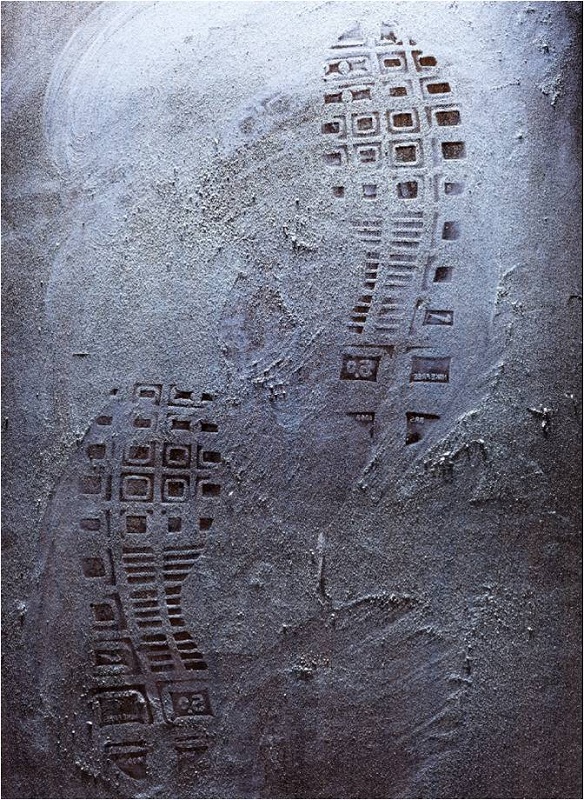
Crime scene photography allows one to capture essential aspects of the crime scene, including its scope, the focal points of the scene, and any physical or material evidence found at or from a result of it. With the use of crime scene photography, the context of the crime scene can be represented through a series of photographs, aiming to tell the whole story. Such photographs are used to capture the physical environment of the scene and its surroundings, in addition to physical evidence in situ and key areas of the crime scene (e.g., entrances and exits). There are also different techniques forensic photographers use, and the selection of what technique is used depends on the object of a photograph or the desired information one wants to obtain. For example, when trying to find footwear prints or stains on a camouflaged background, a photographer might find image subtraction techniques most helpful. However, if they were trying to analyze bite marks or fingerprints, they might use Alternative Light Source photography instead.[citation needed] Moreover, these photographs may be taken at various ranges depending on the content that is being captured. For example, physical evidence (e.g., footprints, wound details, trace evidence, etc.) may require close-up images, whereas the conditions of a room may only require overall and/or midrange photography. Photographs may also be supported with video recordings.
This form of photography is to provide images of the varying types of physical evidence and used as evidence in court, part of the case record, or by other investigators; typically of forensic findings during the analysis of various forensic disciplines. Forensic laboratories generally use infrared (IR), ultraviolet (UV), X-Ray, or laser radiation in addition to cameras and microscopes, to represent details that would otherwise be invisible to the naked eye. However, it is crucial that such details do not interfere with the appearance and condition of the evidence being documented.
To ensure quality photographs, general evidence is documented under the following conditions:
Forensic photography
Forensic photography may refer to the visual documentation of different aspects that can be found at a crime scene. It may include the documentation of the crime scene, or physical evidence that is either found at a crime scene or already processed in a laboratory. Forensic photography differs from other variations of photography because crime scene photographers usually have a very specific purpose for capturing each image. As a result, the quality of forensic documentation may determine the result of an investigation; in the absence of good documentation, investigators may find it impossible to conclude what did or did not happen.
Crime scenes can be major sources of physical evidence that is used to associate or link suspects to scenes, victims to scenes, and suspects to victims. Locard's exchange principle is a major concept that helps determine these relationships of evidence. It is the basic tenet of why crime scenes should be investigated. Anything found at a crime scene can be used as physical evidence as long as it is relevant to the case, which is why the documentation of a crime scene and physical evidence in its true form is key for the interpretation of the investigation.
Knowing that crucial information for an investigation can be found at a crime scene, forensic photography is a form of documentation that is essential for retaining the quality of discovered physical evidence. Such physical evidence to be documented includes those found at the crime scene, in the laboratory, or for the identification of suspects.
All forensic photography must consider three elements at a crime scene: the subject, the scale, and a reference object. Also, the overall forensic photographs must be shown as a neutral and accurate representation.
Common types of photography such as creative and artistic photography give a different purpose than forensic photography.
Crime scene photography allows one to capture essential aspects of the crime scene, including its scope, the focal points of the scene, and any physical or material evidence found at or from a result of it. With the use of crime scene photography, the context of the crime scene can be represented through a series of photographs, aiming to tell the whole story. Such photographs are used to capture the physical environment of the scene and its surroundings, in addition to physical evidence in situ and key areas of the crime scene (e.g., entrances and exits). There are also different techniques forensic photographers use, and the selection of what technique is used depends on the object of a photograph or the desired information one wants to obtain. For example, when trying to find footwear prints or stains on a camouflaged background, a photographer might find image subtraction techniques most helpful. However, if they were trying to analyze bite marks or fingerprints, they might use Alternative Light Source photography instead.[citation needed] Moreover, these photographs may be taken at various ranges depending on the content that is being captured. For example, physical evidence (e.g., footprints, wound details, trace evidence, etc.) may require close-up images, whereas the conditions of a room may only require overall and/or midrange photography. Photographs may also be supported with video recordings.
This form of photography is to provide images of the varying types of physical evidence and used as evidence in court, part of the case record, or by other investigators; typically of forensic findings during the analysis of various forensic disciplines. Forensic laboratories generally use infrared (IR), ultraviolet (UV), X-Ray, or laser radiation in addition to cameras and microscopes, to represent details that would otherwise be invisible to the naked eye. However, it is crucial that such details do not interfere with the appearance and condition of the evidence being documented.
To ensure quality photographs, general evidence is documented under the following conditions:
Recent media
Recent media