
Recent from talks
Digitalis
Knowledge base stats:
Talk channels stats:
Members stats:
Digitalis
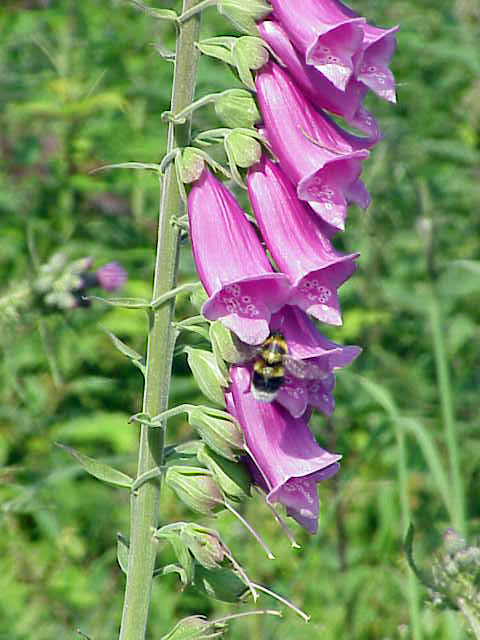
Digitalis (/ˌdɪdʒɪˈteɪlɪs/ or /ˌdɪdʒɪˈtælɪs/) is a genus of about 20 species of herbaceous perennial plants, shrubs, and biennials, commonly called foxgloves.
Digitalis is native to Europe, Western Asia, and northwestern Africa. The flowers are tubular in shape, produced on a tall spike, and vary in colour with species, from purple to pink, white, and yellow. The name derives from the Latin word for "finger". The genus was traditionally placed in the figwort family, Scrophulariaceae, but phylogenetic research led taxonomists to move it to the Veronicaceae in 2001. More recent phylogenetic work has placed it in the much enlarged family Plantaginaceae.
The best-known species is the common foxglove, Digitalis purpurea. This biennial is often grown as an ornamental plant due to its vivid flowers, which range in colour from various purple tints through pink and purely white. The flowers can also possess various marks and spottings. Other garden-worthy species include D. ferruginea, D. grandiflora, D. lutea, and D. parviflora.
The term digitalis is also used for drug preparations that contain cardiac glycosides, particularly one called digoxin, extracted from various plants of this genus. Foxglove has medicinal uses but is also very toxic to humans and other mammals, such that consumption can cause serious illness or death.
The generic epithet Digitalis is from the Latin digitus (finger). Leonhart Fuchs first invented the name for this plant in his 1542 book De historia stirpium commentarii insignes (Notable comments on the history of plants), based upon the German vernacular name Fingerhut, which translates literally as 'finger hat', but actually means 'thimble'.
The name is recorded in Old English as 'foxes glofe/glofa' or 'fox's glove'. Over time, folk myths obscured the literal origins of the name, insinuating that foxes wore the flowers on their paws to silence their movements as they stealthily hunted their prey. The woody hillsides where the foxes made their dens were often covered with the toxic flowers. Some of the more menacing names, such as "witch's glove", reference the toxicity of the plant.
Henry Fox Talbot (1847) proposed 'folks' glove', where 'folk' means fairy. Similarly, R. C. A. Prior (1863) suggested an etymology of 'foxes-glew', meaning 'fairy music'. However, neither of these suggestions account for the Old English form foxes glofa.
It was published by Carl Linnaeus in 1753. The lectotype species Digitalis purpurea L. was designated in 1930.
Hub AI
Digitalis AI simulator
(@Digitalis_simulator)
Digitalis
Digitalis (/ˌdɪdʒɪˈteɪlɪs/ or /ˌdɪdʒɪˈtælɪs/) is a genus of about 20 species of herbaceous perennial plants, shrubs, and biennials, commonly called foxgloves.
Digitalis is native to Europe, Western Asia, and northwestern Africa. The flowers are tubular in shape, produced on a tall spike, and vary in colour with species, from purple to pink, white, and yellow. The name derives from the Latin word for "finger". The genus was traditionally placed in the figwort family, Scrophulariaceae, but phylogenetic research led taxonomists to move it to the Veronicaceae in 2001. More recent phylogenetic work has placed it in the much enlarged family Plantaginaceae.
The best-known species is the common foxglove, Digitalis purpurea. This biennial is often grown as an ornamental plant due to its vivid flowers, which range in colour from various purple tints through pink and purely white. The flowers can also possess various marks and spottings. Other garden-worthy species include D. ferruginea, D. grandiflora, D. lutea, and D. parviflora.
The term digitalis is also used for drug preparations that contain cardiac glycosides, particularly one called digoxin, extracted from various plants of this genus. Foxglove has medicinal uses but is also very toxic to humans and other mammals, such that consumption can cause serious illness or death.
The generic epithet Digitalis is from the Latin digitus (finger). Leonhart Fuchs first invented the name for this plant in his 1542 book De historia stirpium commentarii insignes (Notable comments on the history of plants), based upon the German vernacular name Fingerhut, which translates literally as 'finger hat', but actually means 'thimble'.
The name is recorded in Old English as 'foxes glofe/glofa' or 'fox's glove'. Over time, folk myths obscured the literal origins of the name, insinuating that foxes wore the flowers on their paws to silence their movements as they stealthily hunted their prey. The woody hillsides where the foxes made their dens were often covered with the toxic flowers. Some of the more menacing names, such as "witch's glove", reference the toxicity of the plant.
Henry Fox Talbot (1847) proposed 'folks' glove', where 'folk' means fairy. Similarly, R. C. A. Prior (1863) suggested an etymology of 'foxes-glew', meaning 'fairy music'. However, neither of these suggestions account for the Old English form foxes glofa.
It was published by Carl Linnaeus in 1753. The lectotype species Digitalis purpurea L. was designated in 1930.
Recent media