
Recent from talks
Francisco Ferrer
Knowledge base stats:
Talk channels stats:
Members stats:
Francisco Ferrer
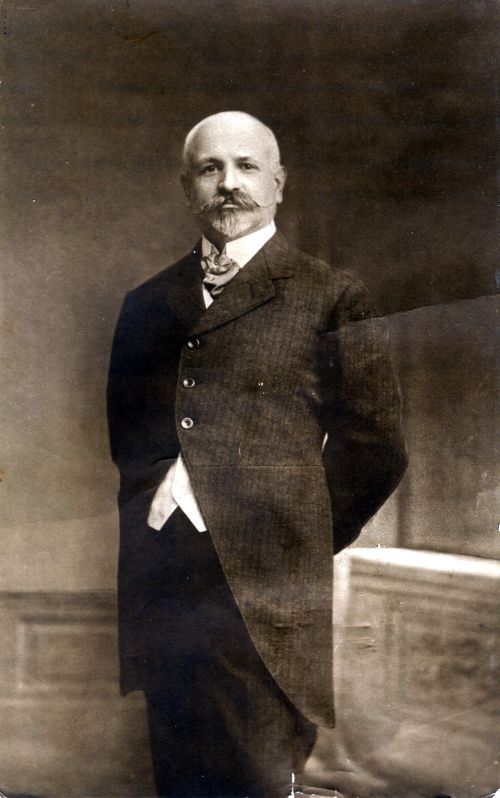
Francesc Ferrer i Guàrdia (Catalan pronunciation: [fɾənˈsɛsk fəˈrej ˈɣwaɾði.ə]; January 14, 1859 – October 13, 1909), widely known as Francisco Ferrer (Spanish pronunciation: [fɾanˈθisko feˈreɾ]), was a Spanish radical freethinker, anarchist, and educationist behind a network of secular, private, libertarian schools in and around Barcelona. His execution, following a revolt in Barcelona, propelled Ferrer into martyrdom and grew an international movement of radicals and libertarians, who established schools in his model and promoted his schooling approach.
Ferrer was raised on a farm near Barcelona, where he developed republican and anti-clerical convictions. As a train conductor, he transmitted messages for the republican leader Manuel Ruiz Zorrilla, exiled in France. Following a failed republican uprising in 1885, Ferrer, too, moved to Paris with his family, where they stayed for 16 years. Ferrer began to explore anarchism and education. At the turn of the century, Ferrer had resolved to open a libertarian school modeled on Paul Robin's Prévost orphanage school. A large inheritance from a Parisian tutee provided the means to do so.
Upon returning to Barcelona in 1901, Ferrer founded the Barcelona Modern School, Escuela Moderna, which sought to provide a secular, libertarian curriculum as an alternative to the religious dogma and compulsory lessons common within Spanish schools. Ferrer's pedagogy borrowed from a tradition of 18th century rationalism and 19th century romanticism. He held that children should wield freewheeling liberties at the expense of conformity, regulation, and discipline. His school eschewed punishments, rewards, and exams, and encouraged practical experience over academic study. The school hosted lectures for adults, a school for teacher training, and a radical printing press, which printed textbooks and the school's journal. Around 120 offshoots of the school spread throughout Spain. The rapidity of Ferrer's rise troubled Spanish church and state authorities, who viewed the school as a front for insurrectionary activity. Ferrer was held in association with the 1906 assassination attempt on the Spanish King, which was used as a pretext for closing the school, but was ultimately released without conviction under international pressure a year later. Ferrer traveled Europe as an advocate of the Spanish revolutionary cause, founded a libertarian education advocacy organization, and reopened his press.
In mid-1909, Ferrer was arrested and accused of orchestrating a week of insurrection known as Barcelona's Tragic Week. Though Ferrer's involvement was likely not as blameless as intimated by his peers, he did not mastermind the events as charged. The ensuing court case, remembered as a show trial by a kangaroo court, resulted in Ferrer's execution and triggered international outcry, as Ferrer was widely believed to be innocent at the time of his death. He was prominently memorialized in writing, monuments, and demonstrations across three continents. The protest became a movement to propagate his educational ideas, and Modern Schools in his name sprouted across the United States and Europe, reaching into Brazil and Asia.
Francesc Ferrer i Guàrdia was born January 10 or 14, 1859, on a farm near Barcelona in Alella, Spain. He became a republican and freethinker in his youth. While his parents were pious Catholics, he grew independent and anti-clerical convictions from his freethinker uncle and militant atheist first employer.
During his mid-20s, Ferrer had become a radical Republican. In 1883, he was initiated into the Masonic Lodge Verdad in Barcelona (Lodge Number 146 of the Gran Oriente de España, under the leadership of Manuel Ruiz Zorrilla), taking on the symbolic name, Brother "Cero", he reached the 32°.
He used his position as a train conductor on a route between France and Barcelona to transmit messages for the exiled Republican leader Manuel Ruiz Zorrilla and shepherd republicans, radicals and freemasons to sanctuary. After supporting an attempted coup under General Manuel Villacampa del Castillo who intended to install a Spanish Republic in late 1886, Ferrer was himself forced to flee to France with his wife and three daughters, where they would stay for 16 years. While in France, Ferrer kept up his masonic activities with the Grand Orient de France.
In Paris, Ferrer taught Spanish, sold wine on commission, volunteered as Ruíz's secretary (until his 1895 death), and pursued radical efforts. He was a Dreyfusard, a delegate to the London 1896 Congress of the Second International, and a teacher at the Masonic school.
Hub AI
Francisco Ferrer AI simulator
(@Francisco Ferrer_simulator)
Francisco Ferrer
Francesc Ferrer i Guàrdia (Catalan pronunciation: [fɾənˈsɛsk fəˈrej ˈɣwaɾði.ə]; January 14, 1859 – October 13, 1909), widely known as Francisco Ferrer (Spanish pronunciation: [fɾanˈθisko feˈreɾ]), was a Spanish radical freethinker, anarchist, and educationist behind a network of secular, private, libertarian schools in and around Barcelona. His execution, following a revolt in Barcelona, propelled Ferrer into martyrdom and grew an international movement of radicals and libertarians, who established schools in his model and promoted his schooling approach.
Ferrer was raised on a farm near Barcelona, where he developed republican and anti-clerical convictions. As a train conductor, he transmitted messages for the republican leader Manuel Ruiz Zorrilla, exiled in France. Following a failed republican uprising in 1885, Ferrer, too, moved to Paris with his family, where they stayed for 16 years. Ferrer began to explore anarchism and education. At the turn of the century, Ferrer had resolved to open a libertarian school modeled on Paul Robin's Prévost orphanage school. A large inheritance from a Parisian tutee provided the means to do so.
Upon returning to Barcelona in 1901, Ferrer founded the Barcelona Modern School, Escuela Moderna, which sought to provide a secular, libertarian curriculum as an alternative to the religious dogma and compulsory lessons common within Spanish schools. Ferrer's pedagogy borrowed from a tradition of 18th century rationalism and 19th century romanticism. He held that children should wield freewheeling liberties at the expense of conformity, regulation, and discipline. His school eschewed punishments, rewards, and exams, and encouraged practical experience over academic study. The school hosted lectures for adults, a school for teacher training, and a radical printing press, which printed textbooks and the school's journal. Around 120 offshoots of the school spread throughout Spain. The rapidity of Ferrer's rise troubled Spanish church and state authorities, who viewed the school as a front for insurrectionary activity. Ferrer was held in association with the 1906 assassination attempt on the Spanish King, which was used as a pretext for closing the school, but was ultimately released without conviction under international pressure a year later. Ferrer traveled Europe as an advocate of the Spanish revolutionary cause, founded a libertarian education advocacy organization, and reopened his press.
In mid-1909, Ferrer was arrested and accused of orchestrating a week of insurrection known as Barcelona's Tragic Week. Though Ferrer's involvement was likely not as blameless as intimated by his peers, he did not mastermind the events as charged. The ensuing court case, remembered as a show trial by a kangaroo court, resulted in Ferrer's execution and triggered international outcry, as Ferrer was widely believed to be innocent at the time of his death. He was prominently memorialized in writing, monuments, and demonstrations across three continents. The protest became a movement to propagate his educational ideas, and Modern Schools in his name sprouted across the United States and Europe, reaching into Brazil and Asia.
Francesc Ferrer i Guàrdia was born January 10 or 14, 1859, on a farm near Barcelona in Alella, Spain. He became a republican and freethinker in his youth. While his parents were pious Catholics, he grew independent and anti-clerical convictions from his freethinker uncle and militant atheist first employer.
During his mid-20s, Ferrer had become a radical Republican. In 1883, he was initiated into the Masonic Lodge Verdad in Barcelona (Lodge Number 146 of the Gran Oriente de España, under the leadership of Manuel Ruiz Zorrilla), taking on the symbolic name, Brother "Cero", he reached the 32°.
He used his position as a train conductor on a route between France and Barcelona to transmit messages for the exiled Republican leader Manuel Ruiz Zorrilla and shepherd republicans, radicals and freemasons to sanctuary. After supporting an attempted coup under General Manuel Villacampa del Castillo who intended to install a Spanish Republic in late 1886, Ferrer was himself forced to flee to France with his wife and three daughters, where they would stay for 16 years. While in France, Ferrer kept up his masonic activities with the Grand Orient de France.
In Paris, Ferrer taught Spanish, sold wine on commission, volunteered as Ruíz's secretary (until his 1895 death), and pursued radical efforts. He was a Dreyfusard, a delegate to the London 1896 Congress of the Second International, and a teacher at the Masonic school.
Recent media