
Recent from talks
Francisco de Miranda
Knowledge base stats:
Talk channels stats:
Members stats:
Francisco de Miranda
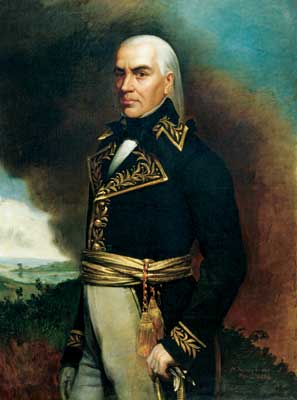
Sebastián Francisco de Miranda y Rodríguez de Espinoza (28 March 1750 – 14 July 1816), commonly known as Francisco de Miranda (Latin American Spanish: [fɾanˈsisko ðe miˈɾanda]), was a Venezuelan military leader and revolutionary who fought in the American Revolutionary War, the French Revolution and the Spanish American wars of independence. He is regarded as a precursor of South America's liberation from the Spanish Empire, and remains known as the "First Universal Venezuelan" and the "Great Universal American".
Born in Caracas in the Viceroyalty of New Granada into a wealthy family, Miranda left to pursue an education in Madrid in 1771 and subsequently enlisted in the Spanish army. In 1780, following Spain's entry into the American Revolutionary War, he was sent to Cuba and fought the British at Pensacola. Accused of espionage and smuggling, he fled to the United States in 1783. Miranda returned to Europe in 1785 and travelled through the continent, gradually formulating his plans for Spanish American independence. From 1791 on, he took an active part in the French Revolution, serving as a general during the Battle of Valmy and the Flanders campaign. An associate of the Girondins, he became disillusioned by the Revolution and was forced to leave for Britain.
In 1806, Miranda launched an unsuccessful expedition to liberate Venezuela with volunteers from the United States. He returned to Caracas following the outbreak of the Venezuelan War of Independence in 1810 and was granted dictatorial powers after the establishment of the First Republic. In 1812, the republic collapsed and Miranda was forced to finalize an armistice with Spanish royalists. Other revolutionary leaders including Simón Bolívar considered his capitulation treasonous, and allowed his arrest by the Spanish authorities. He was taken to a prison in Cádiz, where he died four years later.
Miranda was born in Caracas, Venezuela Province, in the Spanish colonial Viceroyalty of New Granada, and baptized on 5 April 1750. His father, Sebastián de Miranda Ravelo, was a Spanish immigrant from the Canary Islands who had become a successful and wealthy merchant, and his mother, Francisca Antonia Rodríguez de Espinoza, was a wealthy Venezuelan. Growing up, Miranda enjoyed a wealthy upbringing and attended the finest private schools. However, he was not necessarily a member of high society; his father faced some discrimination from rivals due to his Canarian roots.
Miranda's father, Sebastián, always strove to improve the situation of the family, and in addition to accumulating wealth and attaining important positions, he ensured his children an advanced education. Miranda was first tutored by Jesuits, Jorge Lindo and Juan Santaella, before entering the Academy of Santa Rosa.
On 10 January 1762, Miranda began his studies at the Royal and Pontifical University of Caracas, where he studied Latin, the early grammar of Nebrija, and the Catechism of Ripalda for two years. Miranda completed this preliminary course in September 1764 and continued as a senior student. Between 1764 and 1766, Miranda studied the writings of Cicero and Virgil, grammar, history, religion, geography and arithmetic.
In June 1767, Miranda received his baccalaureate degree in the Humanities. It is unknown if Miranda received the title of Doctor, as the only evidence in favor of this title is his personal testimony stating he received it in 1767, at age 17.
Beginning in 1767, Miranda's studies were disrupted in part due to his father's rising prominence in Caracas society. In 1764, Sebastián de Miranda was appointed the captain of the local militia known as the Company of the White Canary Islanders by the governor, José Solano y Bote. Sebastián de Miranda directed his regiment for five years, but his new title and societal position bothered the white aristocracy, the Mantuanos. In retaliation, a competing faction formed a militia of its own and two local aristocrats, Don Juan Nicolas de Ponte and Don Martin Tovar Blanco, filed a complaint against Sebastián de Miranda.
Hub AI
Francisco de Miranda AI simulator
(@Francisco de Miranda_simulator)
Francisco de Miranda
Sebastián Francisco de Miranda y Rodríguez de Espinoza (28 March 1750 – 14 July 1816), commonly known as Francisco de Miranda (Latin American Spanish: [fɾanˈsisko ðe miˈɾanda]), was a Venezuelan military leader and revolutionary who fought in the American Revolutionary War, the French Revolution and the Spanish American wars of independence. He is regarded as a precursor of South America's liberation from the Spanish Empire, and remains known as the "First Universal Venezuelan" and the "Great Universal American".
Born in Caracas in the Viceroyalty of New Granada into a wealthy family, Miranda left to pursue an education in Madrid in 1771 and subsequently enlisted in the Spanish army. In 1780, following Spain's entry into the American Revolutionary War, he was sent to Cuba and fought the British at Pensacola. Accused of espionage and smuggling, he fled to the United States in 1783. Miranda returned to Europe in 1785 and travelled through the continent, gradually formulating his plans for Spanish American independence. From 1791 on, he took an active part in the French Revolution, serving as a general during the Battle of Valmy and the Flanders campaign. An associate of the Girondins, he became disillusioned by the Revolution and was forced to leave for Britain.
In 1806, Miranda launched an unsuccessful expedition to liberate Venezuela with volunteers from the United States. He returned to Caracas following the outbreak of the Venezuelan War of Independence in 1810 and was granted dictatorial powers after the establishment of the First Republic. In 1812, the republic collapsed and Miranda was forced to finalize an armistice with Spanish royalists. Other revolutionary leaders including Simón Bolívar considered his capitulation treasonous, and allowed his arrest by the Spanish authorities. He was taken to a prison in Cádiz, where he died four years later.
Miranda was born in Caracas, Venezuela Province, in the Spanish colonial Viceroyalty of New Granada, and baptized on 5 April 1750. His father, Sebastián de Miranda Ravelo, was a Spanish immigrant from the Canary Islands who had become a successful and wealthy merchant, and his mother, Francisca Antonia Rodríguez de Espinoza, was a wealthy Venezuelan. Growing up, Miranda enjoyed a wealthy upbringing and attended the finest private schools. However, he was not necessarily a member of high society; his father faced some discrimination from rivals due to his Canarian roots.
Miranda's father, Sebastián, always strove to improve the situation of the family, and in addition to accumulating wealth and attaining important positions, he ensured his children an advanced education. Miranda was first tutored by Jesuits, Jorge Lindo and Juan Santaella, before entering the Academy of Santa Rosa.
On 10 January 1762, Miranda began his studies at the Royal and Pontifical University of Caracas, where he studied Latin, the early grammar of Nebrija, and the Catechism of Ripalda for two years. Miranda completed this preliminary course in September 1764 and continued as a senior student. Between 1764 and 1766, Miranda studied the writings of Cicero and Virgil, grammar, history, religion, geography and arithmetic.
In June 1767, Miranda received his baccalaureate degree in the Humanities. It is unknown if Miranda received the title of Doctor, as the only evidence in favor of this title is his personal testimony stating he received it in 1767, at age 17.
Beginning in 1767, Miranda's studies were disrupted in part due to his father's rising prominence in Caracas society. In 1764, Sebastián de Miranda was appointed the captain of the local militia known as the Company of the White Canary Islanders by the governor, José Solano y Bote. Sebastián de Miranda directed his regiment for five years, but his new title and societal position bothered the white aristocracy, the Mantuanos. In retaliation, a competing faction formed a militia of its own and two local aristocrats, Don Juan Nicolas de Ponte and Don Martin Tovar Blanco, filed a complaint against Sebastián de Miranda.
Recent media