Hubbry Logo
Frank CravenFrank CravenMain
Open search
Frank Craven
Community hub
Frank Craven
logo
8 pages, 0 posts
0 subscribers
Be the first to start a discussion here.
Frank Craven
Frank Craven
from Wikipedia

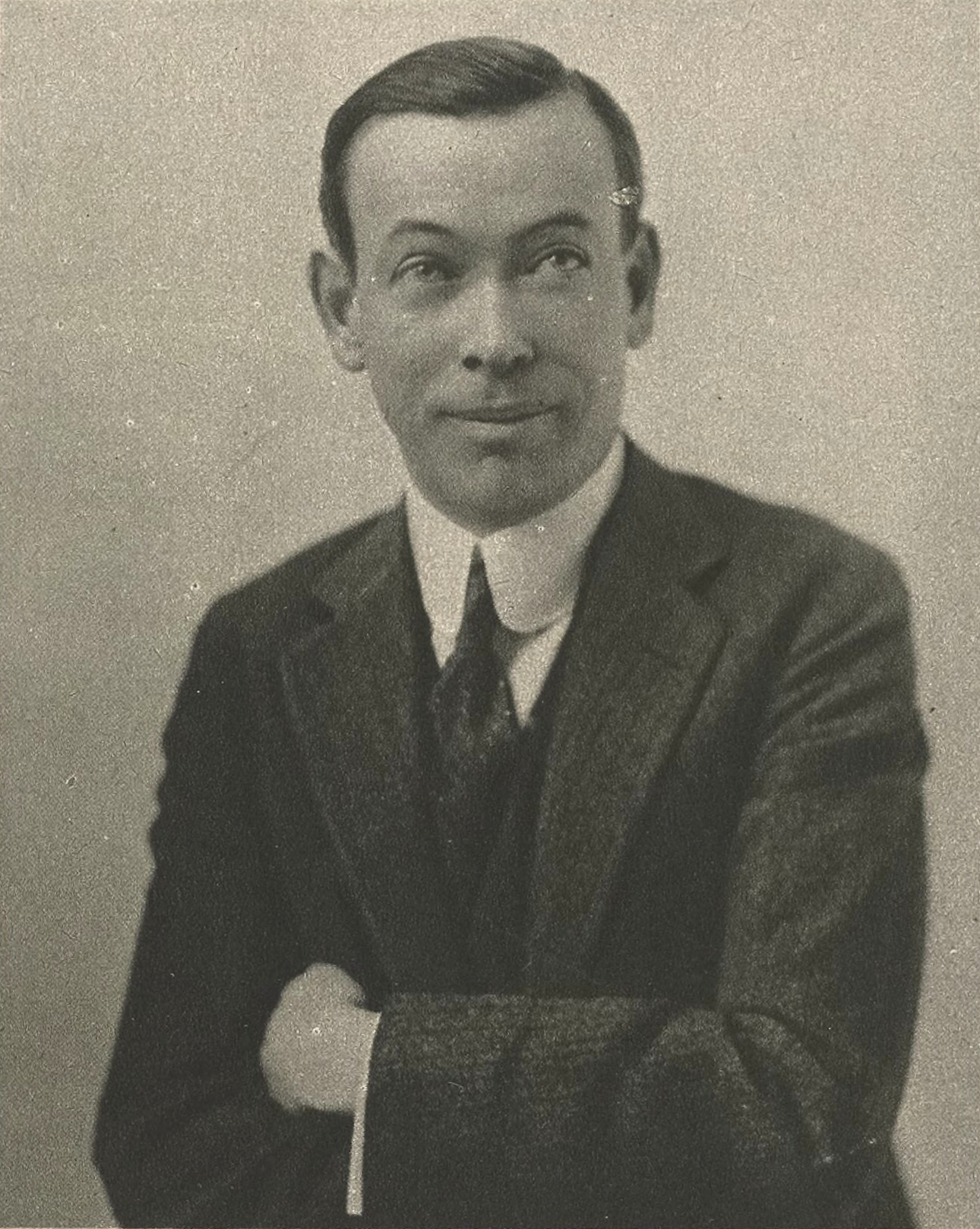
Frank Craven (August 24, 1875 – September 1, 1945)[1] was an American stage and film actor, playwright, and screenwriter, best known for originating the role of the Stage Manager in Thornton Wilder's Our Town.

Key Information

Early years

[edit]

Craven's parents, John T. Craven and Ella Mayer Craven,[2] were actors, and he first appeared on stage when he was three years old, in a child's part in The Silver King, in which his father was acting. His next appearance on stage occurred 13 years later in another production of the same play. That experience stirred an interest in acting as a career.[3]

Career

[edit]
Frank Craven, Martha Scott and John Craven in the original Broadway production of Our Town (1938)

Before he acted in films, Craven worked in stage productions, not limiting his activity to acting. "I would do anything around the place," he said.[3] He found later that work with carpentry, painting, and other backstage activities proved "invaluable" to him.[3] His initial success in New York came in the role of James Gilley in Bought and Paid For (1911). He also played the same role in a production in London.[4] He also was a playwright, penning hits such as Too Many Cooks (1914) and The First Year (1920).[5]

Craven was a character actor who often portrayed wry, small-town figures. His first film role was in We Americans (1928), and he appeared in State Fair (1933), Penrod and Sam (1937), Jack London (1943), and Son of Dracula (1943), among many others.

He wrote numerous screenplays, most notably for the Laurel and Hardy film Sons of the Desert (1933).

In 1938, Craven played the Stage Manager in Our Town on Broadway,[2] and reprised the role in the 1940 film version of the play, co-writing the screenplay. His son John Craven starred as George Gibbs in the stage version, a role played by William Holden in the 1940 film.

Craven was a Republican who campaigned for Thomas Dewey in the 1944 United States presidential election.[6]

Death

[edit]

Craven died in 1945, shortly after finishing his work in Colonel Effingham's Raid.[5]

Filmography

[edit]
Frank Craven as the Stage Manager in the original Broadway production of Our Town (1938)
Year Title Role Notes
1928 We Americans Uncredited
1929 The Very Idea Alan Camp
1932 Handle with Care Radio Announcer
1933 State Fair Storekeeper
1934 City Limits J.B. Matthews
He Was Her Man Pop Sims, aka Jim Parker
Let's Talk It Over Mr. Rockland
That's Gratitude Bob Grant
1935 Car 99 Sheriff Pete Arnot
Vagabond Lady 'Spiggy' Spiggins
Barbary Coast Col. Marcus Aurelius Cobb
1936 It's Up To You Pop' Kane
Small Town Girl Will 'Pa' Brannan
The Harvester Mr. Biddle
1937 Penrod and Sam Mr. Schofield
Blossoms on Broadway P.J. Quinterfield Sr.
You're Only Young Once Frank Redmond (Carvel Newspaper Owner)
1938 Penrod and His Twin Brother Mr. Schofield
1939 Miracles for Sale Dad Morgan
Our Neighbors – The Carters Doc Carter
1940 Our Town Mr. Morgan
City for Conquest Old Timer
Dreaming Out Loud Dr. Walter Barnes
1941 The Lady from Cheyenne Hank Foreman
The Richest Man In Town Abb Crothers
1942 In This Our Life Asa Timberlake
Thru Different Eyes Steve Pettijohn
Girl Trouble Ambrose Murdock Flint
Pittsburgh 'Doc' Powers
Keeper of the Flame Dr. Fielding
1943 Harrigan's Kid Walter Garnet
Dangerous Blondes Inspector Joseph Clinton
Son of Dracula Doctor Brewster
Jack London Old Tom
1944 My Best Gal Danny O'Hara
Destiny Clem Broderick
1945 Forever Yours Uncle Charles
1946 Colonel Effingham's Raid Dewey (final film role)

References

[edit]
[edit]
Revisions and contributorsEdit on WikipediaRead on Wikipedia
from Grokipedia

Frank Craven (August 24, 1875 – September 1, 1945) was an American playwright, actor, director, producer, and whose multifaceted career in theater and film spanned over five decades. Born in to parents in the theatrical profession, he began performing as a child and later gained recognition as a with the domestic The First Year (), which enjoyed a successful Broadway run of 760 performances.
Craven's most enduring contribution came as an and director in Thornton Wilder's , where he originated the pivotal of the Stage Manager during its 1938 Broadway premiere at the , guiding audiences through the play's minimalist portrayal of small-town life. He reprised the in the 1940 , further cementing its iconic status, and also adapted the . In addition to stage work, Craven contributed to cinema by providing the story for the comedy (1933) and appearing in films such as (1933) and (1942). His versatile output reflected a pragmatic approach to storytelling, emphasizing relatable human experiences without reliance on elaborate sets or effects.
Throughout his career, Craven directed and produced several productions, including his own plays like New Brooms (1923), and balanced writing with acting in over 50 films, often in supporting roles that showcased his understated, demeanor. While not associated with major scandals, his legacy endures through the timeless appeal of , which highlighted his skill in bridging stage and audience in innovative narrative forms.

Early Life

Birth and Upbringing

Frank Craven was born on August 24, 1875, in , . His parents, John T. Craven and Ella Mayer Craven, were both professional actors, immersing him in the theater world from infancy. At the age of three, Craven made his stage debut in a child's role in the play The Silver King in , marking the beginning of his lifelong involvement in performance. Growing up in this theatrical household provided early exposure to acting and production, shaping his career trajectory without formal training beyond basic schooling. Following the completion of his education, Craven joined touring theater companies, honing his skills through practical experience in regional performances before advancing to broader stages.

Entry into Entertainment

Craven, born to actors John T. Craven and Ella Mayer Craven, entered the entertainment industry at a young age, making his initial stage appearance as a child in . This early exposure stemmed directly from his family's theatrical profession, providing him with foundational experience in performance amid the late 19th-century American stage circuit. After completing his formal schooling, Craven pursued professional opportunities by touring with provincial stock companies, honing his skills in regional theaters across the . These itinerant engagements, common for aspiring performers of the era, involved repertory work in comedies and dramas, building his versatility as an actor before transitioning to major urban venues. By 1907, he secured his Broadway debut on October 28 in George Ade's comedy Artie at the , marking his entry into New York City's competitive theater scene.

Stage Career

Playwriting Contributions

Frank Craven contributed to American theater as a primarily through comedies that examined domestic relationships, marital discord, and familial obligations, often drawing on realistic portrayals of middle-class life.<grok:render type="render_inline_citation"> 26 </grok:render> His plays frequently featured him in starring roles, allowing him to blend writing with performance, and several achieved commercial on Broadway before adaptations to .<grok:render type="render_inline_citation"> 10 </grok:render><grok:render type="render_inline_citation"> 58 </grok:render> Craven's breakthrough as a came with Too Many Cooks in 1914, a that highlighted his ability to craft humorous scenarios around interpersonal conflicts, marking one of his early hits.<grok:render type="render_inline_citation"> 58 </grok:render> Building on this, The First Year, a 1920 comedic exploration of newlywed struggles, opened on October 20 at the Little Theatre, produced by John Golden and directed by Winchell Smith; it ran for 444 performances, cementing Craven's reputation for witty, relatable domestic .<grok:render type="render_inline_citation"> 29 </grok:render><grok:render type="render_inline_citation"> 33 </grok:render> The play's focus on the "comic tragedy of married life" resonated with audiences, leading to a 1932 .<grok:render type="render_inline_citation"> 34 </grok:render><grok:render type="render_inline_citation"> 31 </grok:render> In 1924, Craven wrote, produced, and staged New Brooms, a three-act depicting generational clashes in a family business, which opened on November 18 at the Klaw Theatre and ran for 144 performances.<grok:render type="render_inline_citation"> 38 </grok:render><grok:render type="render_inline_citation"> 42 </grok:render> The work's themes of reform and inheritance dynamics prompted a 1925 version, underscoring its appeal for screen translation.<grok:render type="render_inline_citation"> 39 </grok:render> Later, That's Gratitude (1930), a prologue-and-three-acts critiquing Hollywood ambition and personal ingratitude, premiered on September 11 at the , with Craven directing and starring; though its Broadway run was brief at 16 performances, it was adapted into a 1934 film, reflecting ongoing interest in his narrative style.<grok:render type="render_inline_citation"> 49 </grok:render><grok:render type="render_inline_citation"> 53 </grok:render><grok:render type="render_inline_citation"> 50 </grok:render> Other works, including This Way Out and The Flowers of Virtue, further demonstrated Craven's prolific output in light comedy, though they garnered less acclaim than his major successes.<grok:render type="render_inline_citation"> 26 </grok:render> Overall, Craven authored around ten stage plays, prioritizing character-driven humor over experimental forms, which aligned with the era's demand for accessible .<grok:render type="render_inline_citation"> 26 </grok:render> His contributions emphasized empirical observations of , avoiding ideological overlays in favor of straightforward causal depictions of relational cause-and-effect.<grok:render type="render_inline_citation"> 14 </grok:render>

Acting and Directing Roles

Craven's Broadway acting career spanned from 1907 to 1942, encompassing over a dozen roles in comedies and dramas, often portraying characters or leads in domestic and lighthearted narratives. He debuted in Artie on October 28, 1907, establishing an early presence in New York theater. Notable early performances included James Gilley in Bought and Paid For, which opened September 26, 1911, and ran for 431 performances. In 1914, Craven starred as Albert Bennett in his own play Too Many Cooks, which premiered February 24 and highlighted his multifaceted talents in a story of comedic domestic chaos. He followed with Jimmie Shannon in on August 8, 1916, a later adapted into a . By 1920, he portrayed Thomas Tucker in The First Year, a hit comedy about marital reconciliation that opened October 20 and enjoyed 253 performances. Craven's most enduring stage role came in 1938 as the Stage Manager in Thornton Wilder's Our Town, which debuted February 4 at the Henry Miller Theatre and ran for 336 performances, cementing his reputation for understated, narrative-driven portrayals. Later appearances included Wallace I. Brown in For Valor (November 18, 1935), Judge Homer W. Peabody in Village Green (September 3, 1941), and Grover Bemis in The Flowers of Virtue (February 5, 1942). As a director, Craven helmed ten Broadway productions between 1914 and 1935, frequently staging his own scripts or vehicles for comedic ensembles. He directed Too Many Cooks in 1914, New Brooms—another of his plays—on November 17, 1924, which was adapted into a 1925 film, and That's Gratitude on September 11, 1930, where he also acted as Robert Grant. Other credits include Whistling in the Dark (January 19, 1932), a thriller that spawned film adaptations, Riddle Me This (February 25, 1932), and For Valor (1935), blending his directing with leading performances. His approach emphasized tight pacing and character-driven humor, contributing to the success of these mid-tier hits.

Film Career

Transition to Cinema

Craven's initial foray into cinema occurred in 1928 with an uncredited role in the Universal drama We Americans, marking his screen acting debut after years of prominence on the stage. The following year, he expanded his involvement by directing and starring in the independent feature The Donovan Affair (1929) for RKO, adapting his own play of the same name into a mystery-comedy that showcased his multifaceted talents from theater. This project represented an early pivot, allowing him to apply his stage-honed skills in writing, directing, and performing to the medium of film. By the early 1930s, Craven secured credited supporting roles in major productions, including the vehicle (1933), where he played the farmer Pa Frake, drawing on his established as a wry, character from comedies. He followed with appearances in (1934), a crime drama, and Penrod and Sam (1937), adapting another of his plays, which further integrated his theatrical background into cinematic narratives. These roles, often portraying small-town or rural figures, aligned with his archetype and facilitated a gradual shift toward film without abandoning live theater entirely. Although Craven continued stage work, including originating the Stage Manager in (1938), his post-1929 career increasingly emphasized film producing, directing, and acting, reflecting the era's growing opportunities in Hollywood as sound films supplanted silent era transitions. This period solidified his versatility, enabling him to reprise stage successes on screen, such as in the 1940 adaptation of , where his narration bridged theatrical minimalism with cinematic realism.

Notable Film Performances

Craven's most prominent film role was as the Stage Manager in the 1940 screen adaptation of , directed by and released by on June 4, 1940. Reprising his originating Broadway performance from 1938, he served as the omniscient narrator, delivering wry commentary on the mundane joys and tragedies of life in the fictional Grover's Corners, , while directly addressing the audience to underscore themes of transience and human connection. The film, co-adapted by Craven alongside and Harry Chandlee, received an Academy Award nomination for Best Adapted Screenplay. Critics noted his laconic, sly delivery preserved the play's philosophical intimacy, adapting effectively to cinema despite modifications to the Stage Manager's direct addresses for visual flow. In (1940), directed by and starring , Craven portrayed Scotty, a supportive figure in the story of a truck driver's entry into the boxing world and his brother's pursuit of musical success in . Released by Warner Bros. on September 21, 1940, the film highlighted Craven's ability to embody earnest, working-class mentors amid urban grit and ambition. Craven delivered a supporting turn as Dr. Fielding in Keeper of the Flame (1942), a drama directed by , featuring as a uncovering a public figure's fascist sympathies and as his enigmatic widow. Released on October 16, 1942, Craven's physician character provided grounded counsel amid the film's exploration of American ideals under threat, showcasing his knack for understated authority in tense ensemble dynamics. Other significant appearances included the role of Old Tom in (1943), a United Artists biopic where he depicted an aged prospector reflecting on the author's Alaskan adventures, and Inspector Joseph Clinton in Dangerous Blondes (1943), a Columbia mystery in which he investigated murders tied to a world scandal. These performances, while secondary, reinforced Craven's screen persona as a reliable purveyor of folksy wisdom and quiet integrity in mid-20th-century Hollywood productions.

Personal Life and Legacy

Family and Relationships

Frank Craven was born on August 24, 1875, to actor parents Frank Craven Sr. and Ella Mayer Craven, both performers in the theater world. His early exposure to the stage came through his family's profession; at age three, he made his debut in a child role in The Silver King, alongside his father. This familial immersion in acting shaped his lifelong career in entertainment. In 1914, Craven married actress Mazie B. Daly, who had previously been married twice to and divorced from actor Arnold Daly. The couple remained together until Craven's death in 1945, with no records of separation or divorce. Their marriage coincided with Craven's rising prominence in and Broadway, though Daly's own career as an actress received less documentation in contemporary sources. Craven and Daly had at least one child, son John Craven, born around 1916, who followed in his father's footsteps as an actor. John appeared alongside his father in the 1938 Broadway production of Our Town, portraying George Gibbs under Frank's direction as the Stage Manager. No other children are verifiably documented in reliable accounts of Craven's personal life.

Death

Frank Craven died on September 1, 1945, in , at the age of 70 from a heart ailment. His death occurred shortly after he completed filming his role as Colonel Effingham in the Colonel Effingham's Raid, which was released posthumously the following year. Contemporary reports noted his passing without specifying further medical details, though obituaries highlighted his extensive career in theater and film up to that point.

Enduring Influence

Frank Craven's origination of the Stage Manager role in Thornton Wilder's on Broadway in 1938 cemented his place in American theatrical history, as the character's omniscient narration and direct audience engagement became hallmarks of the play's innovative structure. This performance, delivered without elaborate scenery in line with Wilder's minimalist vision, helped propel to win the 1938 and achieve over 300 performances in its initial run, establishing a template for meta-theatrical storytelling that continues to influence productions. Subsequent revivals, numbering in the thousands across high schools, regional theaters, and professional stages since, often reference Craven's understated, authoritative portrayal—marked by wry humor and philosophical detachment—as the benchmark for the role. Craven reprised the Stage Manager in the 1940 United Artists film adaptation, co-adapting the screenplay alongside Wilder and Harry Chandlee to translate the stage's bare aesthetic to cinema while preserving the play's intimate focus on and mortality. Released on April 4, 1940, the film grossed approximately $1.2 million at the box office and introduced Our Town's themes to audiences beyond live theater, ensuring the work's accessibility during an era of rising film popularity. His contributions extended the play's reach, with the movie version influencing later adaptations, including television broadcasts and operas, and reinforcing Craven's legacy as a bridge between stage and screen traditions. Beyond , Craven's playwriting, notably The First Year (1920), which enjoyed a successful 253-performance run on Broadway, exemplified his talent for depicting marital discord with realistic dialogue and , shaping the domestic comedy subgenre in early 20th-century American drama. Though less revived than , his scripts' emphasis on relatable character conflicts informed later works by playwrights exploring family dynamics, underscoring Craven's broader impact on narrative authenticity in theater.
Add your contribution
Related Hubs
User Avatar
No comments yet.