Hubbry Logo
Fred SchausFred SchausMain
Open search
Fred Schaus
Community hub
Fred Schaus
logo
8 pages, 0 posts
0 subscribers
Be the first to start a discussion here.
Fred Schaus
Fred Schaus
from Wikipedia

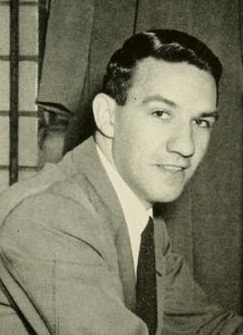
Frederick Appleton Schaus (June 30, 1925 – February 10, 2010) was an American basketball player, head coach and athletic director for the West Virginia University Mountaineers, player for the National Basketball Association's Fort Wayne Pistons and New York Knicks, general manager and head coach for the Los Angeles Lakers, head coach of Purdue University basketball, and a member of the NCAA Basketball Committee. He was born in Newark, Ohio.[1]

Key Information

College career

[edit]

Schaus was recruited from out of state (Ohio) by the legendary coach Lee Patton in 1946 to play at West Virginia University. Under Patton, Fred developed into a top star among stars during that golden age of Mountaineer basketball. Among Schaus' many accomplishments was that he was the first to score 1,000 career points (1,009) at WVU. He was also selected to the All-American team in 1949.

Professional career

[edit]

Schaus left West Virginia to join the Fort Wayne Pistons in the 1949–1950 season. He scored 14.3 points a game and a year later scored a career-best 15.3 points a game. He was selected to play in the first NBA All-Star Game and scored eight points for the West. However, he only averaged 14.1 points per game in 1952, and then in 1953 it dropped to 10.1 points per game.

He was traded to the New York Knicks halfway through the 1954 season and ended his NBA career that season with 7.1 points per game average.

NBA career statistics

[edit]
Legend
  GP Games played   GS  Games started  MPG  Minutes per game
 FG%  Field goal percentage  3P%  3-point field goal percentage  FT%  Free throw percentage
 RPG  Rebounds per game  APG  Assists per game  SPG  Steals per game
 BPG  Blocks per game  PPG  Points per game  Bold  Career high

Regular season

[edit]
Year Team GP MPG FG% FT% RPG APG PPG
1949–50 Fort Wayne 68 .352 .818 2.6 14.3
1950–51 Fort Wayne 68 .340 .835 7.3 2.7 15.1
1951–52 Fort Wayne 62 41.6 .361 .833 7.0 4.0 14.1
1952–53 Fort Wayne 69 36.8 .334 .821 6.0 3.6 10.5
1953–54 Fort Wayne 23 11.8 .397 .760 2.2 .9 3.8
1953–54 New York 44 28.3 .386 .793 4.9 2.0 8.8
Career 334 33.5 .352 .823 6.0 2.9 12.2

Playoffs

[edit]
Year Team GP MPG FG% FT% RPG APG PPG
1950 Fort Wayne 4 .364 .839 2.8 18.5
1951 Fort Wayne 3 .386 .818 5.3 3.3 14.3
1952 Fort Wayne 2 45.0 .343 .875 7.5 7.0 15.5
1953 Fort Wayne 8 30.5 .300 .761 5.3 5.3 8.9
1954 New York 4 29.8 .280 .933 3.0 3.0 7.0
Career 21 32.4 .339 .820 5.0 2.6 11.8

College coaching career

[edit]

West Virginia

[edit]

After his retirement from the NBA, Schaus returned to his alma mater to coach the Mountaineers. In his first season, he led the Mountaineers to a 19–11 mark and an NCAA tournament appearance. In the next five seasons, he posted an amazing 127–26 (.831) record, which included five consecutive NCAA tournament berths. The recruitment of Schaus for Jerry West (a native of Chelyan, West Virginia) to play for the Mountaineers was a key factor, with West calling Schaus his "mentor"; West played on the freshmen team in 1957 before playing with Schaus and the varsity team from 1958 to 1960.[2] He led WVU to the NCAA finals in 1959, but lost to Pete Newell's California team, 71–70.[3]

Purdue

[edit]

After leaving NBA coaching and management in 1972, he returned to the college ranks to coach at Purdue University, taking over for George King. He held a 104–60 overall record as the Boilermaker's head coach, while leading them to the 1974 NIT Championship and a berth in the 1977 NCAA tournament. He then owned the distinction of being the only coach to reach the NIT finals, NCAA finals, and the NBA Finals.

At Purdue, Schaus was the successor to George King, who was Schaus' successor at West Virginia.

After 1981, Schaus returned to WVU to serve as the athletic director.

Professional coaching/management career

[edit]

Los Angeles Lakers

[edit]

After the 1960 season, he left college coaching for the Los Angeles Lakers and reunited with his former WVU star, Jerry West. Schaus guided the Lakers to seven consecutive playoff appearances, including 4 Western Conference Championships[3] in 5 years (1962, 1963, 1965 and 1966). He labeled the loss in 1966 (a Game 7 loss in Boston) as the “worst disappointment of my pro coaching career....If you don’t win it all, you’re nothing.” In 1967, he moved to the front office to become the Lakers general manager. He rebuilt the Lakers, eventually winning the 1972 NBA title. Not long after, Schaus was contacted by his friend George King (who had succeeded Schaus at West Virginia in 1960) about joining him at Purdue, as King wanted to focus on being the athletic director rather than being director and coach. Schaus accepted.[4]

Head coaching record

[edit]

College

[edit]
Statistics overview
Season Team Overall Conference Standing Postseason
West Virginia Mountaineers (Southern Conference) (1954–1960)
1954–55 West Virginia 19–11 9–1 1st NCAA first round
1955–56 West Virginia 21–9 10–2 T–1st NCAA first round
1956–57 West Virginia 25–5 12–0 1st NCAA University Division First Round
1957–58 West Virginia 26–2 12–0 1st NCAA University Division First Round
1958–59 West Virginia 29–5 11–0 1st NCAA University Division Runner-up
1959–60 West Virginia 26–5 9–2 2nd NCAA University Division Regional Third Place
West Virginia: 146–37 (.798) 63–5 (.926)
Purdue Boilermakers (Big Ten Conference) (1972–1978)
1972–73 Purdue 15–9 8–6 T–3rd
1973–74 Purdue 21–9 10–4 3rd NIT Champion
1974–75 Purdue 17–11 11–7 T–3rd NCIT Semifinals
1975–76 Purdue 16–11 11–7 3rd
1976–77 Purdue 20–8 14–4 2nd NCAA Division I First Round
1977–78 Purdue 16–11 11–7 T–4th
Purdue: 104–60 (.634) 65–35 (.650)
Total: 250 – 97 (.720)

      National champion         Postseason invitational champion  
      Conference regular season champion         Conference regular season and conference tournament champion
      Division regular season champion       Division regular season and conference tournament champion
      Conference tournament champion

Professional

[edit]
Legend
Regular season G Games coached W Games won L Games lost W–L % Win–loss %
Playoffs PG Playoff games PW Playoff wins PL Playoff losses PW–L % Playoff win–loss %
Team Year G W L W–L% Finish PG PW PL PW–L% Result
LAL 1960–61 79 36 43 .456 2nd in Western 12 6 6 .500 Lost in Western Div. Finals
LAL 1961–62 80 54 26 .675 1st in Western 13 7 6 .538 Lost in NBA Finals
LAL 1962–63 80 53 27 .663 1st in Western 13 6 7 .462 Lost in NBA Finals
LAL 1963–64 80 42 38 .525 3rd in Western 5 2 3 .400 Lost in Western Div. Semifinals
LAL 1964–65 80 49 31 .613 1st in Western 11 5 6 .455 Lost in NBA Finals
LAL 1965–66 80 45 35 .563 1st in Western 14 7 7 .500 Lost in NBA Finals
LAL 1966–67 81 36 45 .444 3rd in Western 3 0 3 .000 Lost in Western Div. Semifinals
Career 560 315 245 .563 71 33 38 .465

Personal life

[edit]

He is the father of Southern Conference Commissioner and former Ohio University and Wichita State University athletic director Jim Schaus.[5]

Schaus died in Morgantown, West Virginia, on February 10, 2010. He was 84.[6]

See also

[edit]

References

[edit]
Revisions and contributorsEdit on WikipediaRead on Wikipedia
from Grokipedia
Frederick Appleton Schaus (June 30, 1925 – February 10, 2010) was an American basketball player, coach, and athletic director, renowned for his contributions to the sport at the collegiate and professional levels, including leading to the 1959 NCAA Championship game and serving as the first head coach of the . Born in Newark, Ohio, Schaus excelled in high school basketball at Newark High School, where he led the team to the state championship in 1943. At West Virginia University, he became the first Mountaineer to score 1,000 career points (1,009 total) and earned All-America honors as a 6-foot-5 forward. Schaus transitioned to professional basketball in 1949, playing five seasons as a small forward for the Fort Wayne Pistons and New York Knicks, averaging 12.2 points and 6.0 rebounds per game across 334 appearances, and participating in the inaugural NBA All-Star Game in 1951. Schaus began his coaching career at in 1954, where over six seasons he compiled a 146–37 record, made the NCAA Tournament every year, and guided the team to the national championship game in 1959, falling 71–70 to ; during this time, he developed All-Americans like Rod Hundley and . In 1960, he became the inaugural head coach of the , leading the team to seven consecutive playoff appearances and four Western Conference titles (1962, 1963, 1965, 1966), though they lost all four to the ; his 315–245 regular-season record ranks fourth in Lakers history. After leaving coaching in 1967, Schaus served as the Lakers' general manager until 1972, overseeing the team's NBA Championship victory that year. He later coached at from 1972 to 1978, achieving a 104–60 record, winning the 1974 NIT Championship, and reaching the 1977 NCAA Tournament. In 1981, Schaus returned to as , serving until 1989 and impacting the program's overall development during his tenure. His multifaceted career earned him induction into the Hall of Fame in 2007, recognizing his high school, college, professional, and coaching accomplishments originating from his roots.

Early life and education

Childhood and family background

Frederick Appleton Schaus was born on June 30, 1925, in , a small industrial city in the central part of the state. Growing up in a modest family environment, Schaus developed an early affinity for amid the local sports culture of Newark, which featured community leagues and school programs that emphasized team play and physical conditioning. He had at least one , a sister named Mary Brown, who later outlived him, though details on his parents and dynamics remain sparsely documented in available records. Schaus's childhood interest in basketball ignited around age five or six on the family farm just outside Newark, where a simple hoop was installed, fostering his initial skills through informal play. These early experiences in Ohio's heartland laid the groundwork for his lifelong dedication to the sport, influenced by community coaches and peers who valued discipline and teamwork. Following his high school graduation in 1943, Schaus enlisted in the U.S. Navy at age 18, serving during the final years of . His military service included playing competitive on the Great Lakes Naval Training Station team, a program that kept service members physically active amid wartime duties, though specific combat roles are not detailed in biographical accounts. This enlistment postponed his college education until after the war's end in 1945, redirecting his immediate post-adolescent path from academics to .

High school basketball career

Fred Schaus attended Newark High School in , where he excelled in as a center. He was recognized as an all-state selection in 1943, highlighting his standout performance during his senior year. A key highlight of Schaus's high school career came in the 1943 Ohio state tournament, where he played a pivotal role in leading the Newark Panthers to the Class AA championship. The team defeated Canton McKinley 47-42 in the final game at the Columbus Auditorium, securing the title in a closely contested match. His contributions as a forward and center were instrumental in the team's success throughout the tournament. Schaus graduated from Newark High School in 1943, but World War II significantly altered his immediate post-high school athletic trajectory. He enlisted in the U.S. Navy shortly after graduation, serving from 1943 to 1946 and delaying his entry into .

Playing career

College career at

Following his service in the U.S. Navy during , Fred Schaus enrolled at in 1946, where he joined the Mountaineers basketball team under coach Lee Patton. As a 6-foot-5 forward from , Schaus quickly emerged as a key contributor, playing three seasons from 1946-47 to 1948-49 and helping elevate the program's competitiveness in the independent conference. His arrival bolstered a squad that had previously shown promise, building on his all-state high school pedigree to anchor the frontcourt. Schaus's scoring prowess defined his college tenure, amassing 1,009 points over 61 games for an average of 16.5 , making him the first WVU player to reach the 1,000-point milestone. In his (1946-47), he averaged 16.9 points across 22 games, contributing to a strong 19-3 overall record that secured the program's fourth (NIT) appearance in seven years. His year (1947-48) saw 13.1 points per game in 15 contests, while his junior and final (1948-49) peaked with a career-high 18.4 points per game in 24 games, ranking him sixth nationally in scoring that year and powering the Mountaineers to an 18-6 record. Notable performances included high-scoring outputs against conference independents like and NC State, where his efficient shooting—359 field goals and 291 free throws at 75.9%—helped maintain WVU's reputation for disciplined, high-tempo play. Beyond statistics, Schaus exemplified as team captain in his senior year and as student body president, fostering team unity during a transitional era for post-war. His efforts earned him third-team All-American honors from the Helms Foundation in 1949, capping a career that not only set individual benchmarks but also laid groundwork for WVU's future success in the sport.

Professional NBA career

Fred Schaus was selected by the Fort Wayne Pistons in the third round (22nd overall) of the out of , marking his entry into professional basketball. He signed with the Pistons shortly thereafter and made his NBA debut on November 3, 1949, during the league's inaugural season under its new name. Over his first four full seasons with Fort Wayne (1949–1953), Schaus established himself as a versatile forward, contributing significantly to the team's competitive efforts in the Central Division. His scoring prowess peaked in the 1950–51 season, where he averaged 15.1 points per game, earning him a selection to the —the league's second annual showcase—where he scored eight points. During his tenure with the Pistons, Schaus helped the team reach the playoffs in each of his first four seasons, including notable appearances in the division finals in 1949–50 and 1952–53, where Fort Wayne advanced but fell short of the NBA Finals. In the 1949–50 postseason, the Pistons won the third-place tiebreaker against the Chicago Stags (1-0), defeated the Rochester Royals 2-0 in the semifinals, and lost to the Minneapolis Lakers 0-2 in the division finals, with Schaus averaging 18.4 points across five games. The 1952–53 playoffs saw a similar run, as Fort Wayne beat the Rochester Royals 2-1 in the semifinals but lost to the Minneapolis Lakers 2-3 in the division finals; Schaus contributed 8.9 points per game over eight games. These postseason runs highlighted his role in one of the league's more consistent franchises during the early 1950s. On December 29, 1953, midway through the 1953–54 season, the Fort Wayne Pistons sold Schaus's rights to the for cash considerations, joining a team vying for Eastern Division contention. He played 44 games for the Knicks, averaging 8.8 points and 4.9 rebounds per game, before the team participated in a unique round-robin playoff after finishing third in the division. Schaus appeared in all four round-robin games, but New York was eliminated. He retired from playing at the end of the 1953–54 season at age 28, concluding a five-year NBA career. Over 334 regular-season games, Schaus compiled career averages of 12.2 points, 6.0 rebounds (noting incomplete data from his rookie year), and 2.9 assists per game, while appearing in 21 playoff contests with averages of 11.8 points and 5.0 rebounds.

Coaching career

College coaching at West Virginia University

Fred Schaus returned to in 1954 as head men's basketball coach, leveraging his legacy as a star player and All-American for the Mountaineers earlier in the decade. Over six seasons from 1954 to 1960, he compiled an impressive overall record of 146–37, achieving a .798 winning percentage that remains the highest in school history. Under Schaus, the Mountaineers dominated the , winning the regular-season title each year and posting a 56–5 conference record, including a streak of 44 consecutive regular-season victories. He was named Coach of the Year four times during this period (1955, 1958, 1959, and 1960), recognizing his leadership in elevating the program. Schaus guided to six consecutive NCAA Tournament appearances from 1955 to 1960, a feat that underscored the program's national prominence during his tenure. The Mountaineers advanced deep into the 1959 tournament, defeating Dartmouth, Saint Joseph's, , and Louisville to reach the game, where they fell 71–70 to in a classic final. This runner-up finish marked the program's deepest NCAA run at the time and highlighted Schaus's strategic acumen in postseason play. A key aspect of Schaus's success was his development of elite talent, including All-Americans (coached 1954–1957), future Hall of Famer (coached 1957–1960), whom he molded into a dominant scorer and , and , another All-American guard whom he recruited and nurtured and who contributed significantly to the team's back-to-back conference tournament titles in 1958 and 1959. These players formed the core of squads that not only won six straight tournaments but also established as a consistent national contender.

College coaching at Purdue University

Fred Schaus was hired as head basketball coach at in May 1972, resigning from his position as general manager of the to succeed George King, who had departed for the head coaching job at the . Over his six seasons leading the Boilermakers from 1972 to 1978, Schaus compiled an overall record of 104–60, achieving a .634 and guiding the program through a period of transition in the competitive . One of Schaus's most notable achievements came in the 1973–74 season, when Purdue finished 21–9 overall and third in the Big Ten with a 10–4 conference mark before capturing the (NIT) championship. The Boilermakers defeated 87–81 in the NIT final at , marking the first NIT title for a Big Ten team and highlighting Schaus's ability to build a balanced squad capable of postseason success despite not qualifying for the NCAA Tournament, which at the time allowed only one automatic bid per conference. In 1976–77, Schaus led Purdue to a 19–9 record and a second-place finish in the Big Ten (13–5), earning the program's first NCAA Tournament appearance under his tenure with a bid as an team ranked No. 20 in the final . The Boilermakers advanced to the Round of 32 before falling to , a performance bolstered by key recruits including 7-foot-1 center , whom Schaus had persuaded to join Purdue from despite intense competition from Indiana's . , a future No. 1 pick, provided immediate interior dominance as a , contributing to Purdue's resurgence. Schaus's tenure at Purdue involved significant challenges in rebuilding the program amid the rigors of Big Ten play, where dominant rivals like under posed formidable recruiting and competitive hurdles. Despite three postseason appearances, including the 1975 NIT, the Boilermakers often finished outside the conference's top tier, reflecting the difficulty of sustaining elite performance in a league increasingly defined by powerhouse programs. Schaus emphasized up-tempo, entertaining basketball to engage fans and develop talent, laying groundwork for future success even as he departed in 1978 to return to administrative roles.

Professional career

Coaching with the Los Angeles Lakers

After leaving his position as head coach at following the 1959-60 season, Fred Schaus was hired by the on August 20, 1960, to lead the team in its inaugural season in after relocating from . Over the next seven seasons, Schaus compiled a regular-season record of 315 wins and 245 losses, achieving a .563 winning percentage. His teams qualified for the in each of those years, marking seven consecutive postseason appearances, and advanced to the Western Division Finals four times (1962, 1963, 1965, and 1966). Schaus guided the Lakers to the in 1962, 1963, 1965, and 1966, though each series ended in defeat to the , the league's dominant force at the time. In the playoffs overall, his Lakers posted a 33-38 record (.465 winning percentage) across 71 games. Central to these efforts were star players and , both former Mountaineers under Schaus at , who formed one of the league's most dynamic duos and consistently propelled the team deep into the postseason. Schaus's success earned him recognition as the Western Conference coach for the five times, in 1962, 1963, 1964, 1966, and 1967. He was reassigned from his head coaching duties on April 26, 1967, after the Lakers' Western Division Finals loss to the Warriors.

General manager with the Los Angeles Lakers

Following his tenure as head coach, Fred Schaus was immediately promoted to general manager of the in 1967, a role he held until 1972. In this executive position, Schaus focused on roster reconstruction after years of near-misses in the , leveraging his prior relationships with key players like to stabilize and elevate the franchise. His administrative leadership marked a shift from on-court strategy to long-term team building, during which the Lakers achieved sustained contention in the Western Conference. Schaus's key decisions included orchestrating major trades that bolstered the team's core. As general manager, he acquired center from the in exchange for , Archie Clark, and . Two years later, in 1970, Schaus traded center to the to bring back guard , who had been lost in the 1968 ; Goodrich's return provided crucial scoring and playmaking, averaging 22.0 points per game during the 1971-72 season. Additionally, Schaus hired as head coach in 1971, whose innovative training methods, including film study and weight training, transformed the team's discipline and performance. These moves culminated in assembling the roster that captured the 1972 NBA Championship, defeating the in five games after a league-record 69 regular-season wins and a 33-game winning streak. Overall, Schaus's tenure as GM revitalized the Lakers in the early , ending a 12-year title drought for the franchise and establishing a foundation of success through strategic personnel changes that emphasized veteran leadership and star power.

Career statistics and records

Regular Season Statistics

Fred Schaus played five seasons in the NBA, appearing in 334 regular-season games primarily with the Fort Wayne Pistons and briefly with the in 1953-54.
SeasonTeamGPTSTRBAST
1949-50FTW6814.3-2.6
1950-51FTW6815.17.32.7
1951-52FTW6214.17.04.0
1952-53FTW6910.56.03.6
1953-54FTW/NYK677.14.01.6
Career33412.26.02.9
Note: Rebound statistics were not officially tracked until the 1950-51 season; career rebounds average 6.0 per game over 266 games from 1950-51 onward. Total career points: 4,070; total rebounds: 1,609; total assists: 961.

Playoff Statistics

Schaus appeared in 21 playoff games across five seasons.
SeasonTeamGPTSTRBAST
1949-50FTW418.5-2.8
1950-51FTW314.35.33.3
1951-52FTW215.57.57.0
1952-53FTW88.95.31.5
1953-54NYK47.03.02.0
Career2111.25.02.6
Note: Rebound statistics for the 1949-50 playoffs were not officially tracked; career playoff rebounds average 5.0 per game over 17 games from 1950-51 onward. Total playoff points: 236; total rebounds: 85; total assists: 55. Schaus's career highs included 33 points, 15 rebounds, and 13 assists in single games, with scoring and rebounding peaking during his first three seasons coinciding with his 1951 NBA All-Star selection.

Head coaching records

Fred Schaus compiled an impressive across both and , leading teams to multiple championship appearances. His tenure at (WVU) and in , followed by seven seasons with the in the NBA, showcased consistent success, including reaching the NIT, NCAA, and .

College Coaching Records

Schaus coached at WVU from 1954 to 1960 and at Purdue from 1972 to 1978, amassing an overall college record of 250 wins and 97 losses for a .720 . At WVU, he achieved a 146–37 record (.798 ), guiding the Mountaineers to six NCAA appearances, including a run in 1959. His Purdue record stood at 104–60 (.634 ), highlighted by an NIT championship in 1974 and an NCAA berth in 1977.
SeasonSchoolOverall RecordWinning %ConferencePostseason
1954–55WVU19–11.633SouthernNCAA Tournament
1955–56WVU21–9.700SouthernNCAA Tournament
1956–57WVU25–5.833SouthernNCAA Tournament
1957–58WVU26–2.929SouthernNCAA Tournament
1958–59WVU29–5.853Southern
1959–60WVU26–5.839SouthernNCAA Tournament
1972–73Purdue15–9.625Big Ten
1973–74Purdue21–9.700Big TenNIT Champion
1974–75Purdue17–11.607Big Ten
1975–76Purdue16–11.593Big Ten
1976–77Purdue19–9.679Big TenNCAA Tournament
1977–78Purdue16–11.593Big Ten

NBA Coaching Records

With the Lakers from 1960 to 1967, Schaus recorded a regular-season mark of 315–245 (.563 ) over 560 games, leading the team to seven consecutive appearances and four (1962, 1963, 1965, 1966). In the playoffs, he went 33–38 (.465 ) across 71 games.
SeasonRegular Season (G–W–L)Win %Playoffs (G–W–L)Playoff Win %Result
1960–6179–36–43.45612–6–6.500Western Division Finals
1961–6280–54–26.67513–7–6.538 (Lost)
1962–6380–53–27.66313–6–7.462 (Lost)
1963–6480–42–38.5255–2–3.400Western Division Semifinals
1964–6580–49–31.61311–5–6.455 (Lost)
1965–6680–45–35.56314–7–7.500 (Lost)
1966–6781–36–45.4443–0–3.000Western Division Semifinals

Aggregate and Tournament Records

Across his entire head coaching career, Schaus totaled 565 regular-season wins (315 NBA, 250 ) against 342 losses (.623 overall ). Tournament achievements include six NCAA appearances (one ), one NIT title, and four trips, underscoring his impact on postseason play.

Awards and honors

Playing and coaching accolades

During his collegiate career at , Fred Schaus earned All-American honors in 1949, becoming the first Mountaineer to reach 1,000 career points while leading the team to an 18–6 record. As a professional player with the Fort Wayne Pistons, he was selected to the inaugural in 1951, where he contributed 8 points and 4 rebounds for the Western Conference team in a 111-94 loss to the East. In his coaching role at from 1954 to 1960, Schaus was recognized as Coach of the Year four times, specifically for the 1954-55, 1957-58, 1958-59, and 1959-60 seasons, during which his teams won six consecutive conference titles and compiled a 78–9 record over his final three years. Later, as of the from 1960 to 1967, he served as the Western Conference for the on five occasions: 1962, 1963, 1965, 1966, and 1967, guiding teams that included stars like and . At from 1968 to 1974, Schaus led the Boilermakers to the 1974 NIT Championship, defeating 87-81 in the final to secure the program's first postseason title. Additionally, Schaus coached the to a gold medal at the in , going undefeated with a 6-0 record against international competition. His career is marked by a unique achievement: he remains the only coach to have reached the finals of the NIT (1974 with Purdue), the NCAA Tournament (1959 with ), and the (1962, 1963, 1965, and 1966 with the Lakers).

Hall of Fame inductions

Schaus was inducted into the Sports Hall of Fame in 1992, recognizing his multifaceted contributions as a , and at the institution. In the same year, he received the Order of Vandalia, WVU's highest honor for distinguished service to the university and state. These accolades highlighted his role in elevating WVU , including leading the team to the 1959 NCAA final and serving as athletic director from 1981 to 1989. In 2007, Schaus was enshrined in the Ohio Basketball Hall of Fame, honoring his roots as a Newark High School state champion in 1943 and his broader impact on the sport from high school through professional levels. Earlier, in 1983, he had been inducted into the West Virginia Sports Hall of Fame by the West Virginia Sports Writers Association, acknowledging his 19-year coaching career across college and NBA ranks. In 2025, Schaus was posthumously inducted into the inaugural College of Applied Human Sciences Hall of Fame at WVU, building on his prior 1988 enshrinement in the College of Physical Activity and Sport Sciences Hall of Fame and the 1993 CPASS Outstanding Alumnus award. This recognition celebrated his legacy as WVU's first 1,000-point scorer and honoree in 1949, alongside his administrative leadership.

Personal life

Family and marriage

Schaus married Barbara Jean Scherr in 1950 after meeting her as students at West Virginia University. Their marriage lasted until his death in 2010; Barbara Schaus died on January 17, 2023. The couple had two sons, John and Jim, as well as a daughter who predeceased them. Jim Schaus followed in his father's footsteps in athletic administration, serving as athletic director at Ohio University and Wichita State University before becoming and later serving as commissioner of the Southern Conference until his retirement in 2023. The family maintained strong ties to West Virginia, where they resided in Morgantown and hosted annual Christmas parties for the university's athletic department at their home on Cheat Lake. Ohio connections persisted through Schaus's Newark birthplace and his son's career at Ohio University.

Death

Fred Schaus died on February 10, 2010, at the age of 84 in Morgantown, West Virginia, while residing at the Madison Nursing Center. The cause of his death was not publicly disclosed. A visitation and funeral service were held on February 14, 2010, at Suncrest United Methodist Church in Morgantown, officiated by Rev. Tim W. Halloran and Rev. William R. Kinsey. His burial took place the following day, February 15, at Fairmount Cemetery in Jacksontown, Ohio. In lieu of flowers, donations were directed to the Fred and Barbara Schaus Scholarship Fund at the West Virginia University Foundation. Schaus was survived by his wife, Barbara; their two sons, Jim and John; his sister, Mary Brown; and six grandchildren. The basketball community mourned his passing with numerous tributes highlighting his influence as a coach and mentor. , whom Schaus recruited to and later coached with the Lakers, described him as "my mentor" and "the first coach to show interest in me." Rod Hundley, another former player under Schaus at WVU and the Lakers, called him "a no-nonsense coach." Rene A. Henry, former WVU sports information director, noted that Schaus was "the type of wonderful person you meet and know once in a lifetime" and that he "touched the lives of so many of his players and friends." Eulogies from former players and colleagues poured in, reflecting on his lasting impact on college and professional .

Legacy

Impact on basketball

Fred Schaus played a pivotal role in elevating the (WVU) program during his tenure as from 1954 to 1960, compiling a 146–37 record and leading the Mountaineers to six consecutive NCAA Tournament appearances. His teams reached the NCAA championship game in 1959, where they narrowly lost to , marking WVU's emergence as a national powerhouse and establishing a legacy of competitive excellence in . At , Schaus served as head coach from 1972 to 1978, achieving a 104–60 record and guiding the Boilermakers to three postseason appearances, including the 1974 NIT Championship. His leadership restored consistency to the program following a transitional period, fostering a winning culture that emphasized disciplined play and player development, which helped solidify Purdue's standing in Big Ten competition. Schaus's contributions to the were instrumental in the franchise's early success after relocating from in 1960, where he coached for seven seasons and posted a 315–245 record, securing seven consecutive playoff berths and four Western Division titles in 1962, 1963, 1965, and 1966. As general manager from 1967 to 1972, he assembled the core roster—including , , , and —that captured the 1972 NBA championship with a then-record 69 wins, laying the foundation for the Lakers' dynasty in the Western Conference. Schaus profoundly influenced players like , whom he recruited to WVU and mentored from a shy high school prospect into a two-time All-American and NBA icon, later coaching him with the Lakers and crediting Schaus as his lifelong mentor. His career bridged college and professional eras, transitioning seamlessly from NCAA success to NBA leadership and helping integrate top collegiate talents into the pro game during the league's expansion westward. Internationally, Schaus highlighted his coaching acumen by leading the to gold at the in , defeating 84–58 in the final and demonstrating American basketball dominance through strategic team play.

Namesake awards and tributes

In recognition of his exemplary leadership both on and off the court, established the Fred Schaus Captain's Award in 1989, shortly after his retirement as . This honor is presented annually to the most outstanding team captains from WVU's varsity sports programs, emphasizing qualities like dedication, , and influence on teammates that Schaus exemplified throughout his career. Recipients, such as football captain Chris Neild and track captain Keri Bland in 2011, are selected for their embodiment of Schaus's values, with the award serving as a lasting tribute to his role in fostering leadership at the university.

References

Add your contribution
Related Hubs
User Avatar
No comments yet.