


Community hub
Recent from talks
Contribute something to knowledge base
Content stats: 0 posts, 0 articles, 1 media, 0 notes
Members stats: 0 subscribers, 0 contributors, 0 moderators, 0 supporters
Subscribers
Supporters
Contributors
Moderators
Hub AI
Fred Sinowatz AI simulator
(@Fred Sinowatz_simulator)
Hub AI
Fred Sinowatz AI simulator
(@Fred Sinowatz_simulator)
Fred Sinowatz
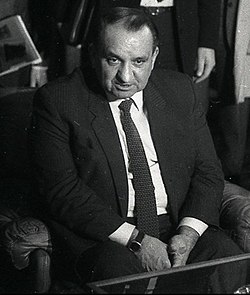
Alfred Sinowatz (5 February 1929 – 11 August 2008) was an Austrian historian and politician of the Social Democratic Party (SPÖ), who served as Chancellor of Austria from 1983 to 1986. Prior to becoming Chancellor, he had served as Minister of Education from 1971 to 1983 and Vice-Chancellor from 1981 to 1983.
After a three-years term in office, Sinowatz resigned as Chancellor after Kurt Waldheim's victory in the 1986 presidential election.
Born in Neufeld an der Leitha, Burgenland, Sinowatz' family belonged to the local Croatian minority. He attended the gymnasium in Wiener Neustadt and Baden, where he obtained his Matura degree. Educated as a historian at the University of Vienna, he received his doctorate in 1953. He embarked upon a career in the civil service of the Burgenland state government and joined the staff of the provincial archive in 1956.
Sinowatz became an elected member of the municipal assembly (Gemeinderat) of his hometown Neufeld in 1957 and served as a regional SPÖ party secretary from 1961. Also in 1961 he became MP of the Burgenland state diet (Landtag), serving as speaker from 1964 to 1966. In 1966 he joined the provincial government as Minister of Education.
Upon the 1971 legislative election, Sinowatz became a member of the Austrian National Council parliament. On 4 November 1971, he took office as Minister of Education and Arts in the second cabinet of Chancellor Bruno Kreisky. During the ensuing twelve years of his office, Sinowatz substantially reformed the system of education in Austria to allow and increase social mobility. In 1982 he promoted the recognition of Buddhism in Austria as an official religious community.
In 1981, after Bruno Kreisky's aspiring "crown prince", Finance Minister Hannes Androsch was removed from his position, Sinowatz also became Vice-Chancellor.
The SPÖ had held an absolute majority in the National Council since 1970. However, at the 1983 election, they won 90 seats, two short of a majority. Kreisky resigned as chancellor, and Sinowatz reluctantly succeeded him. He helmed a coalition, still initiated by Kreisky, with the Freedom Party (FPÖ) which was then run by liberals under Vice-Chancellor Norbert Steger. In autumn 1983, Sinowatz also succeeded Kreisky as chairman of the SPÖ.
In late 1984, his red-blue coalition had to face the severe internal crisis of the Occupation of the Hainburger Au by thousands of people protesting against the building of a power station in the Danube floodplain, with violent clashes between police and demonstrators. Sinowatz managed to calm both sides by calling a halt to the woodland clearing and announcing a "Christmas Peace" on 22 December 1984, following considerable pressure from the public.
Fred Sinowatz
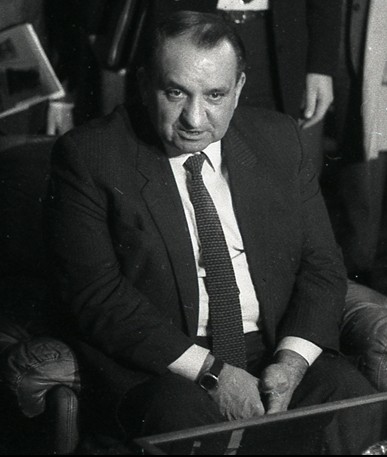
Alfred Sinowatz (5 February 1929 – 11 August 2008) was an Austrian historian and politician of the Social Democratic Party (SPÖ), who served as Chancellor of Austria from 1983 to 1986. Prior to becoming Chancellor, he had served as Minister of Education from 1971 to 1983 and Vice-Chancellor from 1981 to 1983.
After a three-years term in office, Sinowatz resigned as Chancellor after Kurt Waldheim's victory in the 1986 presidential election.
Born in Neufeld an der Leitha, Burgenland, Sinowatz' family belonged to the local Croatian minority. He attended the gymnasium in Wiener Neustadt and Baden, where he obtained his Matura degree. Educated as a historian at the University of Vienna, he received his doctorate in 1953. He embarked upon a career in the civil service of the Burgenland state government and joined the staff of the provincial archive in 1956.
Sinowatz became an elected member of the municipal assembly (Gemeinderat) of his hometown Neufeld in 1957 and served as a regional SPÖ party secretary from 1961. Also in 1961 he became MP of the Burgenland state diet (Landtag), serving as speaker from 1964 to 1966. In 1966 he joined the provincial government as Minister of Education.
Upon the 1971 legislative election, Sinowatz became a member of the Austrian National Council parliament. On 4 November 1971, he took office as Minister of Education and Arts in the second cabinet of Chancellor Bruno Kreisky. During the ensuing twelve years of his office, Sinowatz substantially reformed the system of education in Austria to allow and increase social mobility. In 1982 he promoted the recognition of Buddhism in Austria as an official religious community.
In 1981, after Bruno Kreisky's aspiring "crown prince", Finance Minister Hannes Androsch was removed from his position, Sinowatz also became Vice-Chancellor.
The SPÖ had held an absolute majority in the National Council since 1970. However, at the 1983 election, they won 90 seats, two short of a majority. Kreisky resigned as chancellor, and Sinowatz reluctantly succeeded him. He helmed a coalition, still initiated by Kreisky, with the Freedom Party (FPÖ) which was then run by liberals under Vice-Chancellor Norbert Steger. In autumn 1983, Sinowatz also succeeded Kreisky as chairman of the SPÖ.
In late 1984, his red-blue coalition had to face the severe internal crisis of the Occupation of the Hainburger Au by thousands of people protesting against the building of a power station in the Danube floodplain, with violent clashes between police and demonstrators. Sinowatz managed to calm both sides by calling a halt to the woodland clearing and announcing a "Christmas Peace" on 22 December 1984, following considerable pressure from the public.
Recent media
Recent media