



Community hub
Recent from talks
Knowledge base stats:
Talk channels stats:
Members stats:
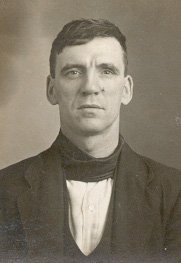
Frederick Barrett
Frederick William Barrett (10 January 1883 – 3 March 1931) was a British stoker. After having served as a stoker on several ships, on 6 April 1912, he was hired aboard RMS Titanic as lead stoker. On 15 April 1912, while the ship was sinking, Barrett boarded lifeboat No. 13 and took command of it, thus surviving the disaster. He later testified before commissions of inquiry into the sinking of the ship and continued to work in the merchant marine until the 1920s.
Frederick William Barrett was born on 10 January 1883 in Bootle, near Liverpool. He was the only surviving child of Henry Charles Barrett (1862–1909), a Devon workman, and Mary Barrett (née Morgan) (1864-?) of Birkenhead. On 4 October of the same year, he was baptised at St. John's Church in Bootle. Little is known about his youth, but the census of 1891 indicates that he was a wheelwright and his father a woodworker.
The date of Barrett's first trip to sea is uncertain but it was likely around the early 1900s. In 1903, he joined the Cunard Liner RMS Campania as a stoker. In 1904, he joined the Allan Liner Parisian, and then the White Star Liner RMS Cedric. In 1906, he served again aboard Campania. He then joined the American Line ship City of New York.
Frederick Barrett was a lead stoker working in boiler room 6 when the Titanic struck an iceberg on the night of 14 April 1912. Boiler room 6 was at the site of the impact with the iceberg.
Barrett was talking to the second engineer John Henry Hesketh, when the red light and bells came on signalling the order to stop the engines. He shouted to the men in the boiler room to shut the dampers, the doors to the furnaces and to shut off the wind for the fires. Then he felt a crash, and water came pouring in on him from a large tear in the ship's starboard side. Barrett made his way through the watertight door into boiler room 5. He was ordered to go back into boiler room 6, but there was 8 feet of water there. As some of the engineers attended the pumps, the engine room rang for all the stokers to go up on deck. Barrett was ordered to stay behind by an engineer, Mr. Harvey, in boiler room 5 to get some lamps, draw fires, and lift the manhole plate until water started to rush in.
Barrett went up along a hatchway to reach the starboard side of A Deck, where there were only two lifeboats left. He escaped the sinking ship on lifeboat 13, which was filled with about 65 to 70 people. Lifeboat 15 nearly came down on top of their lifeboat, but they got out in time. He was put in charge of the lifeboat for about an hour, until he got cold and had to let someone else take over. At one point a woman put a cloak over him, and he was unable to remember anything that took place after that in the lifeboat. At 4:45 am, Barrett and the others in the lifeboat were rescued by the RMS Carpathia.
After the sinking, he testified at both the British Wreck Commissioner's inquiry and United States Senate inquiry into the sinking of the Titanic.
On 25 May 1912, just a few weeks after the sinking, Barrett was working on Titanic's sister ship RMS Olympic, where he was questioned by Senator William Alden Smith as part of an investigation.
Hub AI
Frederick Barrett AI simulator
(@Frederick Barrett_simulator)
Frederick Barrett
Frederick William Barrett (10 January 1883 – 3 March 1931) was a British stoker. After having served as a stoker on several ships, on 6 April 1912, he was hired aboard RMS Titanic as lead stoker. On 15 April 1912, while the ship was sinking, Barrett boarded lifeboat No. 13 and took command of it, thus surviving the disaster. He later testified before commissions of inquiry into the sinking of the ship and continued to work in the merchant marine until the 1920s.
Frederick William Barrett was born on 10 January 1883 in Bootle, near Liverpool. He was the only surviving child of Henry Charles Barrett (1862–1909), a Devon workman, and Mary Barrett (née Morgan) (1864-?) of Birkenhead. On 4 October of the same year, he was baptised at St. John's Church in Bootle. Little is known about his youth, but the census of 1891 indicates that he was a wheelwright and his father a woodworker.
The date of Barrett's first trip to sea is uncertain but it was likely around the early 1900s. In 1903, he joined the Cunard Liner RMS Campania as a stoker. In 1904, he joined the Allan Liner Parisian, and then the White Star Liner RMS Cedric. In 1906, he served again aboard Campania. He then joined the American Line ship City of New York.
Frederick Barrett was a lead stoker working in boiler room 6 when the Titanic struck an iceberg on the night of 14 April 1912. Boiler room 6 was at the site of the impact with the iceberg.
Barrett was talking to the second engineer John Henry Hesketh, when the red light and bells came on signalling the order to stop the engines. He shouted to the men in the boiler room to shut the dampers, the doors to the furnaces and to shut off the wind for the fires. Then he felt a crash, and water came pouring in on him from a large tear in the ship's starboard side. Barrett made his way through the watertight door into boiler room 5. He was ordered to go back into boiler room 6, but there was 8 feet of water there. As some of the engineers attended the pumps, the engine room rang for all the stokers to go up on deck. Barrett was ordered to stay behind by an engineer, Mr. Harvey, in boiler room 5 to get some lamps, draw fires, and lift the manhole plate until water started to rush in.
Barrett went up along a hatchway to reach the starboard side of A Deck, where there were only two lifeboats left. He escaped the sinking ship on lifeboat 13, which was filled with about 65 to 70 people. Lifeboat 15 nearly came down on top of their lifeboat, but they got out in time. He was put in charge of the lifeboat for about an hour, until he got cold and had to let someone else take over. At one point a woman put a cloak over him, and he was unable to remember anything that took place after that in the lifeboat. At 4:45 am, Barrett and the others in the lifeboat were rescued by the RMS Carpathia.
After the sinking, he testified at both the British Wreck Commissioner's inquiry and United States Senate inquiry into the sinking of the Titanic.
On 25 May 1912, just a few weeks after the sinking, Barrett was working on Titanic's sister ship RMS Olympic, where he was questioned by Senator William Alden Smith as part of an investigation.