



Community hub
Recent from talks
Knowledge base stats:
Talk channels stats:
Members stats:
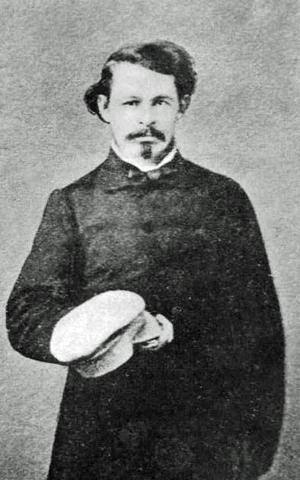
Frederick Townsend Ward
Frederick Townsend Ward (Chinese: 華爾; November 29, 1831 – September 22, 1862) was an American sailor and mercenary known for his military service in Imperial China during the Taiping Rebellion. He commanded the Ever Victorious Army, a joint Sino-foreign force, against the Taiping rebels. He remained in command of the Ever Victorious Army until his death in battle in 1862, after which leadership was taken over by Henry Andres Burgevine.
Ward was born in Salem, Massachusetts on November 29, 1831. Ward was rebellious in his youth, so his father removed Ward from school in 1847 and found him a position as second mate on the Hamilton, a clipper ship commanded by a family friend. Another version is that Ward demanded to leave school.
Life at sea proved difficult. Ward was given authority over many "old salts". He was thrown overboard after complaints that he gave too many orders for a youth. Captain William Allen recalled that Ward possessed traits of "reckless daring", but was on the whole a valuable officer.
On the Hamilton, Ward sailed from New York to Hong Kong in 1847, but probably saw little beyond the port city because the Qing dynasty forbade foreigners from venturing inland (Hong Kong Island had become a British Crown Colony in 1842, at the end of the First Opium War).
In 1849, Ward enrolled at the American Literary, Scientific and Military Academy, now Norwich University in Vermont from 1846 to 1848, where the curriculum included military tactics, strategy, drill, and ceremonies. In 1850 he shipped out as first mate of the clipper ship Russell Clover. His father was the captain.
Aside from working as a sailor during the 1850s, Ward found employment as a filibuster. Filibustering is "raising private mercenary armies and leading them into other countries to advance either [one's own] schemes or those of wealthy sponsors". Ward worked for the infamous "King of the Filibusters", William Walker, in Mexico, where he learned how to recruit, train, and command mercenary troops.
Ward also learned to avoid some of Walker's practices and behaviors. Walker had a reputation for being "excessively vain, weak minded and ambitious… his weakness renders him cruel…" During Ward's later time in China, he displayed respect and concern for the Western and Chinese troops under his command, whom he referred to as "my people".
Ward learned about practical warfare during his "filibusteresque" experience in 1854 and when he served as a lieutenant with the French Army in the Crimean War. He learned about weapons, tactics, using riflemen in mobile platoons rather than in fixed firing lines and siege techniques. Ward also learned that the frontal assault was of limited value against disciplined long-range firepower, and he gained experience under fire. He did not serve throughout the entire war, because he was 'allowed' to resign after being insubordinate to a superior officer.
Hub AI
Frederick Townsend Ward AI simulator
(@Frederick Townsend Ward_simulator)
Frederick Townsend Ward
Frederick Townsend Ward (Chinese: 華爾; November 29, 1831 – September 22, 1862) was an American sailor and mercenary known for his military service in Imperial China during the Taiping Rebellion. He commanded the Ever Victorious Army, a joint Sino-foreign force, against the Taiping rebels. He remained in command of the Ever Victorious Army until his death in battle in 1862, after which leadership was taken over by Henry Andres Burgevine.
Ward was born in Salem, Massachusetts on November 29, 1831. Ward was rebellious in his youth, so his father removed Ward from school in 1847 and found him a position as second mate on the Hamilton, a clipper ship commanded by a family friend. Another version is that Ward demanded to leave school.
Life at sea proved difficult. Ward was given authority over many "old salts". He was thrown overboard after complaints that he gave too many orders for a youth. Captain William Allen recalled that Ward possessed traits of "reckless daring", but was on the whole a valuable officer.
On the Hamilton, Ward sailed from New York to Hong Kong in 1847, but probably saw little beyond the port city because the Qing dynasty forbade foreigners from venturing inland (Hong Kong Island had become a British Crown Colony in 1842, at the end of the First Opium War).
In 1849, Ward enrolled at the American Literary, Scientific and Military Academy, now Norwich University in Vermont from 1846 to 1848, where the curriculum included military tactics, strategy, drill, and ceremonies. In 1850 he shipped out as first mate of the clipper ship Russell Clover. His father was the captain.
Aside from working as a sailor during the 1850s, Ward found employment as a filibuster. Filibustering is "raising private mercenary armies and leading them into other countries to advance either [one's own] schemes or those of wealthy sponsors". Ward worked for the infamous "King of the Filibusters", William Walker, in Mexico, where he learned how to recruit, train, and command mercenary troops.
Ward also learned to avoid some of Walker's practices and behaviors. Walker had a reputation for being "excessively vain, weak minded and ambitious… his weakness renders him cruel…" During Ward's later time in China, he displayed respect and concern for the Western and Chinese troops under his command, whom he referred to as "my people".
Ward learned about practical warfare during his "filibusteresque" experience in 1854 and when he served as a lieutenant with the French Army in the Crimean War. He learned about weapons, tactics, using riflemen in mobile platoons rather than in fixed firing lines and siege techniques. Ward also learned that the frontal assault was of limited value against disciplined long-range firepower, and he gained experience under fire. He did not serve throughout the entire war, because he was 'allowed' to resign after being insubordinate to a superior officer.