
Recent from talks
Frida Kahlo
Knowledge base stats:
Talk channels stats:
Members stats:
Frida Kahlo
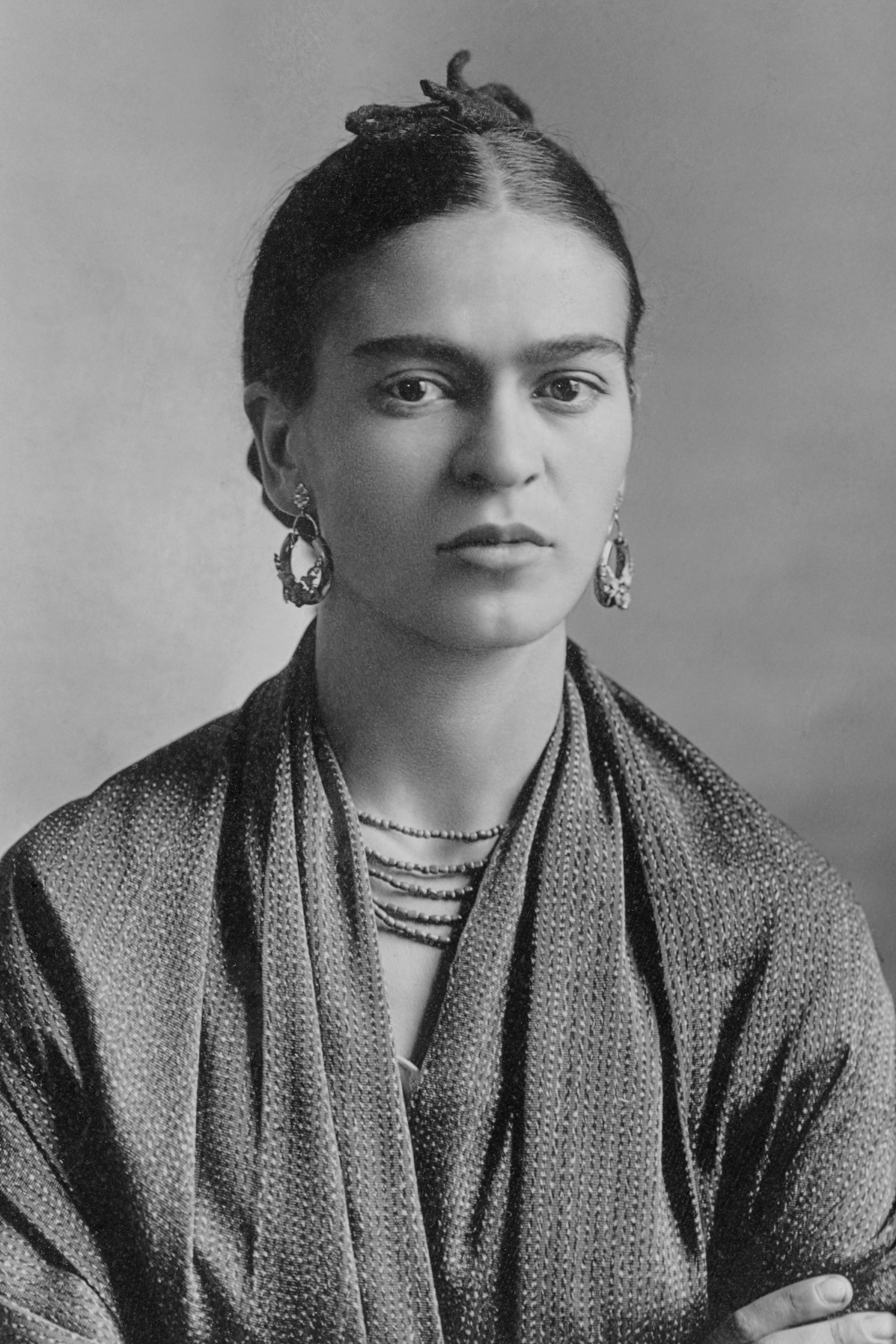
Magdalena Carmen Frida Kahlo y Calderón (Spanish pronunciation: [ˈfɾiða ˈkalo]; 6 July 1907 – 13 July 1954) was a Mexican painter known for her many portraits, self-portraits, and works inspired by the nature and artifacts of Mexico. Inspired by the country's popular culture, she employed a naïve folk art style to explore questions of identity, postcolonialism, gender, class, and race in Mexican society. Her paintings often had strong autobiographical elements and mixed realism with fantasy. In addition to belonging to the post-revolutionary Mexicayotl movement, which sought to define a Mexican identity, Kahlo has been described as a surrealist or magical realist. She is also known for painting about her experience of chronic pain. Her 1940 self-portrait titled The Dream (The Bed) holds the record for the most expensive work by a female artist ever auctioned, at $54.7 million.
Born to a German father and a mestiza mother (of Purépecha descent), Kahlo spent most of her childhood and adult life at La Casa Azul, her family home in Coyoacán – now publicly accessible as the Frida Kahlo Museum. Although she contracted polio in 1913, which left her disabled, Kahlo had been a promising student headed for medical school until being injured in a bus accident at the age of 18, which caused her lifelong pain and medical problems. During her recovery, she returned to her childhood interest in art with the idea of becoming an artist. Around the same time, she approached artist Diego Rivera, whom she had encountered several years prior when he was painting a mural in her school auditorium, to ask for his opinion whether she should pursue a career as a painter or find another means to support herself.[page needed] According to Rivera, the two began their "courtship in earnest" shortly after this encounter.[page needed]
Kahlo's interests in politics and art led her to join the Mexican Communist Party in 1927, through which she once again met fellow Mexican artist Diego Rivera, according to Zelazko. The couple married in 1929 and spent the late 1920s and early 1930s travelling together in Mexico and the United States. During this time, she developed her artistic style, drawing her main inspiration from Mexican folk culture, and painted mostly small self-portraits that mixed elements from pre-Columbian and Catholic beliefs. Her paintings raised the interest of surrealist artist André Breton, who arranged for Kahlo's first solo exhibition at the Julien Levy Gallery in New York in 1938; the exhibition was a success and was followed by another in Paris in 1939. While the French exhibition was less successful, the Louvre purchased a painting from Kahlo, The Frame, making her the first Mexican artist to be featured in their collection. Throughout the 1940s, Kahlo participated in exhibitions in Mexico and the United States and worked as an art teacher. She taught at the Escuela Nacional de Pintura, Escultura y Grabado ("La Esmeralda") and was a founding member of the Seminario de Cultura Mexicana. Kahlo's always-fragile health began to decline in the same decade. While she had had solo exhibitions elsewhere, she had her first solo exhibition in Mexico in 1953, shortly before her death in 1954 at the age of 47.
Kahlo's work as an artist remained relatively unknown until the late 1970s, when her work was rediscovered by art historians and political activists. By the early 1990s, not only had she become a recognized figure in art history, but she was also regarded as an icon for Chicanos, the feminism movement, and the LGBTQ+ community. Kahlo's work has been celebrated internationally as emblematic of Mexican national and Indigenous traditions and by feminists for what is seen as its uncompromising depiction of the female experience and form.
Kahlo enjoyed art from an early age, receiving drawing instruction from printmaker Fernando Fernández (who was her father's friend) and filling notebooks with sketches. In 1925, she began to work outside of school to help her family. After briefly working as a stenographer, she became a paid engraving apprentice for Fernández. He was impressed by her talent, although she did not consider art as a career at this time.
A severe bus accident at the age of 18 left Kahlo in lifelong pain. Confined to bed for three months following the accident, Kahlo began to paint. She started to consider a career as a medical illustrator, as well, which would combine her interests in science and art. Her mother provided her with a specially-made easel, which enabled her to paint in bed, and her father lent her some of his oil paints. She had a mirror placed above the easel, so that she could see herself. Painting became a way for Kahlo to explore questions of identity and existence. She explained, "I paint myself because I am often alone and I am the subject I know best." She later stated that the accident and the isolating recovery period made her desire "to begin again, painting things just as [she] saw them with [her] own eyes and nothing more."
Most of the paintings Kahlo made during this time were portraits of herself, her sisters, and her school friends. Her early paintings and correspondence show that she drew inspiration especially from European artists, in particular Renaissance masters such as Sandro Botticelli and Bronzino and from avant-garde movements such as Neue Sachlichkeit and Cubism. On moving to Morelos in 1929 with her husband Diego Rivera, Kahlo was inspired by the city of Cuernavaca where they lived. She changed her artistic style and increasingly drew inspiration from Mexican folk art. Art historian Andrea Kettenmann states that she may well have been influenced by Adolfo Best Maugard's treatise on the subject, for she incorporated many of the characteristics that he outlined – for example, the lack of perspective and the combining of elements from pre-Columbian and colonial periods of Mexican art. Her identification with La Raza, the people of Mexico, and her profound interest in its culture remained important facets of her art throughout the rest of her life.
When Kahlo and Rivera moved to San Francisco in 1930, Kahlo was introduced to American artists such as Edward Weston, Ralph Stackpole, Timothy L. Pflueger, and Nickolas Muray. The six months spent in San Francisco were a productive period for Kahlo, who further developed the folk art style she had adopted in Cuernavaca. In addition to painting portraits of several new acquaintances, she made Frieda and Diego Rivera (1931), a double portrait based on their wedding photograph, and The Portrait of Luther Burbank (1931), which depicted the eponymous horticulturist as a hybrid between a human and a plant. Although she still publicly presented herself as simply Rivera's spouse rather than as an artist, she participated for the first time in an exhibition, when Frieda and Diego Rivera was included in the Sixth Annual Exhibition of the San Francisco Society of Women Artists in the Palace of the Legion of Honor.
Hub AI
Frida Kahlo AI simulator
(@Frida Kahlo_simulator)
Frida Kahlo
Magdalena Carmen Frida Kahlo y Calderón (Spanish pronunciation: [ˈfɾiða ˈkalo]; 6 July 1907 – 13 July 1954) was a Mexican painter known for her many portraits, self-portraits, and works inspired by the nature and artifacts of Mexico. Inspired by the country's popular culture, she employed a naïve folk art style to explore questions of identity, postcolonialism, gender, class, and race in Mexican society. Her paintings often had strong autobiographical elements and mixed realism with fantasy. In addition to belonging to the post-revolutionary Mexicayotl movement, which sought to define a Mexican identity, Kahlo has been described as a surrealist or magical realist. She is also known for painting about her experience of chronic pain. Her 1940 self-portrait titled The Dream (The Bed) holds the record for the most expensive work by a female artist ever auctioned, at $54.7 million.
Born to a German father and a mestiza mother (of Purépecha descent), Kahlo spent most of her childhood and adult life at La Casa Azul, her family home in Coyoacán – now publicly accessible as the Frida Kahlo Museum. Although she contracted polio in 1913, which left her disabled, Kahlo had been a promising student headed for medical school until being injured in a bus accident at the age of 18, which caused her lifelong pain and medical problems. During her recovery, she returned to her childhood interest in art with the idea of becoming an artist. Around the same time, she approached artist Diego Rivera, whom she had encountered several years prior when he was painting a mural in her school auditorium, to ask for his opinion whether she should pursue a career as a painter or find another means to support herself.[page needed] According to Rivera, the two began their "courtship in earnest" shortly after this encounter.[page needed]
Kahlo's interests in politics and art led her to join the Mexican Communist Party in 1927, through which she once again met fellow Mexican artist Diego Rivera, according to Zelazko. The couple married in 1929 and spent the late 1920s and early 1930s travelling together in Mexico and the United States. During this time, she developed her artistic style, drawing her main inspiration from Mexican folk culture, and painted mostly small self-portraits that mixed elements from pre-Columbian and Catholic beliefs. Her paintings raised the interest of surrealist artist André Breton, who arranged for Kahlo's first solo exhibition at the Julien Levy Gallery in New York in 1938; the exhibition was a success and was followed by another in Paris in 1939. While the French exhibition was less successful, the Louvre purchased a painting from Kahlo, The Frame, making her the first Mexican artist to be featured in their collection. Throughout the 1940s, Kahlo participated in exhibitions in Mexico and the United States and worked as an art teacher. She taught at the Escuela Nacional de Pintura, Escultura y Grabado ("La Esmeralda") and was a founding member of the Seminario de Cultura Mexicana. Kahlo's always-fragile health began to decline in the same decade. While she had had solo exhibitions elsewhere, she had her first solo exhibition in Mexico in 1953, shortly before her death in 1954 at the age of 47.
Kahlo's work as an artist remained relatively unknown until the late 1970s, when her work was rediscovered by art historians and political activists. By the early 1990s, not only had she become a recognized figure in art history, but she was also regarded as an icon for Chicanos, the feminism movement, and the LGBTQ+ community. Kahlo's work has been celebrated internationally as emblematic of Mexican national and Indigenous traditions and by feminists for what is seen as its uncompromising depiction of the female experience and form.
Kahlo enjoyed art from an early age, receiving drawing instruction from printmaker Fernando Fernández (who was her father's friend) and filling notebooks with sketches. In 1925, she began to work outside of school to help her family. After briefly working as a stenographer, she became a paid engraving apprentice for Fernández. He was impressed by her talent, although she did not consider art as a career at this time.
A severe bus accident at the age of 18 left Kahlo in lifelong pain. Confined to bed for three months following the accident, Kahlo began to paint. She started to consider a career as a medical illustrator, as well, which would combine her interests in science and art. Her mother provided her with a specially-made easel, which enabled her to paint in bed, and her father lent her some of his oil paints. She had a mirror placed above the easel, so that she could see herself. Painting became a way for Kahlo to explore questions of identity and existence. She explained, "I paint myself because I am often alone and I am the subject I know best." She later stated that the accident and the isolating recovery period made her desire "to begin again, painting things just as [she] saw them with [her] own eyes and nothing more."
Most of the paintings Kahlo made during this time were portraits of herself, her sisters, and her school friends. Her early paintings and correspondence show that she drew inspiration especially from European artists, in particular Renaissance masters such as Sandro Botticelli and Bronzino and from avant-garde movements such as Neue Sachlichkeit and Cubism. On moving to Morelos in 1929 with her husband Diego Rivera, Kahlo was inspired by the city of Cuernavaca where they lived. She changed her artistic style and increasingly drew inspiration from Mexican folk art. Art historian Andrea Kettenmann states that she may well have been influenced by Adolfo Best Maugard's treatise on the subject, for she incorporated many of the characteristics that he outlined – for example, the lack of perspective and the combining of elements from pre-Columbian and colonial periods of Mexican art. Her identification with La Raza, the people of Mexico, and her profound interest in its culture remained important facets of her art throughout the rest of her life.
When Kahlo and Rivera moved to San Francisco in 1930, Kahlo was introduced to American artists such as Edward Weston, Ralph Stackpole, Timothy L. Pflueger, and Nickolas Muray. The six months spent in San Francisco were a productive period for Kahlo, who further developed the folk art style she had adopted in Cuernavaca. In addition to painting portraits of several new acquaintances, she made Frieda and Diego Rivera (1931), a double portrait based on their wedding photograph, and The Portrait of Luther Burbank (1931), which depicted the eponymous horticulturist as a hybrid between a human and a plant. Although she still publicly presented herself as simply Rivera's spouse rather than as an artist, she participated for the first time in an exhibition, when Frieda and Diego Rivera was included in the Sixth Annual Exhibition of the San Francisco Society of Women Artists in the Palace of the Legion of Honor.
Recent media