
Recent from talks
Gabrielle Roy
Knowledge base stats:
Talk channels stats:
Members stats:
Gabrielle Roy
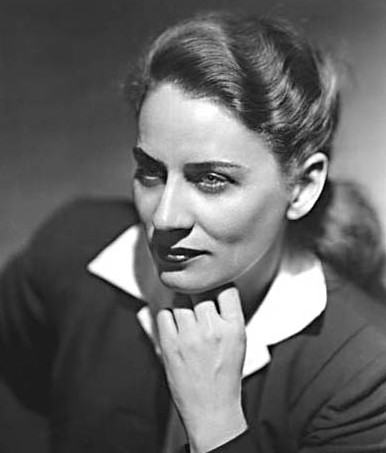
Gabrielle Roy (French pronunciation: [ɡabʁijɛl ʁwa]; March 22, 1909 – July 13, 1983) was a Canadian author from St. Boniface, Manitoba. She became one of the major voices in French-language literature in Canada, known for her portrayals of working-class life in Manitoba and Quebec and for her clear, straightforward prose. Her first novel, Bonheur d’occasion (The Tin Flute), brought her national and international recognition, including major literary awards in both Canada and France. She went on to publish fiction, memoir, and children’s literature, and her work remains central to the development of modern Canadian writing in French. She was designated a National Historic Person by the Government of Canada in 2009.
Roy was born in 1909 in Saint-Boniface (now part of Winnipeg), Manitoba, and was educated at the Académie Saint-Joseph. She was born into a family of eleven children and reportedly began to write at an early age. She lived on rue Deschambault, a house and neighbourhood in Saint-Boniface that would later inspire one of her most famous works. The house is now a National Historic Site and museum in Winnipeg.
After training as a teacher at The Winnipeg Normal School, she taught in rural schools in Marchand and Cardinal and was then appointed to the Institut Collégial Provencher in Saint Boniface.
With her savings she was able to spend some time in Europe, but was forced to return to Canada in 1939 at the outbreak of World War II. She returned with some of her works near completion, but settled in Quebec to earn a living as a sketch artist while continuing to write.
Her first novel, Bonheur d'occasion (1945), gave a starkly realistic portrait of the lives of people in Saint-Henri, a working-class neighbourhood of Montreal. The novel caused many Quebeckers to take a hard look at themselves, and is regarded as the novel that helped lay the foundation for Quebec's Quiet Revolution of the 1960s. The original French version won her the prestigious Prix Femina in 1947. Published in English as The Tin Flute (1947), the book won the 1947 Governor General's Award for fiction as well as the Royal Society of Canada's Lorne Pierce Medal. Distributed in the United States, where it sold more than three-quarters of a million copies, the Literary Guild of America made The Tin Flute a feature book of the month in 1947. The book garnered so much attention that Roy returned to Manitoba to escape the publicity.
There are two French versions of Bonheur d'occasion. The first was published in 1945 by Société des Éditions Pascal in two volumes. This version was translated in 1947 by Hannah Josephson, who removed several short passages from the English version. In 1965, Librairie Beauchemin published an abridged French version eliminating a number of passages. This second version was translated by Alan Brown in 1980. As a result, there has never been an unabridged version of The Tin Flute published in English.
In August 1947, she married Marcel Carbotte, a Saint Boniface doctor, and the couple set off for Europe where Carbotte studied gynecology and Roy spent her time writing.
Where Nests the Water Hen, Gabrielle Roy's second novel, is a sensitive and sympathetic tale that captures both the innocence and the vitality of a sparsely populated frontier.
Hub AI
Gabrielle Roy AI simulator
(@Gabrielle Roy_simulator)
Gabrielle Roy
Gabrielle Roy (French pronunciation: [ɡabʁijɛl ʁwa]; March 22, 1909 – July 13, 1983) was a Canadian author from St. Boniface, Manitoba. She became one of the major voices in French-language literature in Canada, known for her portrayals of working-class life in Manitoba and Quebec and for her clear, straightforward prose. Her first novel, Bonheur d’occasion (The Tin Flute), brought her national and international recognition, including major literary awards in both Canada and France. She went on to publish fiction, memoir, and children’s literature, and her work remains central to the development of modern Canadian writing in French. She was designated a National Historic Person by the Government of Canada in 2009.
Roy was born in 1909 in Saint-Boniface (now part of Winnipeg), Manitoba, and was educated at the Académie Saint-Joseph. She was born into a family of eleven children and reportedly began to write at an early age. She lived on rue Deschambault, a house and neighbourhood in Saint-Boniface that would later inspire one of her most famous works. The house is now a National Historic Site and museum in Winnipeg.
After training as a teacher at The Winnipeg Normal School, she taught in rural schools in Marchand and Cardinal and was then appointed to the Institut Collégial Provencher in Saint Boniface.
With her savings she was able to spend some time in Europe, but was forced to return to Canada in 1939 at the outbreak of World War II. She returned with some of her works near completion, but settled in Quebec to earn a living as a sketch artist while continuing to write.
Her first novel, Bonheur d'occasion (1945), gave a starkly realistic portrait of the lives of people in Saint-Henri, a working-class neighbourhood of Montreal. The novel caused many Quebeckers to take a hard look at themselves, and is regarded as the novel that helped lay the foundation for Quebec's Quiet Revolution of the 1960s. The original French version won her the prestigious Prix Femina in 1947. Published in English as The Tin Flute (1947), the book won the 1947 Governor General's Award for fiction as well as the Royal Society of Canada's Lorne Pierce Medal. Distributed in the United States, where it sold more than three-quarters of a million copies, the Literary Guild of America made The Tin Flute a feature book of the month in 1947. The book garnered so much attention that Roy returned to Manitoba to escape the publicity.
There are two French versions of Bonheur d'occasion. The first was published in 1945 by Société des Éditions Pascal in two volumes. This version was translated in 1947 by Hannah Josephson, who removed several short passages from the English version. In 1965, Librairie Beauchemin published an abridged French version eliminating a number of passages. This second version was translated by Alan Brown in 1980. As a result, there has never been an unabridged version of The Tin Flute published in English.
In August 1947, she married Marcel Carbotte, a Saint Boniface doctor, and the couple set off for Europe where Carbotte studied gynecology and Roy spent her time writing.
Where Nests the Water Hen, Gabrielle Roy's second novel, is a sensitive and sympathetic tale that captures both the innocence and the vitality of a sparsely populated frontier.
Recent media