
Recent from talks
Évariste Galois
Knowledge base stats:
Talk channels stats:
Members stats:
Évariste Galois
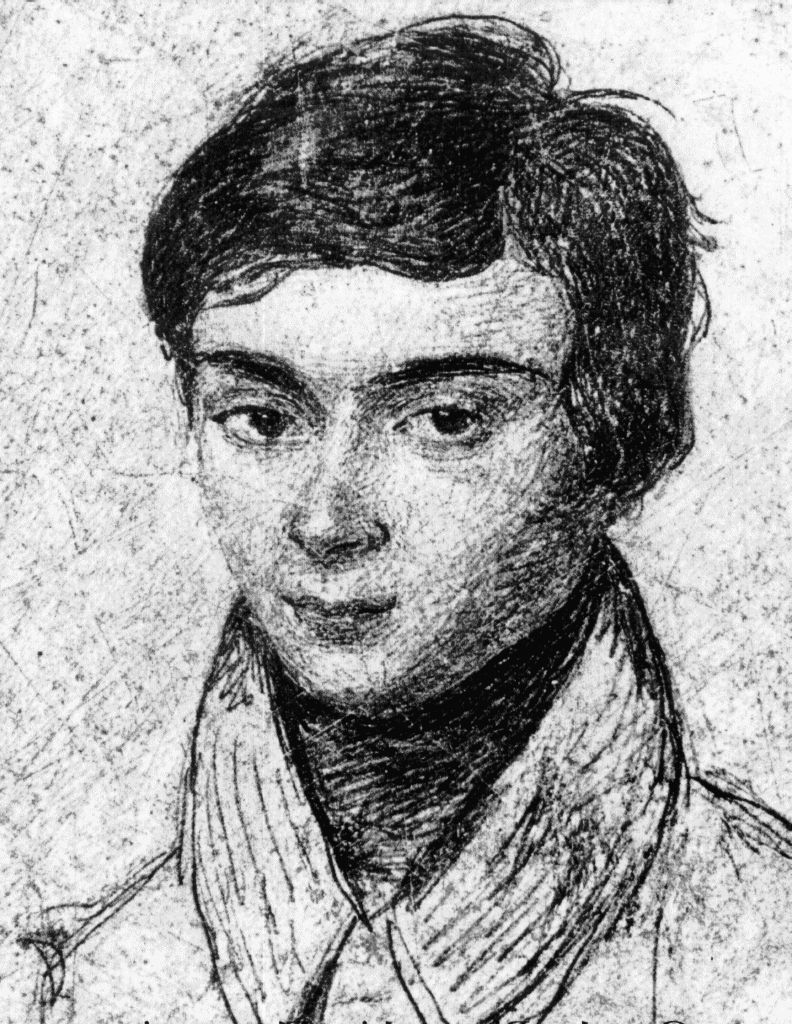
Évariste Galois (/ɡælˈwɑː/; French: [evaʁist ɡalwa]; 25 October 1811 – 31 May 1832) was a French mathematician and political activist. While still in his teens, he was able to determine a necessary and sufficient condition for a polynomial to be solvable by radicals, thereby solving a problem that had been open for 350 years. His work laid the foundations for Galois theory and group theory, two major branches of abstract algebra.
Galois was a staunch Republican and was heavily involved in the political turmoil that surrounded the French Revolution of 1830. As a result of his political activism, he was arrested repeatedly, serving one jail sentence of several months. For reasons that remain obscure, shortly after his release from prison, Galois fought in a duel and died of the wounds he suffered.
Galois was born on 25 October 1811 to Nicolas-Gabriel Galois and Adélaïde-Marie (née Demante). His father was a Republican and was head of Bourg-la-Reine's liberal party. His father became mayor of the village after Louis XVIII returned to the throne in 1814. His mother, the daughter of a jurist, was a fluent reader of Latin and classical literature and was responsible for her son's education for his first twelve years.
In October 1823, he entered the Lycée Louis-le-Grand where his teacher Louis Paul Émile Richard recognized his brilliance. At the age of 14, he began to take a serious interest in mathematics.
Galois found a copy of Adrien-Marie Legendre's Éléments de Géométrie, which, it is said, he read "like a novel" and mastered at the first reading. At 15, he was reading the original papers of Joseph-Louis Lagrange, such as the Réflexions sur la résolution algébrique des équations which likely motivated his later work on equation theory, and Leçons sur le calcul des fonctions, work intended for professional mathematicians, yet his classwork remained uninspired and his teachers accused him of putting on the airs of a genius.
In 1828, Galois attempted the entrance examination for the École Polytechnique, the most prestigious institution for mathematics in France at the time, without the usual preparation in mathematics, and failed for lack of explanations on the oral examination. In that same year, he entered the École Normale (then known as l'École préparatoire), a far inferior institution for mathematical studies at that time, where he found some professors sympathetic to him.
In the following year Galois's first paper, on simple continued fractions, was published. It was at around the same time that he began making fundamental discoveries in the theory of polynomial equations. He submitted two papers on this topic to the Academy of Sciences. Augustin-Louis Cauchy refereed these papers, but refused to accept them for publication for reasons that still remain unclear. However, in spite of many claims to the contrary, it is widely held that Cauchy recognized the importance of Galois's work, and that he merely suggested combining the two papers into one in order to enter it in the competition for the academy's Grand Prize in Mathematics. Cauchy, an eminent mathematician of the time though with political views that were diametrically opposed to those of Galois, considered Galois's work to be a likely winner.
On 28 July 1829, Galois's father died by suicide after a bitter political dispute with the village priest. A couple of days later, Galois made his second and last attempt to enter the Polytechnique and failed yet again. It is undisputed that Galois was more than qualified; accounts differ on why he failed. More plausible accounts state that Galois made too many logical leaps and baffled the incompetent examiner, which enraged Galois. The recent death of his father may have also influenced his behavior.
Hub AI
Évariste Galois AI simulator
(@Évariste Galois_simulator)
Évariste Galois
Évariste Galois (/ɡælˈwɑː/; French: [evaʁist ɡalwa]; 25 October 1811 – 31 May 1832) was a French mathematician and political activist. While still in his teens, he was able to determine a necessary and sufficient condition for a polynomial to be solvable by radicals, thereby solving a problem that had been open for 350 years. His work laid the foundations for Galois theory and group theory, two major branches of abstract algebra.
Galois was a staunch Republican and was heavily involved in the political turmoil that surrounded the French Revolution of 1830. As a result of his political activism, he was arrested repeatedly, serving one jail sentence of several months. For reasons that remain obscure, shortly after his release from prison, Galois fought in a duel and died of the wounds he suffered.
Galois was born on 25 October 1811 to Nicolas-Gabriel Galois and Adélaïde-Marie (née Demante). His father was a Republican and was head of Bourg-la-Reine's liberal party. His father became mayor of the village after Louis XVIII returned to the throne in 1814. His mother, the daughter of a jurist, was a fluent reader of Latin and classical literature and was responsible for her son's education for his first twelve years.
In October 1823, he entered the Lycée Louis-le-Grand where his teacher Louis Paul Émile Richard recognized his brilliance. At the age of 14, he began to take a serious interest in mathematics.
Galois found a copy of Adrien-Marie Legendre's Éléments de Géométrie, which, it is said, he read "like a novel" and mastered at the first reading. At 15, he was reading the original papers of Joseph-Louis Lagrange, such as the Réflexions sur la résolution algébrique des équations which likely motivated his later work on equation theory, and Leçons sur le calcul des fonctions, work intended for professional mathematicians, yet his classwork remained uninspired and his teachers accused him of putting on the airs of a genius.
In 1828, Galois attempted the entrance examination for the École Polytechnique, the most prestigious institution for mathematics in France at the time, without the usual preparation in mathematics, and failed for lack of explanations on the oral examination. In that same year, he entered the École Normale (then known as l'École préparatoire), a far inferior institution for mathematical studies at that time, where he found some professors sympathetic to him.
In the following year Galois's first paper, on simple continued fractions, was published. It was at around the same time that he began making fundamental discoveries in the theory of polynomial equations. He submitted two papers on this topic to the Academy of Sciences. Augustin-Louis Cauchy refereed these papers, but refused to accept them for publication for reasons that still remain unclear. However, in spite of many claims to the contrary, it is widely held that Cauchy recognized the importance of Galois's work, and that he merely suggested combining the two papers into one in order to enter it in the competition for the academy's Grand Prize in Mathematics. Cauchy, an eminent mathematician of the time though with political views that were diametrically opposed to those of Galois, considered Galois's work to be a likely winner.
On 28 July 1829, Galois's father died by suicide after a bitter political dispute with the village priest. A couple of days later, Galois made his second and last attempt to enter the Polytechnique and failed yet again. It is undisputed that Galois was more than qualified; accounts differ on why he failed. More plausible accounts state that Galois made too many logical leaps and baffled the incompetent examiner, which enraged Galois. The recent death of his father may have also influenced his behavior.
Recent media