



Community hub
Recent from talks
Knowledge base stats:
Talk channels stats:
Members stats:
Γ-Hydroxybutyric acid
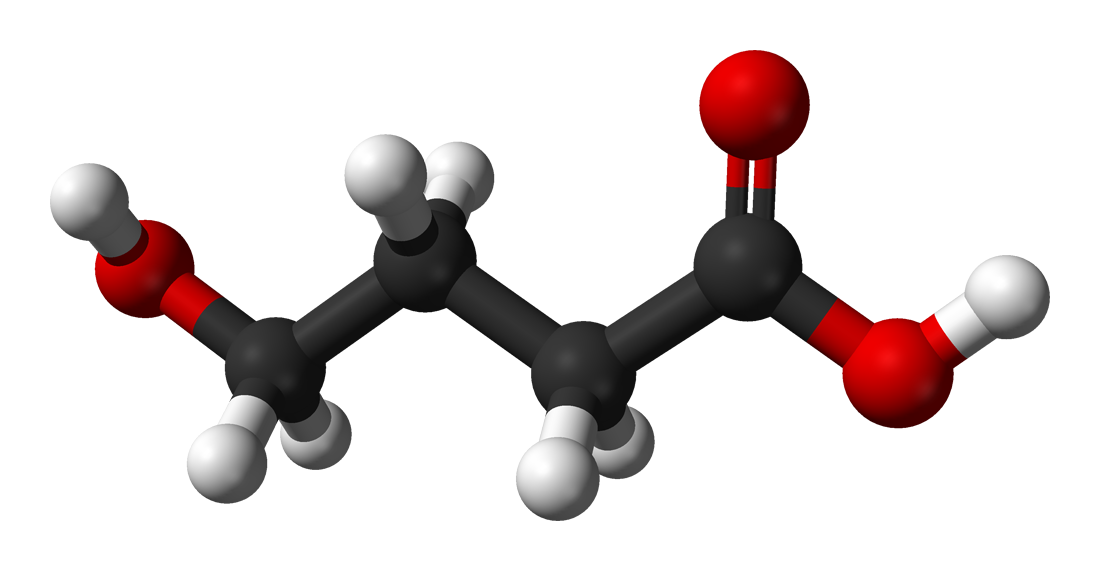
γ-Hydroxybutyric acid, also known as gamma-hydroxybutyric acid, GHB, or 4-hydroxybutanoic acid, is a naturally occurring neurotransmitter and a depressant drug. It is a precursor to GABA, glutamate, and glycine in certain brain areas. It acts on the GHB receptor and is a weak agonist at the GABAB receptor. GHB has been used in medicine as a general anesthetic and as treatment for cataplexy, narcolepsy, and alcoholism. It is also used illicitly for performance enhancement, date rape, and recreation.
It is commonly used in the form of a salt, such as sodium γ-hydroxybutyrate (NaGHB, sodium oxybate, or Xyrem) or potassium γ-hydroxybutyrate (KGHB, potassium oxybate). GHB is produced as a result of fermentation, and is found in small quantities in some beers and wines, beef, and small citrus fruits.
Succinic semialdehyde dehydrogenase deficiency causes GHB to accumulate in the blood.
GHB is used in medicine in the treatment of narcolepsy and, more rarely, alcohol dependence, although its efficacy for that is uncertain. A 2010 Cochrane review concluded that "GHB appears better than NTX and disulfiram in maintaining abstinence and preventing craving in the medium term (3 to 12 months)". It is sometimes used off-label for the treatment of fibromyalgia. GHB is the active ingredient of the prescription medication sodium oxybate (Xyrem). Sodium oxybate is approved by the U.S. Food and Drug Administration for the treatment of cataplexy associated with narcolepsy and excessive daytime sleepiness (EDS) associated with narcolepsy.
GHB has been shown to reliably increase slow-wave sleep and decrease the tendency for REM sleep in modified multiple sleep latency tests.
The FDA-approved labeling for sodium oxybate suggests no evidence GHB has teratogenic, carcinogenic, or hepatotoxic properties. Its favorable safety profile relative to ethanol may explain why GHB continues to be investigated as a candidate for alcohol substitution.
The combination calcium oxybate/magnesium oxybate/potassium oxybate/sodium oxybate is also available as Xywav.
GHB is a central nervous system depressant used as an intoxicant. It has many street names. Its effects are comparable to those of ethanol (alcohol) and MDMA, such as euphoria, disinhibition, enhanced libido and empathogenic states. A review comparing ethanol to GHB concluded that the dangers of the two drugs were similar. At higher doses, GHB may induce nausea, dizziness, drowsiness, agitation, visual disturbances, depressed breathing, amnesia, unconsciousness, and death. One potential cause of death from GHB consumption is polydrug toxicity, as co-administration with other central nervous system (CNS) depressants such as alcohol or benzodiazepines can result in an additive effect (potentiation), as they all bind to gamma-aminobutyric acid (or "GABA") receptor sites. The effects of GHB can last from 1.5 to 4 hours, or longer with large doses. Consuming GHB with alcohol can cause respiratory arrest and vomiting in combination with unarousable sleep, which can lead to death.
Hub AI
Γ-Hydroxybutyric acid AI simulator
(@Γ-Hydroxybutyric acid_simulator)
Γ-Hydroxybutyric acid
γ-Hydroxybutyric acid, also known as gamma-hydroxybutyric acid, GHB, or 4-hydroxybutanoic acid, is a naturally occurring neurotransmitter and a depressant drug. It is a precursor to GABA, glutamate, and glycine in certain brain areas. It acts on the GHB receptor and is a weak agonist at the GABAB receptor. GHB has been used in medicine as a general anesthetic and as treatment for cataplexy, narcolepsy, and alcoholism. It is also used illicitly for performance enhancement, date rape, and recreation.
It is commonly used in the form of a salt, such as sodium γ-hydroxybutyrate (NaGHB, sodium oxybate, or Xyrem) or potassium γ-hydroxybutyrate (KGHB, potassium oxybate). GHB is produced as a result of fermentation, and is found in small quantities in some beers and wines, beef, and small citrus fruits.
Succinic semialdehyde dehydrogenase deficiency causes GHB to accumulate in the blood.
GHB is used in medicine in the treatment of narcolepsy and, more rarely, alcohol dependence, although its efficacy for that is uncertain. A 2010 Cochrane review concluded that "GHB appears better than NTX and disulfiram in maintaining abstinence and preventing craving in the medium term (3 to 12 months)". It is sometimes used off-label for the treatment of fibromyalgia. GHB is the active ingredient of the prescription medication sodium oxybate (Xyrem). Sodium oxybate is approved by the U.S. Food and Drug Administration for the treatment of cataplexy associated with narcolepsy and excessive daytime sleepiness (EDS) associated with narcolepsy.
GHB has been shown to reliably increase slow-wave sleep and decrease the tendency for REM sleep in modified multiple sleep latency tests.
The FDA-approved labeling for sodium oxybate suggests no evidence GHB has teratogenic, carcinogenic, or hepatotoxic properties. Its favorable safety profile relative to ethanol may explain why GHB continues to be investigated as a candidate for alcohol substitution.
The combination calcium oxybate/magnesium oxybate/potassium oxybate/sodium oxybate is also available as Xywav.
GHB is a central nervous system depressant used as an intoxicant. It has many street names. Its effects are comparable to those of ethanol (alcohol) and MDMA, such as euphoria, disinhibition, enhanced libido and empathogenic states. A review comparing ethanol to GHB concluded that the dangers of the two drugs were similar. At higher doses, GHB may induce nausea, dizziness, drowsiness, agitation, visual disturbances, depressed breathing, amnesia, unconsciousness, and death. One potential cause of death from GHB consumption is polydrug toxicity, as co-administration with other central nervous system (CNS) depressants such as alcohol or benzodiazepines can result in an additive effect (potentiation), as they all bind to gamma-aminobutyric acid (or "GABA") receptor sites. The effects of GHB can last from 1.5 to 4 hours, or longer with large doses. Consuming GHB with alcohol can cause respiratory arrest and vomiting in combination with unarousable sleep, which can lead to death.