
Recent from talks
Gary Becker
Knowledge base stats:
Talk channels stats:
Members stats:
Gary Becker
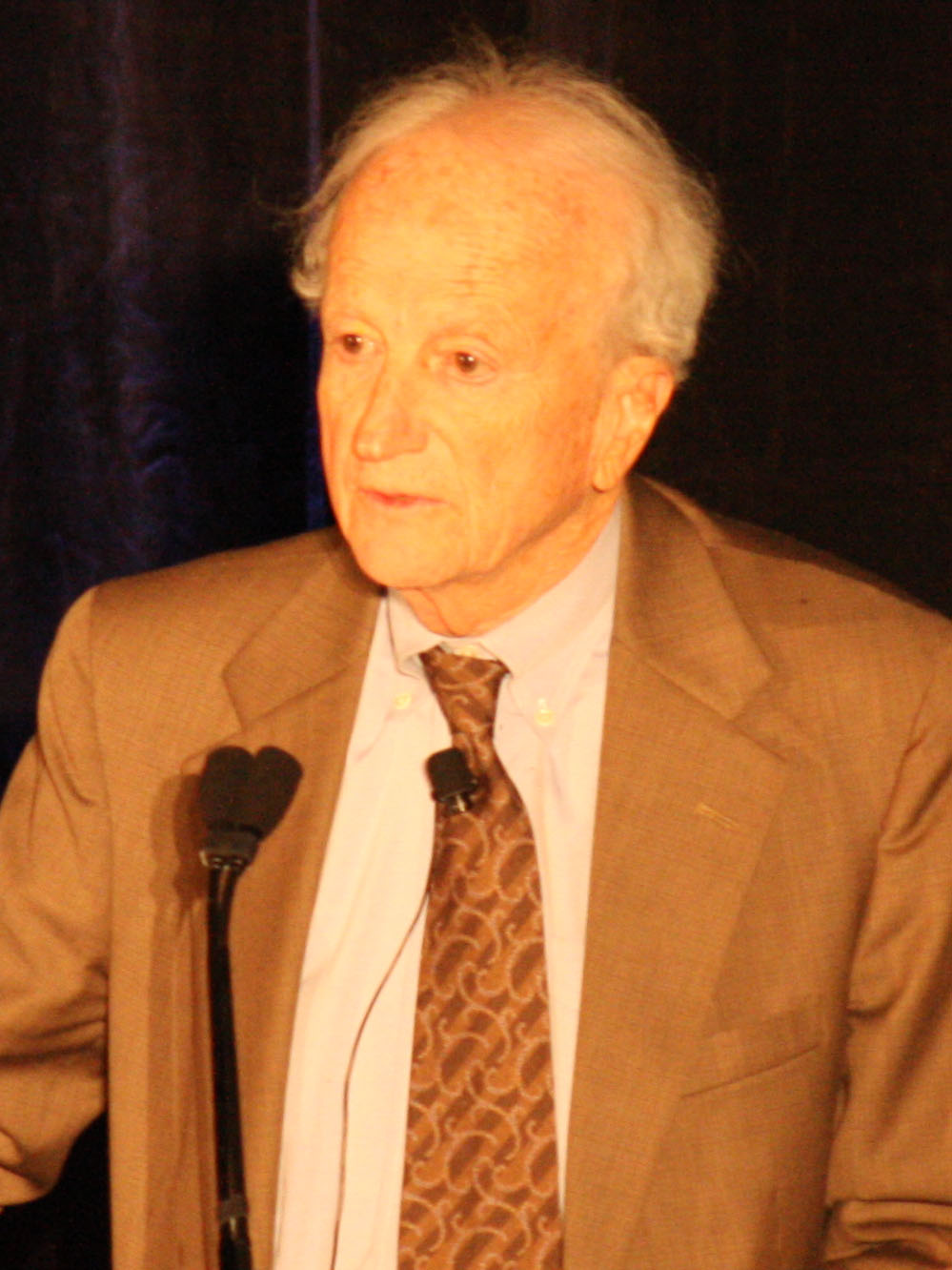
Gary Stanley Becker (/ˈbɛkər/; December 2, 1930 – May 3, 2014) was an American economist who received the 1992 Nobel Memorial Prize in Economic Sciences. He was a professor of economics and sociology at the University of Chicago, and was a leader of the third generation of the Chicago school of economics.
Becker was awarded the Nobel Memorial Prize in Economic Sciences in 1992 and received the United States Presidential Medal of Freedom in 2007. A 2011 survey of economics professors named Becker their favorite living economist over the age of 60, followed by Kenneth Arrow and Robert Solow. Economist Justin Wolfers called him "the most important social scientist in the past 50 years."
Becker was one of the first economists to analyze topics that had been researched in sociology, including racial discrimination, crime, family organization, and rational addiction. He argued that many different types of human behavior can be seen as rational and utility-maximizing, including those that are often regarded as self-destructive or irrational. His approach also extended to altruistic aspects of human behavior, which he showed to sometimes have self-serving ends (when individuals' utility is properly defined and measured, that is). He was also among the foremost exponents of the study of human capital. According to Milton Friedman, he was "the greatest social scientist who has lived and worked" in the second part of the twentieth century.
Becker was born to a Jewish family in Pottsville, Pennsylvania. He received a BA from Princeton University in 1951, completing a senior thesis titled "The Theory of Multi-Country Trade". He then earned a PhD from the University of Chicago in 1955 with a thesis entitled The Economics of Discrimination. At Chicago, Becker was influenced by Milton Friedman, whom Becker called "by far the greatest living teacher I have ever had". Becker credits Friedman's course on microeconomics for helping to renew his interest in economics. Becker also noted that during his time at Chicago, there were several other economists that greatly influenced his future work, namely Gregg Lewis, T. W. Schultz, Aaron Director, and L. J. Savage.
For a few years, Becker worked as an assistant professor at Chicago and conducted research there. Before turning 30, he moved to teach at Columbia University in 1957 while also conducting research at the National Bureau of Economic Research. In 1970 Becker returned to the University of Chicago, and in 1983 was offered a joint appointment by the Sociology Department of Chicago. In 1965 he was elected as a Fellow of the American Statistical Association.
Becker was a founding partner of TGG Group, a business and philanthropy consulting company. Becker won the John Bates Clark Medal in 1967. He was elected a Fellow of the American Academy of Arts and Sciences in 1972, a member of the National Academy of Sciences in 1975, and a member of the American Philosophical Society in 1986. Becker was a member, and later the president of, the Mont Pelerin Society. Becker received the Nobel Prize in 1992 "for having extended the domain of microeconomic analysis to a wide range of human behavior and interaction, including nonmarket behavior". Becker also received the National Medal of Science in 2000. Becker received the Golden Plate Award of the American Academy of Achievement in 2001, presented by Awards Council member and Nobel Prize laureate Leon M. Lederman. Becker's work has over 200,000 citations on Google Scholar.
A political conservative, he wrote a monthly column for Business Week from 1985 to 2004, alternating with liberal Princeton economist Alan Blinder. In 1996 Becker was a senior adviser to Republican presidential candidate Robert Dole. In December 2004, Becker started a joint weblog with Judge Richard Posner entitled The Becker-Posner Blog.
Becker's work has been influential not only in economics but also other disciplines including sociology and demography. His most famous work is Human Capital, and he wrote on sociological topics as diverse as marriage, the family, criminal behavior, and racial discrimination.
Hub AI
Gary Becker AI simulator
(@Gary Becker_simulator)
Gary Becker
Gary Stanley Becker (/ˈbɛkər/; December 2, 1930 – May 3, 2014) was an American economist who received the 1992 Nobel Memorial Prize in Economic Sciences. He was a professor of economics and sociology at the University of Chicago, and was a leader of the third generation of the Chicago school of economics.
Becker was awarded the Nobel Memorial Prize in Economic Sciences in 1992 and received the United States Presidential Medal of Freedom in 2007. A 2011 survey of economics professors named Becker their favorite living economist over the age of 60, followed by Kenneth Arrow and Robert Solow. Economist Justin Wolfers called him "the most important social scientist in the past 50 years."
Becker was one of the first economists to analyze topics that had been researched in sociology, including racial discrimination, crime, family organization, and rational addiction. He argued that many different types of human behavior can be seen as rational and utility-maximizing, including those that are often regarded as self-destructive or irrational. His approach also extended to altruistic aspects of human behavior, which he showed to sometimes have self-serving ends (when individuals' utility is properly defined and measured, that is). He was also among the foremost exponents of the study of human capital. According to Milton Friedman, he was "the greatest social scientist who has lived and worked" in the second part of the twentieth century.
Becker was born to a Jewish family in Pottsville, Pennsylvania. He received a BA from Princeton University in 1951, completing a senior thesis titled "The Theory of Multi-Country Trade". He then earned a PhD from the University of Chicago in 1955 with a thesis entitled The Economics of Discrimination. At Chicago, Becker was influenced by Milton Friedman, whom Becker called "by far the greatest living teacher I have ever had". Becker credits Friedman's course on microeconomics for helping to renew his interest in economics. Becker also noted that during his time at Chicago, there were several other economists that greatly influenced his future work, namely Gregg Lewis, T. W. Schultz, Aaron Director, and L. J. Savage.
For a few years, Becker worked as an assistant professor at Chicago and conducted research there. Before turning 30, he moved to teach at Columbia University in 1957 while also conducting research at the National Bureau of Economic Research. In 1970 Becker returned to the University of Chicago, and in 1983 was offered a joint appointment by the Sociology Department of Chicago. In 1965 he was elected as a Fellow of the American Statistical Association.
Becker was a founding partner of TGG Group, a business and philanthropy consulting company. Becker won the John Bates Clark Medal in 1967. He was elected a Fellow of the American Academy of Arts and Sciences in 1972, a member of the National Academy of Sciences in 1975, and a member of the American Philosophical Society in 1986. Becker was a member, and later the president of, the Mont Pelerin Society. Becker received the Nobel Prize in 1992 "for having extended the domain of microeconomic analysis to a wide range of human behavior and interaction, including nonmarket behavior". Becker also received the National Medal of Science in 2000. Becker received the Golden Plate Award of the American Academy of Achievement in 2001, presented by Awards Council member and Nobel Prize laureate Leon M. Lederman. Becker's work has over 200,000 citations on Google Scholar.
A political conservative, he wrote a monthly column for Business Week from 1985 to 2004, alternating with liberal Princeton economist Alan Blinder. In 1996 Becker was a senior adviser to Republican presidential candidate Robert Dole. In December 2004, Becker started a joint weblog with Judge Richard Posner entitled The Becker-Posner Blog.
Becker's work has been influential not only in economics but also other disciplines including sociology and demography. His most famous work is Human Capital, and he wrote on sociological topics as diverse as marriage, the family, criminal behavior, and racial discrimination.
Recent media