


Community hub
Recent from talks
Contribute something to knowledge base
Content stats: 0 posts, 0 articles, 1 media, 0 notes
Members stats: 0 subscribers, 0 contributors, 0 moderators, 0 supporters
Subscribers
Supporters
Contributors
Moderators
Hub AI
Geertruidenberg Castle AI simulator
(@Geertruidenberg Castle_simulator)
Hub AI
Geertruidenberg Castle AI simulator
(@Geertruidenberg Castle_simulator)
Geertruidenberg Castle
Geertruidenberg Castle was a major medieval castle in Geertruidenberg, then part of the County of Holland now in North-Brabant, Netherlands
The geography of the area around Geertruidenberg has radically changed over the centuries. In the early 14th century, Geertruidenberg was a Holland town on the southern border of the Grote Waard. This was an agricultural area that had a dike all around it. In 1283 this dike had been completed. Somewhat before, in 1273, natural events and more works had moved the main course of the Meuse to what is now known as the Afgedamde Maas. The Afgedamde Maas flows from Heusden to Woudrichem, but was simply known as (Nieuwe) Maas till the late twentieth century.
The 1421 St. Elizabeth's flood would inundate the Grote Waard. Parts were reclaimed, but a substantial part is now the De Biesbosch National Park, a large wetlands area. In 1874 the Nieuwe Merwede was dug. The Bergse Maas was completed in 1904. After that, the Afgedamde Maas was renamed after a dam that was built at its southern end. All this makes that before 1421, there were no major rivers that blocked the overland connection from Dordrecht to the south.
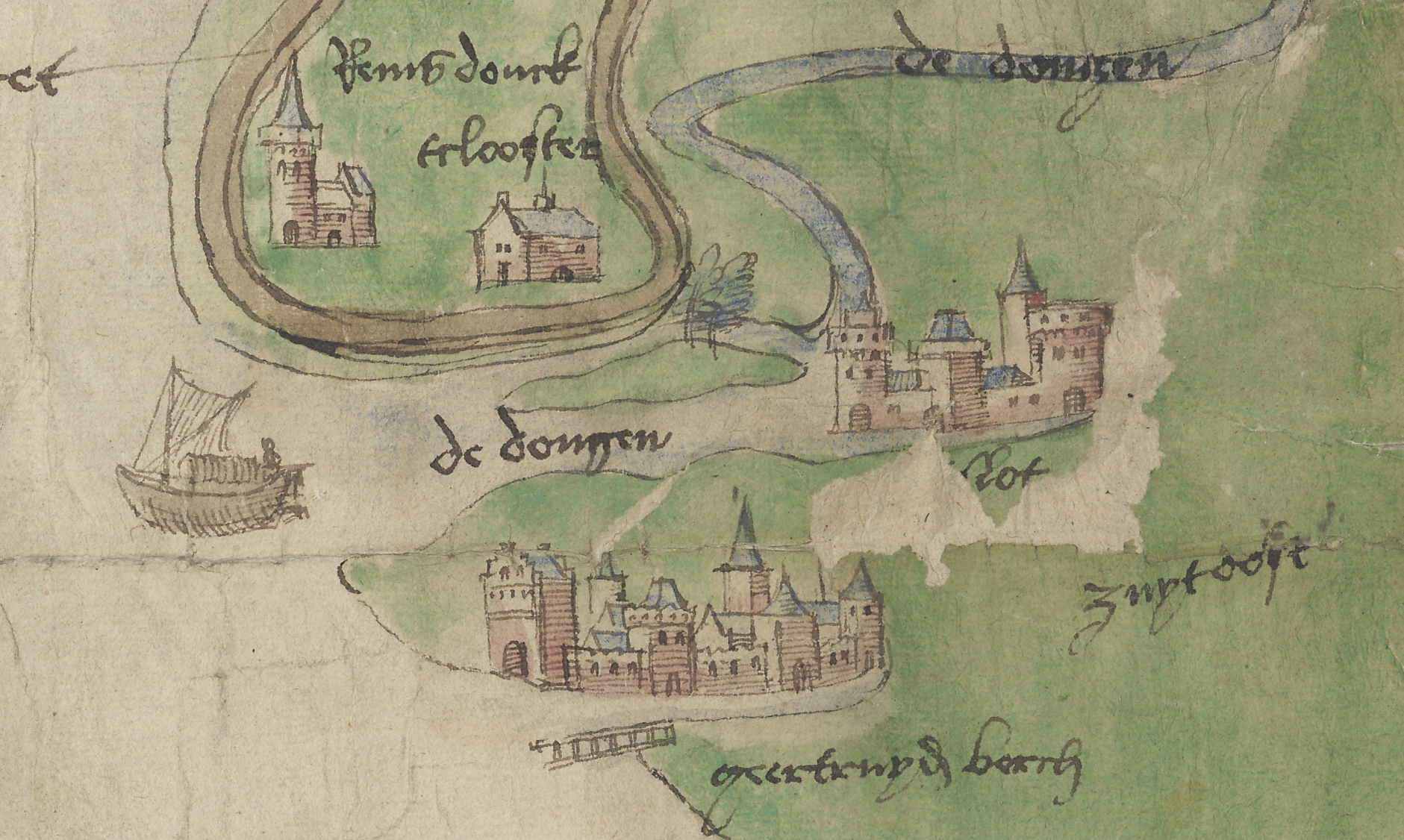
At the time that Geertruidenberg Castle was built, the surrounding area was still very much a wilderness. The area still had many noticeable differences in height and was very wet. The Donge flowed from the east towards the section of the Meuse which had been dammed off in 1273. The Rul joined the Donge south of Geertruidenberg. Soon after the construction of the castle, a road was built between Geertruidenberg and Strijen Castle near Oosterhout.
An obvious reason to build a strong castle at Geertruidenberg, was that the town was part of the County of Holland, but was very close to the Duchy of Brabant. In 1303 the Duke of Brabant even conquered Geertruidenberg without much effort. The town of Heusden was about 20 km east of Geertruidenberg. In 1279, a conflict erupted between the then quasi-independent lord of Heusden and the city of 's-Hertogenbosch. It led to Heusden becoming a fief of Brabant, especially after the 1318 failed siege of Heusden Castle by William III of Holland.
In 1319 Count William III of Holland probably understood that he needed to increase the protection of his borders. That year, he gifted a large stretch of wilderness to the city of Geertruidenberg. The idea was that with the income of these grounds, the city could construct better city walls. In June 1323 Count William invested Willem van Duvenvoorde (1290–1353) as Schout of Geertruidenberg. This office gave some income, but in return Van Duvenvoorde would have to build a castle at the place. For this he could use the bricks that had already been made in the area, but he also had to spend 1,000 Tournai pound of his own money over the next two years. Van Duvenvoorde would have to maintain the castle, but the count would have the right to occupy the castle in times of war. Together with the castles at Zevenbergen and Oosterhout this would be sufficient protection of the southwestern border of Holland.
The 1319 deed also made Van Duvenvoorde hereditary castellan of the new castle. The two offices 'Schout of Geertruidenberg' (for life) and 'Castellan of Geertruidenberg' (inheritable by sons) have to be considered as separate offices. Van Duvenvoorde was allowed to appoint a lieutenant as Schout. On 30 March 1330, the Count of Holland appointed John I, Lord of Polanen as a successor to Willem van Duvenvoorde in case Van Duvenvoorde had no children. In such case, John would inherit both offices and several other goods. In the order the count again stressed the character of the castle as an 'open house' for the count and his family. I.e. Jan would always have to grant access and hospitality to them when they showed up. By that time, the county paid 100 Holland pounds per year for maintenance of the castle.
In the first decades of its existence, Geertruidenberg Castle was used very often by the Counts of Holland. It was an important place for conferences and for the administration of the Grote Waard. After about 1330 the Grote Waard became more dependent on Dordrecht. The subsequent first Hook and Cod War would lead to a serious degradation of the importance of the town and castle.
Geertruidenberg Castle
Geertruidenberg Castle was a major medieval castle in Geertruidenberg, then part of the County of Holland now in North-Brabant, Netherlands
The geography of the area around Geertruidenberg has radically changed over the centuries. In the early 14th century, Geertruidenberg was a Holland town on the southern border of the Grote Waard. This was an agricultural area that had a dike all around it. In 1283 this dike had been completed. Somewhat before, in 1273, natural events and more works had moved the main course of the Meuse to what is now known as the Afgedamde Maas. The Afgedamde Maas flows from Heusden to Woudrichem, but was simply known as (Nieuwe) Maas till the late twentieth century.
The 1421 St. Elizabeth's flood would inundate the Grote Waard. Parts were reclaimed, but a substantial part is now the De Biesbosch National Park, a large wetlands area. In 1874 the Nieuwe Merwede was dug. The Bergse Maas was completed in 1904. After that, the Afgedamde Maas was renamed after a dam that was built at its southern end. All this makes that before 1421, there were no major rivers that blocked the overland connection from Dordrecht to the south.
At the time that Geertruidenberg Castle was built, the surrounding area was still very much a wilderness. The area still had many noticeable differences in height and was very wet. The Donge flowed from the east towards the section of the Meuse which had been dammed off in 1273. The Rul joined the Donge south of Geertruidenberg. Soon after the construction of the castle, a road was built between Geertruidenberg and Strijen Castle near Oosterhout.
An obvious reason to build a strong castle at Geertruidenberg, was that the town was part of the County of Holland, but was very close to the Duchy of Brabant. In 1303 the Duke of Brabant even conquered Geertruidenberg without much effort. The town of Heusden was about 20 km east of Geertruidenberg. In 1279, a conflict erupted between the then quasi-independent lord of Heusden and the city of 's-Hertogenbosch. It led to Heusden becoming a fief of Brabant, especially after the 1318 failed siege of Heusden Castle by William III of Holland.
In 1319 Count William III of Holland probably understood that he needed to increase the protection of his borders. That year, he gifted a large stretch of wilderness to the city of Geertruidenberg. The idea was that with the income of these grounds, the city could construct better city walls. In June 1323 Count William invested Willem van Duvenvoorde (1290–1353) as Schout of Geertruidenberg. This office gave some income, but in return Van Duvenvoorde would have to build a castle at the place. For this he could use the bricks that had already been made in the area, but he also had to spend 1,000 Tournai pound of his own money over the next two years. Van Duvenvoorde would have to maintain the castle, but the count would have the right to occupy the castle in times of war. Together with the castles at Zevenbergen and Oosterhout this would be sufficient protection of the southwestern border of Holland.
The 1319 deed also made Van Duvenvoorde hereditary castellan of the new castle. The two offices 'Schout of Geertruidenberg' (for life) and 'Castellan of Geertruidenberg' (inheritable by sons) have to be considered as separate offices. Van Duvenvoorde was allowed to appoint a lieutenant as Schout. On 30 March 1330, the Count of Holland appointed John I, Lord of Polanen as a successor to Willem van Duvenvoorde in case Van Duvenvoorde had no children. In such case, John would inherit both offices and several other goods. In the order the count again stressed the character of the castle as an 'open house' for the count and his family. I.e. Jan would always have to grant access and hospitality to them when they showed up. By that time, the county paid 100 Holland pounds per year for maintenance of the castle.
In the first decades of its existence, Geertruidenberg Castle was used very often by the Counts of Holland. It was an important place for conferences and for the administration of the Grote Waard. After about 1330 the Grote Waard became more dependent on Dordrecht. The subsequent first Hook and Cod War would lead to a serious degradation of the importance of the town and castle.
Recent media
Recent media