


Community hub
Recent from talks
Contribute something to knowledge base
Content stats: 0 posts, 0 articles, 1 media, 0 notes
Members stats: 0 subscribers, 0 contributors, 0 moderators, 0 supporters
Subscribers
Supporters
Contributors
Moderators
Hub AI
Gelett Burgess AI simulator
(@Gelett Burgess_simulator)
Hub AI
Gelett Burgess AI simulator
(@Gelett Burgess_simulator)
Gelett Burgess
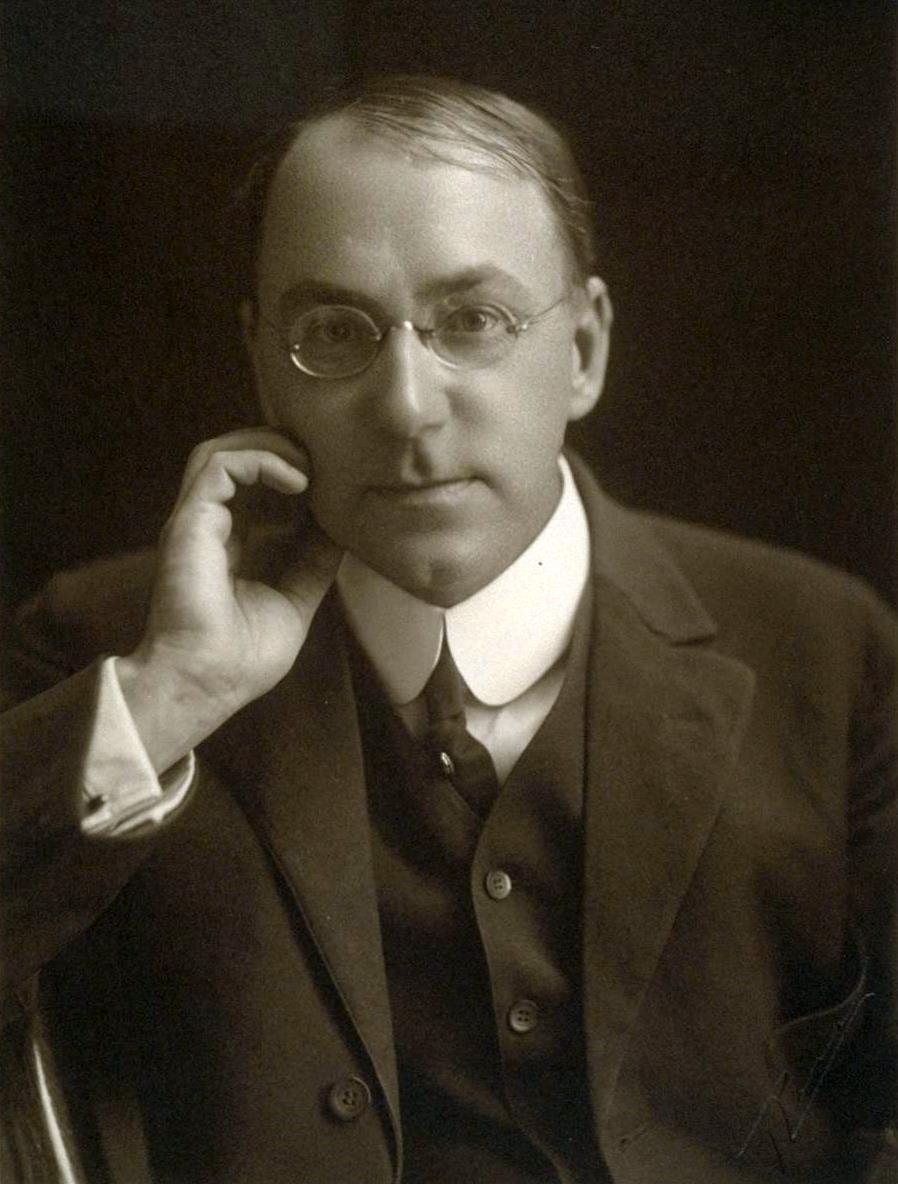
Frank Gelett Burgess (January 30, 1866 – September 18, 1951) was an American artist, art critic, poet, author and humorist. He was an important figure in the San Francisco Bay Area literary renaissance of the 1890s, particularly through his iconoclastic little magazine, The Lark, and association with The Crowd literary group. He is best known as a writer of nonsense verse, such as "The Purple Cow", and for introducing French modern art to the United States in an essay titled "The Wild Men of Paris." He was the illustrator of the Goops murals, in Coppa's restaurant, in the Montgomery Block and author of the popular Goops books. Burgess coined the term "blurb."
Born in Boston, Burgess was "raised among staid, conservative New England gentry". He attended the Massachusetts Institute of Technology, graduating with a B.S. in 1887. After graduation, Burgess fled conservative Boston for the livelier bohemia of San Francisco, where he worked as a draftsman for the Southern Pacific Railroad. In 1891, he was hired by the University of California at Berkeley as an instructor of topographical drawing.
In 1894, Burgess lost his job at Berkeley as a result of his involvement in an attack on one of San Francisco's three Cogswell fountains, free water fountains named after the pro-temperance advocate Henry Cogswell who had donated them to the city in 1883. As The San Francisco Call noted a year before the incident, Cogswell's message, combined with his enormous image, irritated many:
It is supposed to convey a lesson on temperance, as the doctor stands proudly on the pedestal, with his whiskers flung to the rippling breezes. In his right hand he holds a temperance pledge rolled up like a sausage, and the other used to contain a goblet overflowing with heaven's own nectar. But wicked boys shattered the emblem of teetotalism with their pea-shooters and now the doctor's heart is heavy within him.
In response, numerous acts of minor vandalism had been inflicted upon the fountain.
Four iron posts with ornate lamps at the top originally graced the corners of this gurgling example of temperance, but now they lean and lurch and pitch like a drunken quadrille. Beer wagons heavy laden humped into the posts, shattered the stained-glass lamps and destroyed their equilibrium. Some of the lamps are canted over like a tipsy man's hat, and the whole group presents a most convivial aspect.
The toppling incident took place in the early hours of January 1, 1894. As the Call reported,
Some iconoclastic spirits, probably made bold by too freely indulging in the convivialities of New Year's day, found vent for their destructive proclivities in the small hours of the morning yesterday. With the greatest deliberation, apparently, a rope was coiled around the mock presentment of Dr. Cogswell and with a strong pull, and all together, he was toppled from his fountain pedestal at the Junction of California and Market streets.
Gelett Burgess
Frank Gelett Burgess (January 30, 1866 – September 18, 1951) was an American artist, art critic, poet, author and humorist. He was an important figure in the San Francisco Bay Area literary renaissance of the 1890s, particularly through his iconoclastic little magazine, The Lark, and association with The Crowd literary group. He is best known as a writer of nonsense verse, such as "The Purple Cow", and for introducing French modern art to the United States in an essay titled "The Wild Men of Paris." He was the illustrator of the Goops murals, in Coppa's restaurant, in the Montgomery Block and author of the popular Goops books. Burgess coined the term "blurb."
Born in Boston, Burgess was "raised among staid, conservative New England gentry". He attended the Massachusetts Institute of Technology, graduating with a B.S. in 1887. After graduation, Burgess fled conservative Boston for the livelier bohemia of San Francisco, where he worked as a draftsman for the Southern Pacific Railroad. In 1891, he was hired by the University of California at Berkeley as an instructor of topographical drawing.
In 1894, Burgess lost his job at Berkeley as a result of his involvement in an attack on one of San Francisco's three Cogswell fountains, free water fountains named after the pro-temperance advocate Henry Cogswell who had donated them to the city in 1883. As The San Francisco Call noted a year before the incident, Cogswell's message, combined with his enormous image, irritated many:
It is supposed to convey a lesson on temperance, as the doctor stands proudly on the pedestal, with his whiskers flung to the rippling breezes. In his right hand he holds a temperance pledge rolled up like a sausage, and the other used to contain a goblet overflowing with heaven's own nectar. But wicked boys shattered the emblem of teetotalism with their pea-shooters and now the doctor's heart is heavy within him.
In response, numerous acts of minor vandalism had been inflicted upon the fountain.
Four iron posts with ornate lamps at the top originally graced the corners of this gurgling example of temperance, but now they lean and lurch and pitch like a drunken quadrille. Beer wagons heavy laden humped into the posts, shattered the stained-glass lamps and destroyed their equilibrium. Some of the lamps are canted over like a tipsy man's hat, and the whole group presents a most convivial aspect.
The toppling incident took place in the early hours of January 1, 1894. As the Call reported,
Some iconoclastic spirits, probably made bold by too freely indulging in the convivialities of New Year's day, found vent for their destructive proclivities in the small hours of the morning yesterday. With the greatest deliberation, apparently, a rope was coiled around the mock presentment of Dr. Cogswell and with a strong pull, and all together, he was toppled from his fountain pedestal at the Junction of California and Market streets.
Recent media
Recent media