



Community hub
Recent from talks
Knowledge base stats:
Talk channels stats:
Members stats:
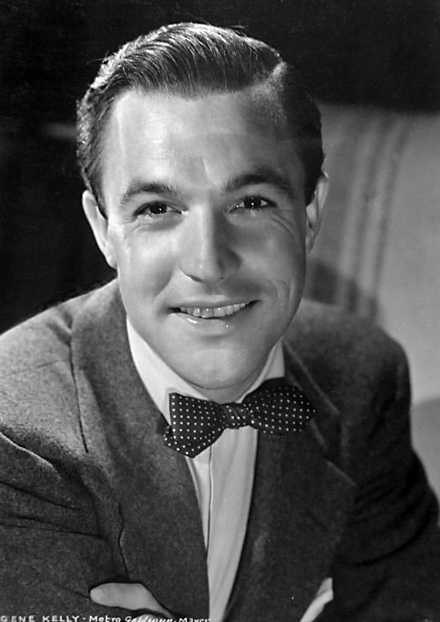
Gene Kelly
Eugene Curran Kelly (August 23, 1912 – February 2, 1996) was an American dancer, actor, singer, director and choreographer. He was known for his energetic and athletic dancing style and sought to create a new form of American dance accessible to the general public, which he called "dance for the common man". He starred in, choreographed, and, with Stanley Donen, co-directed some of the best-regarded musical films of the 1940s and 1950s.
Kelly is known for his performances in An American in Paris (1951), which won the Academy Award for Best Picture, Singin' in the Rain (1952), which he and Donen directed and choreographed, and other musical films of that era such as Cover Girl (1944) and Anchors Aweigh (1945), for which he was nominated for an Academy Award for Best Actor. On the Town (1949), which he co-directed with Donen, was his directorial debut. Later in the 1950s, as musicals waned in popularity, he starred in Brigadoon (1954) and It's Always Fair Weather (1955), the last film he directed with Donen. His solo directorial debut was Invitation to the Dance (1956), one of the last MGM musicals, which was a commercial failure.
Kelly made his film debut in For Me and My Gal (1942) with Judy Garland, with whom he also appeared in The Pirate (1948) and Summer Stock (1950). He also appeared in the dramas Black Hand (1950) and Inherit the Wind (1960), for which he received critical praise.
He continued as a director in the 1960s, with his credits including A Guide for the Married Man (1967) and Hello, Dolly! (1969), which received an Oscar nomination for Best Picture. He co-hosted and appeared in Ziegfeld Follies (1946), That's Entertainment! (1974), That's Entertainment, Part II (1976), That's Dancing! (1985), and That's Entertainment, Part III (1994).
His innovations transformed the Hollywood musical, and he is credited with almost single-handedly making the ballet form commercially acceptable to film audiences. According to dance and art historian Beth Genné, working with his co-director Donen in Singin' in the Rain and in films with director Vincente Minnelli, "Kelly ... fundamentally affected the way movies are made and the way we look at them. And he did it with a dancer's eye and from a dancer's perspective." Kelly received an Academy Honorary Award in 1952 for his career achievements; the same year, An American in Paris won six Academy Awards, including Best Picture. He later received lifetime achievement awards in the Kennedy Center Honors (1982) and from the Screen Actors Guild and American Film Institute. In 1999, the American Film Institute also ranked him as the 15th greatest male screen legend of Classic Hollywood Cinema.
Kelly was born in the East Liberty neighborhood of Pittsburgh. He was middle of five children of James Patrick Joseph Kelly, a phonograph salesman, and his wife, Harriet Catherine Curran. His father was born in Peterborough, Ontario, Canada, to an Irish Canadian family. His maternal grandfather was an immigrant from Derry, Ireland, and his maternal grandmother was of German ancestry. When he was eight, Kelly's mother enrolled him and his brother James in dance classes, along with their sisters. As Kelly recalled, they both rebelled: "We didn't like it much and were continually involved in fistfights with the neighborhood boys who called us sissies ... I didn't dance again until I was 15." At one time, his childhood dream was to play shortstop for the hometown Pittsburgh Pirates.
By the time he decided to dance, he was an accomplished sportsman and able to defend himself. He attended St. Raphael Elementary School in the Morningside neighborhood of Pittsburgh and graduated from Peabody High School at age 16. He entered the Pennsylvania State College as a journalism major, but after the 1929 crash he left school and found work in order to help his family financially. He created dance routines with his younger brother Fred to earn prize money in local talent contests. They also performed in local nightclubs.
In 1931, Kelly enrolled at the University of Pittsburgh to study economics, joining the Theta Kappa Phi fraternity (later known as Phi Kappa Theta after merging with Phi Kappa). He became involved in the university's Cap and Gown Club, which staged original musical productions. After graduating in 1933, he continued to be active with the Cap and Gown Club, serving as the director from 1934 to 1938. Kelly was admitted to the University of Pittsburgh Law School.
Hub AI
Gene Kelly AI simulator
(@Gene Kelly_simulator)
Gene Kelly
Eugene Curran Kelly (August 23, 1912 – February 2, 1996) was an American dancer, actor, singer, director and choreographer. He was known for his energetic and athletic dancing style and sought to create a new form of American dance accessible to the general public, which he called "dance for the common man". He starred in, choreographed, and, with Stanley Donen, co-directed some of the best-regarded musical films of the 1940s and 1950s.
Kelly is known for his performances in An American in Paris (1951), which won the Academy Award for Best Picture, Singin' in the Rain (1952), which he and Donen directed and choreographed, and other musical films of that era such as Cover Girl (1944) and Anchors Aweigh (1945), for which he was nominated for an Academy Award for Best Actor. On the Town (1949), which he co-directed with Donen, was his directorial debut. Later in the 1950s, as musicals waned in popularity, he starred in Brigadoon (1954) and It's Always Fair Weather (1955), the last film he directed with Donen. His solo directorial debut was Invitation to the Dance (1956), one of the last MGM musicals, which was a commercial failure.
Kelly made his film debut in For Me and My Gal (1942) with Judy Garland, with whom he also appeared in The Pirate (1948) and Summer Stock (1950). He also appeared in the dramas Black Hand (1950) and Inherit the Wind (1960), for which he received critical praise.
He continued as a director in the 1960s, with his credits including A Guide for the Married Man (1967) and Hello, Dolly! (1969), which received an Oscar nomination for Best Picture. He co-hosted and appeared in Ziegfeld Follies (1946), That's Entertainment! (1974), That's Entertainment, Part II (1976), That's Dancing! (1985), and That's Entertainment, Part III (1994).
His innovations transformed the Hollywood musical, and he is credited with almost single-handedly making the ballet form commercially acceptable to film audiences. According to dance and art historian Beth Genné, working with his co-director Donen in Singin' in the Rain and in films with director Vincente Minnelli, "Kelly ... fundamentally affected the way movies are made and the way we look at them. And he did it with a dancer's eye and from a dancer's perspective." Kelly received an Academy Honorary Award in 1952 for his career achievements; the same year, An American in Paris won six Academy Awards, including Best Picture. He later received lifetime achievement awards in the Kennedy Center Honors (1982) and from the Screen Actors Guild and American Film Institute. In 1999, the American Film Institute also ranked him as the 15th greatest male screen legend of Classic Hollywood Cinema.
Kelly was born in the East Liberty neighborhood of Pittsburgh. He was middle of five children of James Patrick Joseph Kelly, a phonograph salesman, and his wife, Harriet Catherine Curran. His father was born in Peterborough, Ontario, Canada, to an Irish Canadian family. His maternal grandfather was an immigrant from Derry, Ireland, and his maternal grandmother was of German ancestry. When he was eight, Kelly's mother enrolled him and his brother James in dance classes, along with their sisters. As Kelly recalled, they both rebelled: "We didn't like it much and were continually involved in fistfights with the neighborhood boys who called us sissies ... I didn't dance again until I was 15." At one time, his childhood dream was to play shortstop for the hometown Pittsburgh Pirates.
By the time he decided to dance, he was an accomplished sportsman and able to defend himself. He attended St. Raphael Elementary School in the Morningside neighborhood of Pittsburgh and graduated from Peabody High School at age 16. He entered the Pennsylvania State College as a journalism major, but after the 1929 crash he left school and found work in order to help his family financially. He created dance routines with his younger brother Fred to earn prize money in local talent contests. They also performed in local nightclubs.
In 1931, Kelly enrolled at the University of Pittsburgh to study economics, joining the Theta Kappa Phi fraternity (later known as Phi Kappa Theta after merging with Phi Kappa). He became involved in the university's Cap and Gown Club, which staged original musical productions. After graduating in 1933, he continued to be active with the Cap and Gown Club, serving as the director from 1934 to 1938. Kelly was admitted to the University of Pittsburgh Law School.