Hubbry Logo
Gene RodgersGene RodgersMain
Open search
Gene Rodgers
Community hub
Gene Rodgers
logo
8 pages, 0 posts
0 subscribers
Be the first to start a discussion here.
Gene Rodgers
Gene Rodgers
from Wikipedia

Key Information

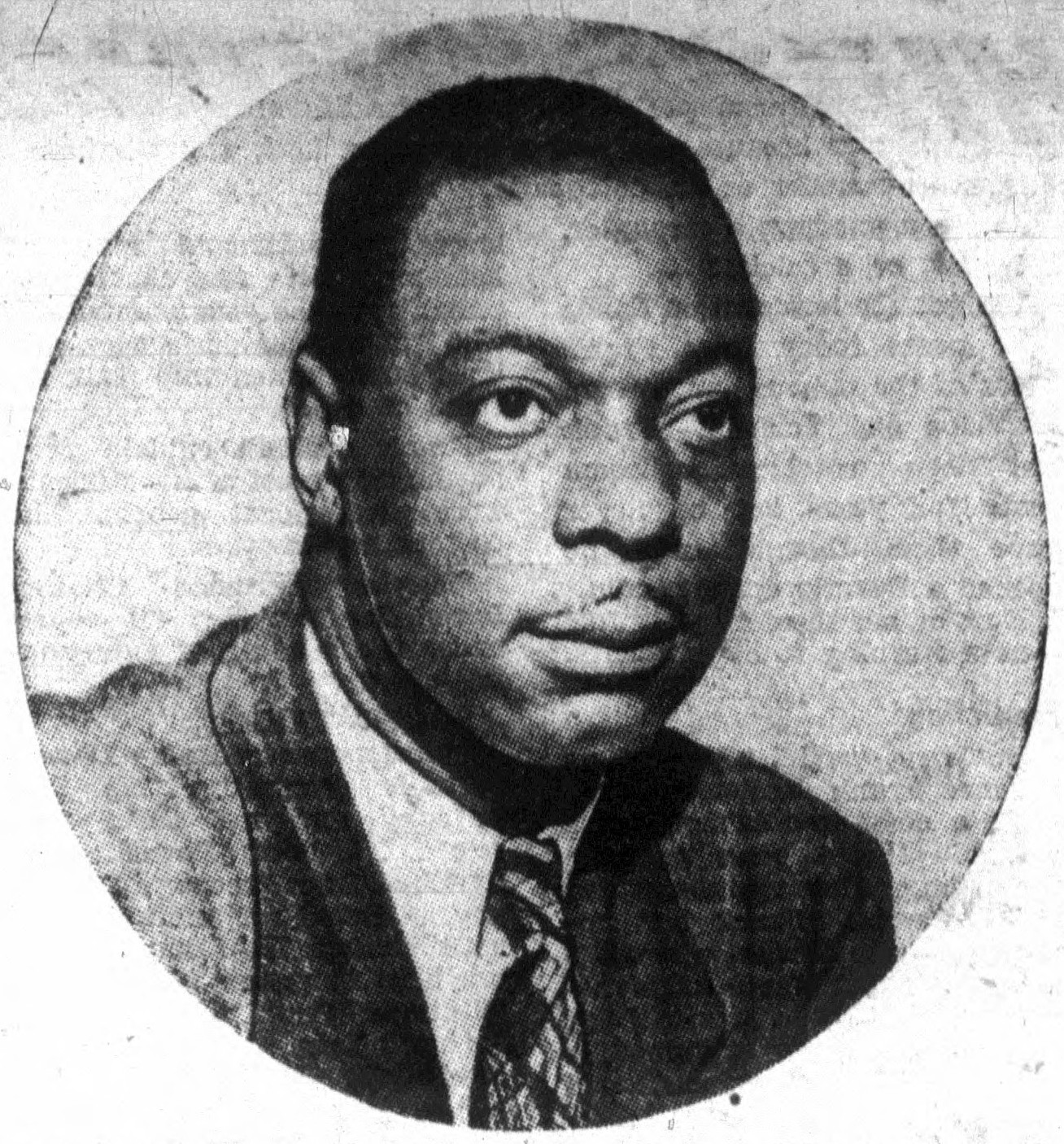
Gene Rodgers (March 5, 1910 – October 23, 1987) was an American jazz pianist, composer, and arranger. He is best known for being the pianist on Coleman Hawkins' famous 1939 recording of "Body and Soul".[1]

Early life

[edit]

Born Eugene Ricardo Rodgers Jr, the eldest child of Eugene Ricardo Rodgers Sr (aka Eugene Richard Rodgers), and his wife Blanche Bona Cabey (both of whom were born in what was then the Danish West Indies / Danish Antilles, later the American Virgin Islands), he was named for his father. Gene had three younger siblings, Mildred (1914), Rowland (1918), and Genevieve (1920).

Later life and career

[edit]

Rodgers worked professionally from the mid-1920s, and in the next few years made recordings with Clarence Williams and King Oliver in addition to playing with Chick Webb and Teddy Hill. He started his own variety show in the 1930s, doing tours of Australia and England; while in the latter in 1936 he recorded with Benny Carter.

Upon his return he played with Coleman Hawkins (1939–40), Zutty Singleton, and Erskine Hawkins (1943). He did work in Hollywood in the 1940s, including an appearance in the film Sensations of 1945 with Cab Calloway and Dorothy Donegan. After this he worked mainly in New York, leading a trio for many years. He played with the Harlem Blues and Jazz Band in 1981–82.

Rodgers appears, with opening title credits, in the 1947 film Shoot to Kill, though it seems the sound was not miked during filming. Appearing about 9:40 into the film is "Ballad of the Bayou"[2] and later is "Rajah's Blues." Both are Rodgers compositions.

Rodgers recorded sparingly as a leader; he did two sides for Vocalion in 1936, four in a session for Joe Davis in 1945, and albums as a trio leader for EmArcy (1958), Black & Blue Records (1972), and 88 Up Right (1980).

References

[edit]
[edit]
Revisions and contributorsEdit on WikipediaRead on Wikipedia
from Grokipedia
Gene Rodgers is an American jazz pianist and arranger known for his performance as the pianist on Coleman Hawkins' influential 1939 recording of "Body and Soul." Born Eugene R. Rodgers, Jr. on March 5, 1910, in New York City, New York, he began his professional career in the mid-1920s and became a respected figure in the swing era through his work with leading jazz musicians and orchestras. Rodgers collaborated with notable artists including Clarence Williams, King Oliver, Chick Webb, Teddy Hill, Zutty Singleton, Erskine Hawkins, Cab Calloway, and Benny Carter, contributing to ensembles such as Benny Carter And His Orchestra, Coleman Hawkins And His Orchestra, and Clarence Williams' Jazz Kings. He also performed in a number of 1940s films, appearing as a boogie-woogie specialty pianist in titles such as That's My Baby! (1944) and I'll Tell the World (1945), and provided soundtrack contributions to others like Shoot to Kill (1947). Rodgers remained active as a performer and arranger throughout his life and died in New York City on October 23, 1987.

Early Life

Birth and Childhood

Gene Rodgers was born on March 5, 1910, in New York City, New York. He was the eldest child of Eugene Ricardo Rodgers Sr. and Blanche Bona Cabey, both immigrants from the Danish West Indies (now the U.S. Virgin Islands), and grew up in the Harlem neighborhood of Manhattan within the African American community of early 20th century New York City. His family lived on West 163rd Street in Harlem, where his father worked as a porter at a club, exposing Rodgers to the vibrant musical and cultural environment of the area during his childhood.

Musical Training and Early Influences

His playing style was shaped by the stride piano tradition prevalent in Harlem during his youth. These formative experiences in the Harlem musical scene laid the groundwork for his development as a jazz pianist.

Career

Early Professional Work in Jazz

Gene Rodgers began his professional career in jazz during the mid-1920s, shortly after his early musical development. In 1929, he made his first documented recording appearance, accompanying vocalist Mamie Smith on a session for Columbia Records. In the late 1920s and early 1930s, Rodgers participated in recording sessions with Clarence Williams and King Oliver, contributing piano to their ensembles during this formative period of jazz development. He also performed with the orchestras of Chick Webb and Teddy Hill, gaining experience in the emerging big band style that characterized much of the era's jazz scene. These early engagements in small group and big band contexts helped establish Rodgers as a capable swing-era pianist in New York.

Major Collaborations and Band Work

Gene Rodgers is best known for his collaboration with tenor saxophonist Coleman Hawkins on the landmark 1939 recording of "Body and Soul," where he contributed the memorable four-bar piano introduction that became a defining element of the track. Following his time with Hawkins from 1939 to 1940, Rodgers performed and recorded with drummer Zutty Singleton's trio as well as in Erskine Hawkins' big band during the early 1940s. In later years, Rodgers led his own small groups, including trios and quartets, performing in New York venues and recording under his own name, such as on tracks like "Jukebox Boogie" in 1944. His work in these ensembles highlighted his skills as a swing-era pianist and arranger, contributing to both live performances and recordings throughout the 1940s and beyond.

Film and Television Contributions

Gene Rodgers made limited but notable contributions to film during the 1940s, primarily through on-screen piano performances that highlighted his jazz and boogie-woogie style. He appeared as an actor and performer in That's My Baby! (1944), I'll Tell the World (1945), and Shoot to Kill (1947). In Shoot to Kill (1947), Rodgers received opening title credits for his musical sequence, where he performed two of his own compositions, "Ballad of the Bayou" and "Rajah's Blues," delivering a standout boogie-woogie piano performance. He also featured in the 1944 Soundie Jukebox Boogie, a short musical film format popular at the time that showcased his solo piano work. No verified television appearances or contributions have been documented in available sources.

Later Career and Performances

In his later career, Gene Rodgers remained active primarily in New York City, leading his own piano trio for many years and focusing on club performances. His recording output was limited compared to earlier decades, but he released albums as a leader on Black & Blue Records in 1972 and 88 Up Right in 1980. During 1981 and 1982, he performed as a member of the Harlem Blues and Jazz Band, contributing to the group's efforts to keep traditional jazz alive through live appearances. As he advanced in age, Rodgers' public performances became less frequent, reflecting a natural reduction in activity while he continued to draw on his extensive experience in the New York jazz scene.

Personal Life

Family and Personal Relationships

Gene Rodgers was a lifelong resident of New York City, where he was born in Manhattan in 1910 and remained based for his entire career and life. He later resided in Queens at the time of his death in 1987. Details about his marriages, children, or other personal relationships are not documented in major biographical sources on his life and career.

Death and Legacy

Death

Gene Rodgers died on October 23, 1987, in New York City, New York, at the age of 77. No specific cause of death or additional circumstances surrounding his passing were detailed in available biographical sources.

Legacy and Recognition

Gene Rodgers' legacy in jazz remains modest and largely confined to niche appreciation among record collectors and historians of the swing era, as he never achieved widespread fame despite a career spanning over five decades. He is best remembered as the pianist on Coleman Hawkins' landmark 1939 recording of "Body and Soul," widely regarded as one of the most influential jazz performances ever recorded, though his own contributions there were supportive rather than starring. This single association has endured as his primary claim to recognition, while his broader work as a swing and boogie-woogie adept pianist has been overshadowed by more prominent contemporaries. Rodgers recorded sparingly as a leader, issuing only a handful of sessions under his own name across his lifetime, which has contributed to his limited posthumous visibility. No major awards, reissue campaigns, or dedicated critical retrospectives appear to have elevated his profile after his death in 1987, and his influence on stride or swing piano styles remains underexplored in available sources. Areas of incomplete coverage persist, including sparse details on his full discography, few preserved interviews or personal accounts, and limited documentation of his film and television appearances beyond a small number of known Soundies and features.

Discography and Archives

Gene Rodgers' discography as a leader is modest, reflecting his career-long emphasis on sideman and collaborative roles in jazz. He recorded sparingly, with early sessions including two sides for Vocalion in 1936 and four boogie-woogie-influenced singles for Joe Davis in 1945, such as "Rhapsody Boogie," "Poet and Peasant Boogie," "G R Boogie," and "G R Blues." Later leader efforts include the 1958 trio album Jazz Comes to the Astor on EmArcy. In 1972, he recorded a trio session with bassist Slam Stewart and drummer Jo Jones that was released as After Hours on Black and Blue in 1973 and subsequently reissued in compilations such as The Definitive Black & Blue Sessions: After Hours. A compilation of his material, It Might As Well Be - - - Gene!, appeared on 88 Up Right. Rodgers' most influential recorded contribution remains his four-bar piano introduction on Coleman Hawkins' landmark 1939 recording of "Body and Soul." He also appeared as a sideman on sessions with Benny Carter in 1936, Clarence Williams, and others, with later features including Al Casey's 1981 Six Swinging Strings on JSP Records. His work is preserved through reissues on labels like Black and Blue and JSP, as well as digital availability on platforms such as Apple Music. No major institutional archives dedicated to his materials are prominently documented.

Known Critical Reception

Gene Rodgers' work as a jazz pianist received limited critical attention during his career, with most documentation focusing on his sideman roles rather than independent reviews or accolades. His piano accompaniment on Coleman Hawkins' iconic 1939 recording of "Body and Soul" is part of one of jazz's most celebrated performances, though critical praise has overwhelmingly centered on Hawkins' tenor saxophone solo rather than Rodgers' contributions. Rodgers' sparse recordings as a leader, including sides for Vocalion (1936), Joe Davis (1945), EmArcy (1958), Black & Blue (1972), and 88 Up Right (1980), have not attracted substantial published reviews or ratings in major jazz sources. Discographies note these releases, but no prominent critic commentary or awards are associated with them. Overall, Rodgers is recognized in jazz histories for his versatility and associations with figures like Benny Carter, Erskine Hawkins, and Cab Calloway, but detailed critical reception remains scarce.

Areas of Incomplete Coverage

Despite his notable contributions to jazz, particularly as the pianist on Coleman Hawkins' landmark 1939 recording of "Body and Soul," Gene Rodgers remains a relatively under-documented figure in jazz history. Comprehensive biographical accounts are scarce, with most sources offering only brief overviews of his career and repeating the same key highlights from his early and mid-period work. One significant area of incomplete coverage concerns his personal life, where available references provide no details beyond basic birth information and early family origins, leaving aspects such as adult relationships, marriage, or children entirely undocumented in standard jazz biographies and profiles. His later career also suffers from limited documentation, particularly the decades spent primarily in New York leading a trio after the 1940s, which are mentioned only in passing without specifics on venues, repertoire, band members, or significant events during this long phase of steady work. Rodgers' recording activity as a leader was notably sparse across his entire career, consisting of just a handful of sessions and albums, a circumstance that has prompted descriptions of him as an under-recorded "lost pianist" who "didn't record nearly as often as he should have" and ultimately "slipped through the cracks" despite his evident talent. These gaps contribute to an overall picture where Rodgers' full legacy, beyond a few iconic moments, remains incompletely explored in existing sources.

Discography and Archives

Gene Rodgers' discography as a leader is modest, reflecting his career-long emphasis on sideman and collaborative roles in jazz. He recorded sparingly, with early sessions including two sides for Vocalion in 1936 and four boogie-woogie-influenced singles for Joe Davis in 1945, such as "Rhapsody Boogie," "Poet and Peasant Boogie," "G R Boogie," and "G R Blues." Later leader efforts include the 1958 trio album Jazz Comes to the Astor on EmArcy. In 1972, he recorded a trio session with bassist Slam Stewart and drummer Jo Jones that was released as After Hours on Black and Blue in 1973 and subsequently reissued in compilations such as The Definitive Black & Blue Sessions: After Hours. A compilation of his material, It Might As Well Be - - - Gene!, appeared on 88 Up Right. Rodgers' most influential recorded contribution remains his four-bar piano introduction on Coleman Hawkins' landmark 1939 recording of "Body and Soul." He also appeared as a sideman on sessions with Benny Carter in 1936, Clarence Williams, and others, with later features including Al Casey's 1981 Six Swinging Strings on JSP Records. His work is preserved through reissues on labels like Black and Blue and JSP, as well as digital availability on platforms such as Apple Music. No major institutional archives dedicated to his materials are prominently documented.

Areas of Incomplete Coverage

Despite his notable contributions to jazz, particularly as the pianist on Coleman Hawkins' landmark 1939 recording of "Body and Soul," Gene Rodgers remains a relatively under-documented figure in jazz history. Comprehensive biographical accounts are scarce, with most sources offering only brief overviews of his career and repeating the same key highlights from his early and mid-period work. One significant area of incomplete coverage concerns his personal life, where available references provide no details beyond basic birth information and early family origins, leaving aspects such as adult relationships, marriage, or children entirely undocumented in standard jazz biographies and profiles. His later career also suffers from limited documentation, particularly the decades spent primarily in New York leading a trio after the 1940s, which are mentioned only in passing without specifics on venues, repertoire, band members, or significant events during this long phase of steady work. Rodgers' recording activity as a leader was notably sparse across his entire career, consisting of just a handful of sessions and albums, a circumstance that has prompted descriptions of him as an under-recorded "lost pianist" who "didn't record nearly as often as he should have" and ultimately "slipped through the cracks" despite his evident talent. These gaps contribute to an overall picture where Rodgers' full legacy, beyond a few iconic moments, remains incompletely explored in existing sources.
Add your contribution
Related Hubs
User Avatar
No comments yet.