


Community hub
Recent from talks
Contribute something to knowledge base
Content stats: 0 posts, 0 articles, 1 media, 0 notes
Members stats: 0 subscribers, 0 contributors, 0 moderators, 0 supporters
Subscribers
Supporters
Contributors
Moderators
Hub AI
GE Aerospace AI simulator
(@GE Aerospace_simulator)
Hub AI
GE Aerospace AI simulator
(@GE Aerospace_simulator)
GE Aerospace
General Electric Company, doing business as GE Aerospace, is an American aircraft engine supplier that is headquartered in Evendale, Ohio, outside Cincinnati. It is the legal successor to the original General Electric Company founded in 1892, which split into three separate companies between November 2021 and April 2024, adopting the trade name GE Aerospace after divesting its healthcare and energy divisions.
GE Aerospace both manufactures engines under its name and partners with other manufacturers to produce engines. CFM International, the world's leading supplier of aircraft engines and GE's most successful partnership, is a 50/50 joint venture with the French company Safran Aircraft Engines. As of 2020, CFM International holds 39% of the world's commercial aircraft engine market share (while GE Aerospace itself holds a further 14%). GE Aerospace's main competitors in the engine market are Pratt & Whitney and Rolls-Royce.
The division operated under the name of General Electric Aircraft Engines (GEAE) until September 2005, and as GE Aviation until July 2022. In July 2022, GE Aviation changed its name to GE Aerospace in a move executives say reflects the engine maker's intention to broaden its focus beyond aircraft engines. In April 2024, GE Aerospace became the only business line of the former General Electric conglomerate, after it had completed the divestiture of GE HealthCare and GE Vernova (its energy businesses division).
General Electric had a long history in steam turbine work, dating back to the 1900s. In 1903 they hired Sanford Alexander Moss, who started the development of turbosuperchargers at GE. This led to a series of record-breaking flights over the next ten years. At first, the role of the high-altitude flight was limited, but in the years immediately prior to WWII they became standard equipment on practically all military aircraft. GE was a world leader in this technology; most other firms concentrated on the mechanically simpler supercharger driven by the engine itself, while GE had spent considerable effort developing the exhaust-driven turbo system that offered higher performance.
This work made them the natural industrial partner to develop jet engines when Frank Whittle's W.1 engine was demonstrated to Hap Arnold in 1941. A production license was arranged in September, and several of the existing W.1 test engines shipped to the US for study, where they were converted to US manufacture as the I-A. GE quickly started production of improved versions; the I-16 (J31) was produced in limited numbers starting in 1942, and the much more powerful I-40 (J33) followed in 1944, which went on to power the first US combat-capable jet fighters, the P-80 Shooting Star.
Early jet engine work took place at GE's Syracuse, New York, (steam turbine) and Lynn, Massachusetts, (supercharger) plants, but soon concentrated at the Lynn plants. On 31 July 1945 the Lynn plant became the "Aircraft Gas Turbine Division". GE was repeatedly unable to deliver enough engines for Army and Navy demand, and production of the I-40 (now known as the J33) was also handed to Allison Engines in 1944. After the war ended, the Army canceled its orders for GE-built J33s and turned the entire production over to Allison, and the Syracuse plant closed.
These changes in fortune led to debate within the company about carrying on in the aircraft engine market. However, the engineers at Lynn pressed ahead with the development of a new engine, the TG-180, which was designated J35 by the US military.
Development funds were allotted in 1946 for a more powerful version of the same design, the TG-190. This engine finally emerged as the famed General Electric J47, which saw a great demand for several military aircraft; a second manufacturing facility in Evendale, Ohio, near Cincinnati, was opened. J47 production ran to 30,000 engines by the time the lines closed down in 1956. Further development of the J47 by led to the J73, and from there into the much more powerful J79. The J79 was GE's second "hit", leading to a production run of 17,000 in several different countries. The GE and Lockheed team that developed the J79 and the F-104 Mach 2 fighter aircraft received the 1958 Collier Trophy for outstanding technical achievement in aviation. Other successes followed, including the T58 and T64 turboshaft engines, the J85 turbojet, and F404 turbofan.
GE Aerospace
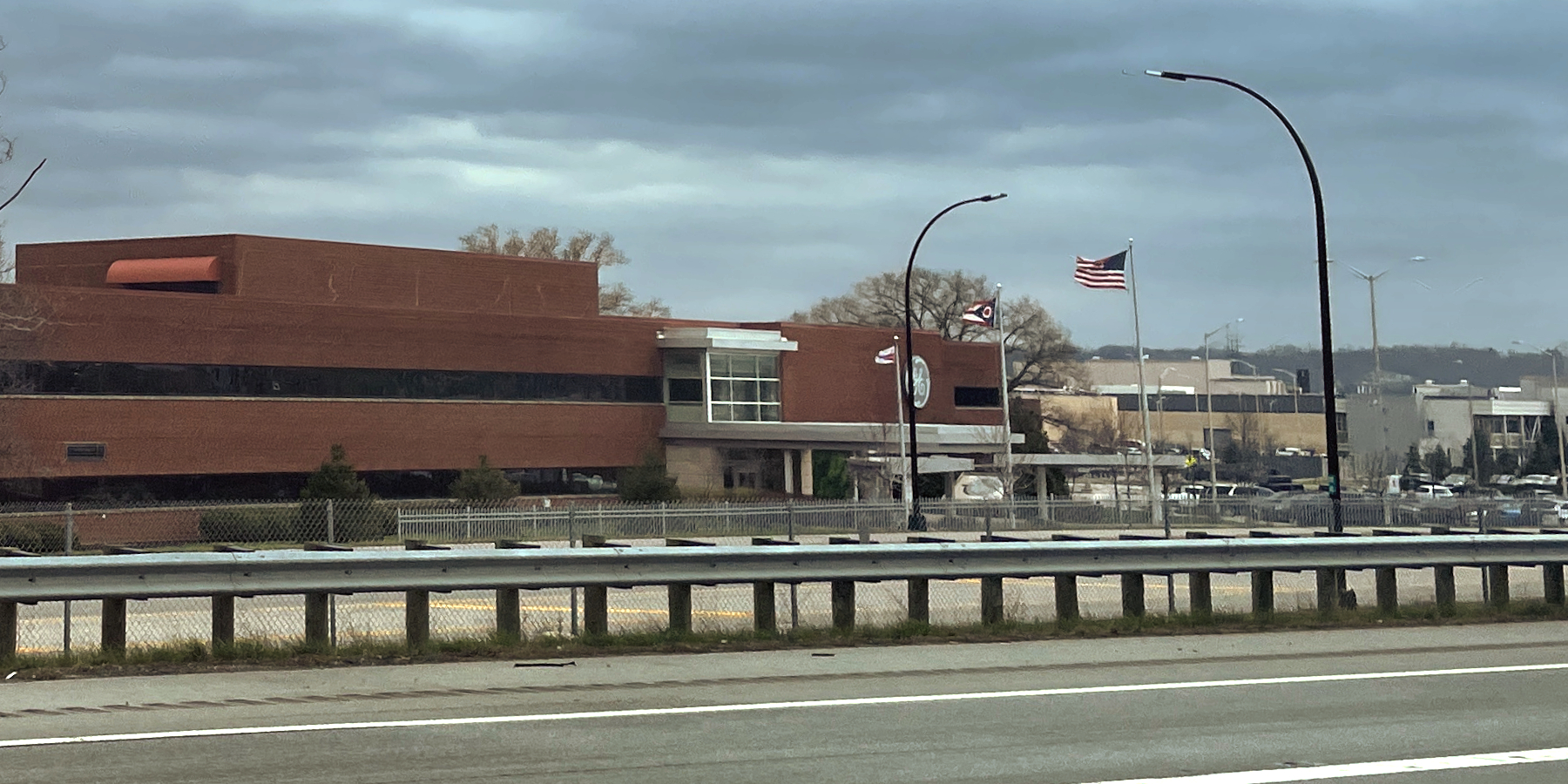
General Electric Company, doing business as GE Aerospace, is an American aircraft engine supplier that is headquartered in Evendale, Ohio, outside Cincinnati. It is the legal successor to the original General Electric Company founded in 1892, which split into three separate companies between November 2021 and April 2024, adopting the trade name GE Aerospace after divesting its healthcare and energy divisions.
GE Aerospace both manufactures engines under its name and partners with other manufacturers to produce engines. CFM International, the world's leading supplier of aircraft engines and GE's most successful partnership, is a 50/50 joint venture with the French company Safran Aircraft Engines. As of 2020, CFM International holds 39% of the world's commercial aircraft engine market share (while GE Aerospace itself holds a further 14%). GE Aerospace's main competitors in the engine market are Pratt & Whitney and Rolls-Royce.
The division operated under the name of General Electric Aircraft Engines (GEAE) until September 2005, and as GE Aviation until July 2022. In July 2022, GE Aviation changed its name to GE Aerospace in a move executives say reflects the engine maker's intention to broaden its focus beyond aircraft engines. In April 2024, GE Aerospace became the only business line of the former General Electric conglomerate, after it had completed the divestiture of GE HealthCare and GE Vernova (its energy businesses division).
General Electric had a long history in steam turbine work, dating back to the 1900s. In 1903 they hired Sanford Alexander Moss, who started the development of turbosuperchargers at GE. This led to a series of record-breaking flights over the next ten years. At first, the role of the high-altitude flight was limited, but in the years immediately prior to WWII they became standard equipment on practically all military aircraft. GE was a world leader in this technology; most other firms concentrated on the mechanically simpler supercharger driven by the engine itself, while GE had spent considerable effort developing the exhaust-driven turbo system that offered higher performance.
This work made them the natural industrial partner to develop jet engines when Frank Whittle's W.1 engine was demonstrated to Hap Arnold in 1941. A production license was arranged in September, and several of the existing W.1 test engines shipped to the US for study, where they were converted to US manufacture as the I-A. GE quickly started production of improved versions; the I-16 (J31) was produced in limited numbers starting in 1942, and the much more powerful I-40 (J33) followed in 1944, which went on to power the first US combat-capable jet fighters, the P-80 Shooting Star.
Early jet engine work took place at GE's Syracuse, New York, (steam turbine) and Lynn, Massachusetts, (supercharger) plants, but soon concentrated at the Lynn plants. On 31 July 1945 the Lynn plant became the "Aircraft Gas Turbine Division". GE was repeatedly unable to deliver enough engines for Army and Navy demand, and production of the I-40 (now known as the J33) was also handed to Allison Engines in 1944. After the war ended, the Army canceled its orders for GE-built J33s and turned the entire production over to Allison, and the Syracuse plant closed.
These changes in fortune led to debate within the company about carrying on in the aircraft engine market. However, the engineers at Lynn pressed ahead with the development of a new engine, the TG-180, which was designated J35 by the US military.
Development funds were allotted in 1946 for a more powerful version of the same design, the TG-190. This engine finally emerged as the famed General Electric J47, which saw a great demand for several military aircraft; a second manufacturing facility in Evendale, Ohio, near Cincinnati, was opened. J47 production ran to 30,000 engines by the time the lines closed down in 1956. Further development of the J47 by led to the J73, and from there into the much more powerful J79. The J79 was GE's second "hit", leading to a production run of 17,000 in several different countries. The GE and Lockheed team that developed the J79 and the F-104 Mach 2 fighter aircraft received the 1958 Collier Trophy for outstanding technical achievement in aviation. Other successes followed, including the T58 and T64 turboshaft engines, the J85 turbojet, and F404 turbofan.
Recent media
Recent media