


Community hub
Recent from talks
Contribute something to knowledge base
Content stats: 0 posts, 0 articles, 1 media, 0 notes
Members stats: 0 subscribers, 0 contributors, 0 moderators, 0 supporters
Subscribers
Supporters
Contributors
Moderators
Hub AI
Generalized epilepsy AI simulator
(@Generalized epilepsy_simulator)
Hub AI
Generalized epilepsy AI simulator
(@Generalized epilepsy_simulator)
Generalized epilepsy
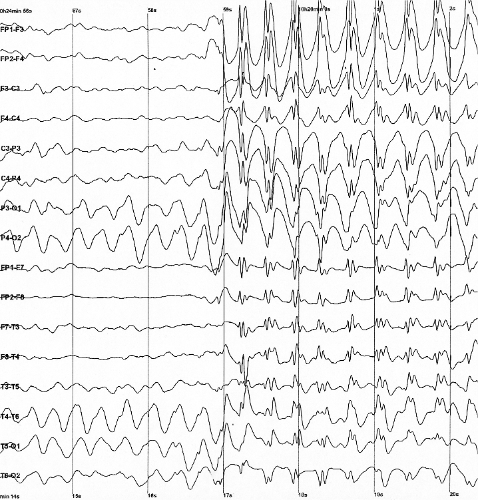
Generalized epilepsy is a form of epilepsy characterized by generalized seizures that occur with no obvious cause. Generalized seizures, as opposed to focal seizures, are a type of seizure that manifests as impaired consciousness, bilateral motor findings (including spasms, stiffening, jerking, contractions, or loss of muscle tone) or both. Generalized seizures also differ from focal seizures since they originate on both sides (hemispheres) of the brain and distort the electrical activity of the whole or a larger portion of the brain. These electrical findings are commonly visualized on electroencephalography (EEG) as part of diagnosis.
Generalized epilepsy is a type of primary epilepsy because the disorder is the originally diagnosed condition, as opposed to secondary epilepsy, which occurs as a symptom of a diagnosed illness.
Generalized epilepsy is usually diagnosed in childhood and can be caused by a number of underlying factors including dysfunctional neuronal networks, genetics, or brain trauma.
Generalized epilepsy can be broken down into six main subcategories of seizure types: absence seizures, myoclonic seizures, clonic seizures, tonic seizures, tonic-clonic seizures, and atonic seizures. Generalized epilepsy can also be a sign of an underlying seizure syndrome. Generalized seizures are most commonly treated with anti-epileptic medications and in rare cases surgical intervention.
Generalized epilepsy is usually diagnosed during childhood. Some patients outgrow their epilepsy during adolescence and no longer need medication, while others have the condition for life and will need long-term medication and monitoring.
Most research suggests that the part of the brain that is most likely involved in generalized epilepsy is the thalamus and is surrounding networks. Some of the main functions of the thalamus is the processing of sensory and motor information as well as the regulation of consciousness, sleep, and alertness. Specific connections from the thalamus to the hippocampus and amygdala have been reported in animals. Though it is not believed to be the site of origin for the seizures, there is some belief that these pathways have a role in lowering the seizure threshold in some patients. Other connections between the thalamus and cerebellum and the thalamus and the basal ganglia have been implicated in the mechanism behind generalized epilepsy. However, the exact underlying cause of generalized epilepsy is unknown.
The idea of a genetic basis for generalize epilepsy first arose from twin studies in which if one identical (monozygotic) twin developed generalized epilepsy it would be more likely for the other identical twin to also develop epilepsy than if the twins had been fraternal (dizygotic). Underlying genetic causes have been implicated specifically in the subclass of idiopathic generalized epilepsies. The specific genes that have shown to have some effect in causing these syndromes include but are not limited to: SCN1A, SCN1B, GABRA1, GABRG2, and SLC2A1.
Traumatic brain injury (TBI), stroke, brain tumors, abnormal vessels (ex: arteriovenous malformations), and brain infections like meningitis or encephalitis have also been associated with an increased risk of developing epilepsy.
Generalized epilepsy
Generalized epilepsy is a form of epilepsy characterized by generalized seizures that occur with no obvious cause. Generalized seizures, as opposed to focal seizures, are a type of seizure that manifests as impaired consciousness, bilateral motor findings (including spasms, stiffening, jerking, contractions, or loss of muscle tone) or both. Generalized seizures also differ from focal seizures since they originate on both sides (hemispheres) of the brain and distort the electrical activity of the whole or a larger portion of the brain. These electrical findings are commonly visualized on electroencephalography (EEG) as part of diagnosis.
Generalized epilepsy is a type of primary epilepsy because the disorder is the originally diagnosed condition, as opposed to secondary epilepsy, which occurs as a symptom of a diagnosed illness.
Generalized epilepsy is usually diagnosed in childhood and can be caused by a number of underlying factors including dysfunctional neuronal networks, genetics, or brain trauma.
Generalized epilepsy can be broken down into six main subcategories of seizure types: absence seizures, myoclonic seizures, clonic seizures, tonic seizures, tonic-clonic seizures, and atonic seizures. Generalized epilepsy can also be a sign of an underlying seizure syndrome. Generalized seizures are most commonly treated with anti-epileptic medications and in rare cases surgical intervention.
Generalized epilepsy is usually diagnosed during childhood. Some patients outgrow their epilepsy during adolescence and no longer need medication, while others have the condition for life and will need long-term medication and monitoring.
Most research suggests that the part of the brain that is most likely involved in generalized epilepsy is the thalamus and is surrounding networks. Some of the main functions of the thalamus is the processing of sensory and motor information as well as the regulation of consciousness, sleep, and alertness. Specific connections from the thalamus to the hippocampus and amygdala have been reported in animals. Though it is not believed to be the site of origin for the seizures, there is some belief that these pathways have a role in lowering the seizure threshold in some patients. Other connections between the thalamus and cerebellum and the thalamus and the basal ganglia have been implicated in the mechanism behind generalized epilepsy. However, the exact underlying cause of generalized epilepsy is unknown.
The idea of a genetic basis for generalize epilepsy first arose from twin studies in which if one identical (monozygotic) twin developed generalized epilepsy it would be more likely for the other identical twin to also develop epilepsy than if the twins had been fraternal (dizygotic). Underlying genetic causes have been implicated specifically in the subclass of idiopathic generalized epilepsies. The specific genes that have shown to have some effect in causing these syndromes include but are not limited to: SCN1A, SCN1B, GABRA1, GABRG2, and SLC2A1.
Traumatic brain injury (TBI), stroke, brain tumors, abnormal vessels (ex: arteriovenous malformations), and brain infections like meningitis or encephalitis have also been associated with an increased risk of developing epilepsy.
Recent media
Recent media