
Recent from talks
Encephalitis
Knowledge base stats:
Talk channels stats:
Members stats:
Encephalitis
Encephalitis is inflammation of the brain. The severity can be variable with symptoms including reduction or alteration in consciousness, aphasia, headache, fever, confusion, a stiff neck, and vomiting. Complications may include seizures, hallucinations, trouble speaking, memory problems, and problems with hearing.
Causes of encephalitis include viruses such as herpes simplex virus and rabies virus as well as bacteria, fungi, or parasites. Other causes include autoimmune diseases and certain medications. In many cases the cause remains unknown. Risk factors include a weak immune system. Diagnosis is typically based on symptoms and supported by blood tests, medical imaging, and analysis of cerebrospinal fluid.
Certain types are preventable with vaccines. Treatment may include antiviral medications (such as acyclovir), anticonvulsants, and corticosteroids. Treatment generally takes place in hospital. Some people require artificial respiration. Once the immediate problem is under control, rehabilitation may be required. In 2015, encephalitis was estimated to have affected 4.3 million people and resulted in 150,000 deaths worldwide.
Adults with encephalitis present with acute onset of fever, headache, confusion, and sometimes seizures. Younger children or infants may present with irritability, poor appetite and fever. Neurological examinations usually reveal a drowsy or confused person. Stiff neck, due to the irritation of the meninges covering the brain, indicates that the patient has either meningitis or meningoencephalitis.
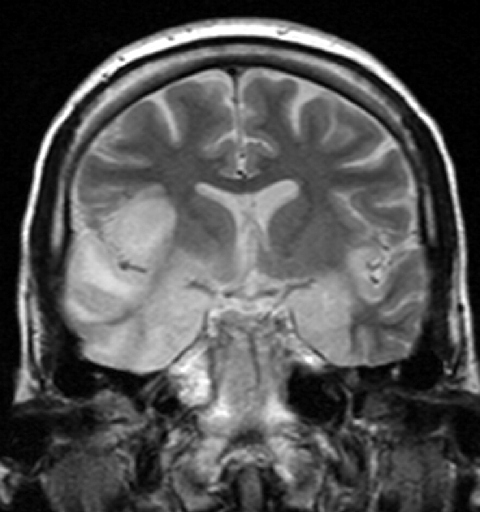
Limbic encephalitis refers to inflammatory disease confined to the limbic system of the brain. The clinical presentation often includes disorientation, disinhibition, memory loss, seizures, and behavioral anomalies. MRI imaging reveals T2 hyperintensity in the structures of the medial temporal lobes, and in some cases, other limbic structures. Some cases of limbic encephalitis are of autoimmune origin.
Encephalitis lethargica is identified by high fever, headache, delayed physical response, and lethargy. Individuals can exhibit upper body weakness, muscular pains, and tremors, though the cause of encephalitis lethargica is not currently known. From 1917 to 1928, an epidemic of encephalitis lethargica occurred worldwide.
In 30%-40% of encephalitis cases, the etiology remains unknown.
Viral infections are the usual cause of infectious encephalitis. Viral encephalitis can occur either as a direct effect of an acute infection, or as one of the sequelae of a latent infection. The majority of viral cases of encephalitis have an unknown cause; however, the most common identifiable cause of viral encephalitis is from herpes simplex infection. Other causes of acute viral encephalitis are rabies virus, poliovirus, and measles virus.
Hub AI
Encephalitis AI simulator
(@Encephalitis_simulator)
Encephalitis
Encephalitis is inflammation of the brain. The severity can be variable with symptoms including reduction or alteration in consciousness, aphasia, headache, fever, confusion, a stiff neck, and vomiting. Complications may include seizures, hallucinations, trouble speaking, memory problems, and problems with hearing.
Causes of encephalitis include viruses such as herpes simplex virus and rabies virus as well as bacteria, fungi, or parasites. Other causes include autoimmune diseases and certain medications. In many cases the cause remains unknown. Risk factors include a weak immune system. Diagnosis is typically based on symptoms and supported by blood tests, medical imaging, and analysis of cerebrospinal fluid.
Certain types are preventable with vaccines. Treatment may include antiviral medications (such as acyclovir), anticonvulsants, and corticosteroids. Treatment generally takes place in hospital. Some people require artificial respiration. Once the immediate problem is under control, rehabilitation may be required. In 2015, encephalitis was estimated to have affected 4.3 million people and resulted in 150,000 deaths worldwide.
Adults with encephalitis present with acute onset of fever, headache, confusion, and sometimes seizures. Younger children or infants may present with irritability, poor appetite and fever. Neurological examinations usually reveal a drowsy or confused person. Stiff neck, due to the irritation of the meninges covering the brain, indicates that the patient has either meningitis or meningoencephalitis.
Limbic encephalitis refers to inflammatory disease confined to the limbic system of the brain. The clinical presentation often includes disorientation, disinhibition, memory loss, seizures, and behavioral anomalies. MRI imaging reveals T2 hyperintensity in the structures of the medial temporal lobes, and in some cases, other limbic structures. Some cases of limbic encephalitis are of autoimmune origin.
Encephalitis lethargica is identified by high fever, headache, delayed physical response, and lethargy. Individuals can exhibit upper body weakness, muscular pains, and tremors, though the cause of encephalitis lethargica is not currently known. From 1917 to 1928, an epidemic of encephalitis lethargica occurred worldwide.
In 30%-40% of encephalitis cases, the etiology remains unknown.
Viral infections are the usual cause of infectious encephalitis. Viral encephalitis can occur either as a direct effect of an acute infection, or as one of the sequelae of a latent infection. The majority of viral cases of encephalitis have an unknown cause; however, the most common identifiable cause of viral encephalitis is from herpes simplex infection. Other causes of acute viral encephalitis are rabies virus, poliovirus, and measles virus.
Recent media