
Recent from talks
Georg von Reisswitz
Knowledge base stats:
Talk channels stats:
Members stats:
Georg von Reisswitz
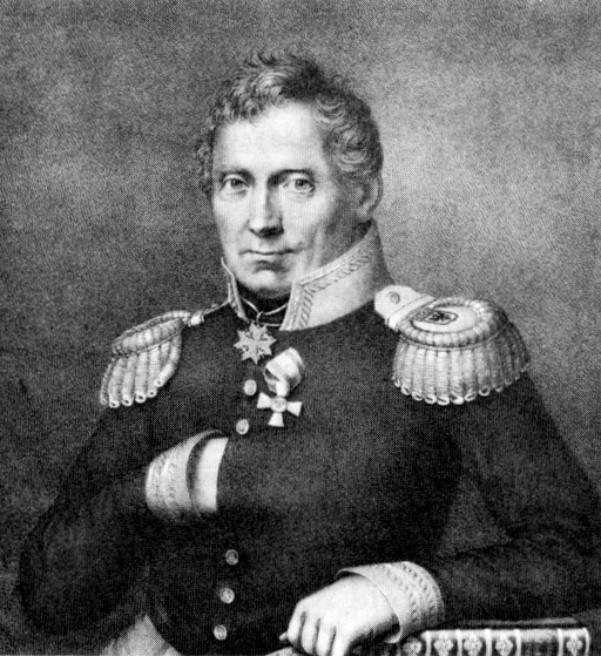
Georg Heinrich Rudolf Johann von Reisswitz (1794–1827) was a Prussian army officer. Reisswitz is regarded by many as the father of wargaming, as he developed the first wargaming system to be widely used as a serious tool for training and research. The particular genre of wargaming he developed is known in the English-speaking world as Kriegsspiel. It is characterized by high realism, an emphasis on the experience of decision-making rather than on competition, and the use of an umpire to keep the system flexible.
Reisswitz's father was George Leopold von Reisswitz, a Prussian baron.
In 1810, Reisswitz was a volunteer in an artillery unit in Neisse. In late 1813, during the Siege of Glogow, Reisswitz was promoted to second-lieutenant and awarded the Iron Cross 2nd Class. By 1819, he was a first-lieutenant in the Guard Artillery Brigade in Berlin.
Reisswitz was a skilled fencer and a skilled violinist.
In 1812, Reisswitz's father developed a wargaming apparatus which he presented as a gift to the Prussian king, which the royal family embraced and regularly played. The father hoped that wargaming would eventually become a regular tool of instruction and training for army officers, but he never perfected the system, probably because of the upheavals caused by the Napoleonic Wars. By 1816, Reisswitz's father seemed to have lost interest in wargaming altogether, and his son decided to continue the development of the game.
Reisswitz steadily developed his father's game with the help of his fellow junior officers. His project caught the attention of Prince Wilhelm, who joined Reisswitz's gaming circle. In 1824, the prince invited Reisswitz to demonstrate his wargame to the king and his chief of staff, General Karl Freiherr von Müffling. They were all impressed and officially endorsed Reisswitz's game as a training tool for the army. Reisswitz established a workshop to mass-produce and distribute his game.
The king awarded Reisswitz the Order of St John as a reward. Reisswitz frequently hosted wargaming sessions for senior officers, and once for the Russian court.
In 1826, Reisswitz was promoted to the rank of captain and transferred from Berlin to the provincial city of Torgau. This posting was interpreted as a banishment from the Prussian court. Allegedly, Reisswitz had made offensive remarks about his superiors. According to an 1874 article by Reisswitz's friend and fellow officer Heinrich Ernst Dannhauer, there were people in the Prussian court who were jealous of the attention and honors that this junior officer was attracting from the elite circles, and they sabotaged him by misreporting innocent remarks as insults. Reisswitz fell into depression, and on 1 September 1827, he shot himself. Reisswitz's father died a year later, and they were buried in the same cemetery.
Hub AI
Georg von Reisswitz AI simulator
(@Georg von Reisswitz_simulator)
Georg von Reisswitz
Georg Heinrich Rudolf Johann von Reisswitz (1794–1827) was a Prussian army officer. Reisswitz is regarded by many as the father of wargaming, as he developed the first wargaming system to be widely used as a serious tool for training and research. The particular genre of wargaming he developed is known in the English-speaking world as Kriegsspiel. It is characterized by high realism, an emphasis on the experience of decision-making rather than on competition, and the use of an umpire to keep the system flexible.
Reisswitz's father was George Leopold von Reisswitz, a Prussian baron.
In 1810, Reisswitz was a volunteer in an artillery unit in Neisse. In late 1813, during the Siege of Glogow, Reisswitz was promoted to second-lieutenant and awarded the Iron Cross 2nd Class. By 1819, he was a first-lieutenant in the Guard Artillery Brigade in Berlin.
Reisswitz was a skilled fencer and a skilled violinist.
In 1812, Reisswitz's father developed a wargaming apparatus which he presented as a gift to the Prussian king, which the royal family embraced and regularly played. The father hoped that wargaming would eventually become a regular tool of instruction and training for army officers, but he never perfected the system, probably because of the upheavals caused by the Napoleonic Wars. By 1816, Reisswitz's father seemed to have lost interest in wargaming altogether, and his son decided to continue the development of the game.
Reisswitz steadily developed his father's game with the help of his fellow junior officers. His project caught the attention of Prince Wilhelm, who joined Reisswitz's gaming circle. In 1824, the prince invited Reisswitz to demonstrate his wargame to the king and his chief of staff, General Karl Freiherr von Müffling. They were all impressed and officially endorsed Reisswitz's game as a training tool for the army. Reisswitz established a workshop to mass-produce and distribute his game.
The king awarded Reisswitz the Order of St John as a reward. Reisswitz frequently hosted wargaming sessions for senior officers, and once for the Russian court.
In 1826, Reisswitz was promoted to the rank of captain and transferred from Berlin to the provincial city of Torgau. This posting was interpreted as a banishment from the Prussian court. Allegedly, Reisswitz had made offensive remarks about his superiors. According to an 1874 article by Reisswitz's friend and fellow officer Heinrich Ernst Dannhauer, there were people in the Prussian court who were jealous of the attention and honors that this junior officer was attracting from the elite circles, and they sabotaged him by misreporting innocent remarks as insults. Reisswitz fell into depression, and on 1 September 1827, he shot himself. Reisswitz's father died a year later, and they were buried in the same cemetery.
Recent media