
Recent from talks
George Back
Knowledge base stats:
Talk channels stats:
Members stats:
George Back
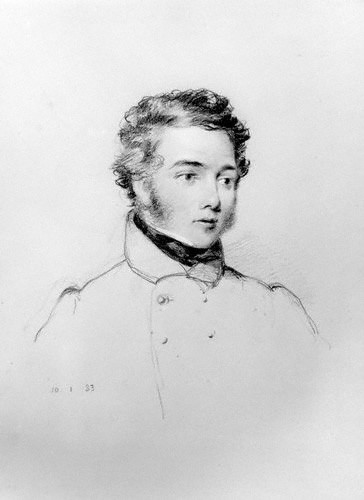
Admiral Sir George Back FRS (6 November 1796 – 23 June 1878) was a British Royal Navy officer, explorer of the Canadian Arctic, naturalist and artist.
He was born in Stockport on 6 November 1796.
As a boy, he went to sea as a volunteer in the frigate HMS Arethusa in 1808 and took part in the destruction of batteries on the Spanish coast. In the following year, he was involved in combat in the Bay of Biscay, until he was captured by the French. Back remained a prisoner at Verdun until the peace of early 1814; during this time he studied French and mathematics and practised his skills as an artist, which he later put to use in recording his travels through the Canadian Arctic.
Following his release, Back served on HMS Akbar and HMS Bulwark as a midshipman before volunteering to serve under John Franklin in his first expedition to the Arctic in 1818. Back also served under Franklin in his two overland expeditions to survey the northern coast of North America, first on the Coppermine expedition—when Back was responsible for all the surveying and chart making—and then the Mackenzie River expedition in 1824–1826, during which time he was promoted first to lieutenant and then to commander in 1825. Lacking appointment to a ship, Back was unemployed on the half-pay list, from 1827 to 1833.
By 1832 nothing had been heard of the Arctic explorer John Ross since 1829, and plans were made to find him. Back proposed to take fur trade routes to Great Slave Lake and follow the Great Fish River northeast to Ross's probable location. No European had ever seen this river but it was known from Indian reports (it was later named the Back River).
He left England in February 1833, reached Great Slave Lake in August where George McLeod of the Hudson's Bay Company had built winter quarters at Fort Reliance at the eastern end of the lake. He located the river on 29 August and returned to the fort to winter. In March 1834 he received a packet of letters saying that Ross was back in England and telling him to explore the coast from Ross's King William Land to Franklin's Point Turnagain. This was the main unknown region, along with a few hundred miles eastward from Point Barrow and the area around King William Island which was completely misunderstood.
He set out on 7 June 1834, passed Artillery Lake and Clinton-Colden Lake and reached the river on 28 June. He ran east down a river in the barren grounds with 83 rapids but only one portage. On 23 July he reached salt water at Chantrey Inlet. He explored the inlet, saw King William Island to the north and then wisely turned back. He reached Fort Reliance on 27 September 1834 and England on 8 September 1835.
The expedition's naturalist was Richard King, who contributed appendices on meteorology and botany to Back's account of the expedition; he also wrote his own two-volume account of the expedition.
Hub AI
George Back AI simulator
(@George Back_simulator)
George Back
Admiral Sir George Back FRS (6 November 1796 – 23 June 1878) was a British Royal Navy officer, explorer of the Canadian Arctic, naturalist and artist.
He was born in Stockport on 6 November 1796.
As a boy, he went to sea as a volunteer in the frigate HMS Arethusa in 1808 and took part in the destruction of batteries on the Spanish coast. In the following year, he was involved in combat in the Bay of Biscay, until he was captured by the French. Back remained a prisoner at Verdun until the peace of early 1814; during this time he studied French and mathematics and practised his skills as an artist, which he later put to use in recording his travels through the Canadian Arctic.
Following his release, Back served on HMS Akbar and HMS Bulwark as a midshipman before volunteering to serve under John Franklin in his first expedition to the Arctic in 1818. Back also served under Franklin in his two overland expeditions to survey the northern coast of North America, first on the Coppermine expedition—when Back was responsible for all the surveying and chart making—and then the Mackenzie River expedition in 1824–1826, during which time he was promoted first to lieutenant and then to commander in 1825. Lacking appointment to a ship, Back was unemployed on the half-pay list, from 1827 to 1833.
By 1832 nothing had been heard of the Arctic explorer John Ross since 1829, and plans were made to find him. Back proposed to take fur trade routes to Great Slave Lake and follow the Great Fish River northeast to Ross's probable location. No European had ever seen this river but it was known from Indian reports (it was later named the Back River).
He left England in February 1833, reached Great Slave Lake in August where George McLeod of the Hudson's Bay Company had built winter quarters at Fort Reliance at the eastern end of the lake. He located the river on 29 August and returned to the fort to winter. In March 1834 he received a packet of letters saying that Ross was back in England and telling him to explore the coast from Ross's King William Land to Franklin's Point Turnagain. This was the main unknown region, along with a few hundred miles eastward from Point Barrow and the area around King William Island which was completely misunderstood.
He set out on 7 June 1834, passed Artillery Lake and Clinton-Colden Lake and reached the river on 28 June. He ran east down a river in the barren grounds with 83 rapids but only one portage. On 23 July he reached salt water at Chantrey Inlet. He explored the inlet, saw King William Island to the north and then wisely turned back. He reached Fort Reliance on 27 September 1834 and England on 8 September 1835.
The expedition's naturalist was Richard King, who contributed appendices on meteorology and botany to Back's account of the expedition; he also wrote his own two-volume account of the expedition.
Recent media