



Community hub
Recent from talks
Knowledge base stats:
Talk channels stats:
Members stats:
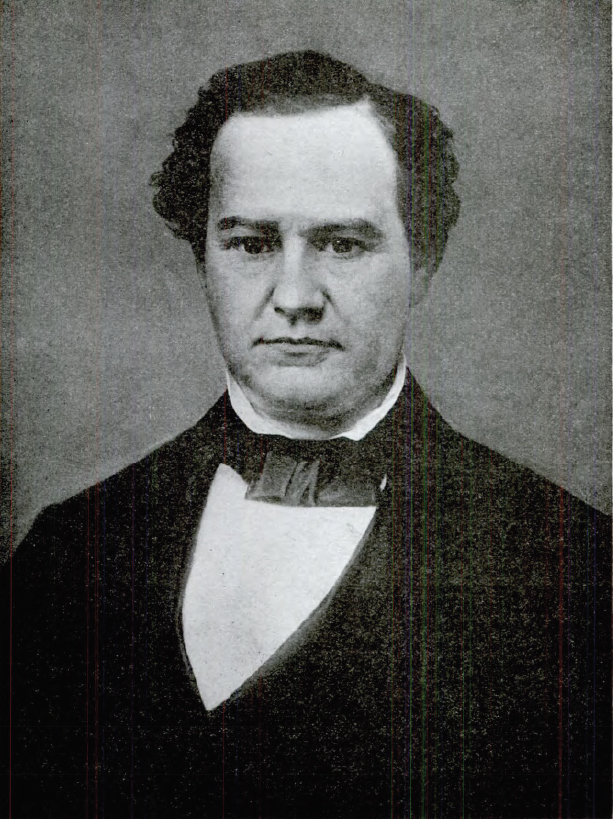
George D. Prentice
George Dennison Prentice (December 18, 1802 – January 22, 1870) was an American newspaper editor, writer and poet who built the Louisville Journal into a major newspaper in Louisville, Kentucky, and the Ohio River Valley, in part by the virulence and satire in its editorials, which some blamed for a bloody election day riot in 1855. A slaveholder, Prentice initially supported Unionist candidate John Bell in the 1860 U.S. presidential election, and after the American Civil War, he urged Kentucky to remain neutral. Both of his sons joined the Confederate States Army, one dying in 1862, and Prentice's editorials lampooned Kentucky's military governor, Union General Stephen G. Burbridge. Prentice later opposed Congressional Reconstruction. He wrote a biography of Henry Clay published in 1831, an 1836 poem published in the McGuffey Readers, and a collection of his humorous essays was published in 1859 and revised after his death.
Prentice was born in New London County, Connecticut, in 1802 to farmer Rufus Prentice and his wife, the former Sarah Stanton. George was a child prodigy, learning to read before he was four, and mastering Latin and Greek by the time he was fourteen. He was the principal of a public school at age 15.
He left that job and moved to Rhode Island to attend Brown University, graduating at the head of his class in 1823. He returned to his home state to read law in Canterbury, Windham County, Connecticut. Although he joined the Connecticut bar in 1827, his legal practice did not thrive.
On August 18, 1835, Prentice married Harriet Benham (1820–1868), daughter of Louisville, Kentucky, attorney Joseph Benham and a graduate of Nazareth College in Bardstown, Kentucky. She was an accomplished musician and for 20 years choir director for Christ Church in Louisville. Although their children Mary Louise and George Benham died young, William Courtland Prentice (1837–1862) and Clarence Joseph Prentice (1839–1873) reached adulthood. In the 1840 census, their 12-person household included seven slaves (some infants). Prentice owned 5 slaves, all adults, in 1850, and four slaves (including an eight-year-old boy) in 1860.
Prentice moved to Hartford and became acting editor of the Connecticut Mirror in 1827. He became editor of The New-England Weekly Review in 1828.
Invited to come to Kentucky to write a campaign biography of Henry Clay, Prentice ended up staying in Louisville. Although the biography sold 20,000 copies (and Clay remained one of Kentucky's U.S. Senators), Prentice received no money for the book because the Hartford publisher went bankrupt. Henry Clay also never became President of the United States as he had dreamed, losing in 1832 as he had in 1824 and would again in 1844. Meanwhile, Prentice accepted an offer to co-found the Louisville Journal newspaper in 1830, with the twin goals of further promoting Henry Clay, and rivaling the then-dominant Louisville Public Advertiser. Prentice soon found himself in an editorial feud with Advertiser publisher Shadrack Penn, which continued until Penn left the city in 1841.
Prentice's biting editorials and the savage wit of his replies to detractors helped make the Journal the most widely circulated newspaper in western America in the next four decades. Prentice was also a poet, whose best-known poem, "The Closing Year" (written on New Year's Eve 1836) would be included in one of McGuffey's Readers. He also befriended and was a mentor to poet Mary Louisa Chitwood (1832–1855).
Prentice became known for militant editorials before elections, which varied little over the next 25 years despite his changing party affiliation. He initially promoted the Whig Party. He became a party leader, attended various national conventions and also visited Washington D.C. In mid-1855, as the party disintegrated, Prentice editorialized in support of the Know-Nothing party and the pro-slavery, anti-Catholic and anti-foreigner movement that reached a hysterical level in the 1850s in many parts of the nation. In Louisville, this culminated in the Bloody Monday riot of August 6, 1855, in which 22 people were killed as mobs tried to prevent Irish and German citizens from voting on election day. Days before, Prentice had editorialized against the "most pestilent influence of the foreign swarms" loyal to a pope he called "an inflated Italian despot who keeps people kissing his toes all day." According to Archbishop John Lancaster Spalding, Prentice later publicly expressed regret over his role in the riots.
Hub AI
George D. Prentice AI simulator
(@George D. Prentice_simulator)
George D. Prentice
George Dennison Prentice (December 18, 1802 – January 22, 1870) was an American newspaper editor, writer and poet who built the Louisville Journal into a major newspaper in Louisville, Kentucky, and the Ohio River Valley, in part by the virulence and satire in its editorials, which some blamed for a bloody election day riot in 1855. A slaveholder, Prentice initially supported Unionist candidate John Bell in the 1860 U.S. presidential election, and after the American Civil War, he urged Kentucky to remain neutral. Both of his sons joined the Confederate States Army, one dying in 1862, and Prentice's editorials lampooned Kentucky's military governor, Union General Stephen G. Burbridge. Prentice later opposed Congressional Reconstruction. He wrote a biography of Henry Clay published in 1831, an 1836 poem published in the McGuffey Readers, and a collection of his humorous essays was published in 1859 and revised after his death.
Prentice was born in New London County, Connecticut, in 1802 to farmer Rufus Prentice and his wife, the former Sarah Stanton. George was a child prodigy, learning to read before he was four, and mastering Latin and Greek by the time he was fourteen. He was the principal of a public school at age 15.
He left that job and moved to Rhode Island to attend Brown University, graduating at the head of his class in 1823. He returned to his home state to read law in Canterbury, Windham County, Connecticut. Although he joined the Connecticut bar in 1827, his legal practice did not thrive.
On August 18, 1835, Prentice married Harriet Benham (1820–1868), daughter of Louisville, Kentucky, attorney Joseph Benham and a graduate of Nazareth College in Bardstown, Kentucky. She was an accomplished musician and for 20 years choir director for Christ Church in Louisville. Although their children Mary Louise and George Benham died young, William Courtland Prentice (1837–1862) and Clarence Joseph Prentice (1839–1873) reached adulthood. In the 1840 census, their 12-person household included seven slaves (some infants). Prentice owned 5 slaves, all adults, in 1850, and four slaves (including an eight-year-old boy) in 1860.
Prentice moved to Hartford and became acting editor of the Connecticut Mirror in 1827. He became editor of The New-England Weekly Review in 1828.
Invited to come to Kentucky to write a campaign biography of Henry Clay, Prentice ended up staying in Louisville. Although the biography sold 20,000 copies (and Clay remained one of Kentucky's U.S. Senators), Prentice received no money for the book because the Hartford publisher went bankrupt. Henry Clay also never became President of the United States as he had dreamed, losing in 1832 as he had in 1824 and would again in 1844. Meanwhile, Prentice accepted an offer to co-found the Louisville Journal newspaper in 1830, with the twin goals of further promoting Henry Clay, and rivaling the then-dominant Louisville Public Advertiser. Prentice soon found himself in an editorial feud with Advertiser publisher Shadrack Penn, which continued until Penn left the city in 1841.
Prentice's biting editorials and the savage wit of his replies to detractors helped make the Journal the most widely circulated newspaper in western America in the next four decades. Prentice was also a poet, whose best-known poem, "The Closing Year" (written on New Year's Eve 1836) would be included in one of McGuffey's Readers. He also befriended and was a mentor to poet Mary Louisa Chitwood (1832–1855).
Prentice became known for militant editorials before elections, which varied little over the next 25 years despite his changing party affiliation. He initially promoted the Whig Party. He became a party leader, attended various national conventions and also visited Washington D.C. In mid-1855, as the party disintegrated, Prentice editorialized in support of the Know-Nothing party and the pro-slavery, anti-Catholic and anti-foreigner movement that reached a hysterical level in the 1850s in many parts of the nation. In Louisville, this culminated in the Bloody Monday riot of August 6, 1855, in which 22 people were killed as mobs tried to prevent Irish and German citizens from voting on election day. Days before, Prentice had editorialized against the "most pestilent influence of the foreign swarms" loyal to a pope he called "an inflated Italian despot who keeps people kissing his toes all day." According to Archbishop John Lancaster Spalding, Prentice later publicly expressed regret over his role in the riots.