
Recent from talks
George Fisher Baker
Knowledge base stats:
Talk channels stats:
Members stats:
George Fisher Baker
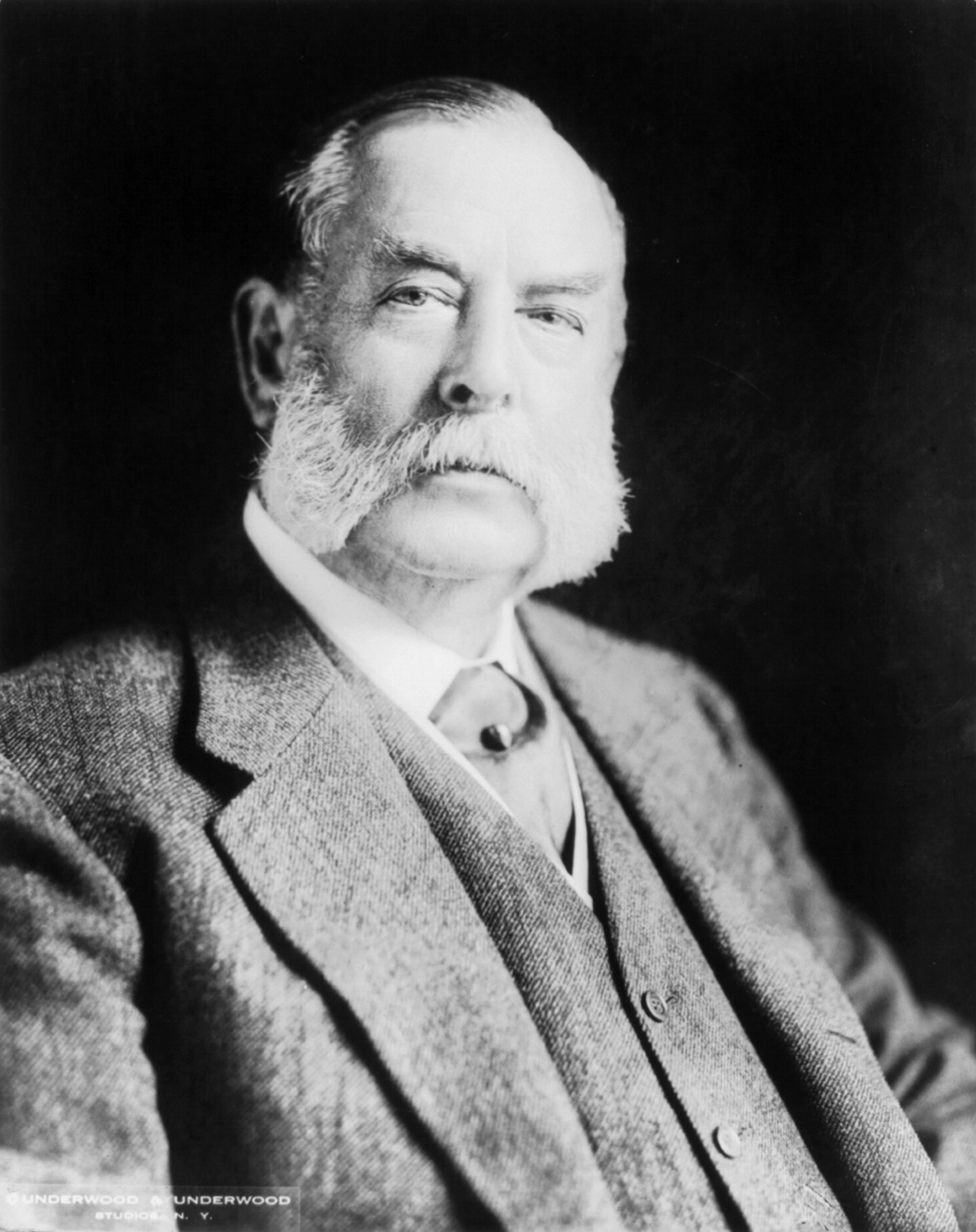
George Fisher Baker (March 27, 1840 – May 2, 1931) was an American financier and philanthropist. Known as the "Dean of American Banking", he was also known for his taciturnity. Baker made a fortune after the Civil War in railroads and banking, and at his death was estimated to be the third-richest man in the United States, after Henry Ford and John D. Rockefeller.
Baker was born in Troy, New York, to Eveline Stevens Baker and George Ellis Baker, a shoe-store owner who was elected in 1850 on the Whig ticket to the New York State Assembly. At 14, young George entered the S.S. Seward Institute in Florida, New York, where he studied geography, bookkeeping, history, and algebra. At 16, he was hired as a junior clerk in the New York State Banking Department.
Following the outbreak of the American Civil War, Baker enlisted in the 18th Regiment of the Massachusetts Volunteers, in which he achieved the ranks of first lieutenant and adjutant.
In 1863, Baker, along with his mentor, John Thompson, and Thompson's sons Frederick Ferris Thompson and Samuel C. Thompson, co-founded the First National Bank of the City of New York. The first national bank to be chartered in New York City under the National Currency Act of 1863, it became a forerunner of today's Citibank, N.A.
Baker became First National's president at age 37, on September 1, 1877. His 20,000 shares were worth about $20 million ($604,687,500 today). He retired as president in 1909, and became chairman of the board. He was succeeded in the presidency by Francis L. Hine, the former vice president of the bank.
An avid investor, he held interests in many corporations and was the largest stockholder in the Central Railroad of New Jersey. He was a director in 22 corporations, which with their subsidiaries had aggregate resources of $7.27 billion. He was the largest individual owner of U.S. Steel stock; in the early 1920s, his shares were worth some $5,965,000 (equivalent to around $83,245,000 in 2017 dollars), according to a May 4, 1924, article in Time.[citation needed]
The April 14, 1924, edition of Time said of Baker:[citation needed]
True, he is twice as rich as the original J.P. Morgan, having a fortune estimated at 200 millions. True, at the age of 84 when he has retired from many directorates, he dominates half a dozen railroads, several banks, scores of industrial concerns.
Hub AI
George Fisher Baker AI simulator
(@George Fisher Baker_simulator)
George Fisher Baker
George Fisher Baker (March 27, 1840 – May 2, 1931) was an American financier and philanthropist. Known as the "Dean of American Banking", he was also known for his taciturnity. Baker made a fortune after the Civil War in railroads and banking, and at his death was estimated to be the third-richest man in the United States, after Henry Ford and John D. Rockefeller.
Baker was born in Troy, New York, to Eveline Stevens Baker and George Ellis Baker, a shoe-store owner who was elected in 1850 on the Whig ticket to the New York State Assembly. At 14, young George entered the S.S. Seward Institute in Florida, New York, where he studied geography, bookkeeping, history, and algebra. At 16, he was hired as a junior clerk in the New York State Banking Department.
Following the outbreak of the American Civil War, Baker enlisted in the 18th Regiment of the Massachusetts Volunteers, in which he achieved the ranks of first lieutenant and adjutant.
In 1863, Baker, along with his mentor, John Thompson, and Thompson's sons Frederick Ferris Thompson and Samuel C. Thompson, co-founded the First National Bank of the City of New York. The first national bank to be chartered in New York City under the National Currency Act of 1863, it became a forerunner of today's Citibank, N.A.
Baker became First National's president at age 37, on September 1, 1877. His 20,000 shares were worth about $20 million ($604,687,500 today). He retired as president in 1909, and became chairman of the board. He was succeeded in the presidency by Francis L. Hine, the former vice president of the bank.
An avid investor, he held interests in many corporations and was the largest stockholder in the Central Railroad of New Jersey. He was a director in 22 corporations, which with their subsidiaries had aggregate resources of $7.27 billion. He was the largest individual owner of U.S. Steel stock; in the early 1920s, his shares were worth some $5,965,000 (equivalent to around $83,245,000 in 2017 dollars), according to a May 4, 1924, article in Time.[citation needed]
The April 14, 1924, edition of Time said of Baker:[citation needed]
True, he is twice as rich as the original J.P. Morgan, having a fortune estimated at 200 millions. True, at the age of 84 when he has retired from many directorates, he dominates half a dozen railroads, several banks, scores of industrial concerns.
Recent media