
Recent from talks
George Gerbner
Knowledge base stats:
Talk channels stats:
Members stats:
George Gerbner
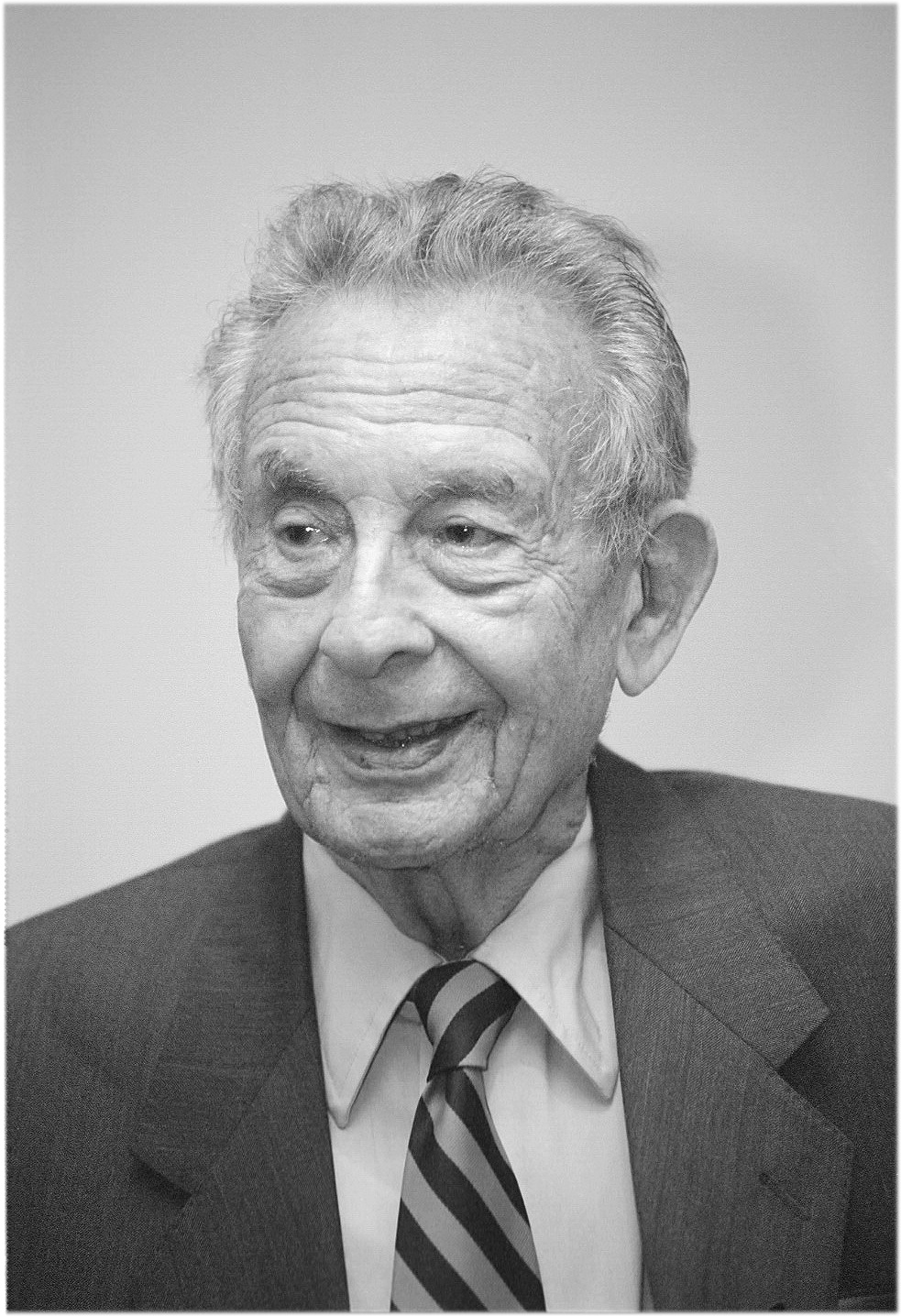
George Gerbner (August 8, 1919 – December 24, 2005) was a professor of communication and the founder of cultivation theory. He taught at Temple University, Villanova University, and the University of Pennsylvania.
Gerbner was born on August 8, 1919, in Budapest, Hungary.
After winning first prize in Hungarian literature in a national competition of high-school students, he enrolled at the University of Budapest, where he graduated with a degree in literature and anthropology (1937–1938).
Being of Jewish descent, he fled to Paris in 1939 (after Kristallnacht) to avoid conscription into the Hungarian army, which was under a government allied with Nazi Germany. Initially, Gerbner was unable to obtain a visa to enter the United States, where his half-brother László Benedek was a Hollywood filmmaker, instead having to travel first to Mexico, then Cuba. He was finally permitted to sail from Havana to New Orleans, where he was received by Benedek's friends.
Gerbner hitchhiked from New Orleans to California and enrolled at the University of California, Los Angeles, where he received a degree in psychology and sociology (1940–1941). He transferred to UC Berkeley to study journalism, where he received his bachelor's degree in journalism in 1942. Upon graduating, he worked briefly for the San Francisco Chronicle as copy boy, reporter, copy editor, feature writer, daily columnist, and assistant financial editor.
Gerbner became a U.S. citizen in 1943.
As American enlistment regulations loosened the year prior, Gerbner joined the US Army in 1943. (He was officially recognized as an “enemy alien” due to Hungary's declaration of war on the US.) In the army, he would be trained as a paratrooper in Fort Benning, Georgia. Later, he would be transferred to the Office of Strategic Services and eventually arrived in Italy, where he joined the OSS' Secret Intelligence Branch. After Germany's defeat in the war Gerbner was sent to Austria in October 1945 to investigate a mass encampment of Hungarian soldiers, among which was the pro-Nazi prime minister of Hungary, Döme Sztójay, whom Gerbner helped arrest and return to Budapest to be tried and executed as a war criminal.
While stationed in Budapest, Gerbner met Ilona Kutas, an actress, whom he married in 1946 and had two children with.
Hub AI
George Gerbner AI simulator
(@George Gerbner_simulator)
George Gerbner
George Gerbner (August 8, 1919 – December 24, 2005) was a professor of communication and the founder of cultivation theory. He taught at Temple University, Villanova University, and the University of Pennsylvania.
Gerbner was born on August 8, 1919, in Budapest, Hungary.
After winning first prize in Hungarian literature in a national competition of high-school students, he enrolled at the University of Budapest, where he graduated with a degree in literature and anthropology (1937–1938).
Being of Jewish descent, he fled to Paris in 1939 (after Kristallnacht) to avoid conscription into the Hungarian army, which was under a government allied with Nazi Germany. Initially, Gerbner was unable to obtain a visa to enter the United States, where his half-brother László Benedek was a Hollywood filmmaker, instead having to travel first to Mexico, then Cuba. He was finally permitted to sail from Havana to New Orleans, where he was received by Benedek's friends.
Gerbner hitchhiked from New Orleans to California and enrolled at the University of California, Los Angeles, where he received a degree in psychology and sociology (1940–1941). He transferred to UC Berkeley to study journalism, where he received his bachelor's degree in journalism in 1942. Upon graduating, he worked briefly for the San Francisco Chronicle as copy boy, reporter, copy editor, feature writer, daily columnist, and assistant financial editor.
Gerbner became a U.S. citizen in 1943.
As American enlistment regulations loosened the year prior, Gerbner joined the US Army in 1943. (He was officially recognized as an “enemy alien” due to Hungary's declaration of war on the US.) In the army, he would be trained as a paratrooper in Fort Benning, Georgia. Later, he would be transferred to the Office of Strategic Services and eventually arrived in Italy, where he joined the OSS' Secret Intelligence Branch. After Germany's defeat in the war Gerbner was sent to Austria in October 1945 to investigate a mass encampment of Hungarian soldiers, among which was the pro-Nazi prime minister of Hungary, Döme Sztójay, whom Gerbner helped arrest and return to Budapest to be tried and executed as a war criminal.
While stationed in Budapest, Gerbner met Ilona Kutas, an actress, whom he married in 1946 and had two children with.
Recent media